
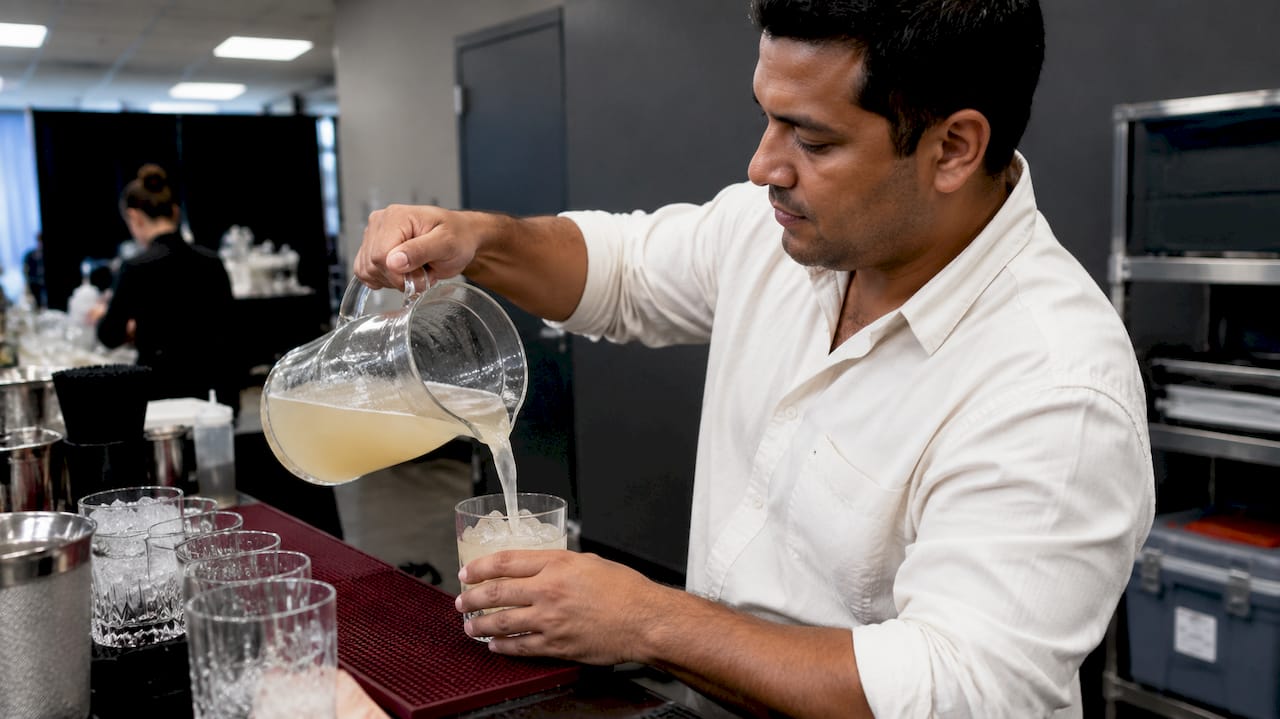
Batching a cocktail means multiplying a tested single-serving recipe by your headcount, adding the water that shaking would have added, and holding back anything that shouldn’t sit. Done well, it gets a line of guests served in seconds instead of minutes. Done badly, it gives you 40 pitchers of something too strong, too warm or flat. This guide covers the forecast, the math, the finishing steps and the points where a Las Vegas or Henderson event needs a licensed professional.
TL;DR
- Forecast drinks first, then pick recipes. Scale servings, not the guest list.
- Add dilution on purpose: roughly 15% water for a batch served right away, 20% for one made ahead, then chill.
- Keep citrus-sensitive, sparkling and garnish ingredients out of the main batch and add them at service.
- Label every container with the name, contents, date and allergens so whoever pours it knows what it is.
- In Las Vegas and Henderson, selling or serving alcohol at an event involves licensing. We handle that side so you don’t have to.
Table of Contents
- Why batching works at events (and where it doesn’t)
- Start with a forecast, not a recipe
- The batching math
- Separate the batch from the finish
- Picking drinks that batch well
- Chilling, storing and serving safely
- Label the batch for the person pouring
- The Las Vegas and Henderson question: who is allowed to serve?
- Our perspective: when batching helps and when it hurts
- What the pros handle that a pitcher can’t
- Work with us on your Las Vegas or Henderson event
- A prep timeline you can copy
- FAQ
- Sources
Why batching works at events (and where it doesn’t)
A bartender making a cocktail to order measures, shakes or stirs, strains and garnishes. That is fine for a 30-person dinner. At a 200-person reception with one bar, every drink that needs a shaker adds seconds to every guest’s wait, and the seconds stack into a line.
Batching moves the measuring to a calm moment before the event. At service, the pour is one step: ice, batch, garnish. That is the idea behind our own piece on faster bar service with batch cocktails before guests arrive.
Batching is not right for every drink. Anything built around fresh egg white, muddled herbs, or a precise shake texture loses something. Spirit-forward drinks such as an Old Fashioned or Manhattan batch beautifully. Citrus drinks such as margaritas and daiquiris batch well too, with some caution on timing. Anything fizzy needs a split approach, covered below.
Start with a forecast, not a recipe
Most guides, including the top-ranking recipe roundups, open with a list of drinks. A better order is the reverse. A production guide from a cocktail company makes the same case: separate the recipe from the forecast, then turn the result into an order you can check.
Answer these before you buy anything:
- How many adults will drink? Not total headcount. Subtract children and guests who won’t drink.
- How long is the bar open? Four hours is a different order than two.
- What share of drinks will be batched? If you also serve beer, wine and a full bar, signature cocktails might be only a third of what’s poured.
- How many batched recipes? One planning guide suggests two signature cocktails, one spirit-forward and one refreshing, as a solid starting point.
For the total-drinks question, a general rule of thumb is a drink or so per guest per hour, front-loaded toward the first hour. Treat that as a planning assumption, not a law. If you want a sourced walk-through of how much to buy for a wedding, this guide on how much alcohol to buy for a 4 to 5 hour wedding is a useful companion. For Las Vegas planners, we also published wedding alcohol quantity estimates and a note on mixer quantities per guest.
A worked forecast
Say you’re hosting 100 guests for a four-hour reception. Assume (this is our planning assumption, adjust it for your crowd) that 85 guests drink and each averages three drinks, about 255 drinks. If half of those are signature cocktails split evenly across two recipes, you need roughly 64 servings of each. Round up to 70 for spills, refills and the guest who wants a second round of the favorite.
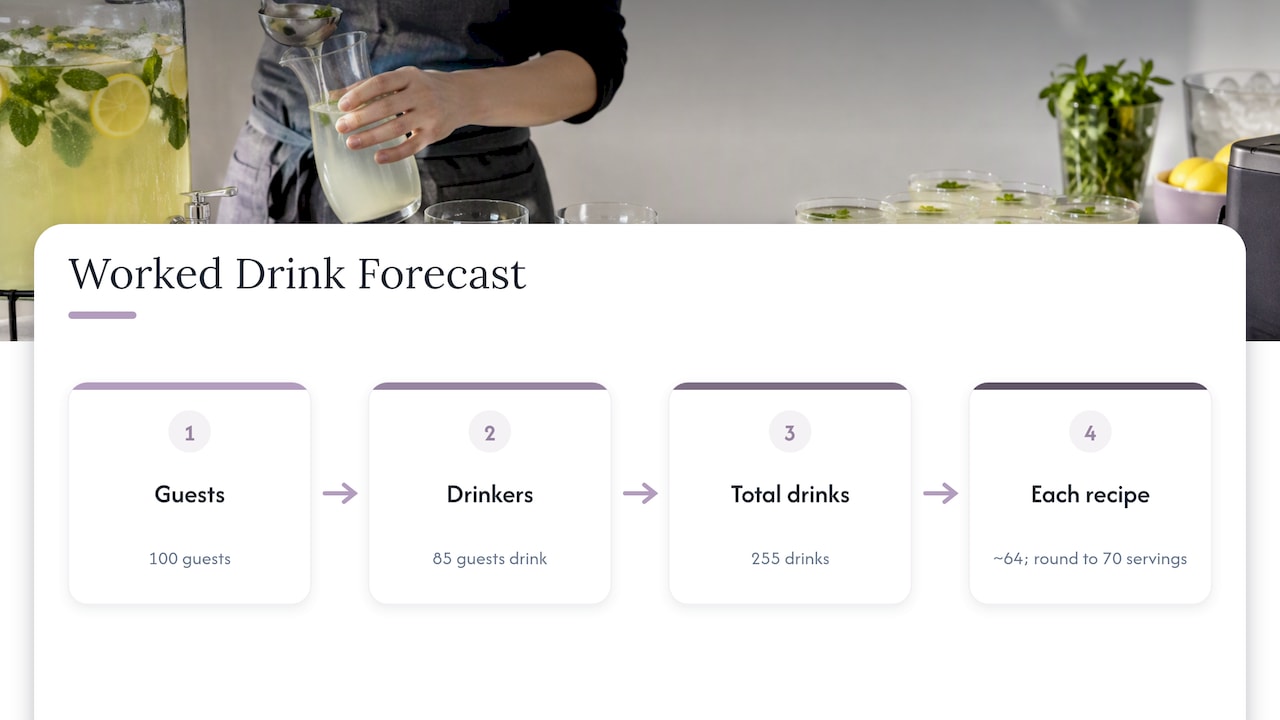
Now you have a serving count for each recipe. That is the number you scale.
The batching math
Step 1: Scale the recipe
Take a recipe you have tested at single-serving size, and multiply every liquid by the number of servings. The word tested matters. One scaling guide says to multiply a tested single-serving recipe by the servings and plan how it will be chilled, diluted and finished. Don’t scale an untested recipe to 70 servings and discover the problem at the event.
Example: a simple margarita-style drink.
| Ingredient | Per serving | 50 servings |
|---|---|---|
| Tequila | 2 oz | 100 oz |
| Fresh lime juice | 1 oz | 50 oz |
| Orange liqueur | ¾ oz | 37.5 oz |
| Subtotal | 3¾ oz | 187.5 oz |
| Water (20%) | ¾ oz | 37.5 oz |
| Total | 4½ oz | 225 oz (about 1.75 gallons) |
This recipe is an illustration of the math, not a house recipe. Taste it at small scale first.
Step 2: Add the dilution
When a bartender shakes or stirs a drink over ice, the ice melts into it. That water is part of the recipe. In a batch there is no ice contact, so you add the water yourself.
A widely used approach from a batching guide by Tom Macy: if the batch will be made ahead, add 20% water relative to the batch volume (about three-quarters of an ounce per serving) and chill it for two hours or more. If you’ll serve it immediately, add 15% water plus ice at the pour. His guide suggests a cup of ice per 10 drinks for the immediate method.
Decide which camp you’re in before the event. Most event batches are made the day of or the day before, so the 20% add-and-chill method fits.
The JL Cocktail Co guide also stresses defining what your dilution percentage means. Percent of what? Of the spirit, of the total liquid, of the finished drink? Write the definition on your prep sheet so two people don’t read “20%” two different ways.
Step 3: Turn volume into containers
225 ounces doesn’t mean much when you’re standing in a warehouse. Convert it:
- 128 ounces make a gallon, so the 50-serving batch above is just under two gallons.
- A standard 750 ml bottle holds about 25.4 ounces. Your 100 ounces of tequila is roughly four bottles.
- Decide on the dispensing container (beverage dispenser, labeled carboy, or sealed bottles) and check that your batch fits with room to spare.
Then build your shopping list from the totals and add a buffer. The guide above calls the result an auditable order: anyone can check how you got from guests to bottles.
Separate the batch from the finish
The biggest mistake we see with home-batched drinks is putting everything in one container. Some things belong in the batch. Others belong at the bar.
Batch these:
- Spirits, liqueurs and vermouths
- Syrups and bitters
- Water for dilution
- Citrus juice, if the batch is made the same day or the day before (see timing below)
Hold these back:
- Sparkling ingredients. Champagne, prosecco, soda and tonic go flat. Elixiary’s guide advises keeping sparkling ingredients separate until service and not assuming every drink can be mixed days ahead.
- Ice. It dilutes unpredictably. Put it in the glass, not the batch.
- Fresh herbs and garnish. Mint turns dark and bitter sitting in liquid. Cut garnish the day of and keep it cold.
- Dairy, cream and egg. These are food-safety questions as much as flavor questions. Skip them in a batch unless a licensed professional is handling them.
Timing for citrus
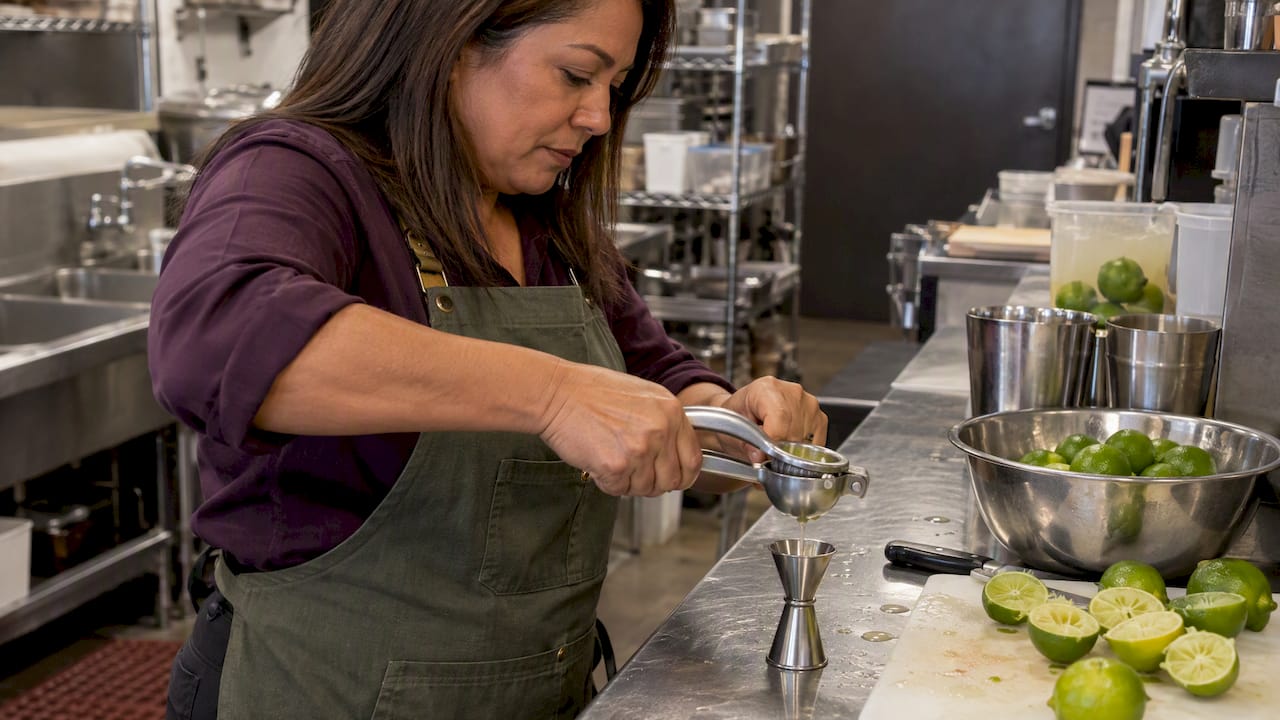
Fresh citrus juice is bright for a limited window. Our practical rule: squeeze it the day of the event or the day before, and keep it cold. Different guides give different windows, so test your own recipe a day before and taste it. If the juice has dulled, you will notice.
Picking drinks that batch well
The top-ranking pages are mostly lists of recipes: sangria, punch, spiked lemonade, margaritas, spritzers. Those are good starting points. For an event, though, choose by logistics as much as flavor.
| Drink style | Batches well? | Notes |
|---|---|---|
| Margarita, daiquiri | Yes | Add water, chill, serve over ice. Watch citrus timing. |
| Old Fashioned, Manhattan, Negroni | Very well | Spirit-forward, stable, can be bottled ahead. |
| Sangria, punch | Yes | Add fruit and any sparkling element late. |
| Spritz, mimosa-style | Partly | Batch the base, top with sparkling at the pour. |
| Mojito, smash | Poorly | Needs fresh muddled herb. Offer one pre-built base instead. |
| Anything with egg white | No | Keep for à la carte service by a bartender. |
Make it fit the event
For weddings, a cocktail guide suggests that signature drinks work when they tell a story and stay accessible across generations and palates, avoiding extreme bitterness. That means your batch should be something your 25-year-old cousin and your 70-year-old uncle both reach for. If you want ideas, see our posts on signature wedding cocktail ideas for Las Vegas couples and craft cocktail wedding menu examples. Our bachelorette party drinks post covers three batchable pours built for photos.
For corporate receptions, keep the menu short and the pours consistent. A branded signature drink and one lighter option usually do more than a long list. We go deeper in corporate cocktail reception best practices for planners.
Don’t forget guests who don’t drink. Our guide to building a wedding reception mocktail menu shows how to batch a non-alcoholic option with the same care, and a mocktail batch is the easiest place to start since you’re not dealing with alcohol rules.
Chilling, storing and serving safely
A batch tastes best cold, and cold is also the sensible way to hold anything perishable. Alcohol-heavy batches are different from food, but your batch may contain fresh juice, fruit or syrup, and those are perishable.
Some practical rules:
- Chill the batch for at least two hours before service if you added water for the make-ahead method.
- Use food-grade containers that are clean and sealed. Don’t use anything that held cleaning products.
- Keep dispensers out of direct sun. Las Vegas and Henderson summer events can run hot, and a dispenser on an unshaded patio warms quickly. Put a block of ice or a chilled core in the dispenser rather than loose ice that waters it down.
- Refill from a chilled backup container, not by topping up a warm one.
If your event also serves food, the venue or caterer will have its own cold-holding rules. Food codes treat some items as needing refrigeration, and note that sealed beer and soda are not in that category. That is about retail beverages, not your fresh-juice cocktail, so ask your venue what applies to a batch made with perishable ingredients.
Label the batch for the person pouring
The person pouring at 9 p.m. is often not the person who made the batch at 2 p.m. A clear label prevents mistakes. Each container should show:
- The drink name
- The ingredients, including the base spirit and any known allergens (citrus, nuts in orgeat, dairy)
- The date and time it was made
- The dilution method, such as “20% water added, serve over ice”
- What gets added at the bar, like “top with prosecco” or “garnish with lime wheel”
The food-safety guidance in one health department’s Food Code summary says to label food for content and date. Treat your batch with the same discipline: if you can’t say what’s in a container and when it was made, don’t serve from it.
Keep a one-page prep sheet with the recipe, serving count, total volume and container list. If a bartender or friend takes over mid-event, they can read it and keep going.
The Las Vegas and Henderson question: who is allowed to serve?
Here is where DIY batching stops being a pure recipe question. In Nevada, serving alcohol to guests is not always the same as pouring for friends at home.
The City of Las Vegas business license instructions describe a full alcohol on-premise license as authorizing sales for consumption within the licensed establishment, and say it may be eligible to provide catering at events with an approved permit. In other words, catering alcohol at an event runs through licensing and permits, not just a bartender with a shaker.
The rules differ depending on whether guests pay for drinks, who provides the alcohol, the venue, and the jurisdiction (Las Vegas, Henderson, Clark County or a resort property). Before you plan a large event, ask your venue about their alcohol policy, and for specifics, contact the city or county licensing office directly. We’re not a substitute for that office, and nothing here is legal advice.
What we can say from experience is that venues and corporate clients want proof of insurance and compliance with local code. A licensed, insured team handles that paperwork as part of the booking.
Our perspective: when batching helps and when it hurts
We only work in Las Vegas and Henderson, and we’ve spent over 20 years behind bars at weddings, corporate events and private parties. Here is how we think about batching.
Batching is a tool for speed, not a shortcut around craft. The best use is on one or two signature drinks that carry the event’s theme, while the rest of the bar stays à la carte. That way, the line moves and guests still get a real bartender for the Old Fashioned or the vodka soda with a twist.
We batch the base and finish at the bar. A pre-mixed, pre-diluted base poured over fresh ice and garnished by a person looks and tastes like a made-to-order drink, and guests are never waiting on a shaker.
We test every recipe at scale before the event. A drink that works at one serving can taste different at 70, especially when citrus is involved.
And we’re honest when batching is the wrong call. A craft-forward cocktail menu with six recipes needs bartenders, not pitchers. A mixed crowd that includes guests who want custom drinks needs a full bar. Batching is for the signature moments.
— Brennon
What the pros handle that a pitcher can’t
Batching at home is realistic for a backyard party or a bridal shower. It gets harder at scale:
- Volume. 300 servings is 15 to 20 gallons of liquid to mix, chill, store and keep cold.
- Service. Someone has to pour, garnish, check IDs, and cut off a guest who has had enough.
- Logistics. Bars, glassware, ice, trash, power and setup all have to arrive and leave on time.
- Compliance. Licensing, insurance and venue rules.
That is where a mobile bar service earns its fee. If you want the bar itself covered, our bar rental packages include setup. If you have your own supplies and need only people behind the bar, look at dry hire staffing. For more on what to expect from a proposal, read what a bar package includes.
Work with us on your Las Vegas or Henderson event
Liquid Courage is a mobile bartending and liquor catering company serving Las Vegas and Henderson, Nevada. We build menus with batched signature drinks, branded bar options and professional bartenders who finish every pour. Planning a wedding? See our wedding services. Hosting a company event? Visit our corporate events page. For anything else, start at liquidcouragelv.com and tell us your date, headcount and venue.
A prep timeline you can copy
| When | What to do |
|---|---|
| 2 to 4 weeks out | Confirm headcount, hours and venue alcohol policy. Choose the recipes. |
| 1 to 2 weeks out | Test each recipe at small scale. Fix the proportions. Write the prep sheet. |
| 3 to 5 days out | Order spirits, mixers, glassware, containers and ice. |
| Day before | Mix the batch with water. Chill. Label. Squeeze citrus if the recipe calls for it. |
| Event day | Taste a sample from the batch. Set up dispensers cold. Cut garnish. Prepare sparkling toppers. |
| Service | Ice in the glass, pour the batch, finish and garnish. Keep a chilled backup container. |
If the tasting test fails, fix it one variable at a time: too sharp means a touch more water or sweetener, too flat means a bit more citrus, too boozy means more water before you add anything else.
FAQ
How far ahead can I batch cocktails for an event?
It depends on the ingredients. Spirit-forward drinks with no fresh juice keep well for days when sealed and chilled. Drinks with fresh citrus are best mixed the day before or the day of, and sparkling ingredients should be added at service. One scaling guide cautions that not every drink can be mixed days ahead.
How much water do I add to a batched cocktail?
A common starting point is 20% of the batch volume if you’ll chill it ahead, or 15% if you’ll serve it right away over ice. Taste a sample at serving temperature and adjust in small steps. Write the percentage on your prep sheet.
How many batched drinks do I need for 100 guests?
Start from how many guests drink, how many hours the bar is open and how many drinks are batched versus poured to order. In our example, 85 drinkers at about three drinks each gave around 255 drinks, which we split across two recipes with some extra. Your number will differ, so use your own forecast.
Can I serve batched cocktails myself at a Las Vegas venue?
It depends on the venue, whether drinks are sold or free, and local licensing. The City of Las Vegas says catering with a full on-premise alcohol license requires an approved permit. Ask your venue first, then confirm with the city or county licensing office.
Do batched cocktails work for weddings?
Yes, for one or two signature drinks. A wedding bar guide suggests pairing two signature cocktails with beer, wine and a non-alcoholic option. Batching keeps the line moving while guests who want something else can still order from the bar.
Sources
- How to batch cocktails for an event, JL Cocktail Co
- Batching Cocktails, Tom Macy
- Batch Cocktails for Parties: Scaling Recipes and Serving, Elixiary
- Wedding Cocktails & Signature Drinks, CocktailFYI
- Wedding Bar Guide, Plan A Wedding
- Business License Instruction Sheet, City of Las Vegas
- How Much Alcohol to Buy for a Wedding
- FDA Food Code cold-holding, Suncoast Cold Systems
- FDA Food Code 2023, Greenwich Health Department