
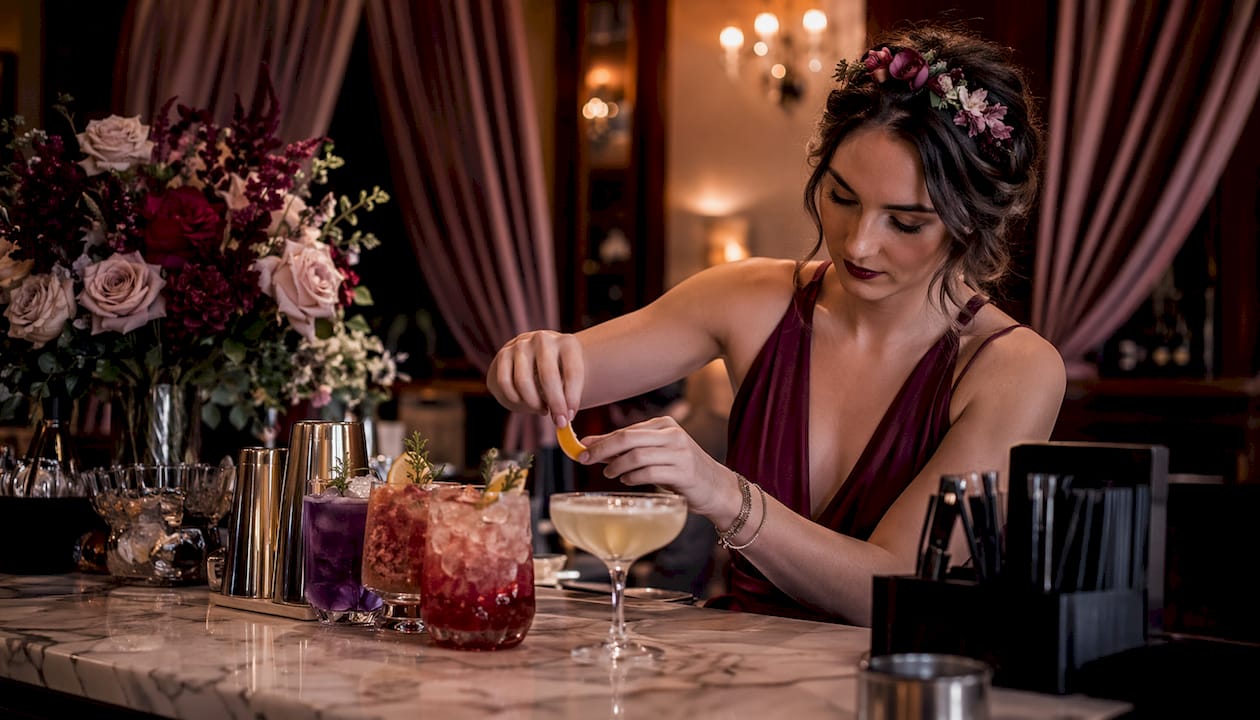
The best craft cocktail wedding menus lead with three to five well-chosen drinks: one light and refreshing, one spirit-forward, one seasonal, and at least one non-alcoholic option that looks just as beautiful as the rest. Experts recommend limiting a wedding signature cocktail menu to that focused range to keep bar lines short and quality consistent. Here are the standout choices that work across nearly every wedding style:
- Negroni — Gin, Campari, and sweet vermouth in equal parts. Bitter, bold, and endlessly photogenic. Swap the house gin for the groom’s favorite bottle and it becomes a personal statement.
- Aperol Spritz — Prosecco, Aperol, and a splash of soda. That vivid orange color photographs beautifully and the low ABV keeps the cocktail hour relaxed.
- Whiskey Sour — Bourbon, fresh lemon juice, and a touch of simple syrup. A crowd-pleaser that bridges generations and takes a seasonal twist easily (think cider and cinnamon in fall).
- Moscow Mule — Vodka, ginger beer, and lime. Served in a copper mug, it doubles as a keepsake favor. Sweet, spicy, and universally liked.
- Pimm’s Cup — Pimm’s No. 1, lemon juice, and soda. Fruit-forward and refreshing, especially for outdoor summer receptions.
- Classic Elderflower Spritz — Prosecco, elderflower liqueur, soda water, and a lemon twist. Light, low-ABV, and elegant for daytime or garden ceremonies.
- Non-Alcoholic “Citrus Kiss” — Sparkling water, orange juice, lime, simple syrup, and a rosemary garnish. Serve it in identical glassware to the alcoholic options so every guest feels equally considered.
Craft cocktail wedding menu examples by season and theme
Seasonal ingredients do more than taste better. They set a mood. A spring menu built around lavender and elderflower reads completely differently from a fall menu anchored in apple cider and maple, and guests feel that difference the moment the drink lands in their hand. Tailoring cocktails by season ensures better ingredient quality and reinforces the atmosphere you have already built through your florals, venue, and decor.
Spring: Fresh, Floral, and Light
- Lavender Lemon Gin Fizz — Gin, house-made lavender syrup, fresh lemon, club soda. Garnish with dried lavender and a lemon wheel.
- Strawberry Basil Vodka Spritz — Vodka, muddled strawberry, basil syrup, prosecco finish. A fresh basil sprig on top makes it look like a garden centerpiece.
- Elderflower Hugo Spritz — Prosecco, elderflower liqueur, mint, lime. One of the easiest drinks to pre-batch without losing carbonation.
Summer: Cool, Crisp, and Photogenic
- Watermelon Mint Cooler — Vodka or tequila, fresh watermelon juice, mint, lime. Garnish with a thin watermelon slice for an instant social media moment.
- Pineapple Coconut Mojito — White rum, coconut water, pineapple, lime, mint. A toasted coconut rim adds texture and aroma.
- Cucumber Elderflower Collins — Gin, cucumber press, elderflower, soda. Pale green, delicate, and pairs beautifully with light passed appetizers.
Fall: Warm, Spiced, and Comforting
- Spiced Apple Cider Whiskey Sour — Whiskey, fresh cider, cinnamon clove syrup. A dehydrated apple slice and cinnamon stick make the garnish as striking as the drink.
- Maple Old Fashioned — Bourbon, maple syrup, bitters, orange peel. Serve under a smoked glass dome for a dramatic tableside reveal.
- Pear and Rosemary Gin Spritz — Gin, roasted pear syrup, tonic, torched rosemary sprig. The torched herb fills the room with aroma.
Winter: Cozy, Rich, and Celebration-Ready
- Vanilla Espresso Martini — Vodka, coffee liqueur, vanilla syrup. Three espresso beans on top and a micro-foam design make it the most photographed drink of the night.
- Cranberry Rosemary Gin Sparkler — Gin, cranberry, rosemary, prosecco, sugared rosemary sprig. Deep red color reads beautifully against candlelight.
- Spiked Hot Chocolate Bar — Whiskey, Baileys, or peppermint schnapps options with a toasted marshmallow topper. Ideal for outdoor winter ceremonies.
Pro Tip: Pre-batch cocktails by mixing all spirits, citrus, and sweeteners in advance. Add carbonated elements like soda, prosecco, or ginger beer only at service. A carbonated pre-batch goes flat within an hour, but a properly diluted base holds overnight in the refrigerator and pours consistently all evening.
How to choose the right wedding cocktail menu
Start with your guest list, not your personal favorites. A multi-generational crowd at a 200-person reception needs approachable flavor profiles. Cocktails that are overly bitter or intensely spirit-forward will sit untouched while guests default to beer and wine. The goal is drinks that feel personal to you but are genuinely enjoyable for everyone.
A focused wedding drink menu of three to five cocktails also keeps bar service moving. Every additional option adds decision time, prep complexity, and the risk of running short on a key ingredient mid-reception.
- Consider your season and venue first. A summer garden wedding calls for light, citrusy options. A winter ballroom suits bourbon or spiced cocktails. The setting should inform the spirit base before anything else.
- Balance the flavor spectrum. Aim for one light and low-ABV option, one spirit-forward choice, one seasonal or themed cocktail, and one non-alcoholic mocktail. That four-drink structure covers nearly every guest preference.
- Keep ABV in a reasonable range. Most wedding cocktails work best between 12% and 20% ABV. Drinks above that threshold tend to slow guests down early in the evening.
- Check ingredient availability with your bartender. Fresh watermelon juice is easy to source in july. It is not in december. Your bartender can flag substitutions before they become a problem on the day.
- Budget realistically. Fresh-squeezed citrus, premium spirits, and specialty syrups add up quickly when you are scaling for 150 guests. A batch margarita scaled for a large number of guests requires carefully planned proportions of blanco tequila, Cointreau, and fresh lime juice to maintain balanced flavor. Plan ingredient quantities before you finalize the menu.
Bar service timing matters as much as the cocktail list itself. A well-designed menu falls apart if the bar is understaffed or the setup does not support the volume.
How to personalize and name your signature cocktails
The most successful wedding cocktails are rarely invented from scratch. They are classics renamed and slightly adjusted to reflect the couple’s story, which makes them immediately familiar to guests while still feeling personal. A Negroni becomes “The Rossi Rendezvous” when the couple met in Rome. A Moscow Mule becomes “The Music City Mule” for a Nashville love story.
Naming strategies that consistently work:
- Use your last name. “The Smiths Spritz” or “The Garcia Gimlet” is simple, readable on a menu sign, and unmistakably yours.
- Reference a meaningful location. Where you met, got engaged, or honeymooned gives the drink a story guests will ask about.
- Include a pet or inside joke. “Duke’s Daiquiri” or “The Mint to Be Mojito” lands with guests who know you and charms the ones who do not.
- Play on wedding language. “Wedding Bell-ini,” “Bloody Marry Me,” and “Mai Tai the Knot” are crowd favorites for a reason.
Visual presentation carries as much weight as the name. Cocktail color and garnishes contribute directly to social buzz and event atmosphere. A framed menu sign with the drink’s name and a two-line story about why you chose it becomes a conversation piece at the bar. Coordinated glassware, edible flowers, and a garnish station where guests can dress their own drinks add an interactive layer that photographs well.
Mocktails deserve the same naming care. A “Citrus Kiss” or “Garden Glow” served in identical glassware to the alcoholic options ensures non-drinking guests feel genuinely included, not accommodated as an afterthought. Identical glassware and garnishes for both alcoholic and non-alcoholic drinks maintain an elegant, cohesive bar aesthetic.
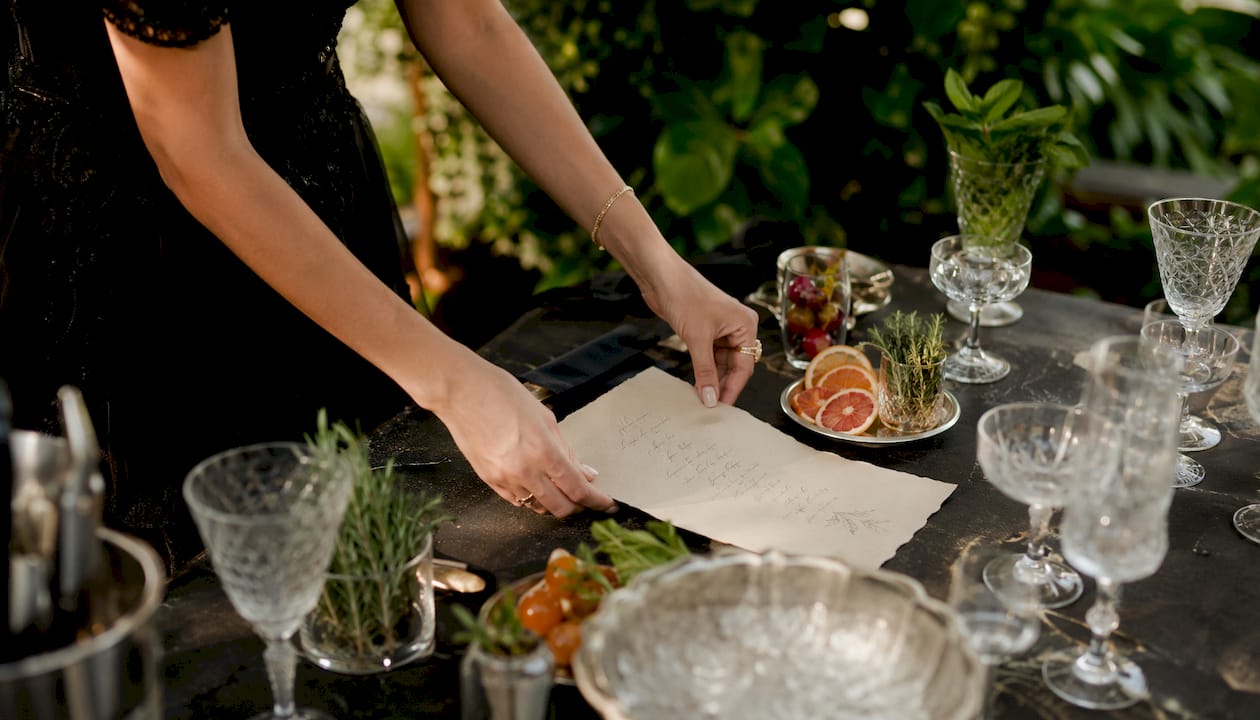
If you are planning a honeymoon yacht charter or a destination celebration, the location itself can inspire the cocktail name and flavor profile, tying the whole event together.
2026 wedding cocktail trends worth knowing
The clearest signal from 2026 is a return to recognizable classics, but with a personal layer added. Malysa Volpicelli, director of events at Manhatta in New York City, put it directly:
That philosophy translates into a few concrete shifts couples are making right now:
- Seasonal ingredients over generic syrups. Fresh berries in summer, spice-infused syrups in fall. The difference in flavor is immediate, and guests notice.
- Visual appeal as a design element. Drinks are part of the decor. A vivid Aperol Spritz or a deep-red Cranberry Rosemary Sparkler on a white tablecloth reads as intentional styling, not just refreshment.
- Pre-batching as standard practice. Pre-batching cocktails is the most reliable way to ensure service speed and drink consistency at a large reception. Mix spirits, citrus, and sweeteners in advance; add sparkling elements at service.
- Mocktails with equal effort. A non-alcoholic signature drink that is as thoughtfully prepared and visually appealing as the alcoholic options ensures every guest feels valued, not just accommodated.
- Identical glassware across the bar. Serving alcoholic and non-alcoholic drinks in the same glass removes any visual distinction that might make sober guests feel singled out.
The couples who get this right treat the bar as a hospitality moment, not a logistics problem. Every drink that leaves the bar should look like it belongs at the wedding.
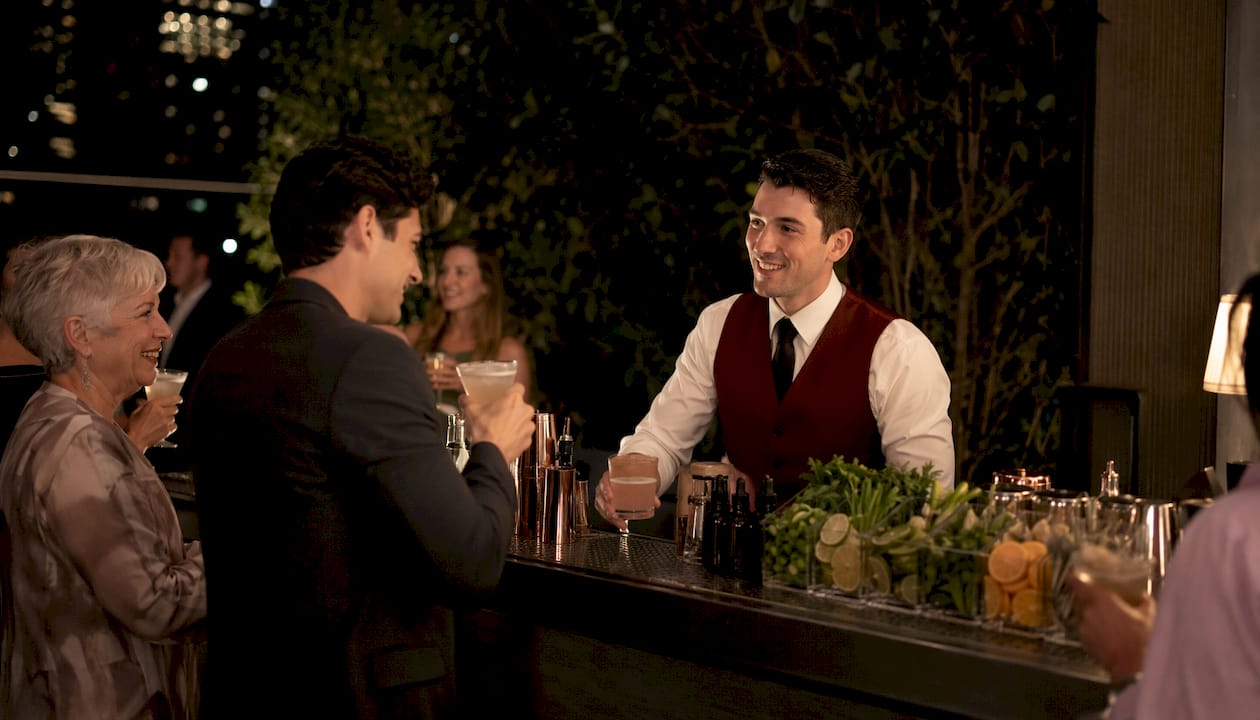
Let Liquidcouragelv build your wedding cocktail menu
Liquidcouragelv is a mobile bartending company serving Las Vegas and Henderson, Nevada. The team brings professional bar setup, premium spirits, and experienced bartenders directly to your venue, so you get a polished cocktail experience without coordinating multiple vendors.
Whether you want a focused three-drink signature menu or a full open bar paired with two named cocktails, Liquidcouragelv handles the planning, scaling, and execution. Learn more about wedding beverage catering in Las Vegas, or review the liquor catering contract checklist before your first vendor conversation.
Key Takeaways
A focused craft cocktail wedding menu of three to five drinks, built around seasonal ingredients and at least one non-alcoholic option, delivers the best guest experience and the smoothest bar service.
| Point | Details |
|---|---|
| Limit the menu to three to five cocktails | Fewer choices speed up bar service and reduce the risk of running short on ingredients. |
| Balance flavor profiles | Include one light option, one spirit-forward choice, one seasonal cocktail, and one mocktail. |
| Pre-batch before the event | Mix spirits, citrus, and sweeteners in advance; add carbonated elements only at service. |
| Use identical glassware for all drinks | Serving mocktails in the same glass as cocktails keeps the bar aesthetic cohesive and inclusive. |
| Name cocktails with your story | Renaming a classic after a meaningful place, person, or inside joke makes it distinctly yours. |