
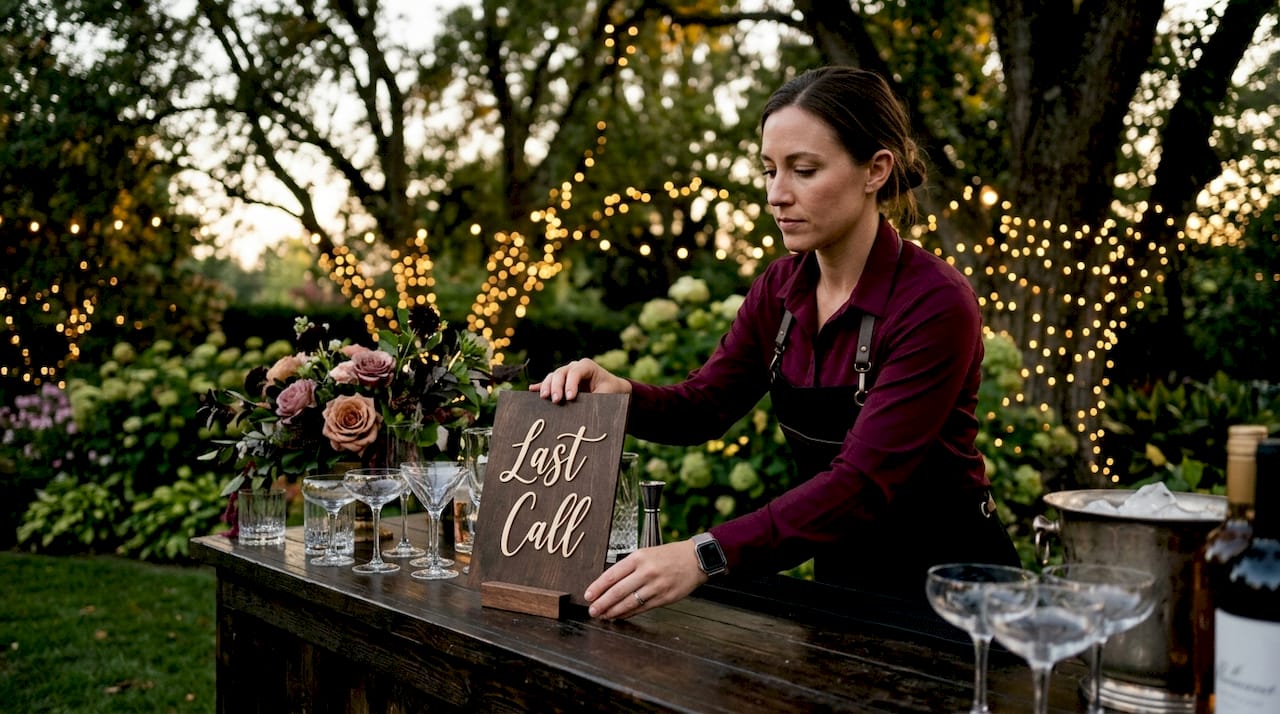
Managing the last call at your wedding reception bar is the single most important step to ending your celebration on a high note rather than in confusion. In Las Vegas and Henderson, where venue liquor licenses carry strict bar end-times, a poorly executed last call can result in fines, permit reviews, or an abrupt shutdown that kills the mood. The industry term for this process is “bar closure management,” and it covers everything from timing announcements to coordinating staff roles. Done right, it keeps guests comfortable, keeps you compliant, and keeps the party feeling like it ended on your terms.
How to manage last call at your wedding reception bar
The foundation of smooth bar closure management is preparation, not improvisation. Couples who plan their last call sequence in advance avoid the frantic scramble that turns a beautiful reception into a stressful memory. Three elements drive that preparation: assigning a show caller, confirming venue policies, and building a written timeline.
Assign a show caller before the wedding day
A show caller is the single person responsible for executing your reception timeline, including the bar close. This role typically falls to your wedding planner, DJ, or MC. Designating a show caller is a best practice specifically because it removes you from having to make real-time decisions on your wedding day. You should be dancing, not watching the clock.
The show caller holds a pre-written timeline that includes every cue: first dance, cake cutting, and the last call signal. That document becomes the operating manual for your entire vendor team. Without it, your bartenders, DJ, and venue coordinator are each working from their own assumptions.
Confirm venue policies and bar end-times
Las Vegas and Henderson venues tie their bar end-times directly to their liquor permits. Going even 15 minutes past the permitted close can trigger fines or a permit review. That is not a risk worth taking on your wedding night. Confirm the exact bar close time in writing with your venue coordinator at least two weeks before the event.
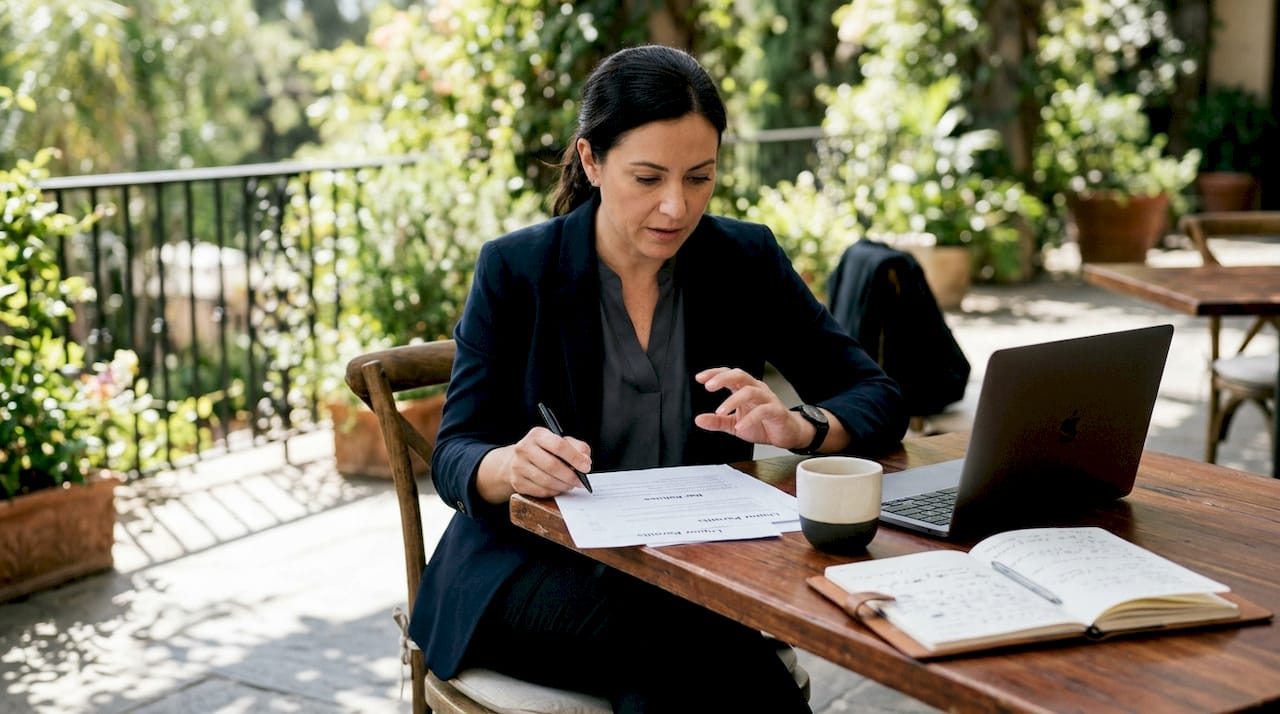
Your wedding liquor catering contract should spell out the permitted bar hours, the name of the responsible server, and what happens if service runs long. If it does not, ask for an amendment before you sign.
Build a written reception timeline with last call cued in
The timeline is not just for the show caller. Share it with your bartenders, your DJ or MC, and your venue coordinator. Each person needs to know the bar close time and their specific role in the transition. A pre-written timeline with a last call cue is the clearest way to keep every vendor aligned.
- Confirm bar close time with the venue in writing
- Add the last call cue to the master timeline, 30 minutes before close
- Share the timeline with bartenders, DJ or MC, and venue coordinator
- Assign the show caller as the single point of contact for real-time adjustments
Pro Tip: Schedule a five-minute vendor huddle at the start of your reception to confirm the last call time verbally with every team member. Written timelines get forgotten; a quick face-to-face confirmation sticks.
How do you announce last call without disrupting the party?
The announcement itself is where most couples get it wrong. A jarring microphone interruption in the middle of a packed dance floor creates a rush to the bar, not an orderly wind-down. The goal is a transition that guests barely notice until they realize the bar has closed.
Announcing last call 30 minutes before bar service ends is the industry standard. That window gives guests enough time to get one final drink without feeling cut off, and it gives your bartenders time to manage the flow without being overwhelmed. Thirty minutes is not arbitrary. It is the result of consistent experience across thousands of receptions.
Three announcement styles to consider
Verbal announcement via DJ or MC. The DJ or MC makes a brief, upbeat announcement: “Last call is in 30 minutes, so head to the bar now if you’d like one more drink.” This works well for receptions where guests are already mingling rather than dancing. Bartenders lack microphone access and the formal authority to make this call, so the DJ or MC must own it.
Silent last call. The show caller signals bartenders to stop making new cocktails and begin steering guests toward non-alcoholic options. No announcement is made. Silent last call methods avoid interruptions and reduce the crowd rush that a verbal announcement can trigger. This approach works best when your bartenders are experienced and your guest count is manageable.
Graduated service shift. The bar transitions from full spirits service to beer and wine only. Guests still have options, but the pace of consumption naturally slows. This method pairs well with either a verbal or silent announcement.
- Verbal announcement: best for mingling crowds, delivered by DJ or MC
- Silent last call: best for dance-floor-heavy receptions with experienced bar staff
- Graduated shift: works alongside either method to slow consumption organically
Pro Tip: Ask your DJ to time the last call announcement between songs, not during one. Cutting the music to announce last call feels abrupt. Slipping it in during a natural pause keeps the energy intact.
What service strategies help manage drink flow near closing time?
Changing how you serve drinks in the final hour is one of the most effective tools for a smooth bar close. Transitioning from a full open bar to beer and wine only in the last 60 minutes slows consumption, reduces costs, and prevents the last-minute drink piling that creates chaos at the bar.
The logic is straightforward. Cocktails take longer to make and are consumed faster. Beer and wine require less bartender time per drink, which means your staff can handle a higher volume of guests without falling behind. The shift also signals to guests, without a formal announcement, that the evening is winding down.
Service transition options for the final hour
| Service Phase | Drinks Available | Purpose |
|---|---|---|
| Full reception (hours 1–4) | Full open bar | Guest satisfaction and celebration |
| Final 60 minutes | Beer and wine only | Slow consumption, reduce bar rush |
| Final 15 minutes | Non-alcoholic options only | Orderly close, compliance buffer |
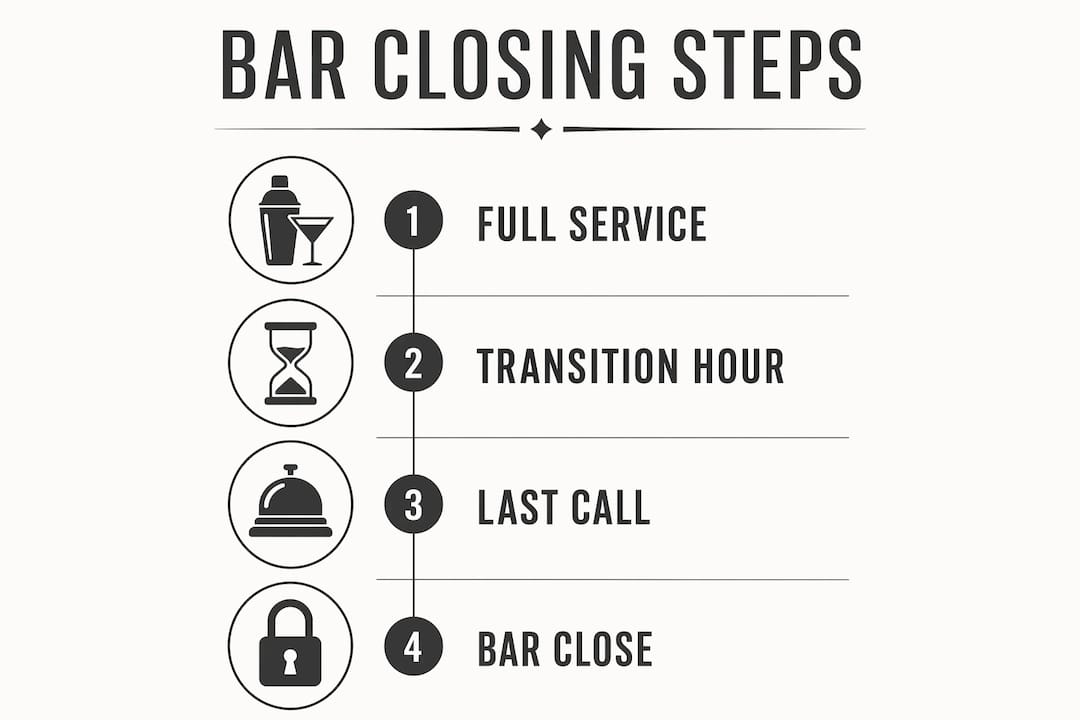
Staffing during the transition matters. If you started the reception with two bartenders, keep both through the final hour. Reducing staff too early creates lines, which creates frustration, which creates the exact rush you are trying to avoid. Graduated service shifts work best when the bar remains fully staffed through the close.
Pro Tip: Pre-stock the bar with extra water, sparkling water, and a non-alcoholic signature drink for the final 15 minutes. Guests who are not ready to stop socializing will reach for something, and giving them an appealing option keeps the mood positive.
How do you troubleshoot last call problems before they start?
The most common last call mistakes are predictable, and every one of them is preventable with the right plan in place.
Relying on bartenders to manage the announcement. Bartenders are focused on service. They are not positioned to make crowd-wide announcements, and in most Las Vegas venues, they do not have microphone access. The show caller and DJ or MC own the announcement. Bartenders execute the service shift.
Allowing guests to hoard drinks. When last call is announced, some guests will order three or four drinks at once. A shift to beer and wine only naturally limits this behavior because the drinks are lower-stakes. If you are running a full open bar through close, instruct your bartenders in advance to limit orders to two drinks per person at last call.
Missing the venue’s permitted close time. This is the highest-risk mistake for Las Vegas and Henderson couples. Venue liquor licenses enforce bar end-times strictly, and a delay can trigger fines or a permit review. Set a phone alarm for the show caller 35 minutes before close as a backup to the written timeline.
“The show caller is the single most overlooked role in reception planning. Every couple wants a smooth last call, but without one person holding the timeline and making real-time calls, the bar close becomes a group decision. Group decisions at 10:45 PM never go well.”
If guests resist last call or rush the bar, the show caller steps in to redirect. The DJ can shift to a high-energy song that pulls people back to the dance floor. Non-alcoholic drinks at the bar give guests something to hold. The goal is redirection, not confrontation.
Key Takeaways
Smooth bar closure management at a Las Vegas or Henderson wedding reception requires a show caller, a written timeline, a graduated service shift, and strict compliance with venue liquor license end-times.
| Point | Details |
|---|---|
| Assign a show caller | One person holds the timeline and makes real-time last call decisions. |
| Announce 30 minutes early | Industry standard timing prevents chaos and gives guests a fair wind-down window. |
| Shift to beer and wine | Transitioning service in the final hour slows consumption and reduces bar rush. |
| Confirm venue bar end-times | Las Vegas and Henderson venues enforce permitted close times strictly; confirm in writing. |
| Keep bar staff through close | Reducing bartenders too early creates lines and frustration near last call. |
What I’ve learned about last call after working Las Vegas receptions
Every couple I talk to has thought about the first dance, the cake, and the send-off. Almost none of them have thought about last call until I bring it up. That gap is where receptions fall apart at the end.
The show caller role changed everything for the couples I’ve worked with through Liquidcouragelv. When one person owns the timeline, the couple stops watching the clock. They stop worrying about whether the bartenders know when to stop. They just enjoy the night. That shift in mindset, from manager to guest at your own wedding, is worth every minute of planning it takes to get there.
Las Vegas venues are not forgiving about bar end-times. I have seen receptions where the bar ran 20 minutes long because no one confirmed the close time with the venue coordinator. The couple paid for it, literally. Verify the permitted close time, write it into your contract, and give your show caller a backup alarm. That combination has never failed.
The bar service timing conversation should happen at your first planning meeting, not the week before the wedding. The earlier you lock in the timeline, the more options you have to adjust it.
— Brennon
How Liquidcouragelv supports your wedding bar close
Planning a smooth last call starts with having the right team behind the bar.
Liquidcouragelv provides mobile bartending and liquor catering services exclusively in Las Vegas and Henderson. Every event includes professional bartenders who understand local venue licensing requirements and know how to execute a clean bar close without disrupting your reception. The team works directly with your show caller, DJ, and venue coordinator to keep the timeline on track. Couples can review the full wedding liquor catering checklist to confirm their bar contract covers close-time compliance, or explore event packages to find the right service level for their guest count and venue.
FAQ
What is the standard last call time at a wedding reception?
Last call should be announced 30 minutes before bar service ends. This window gives guests time to get a final drink without creating a last-minute rush.
Who should announce last call at a wedding reception?
The DJ or MC should make the last call announcement, coordinated by the show caller. Bartenders typically lack microphone access and the formal authority to address the full crowd.
Can you do a silent last call at a wedding?
Yes. A silent last call involves signaling bartenders to stop cocktail service and shift to non-alcoholic options without a public announcement. It works best with experienced bar staff and a smaller guest count.
What happens if bar service runs late at a Las Vegas venue?
Las Vegas and Henderson venues tie bar end-times to their liquor permits. Running even 15 minutes late can result in fines or a permit review. Confirm the exact close time in writing before your wedding day.
How do you prevent guests from rushing the bar at last call?
Transitioning to beer and wine only in the final hour naturally slows the rush. You can also instruct bartenders to limit orders to two drinks per person during the last call window.