
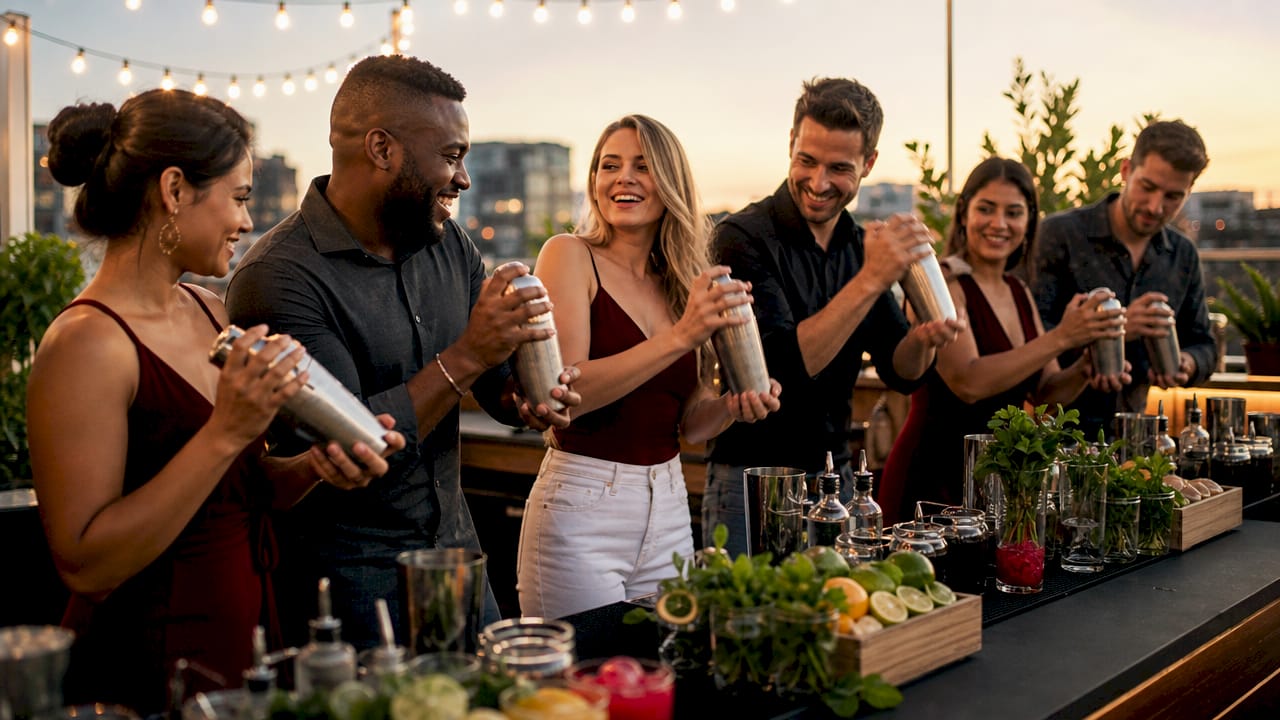
Bartending is defined as one of the most effective hands-on team-building methods available to HR professionals and team leaders in 2026. The role of bartending in team building goes beyond novelty. It creates shared learning experiences that flatten workplace hierarchy, spark natural conversation, and build the kind of camaraderie that passive activities like trivia nights or trust falls simply cannot replicate. Hospitality venues that prioritize staff engagement and morale report 20–30% higher customer satisfaction scores. That same principle applies directly to corporate teams: when people feel connected, performance follows.
How does bartending enhance team collaboration and communication?
Bartending activities build collaboration because they put every participant on equal footing. Hands-on mixology classes flatten professional hierarchy by giving all participants a shared, unfamiliar task. The VP and the new hire are both fumbling with a jigger for the first time. That shared inexperience creates authentic connection faster than any icebreaker script.
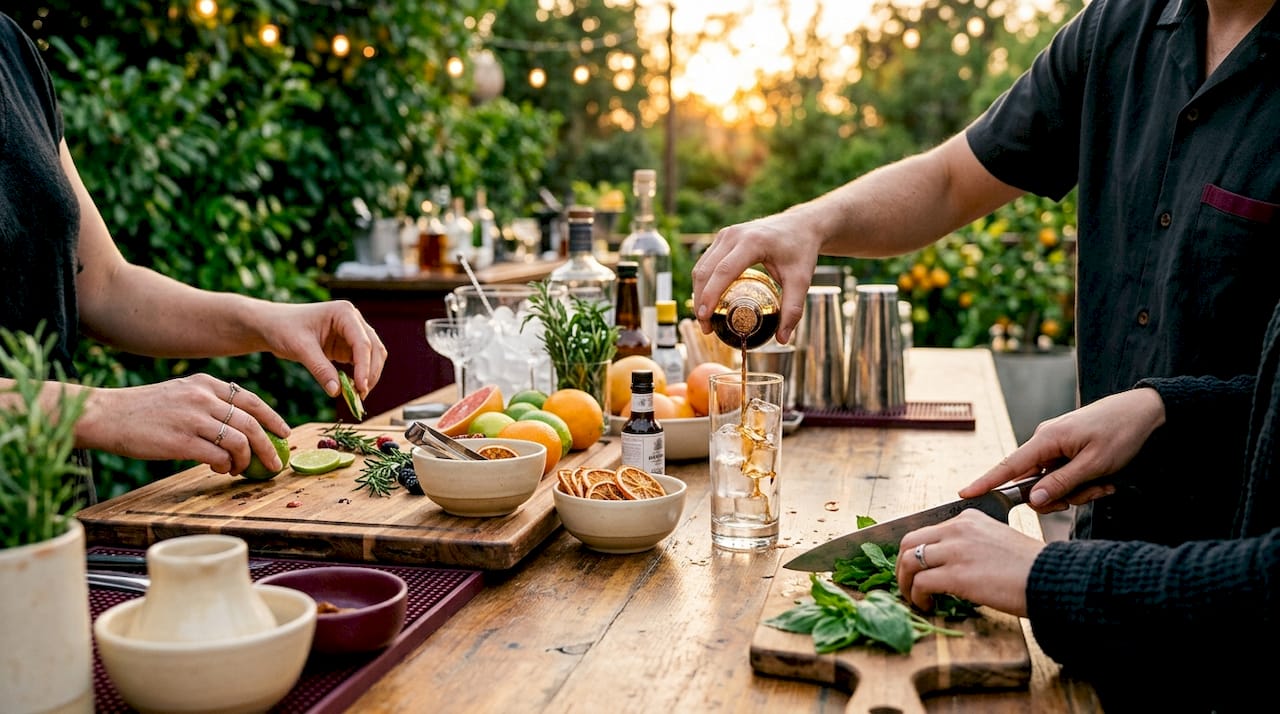
The mechanics of a cocktail class also require real communication. Participants must coordinate, ask questions, and problem-solve together to produce a finished drink. These are the same skills that drive effective workplace teams. The difference is that in a bartending setting, those skills feel natural rather than forced.
Competitive formats add another layer. Cocktail challenges where teams create and present a signature drink introduce friendly pressure that mirrors real project dynamics. Casual formats, like guided tastings or free-build sessions, work better for teams that need to decompress rather than compete.
- Shared task completion builds trust faster than discussion-based activities
- Natural conversation replaces scripted icebreakers when hands are busy
- Friendly competition mirrors workplace project dynamics in a low-stakes environment
- Equal footing removes title-based social barriers between colleagues
Pro Tip: Structure the first 15 minutes as pure instruction with no competition. Let people get comfortable before introducing any challenge element. Teams that feel safe make better drinks and better connections.
What types of bartending events work best for different team goals?
The format of a bartending event determines its outcome. Choosing the wrong format for your team’s culture is the most common mistake HR leaders make with these activities.
| Event format | Best for | Group size | Energy level |
|---|---|---|---|
| Guided mixology class | Onboarding, new team integration | 8–30 people | Relaxed, educational |
| Cocktail challenge | High-performing teams, offsites | 10–40 people | Competitive, energetic |
| Mobile bar experience | Client entertainment, celebrations | 20–100+ people | Social, celebratory |
| Signature cocktail creation | Culture-building, milestone events | 8–20 people | Creative, collaborative |
Guided mixology classes suit onboarding events because they give new hires a structured way to meet colleagues without the pressure of unstructured socializing. Corporate clients consistently rebook mixology events after positive feedback, which signals that the format delivers lasting value rather than a one-time novelty.
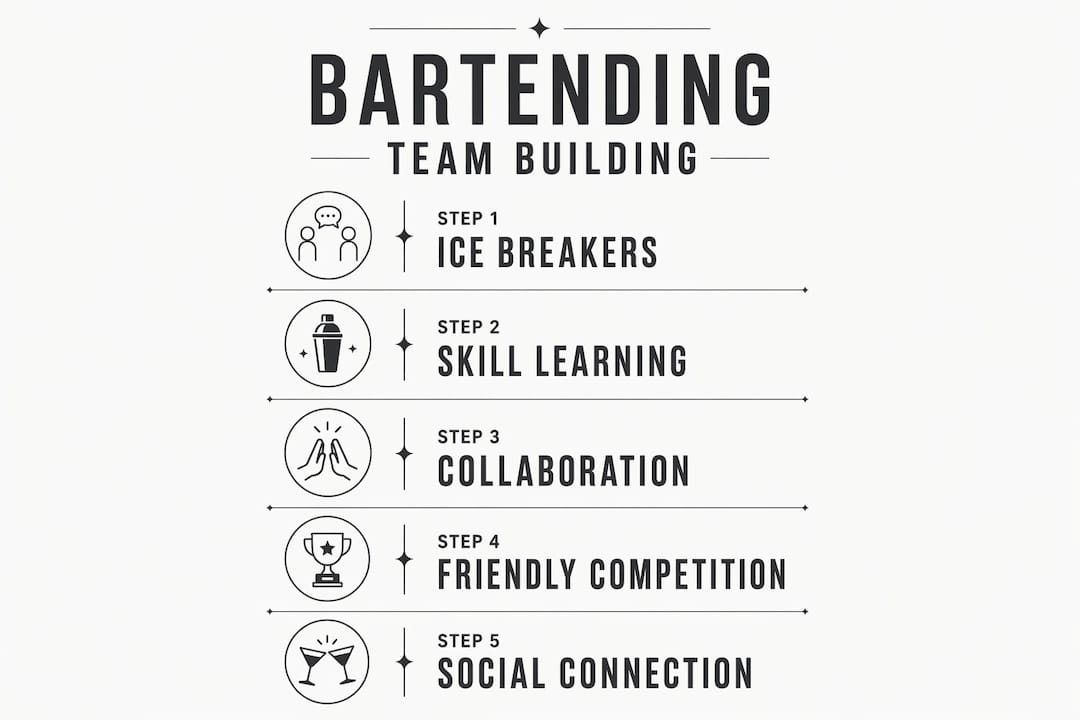
Cocktail challenges work well for established teams that already communicate well but need a shared goal to reignite energy. The creative constraint of building a drink around a theme, like the company’s values or a product launch, produces memorable results. Custom signature cocktails tied to team culture amplify memorability and give teams something to talk about long after the event ends.
Mobile bar setups serve a different purpose. They work best for larger groups where the goal is social connection rather than skill-building. A professional bartender managing the bar frees attendees to focus entirely on conversation, which makes mobile setups ideal for client entertainment or company-wide celebrations. Liquidcouragelv specializes in exactly this format for corporate events in Las Vegas and Henderson, Nevada.
One factor that HR leaders often overlook is inclusivity. Every bartending event should offer a strong mocktail menu alongside cocktails. Weak zero-proof options reduce engagement for non-drinkers and signal that the event was not designed with the full team in mind.
What logistics make or break a bartending team-building event?
Logistics determine whether a bartending event feels polished or chaotic. Getting the setup right is invisible when done well and painfully obvious when done poorly.
-
Choose the right space. Office conference rooms typically lack the counter space and ventilation that cocktail classes require. A dedicated event venue or outdoor space with proper setup gives participants room to work comfortably. Physical space constraints are one of the top reasons mixology events underperform.
-
Pre-prep all ingredients. Professional bartenders measure and organize every ingredient before guests arrive. This invisible labor is what allows the event to flow without dead time. Groups that spend 10 minutes waiting for supplies lose momentum and engagement.
-
Set the right duration. A 90-minute session is the standard for most corporate mixology events. Shorter sessions feel rushed. Sessions longer than two hours risk losing energy in the final stretch, especially for after-work events.
-
Build in a mocktail option from the start. Offer zero-proof versions of every cocktail on the menu. Announce this at the beginning so non-drinkers feel included rather than accommodated as an afterthought.
-
Keep the menu focused. Two or three cocktail recipes per session is the right range. More than that creates confusion and slows the pace. The goal is connection, not a bartending certification.
Pro Tip: Ask your bartending provider to create one signature drink named after your company or team. It takes five minutes to plan and becomes the most photographed, most talked-about moment of the event.
What measurable benefits can organizations expect from bartending-based team building?
The benefits of bartending-based team building extend well beyond the event itself. Workplace camaraderie is a strategic asset that produces measurable gains in productivity and retention when cultivated deliberately. Leaders who treat social connection as a professional investment see results in team energy, commitment, and output.
Turnover reduction is one of the clearest outcomes. Meaningful cultural change through team cohesion activities requires consistent investment over 3–6 months to reduce turnover and increase engagement. A single bartending event will not fix a broken culture. A quarterly program of social experiences, with bartending events as a centerpiece, builds the sustained connection that retention requires.
The impact also extends beyond the office. Mixology classes that produce a take-home product extend the team-building experience past the event itself. Participants share their drinks with partners and post photos on social media, which prolongs positive memories and creates organic visibility for the company’s culture.
“Supporting staff wellbeing increases cognitive capacity and creative problem-solving. When teams feel genuinely connected to each other, they bring more of their thinking capacity to work problems. Bartending events create that connection in a format that feels earned rather than manufactured.”
The role of bartending in employee morale is also tied directly to the role of bartender in guest experience. Teams that experience professional bartending firsthand develop a deeper appreciation for hospitality craft. That appreciation translates into better client interactions and a stronger sense of pride in company events.
Key Takeaways
Bartending-based team building works because it combines shared physical tasks, equal footing, and natural conversation into a single experience that passive activities cannot replicate.
| Point | Details |
|---|---|
| Hierarchy flattening | Mixology tasks put all participants on equal footing, regardless of title or tenure. |
| Format alignment | Match the event format to your team’s goal: classes for onboarding, challenges for established teams. |
| Logistics drive outcomes | Space, prep, duration, and menu complexity determine whether the event succeeds or falls flat. |
| Sustained investment | Cultural benefits like retention gains require consistent programming over 3–6 months, not a single event. |
| Inclusivity matters | A strong mocktail menu is not optional. It signals that the event was designed for the whole team. |
Why I think most corporate team building gets this backwards
Most HR programs treat team building as a reward rather than a tool. They schedule an activity after a big quarter closes, when energy is already high, and then wonder why the effect fades within two weeks. The teams that need connection most are the ones that never get it because they are too busy hitting targets.
Bartending events work differently when you deploy them at the right moment. I have seen the biggest engagement shifts happen when a company brings in a mobile bar setup during a period of organizational change, not after a win. New leadership, a restructure, a return-to-office push. Those are the moments when people need a shared, low-stakes experience to rebuild trust. A cocktail class gives them a reason to stand next to someone they have been avoiding in Slack.
The other mistake I see constantly is choosing the format based on what sounds fun rather than what the team actually needs. A competitive cocktail challenge is great for a sales team that thrives on competition. It is the wrong call for a team that just went through layoffs and needs to feel safe. Matching the format to the team’s emotional state is the skill that separates a memorable event from a forgettable one.
My honest recommendation: treat bartending events as part of a broader morale program, not a standalone fix. Pair them with regular check-ins, recognition programs, and genuine leadership visibility. The bartending event creates the spark. The rest of the program keeps it burning.
— Brennon
Liquidcouragelv brings professional bartending to your next team event
Corporate team-building events in Las Vegas and Henderson deserve more than a rented folding table and a cooler. Liquidcouragelv provides fully mobile bar setups and professional bartending services designed for corporate groups of all sizes.
Every event includes pre-prepped ingredients, a custom drink menu, and bartenders who know how to read a room and keep energy high. Whether you are planning an offsite, an onboarding event, or a client reception, Liquidcouragelv handles the bar so your team can focus on connecting. Learn how a mobile bar setup works for corporate events, or get details on the full conference bartending service to find the right fit for your group.
FAQ
How does bartending improve team communication?
Bartending tasks require real-time coordination and problem-solving, which builds the same communication habits that drive effective workplace teams. The shared, hands-on format creates natural conversation without scripted icebreakers.
What is the best bartending event format for onboarding new employees?
A guided mixology class works best for onboarding because it provides structure and equal footing for participants who do not yet know each other. The educational format reduces social pressure while encouraging genuine interaction.
How long should a corporate bartending team-building event last?
A 90-minute session is the standard for most corporate mixology events. Shorter sessions feel rushed, while sessions beyond two hours risk losing energy, especially for after-work events.
Do bartending team-building events need to include alcohol?
No. Every well-run bartending event should include a full mocktail menu alongside cocktails. Offering strong zero-proof options from the start signals that the event was designed for the entire team, not just drinkers.
How often should organizations run bartending team-building events?
Meaningful cultural benefits like reduced turnover require consistent investment over 3–6 months. A quarterly bartending event, paired with other morale-building activities, produces the sustained connection that one-off events cannot.