
A mobile bar setup is a coordinated system of portable equipment, staffing, and workflow designed to deliver professional beverage service at any event location. Understanding how mobile bar setup works before you book a service or plan your own bar saves you from costly day-of surprises. The core components are always the same: a portable bar structure, refrigeration, ice supply, power, water access, and trained staff. Get any one of those wrong, and service slows down fast. This guide walks you through every layer of the process, from equipment selection to service models to the practical tips that separate smooth events from chaotic ones.
How does mobile bar setup work?
Mobile bar setup works by assembling a self-contained service station at your event venue, independent of any permanent bar infrastructure. The bar operator brings everything needed: the bar itself, glassware, tools, ice, and often the beverages. The setup process follows a defined sequence, not a casual arrangement of bottles on a table.
The three non-negotiable pillars of any functional mobile bar are refrigeration, power, and workflow layout. Refrigeration keeps kegs, wine, and mixers at safe serving temperatures. Power runs the refrigeration units, lighting, and any blending equipment. Workflow layout determines whether a bartender can serve 60 guests per hour or 30. Mobile bars prioritize station functionality to avoid service bottlenecks, meaning the layout must let staff reach taps, ice, cups, and napkins without crossing paths.
The industry term for this type of service is “mobile bartending” or “liquor catering,” and both phrases describe the same model: a licensed or permitted operator brings the bar experience to you. Liquidcouragelv operates exactly this model across Las Vegas and Henderson, Nevada, handling weddings, corporate events, and private parties.
What essential equipment and infrastructure are needed?
The physical bar structure is the foundation. Options range from folding portable bars to custom-built trailers. Startup costs reflect that range, running from $5,000 for basic portable setups to over $50,000 for premium custom trailer builds. For event planners, this matters because it signals the quality and capacity of the service you are hiring.
Refrigeration and ice
Refrigeration in a mobile bar typically means kegerators for draft beer, insulated coolers for wine and spirits, and dedicated ice bins for cocktail service. Mobile bar operators use a cold chain hierarchy with kegerators, coolers, and strict cleanliness policies to maintain product quality. Ice is the most underestimated supply in mobile bar planning. The standard allocation is 10 pounds of ice per 25 guests, and that number assumes moderate consumption. For outdoor summer events in Las Vegas, build in more.
Power and electrical setup
Mobile bars need reliable power for refrigeration, lighting, and blending equipment. Outdoor setups require outdoor-rated extension cables and GFCI-protected outlets to prevent electrical faults near water. If the venue lacks sufficient power access, a generator becomes part of the setup. Load management matters: running a kegerator, two blenders, and LED lighting on a single 15-amp circuit will trip a breaker mid-service.
Water supply and sanitation
Potable water access is required for handwashing stations, which are a health code standard at most catered events. Greywater from rinsing and washing must be collected and disposed of properly, not poured on the ground. Professional operators bring their own water containers and greywater tanks when venue plumbing is unavailable.
Inventory and tools
- Glassware: plan with a 15% buffer above guest count to account for breakage and double-use
- Bar tools: shakers, jiggers, strainers, bottle openers, cutting boards, and garnish trays
- Cleaning supplies: sanitizing solution, bar mops, and a closed-lid storage policy during service
- Napkins, straws, and cocktail picks: small items that run out faster than expected
Pro Tip: Professional mobile bars maintain a “closed-lid clean” policy during service, keeping only active tools on the counter. This prevents contamination and keeps the workspace fast and organized.
How is a mobile bar planned and executed on event day?
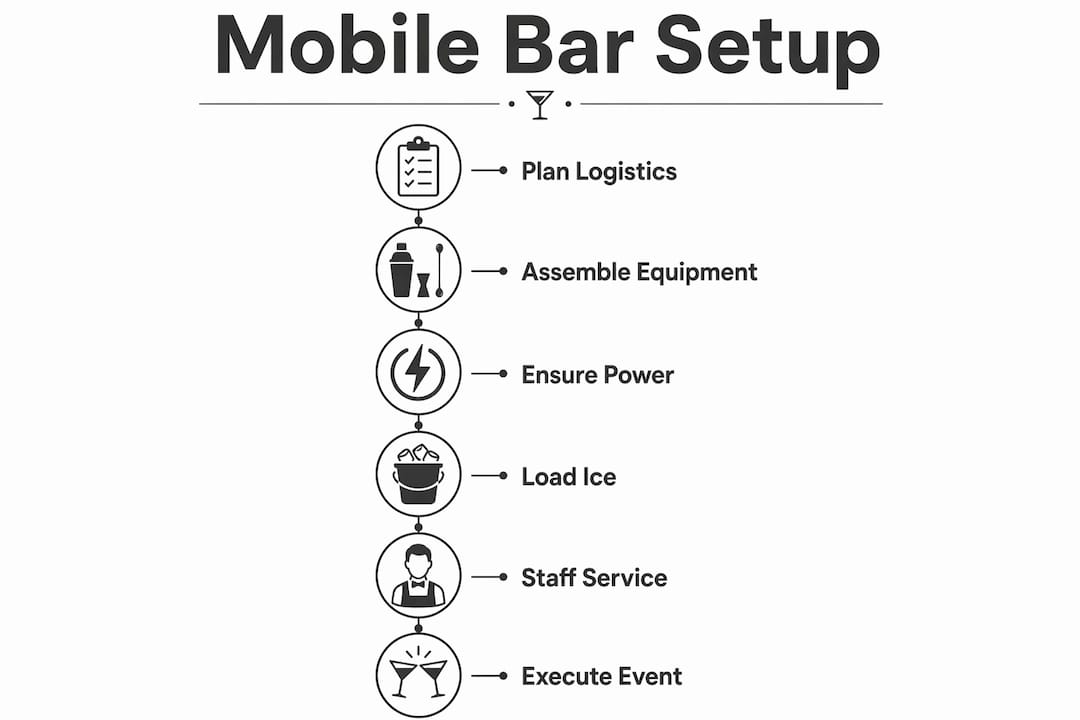
Event day execution follows a strict timeline. Improvising the sequence creates delays that ripple through your entire event schedule. Setup time generally requires 1–2 hours, with an additional hour for breakdown. That window must be built into your venue access agreement, not assumed.
The standard event day sequence looks like this:
- Arrival and venue walkthrough (2–3 hours before guests arrive): The bar team confirms power access, water points, and bar placement before unloading anything.
- Physical bar assembly (2–3 hours before guests arrive): The portable bar structure is assembled, leveled, and positioned according to the pre-approved layout plan.
- Ice loading (90 minutes before service): Ice goes in last because it melts. Loading ice 90 minutes before service keeps it at peak volume through the first hours of the event.
- Garnish and tool staging (45–60 minutes before service): Citrus is cut, garnish trays are filled, tools are placed at each station, and the bar is stocked with opening inventory.
- Final check and staff briefing (15–30 minutes before service): The lead bartender reviews the drink menu, confirms payment model, and briefs the team on event-specific details.
- Service period: Bartenders work their stations. A well-designed layout means no one crosses paths to grab supplies.
- Breakdown: Glassware is collected, ice is disposed of, equipment is cleaned and packed, and the venue is left in the condition it was found.
Pro Tip: Professionals finalize all logistical details 7 days before the event and lock in the run sheet 48 hours out. If your bar service provider is not asking for a finalized guest count and venue access confirmation by that deadline, that is a warning sign.
Staffing ratios affect everything. One bartender can typically serve 50–75 guests at a relaxed pace. High-volume cocktail events or open bar formats need one bartender per 50 guests or fewer. The event schedule also dictates staffing: a cocktail hour followed by a seated dinner requires different staffing intensity than a four-hour open bar reception.
Bar placement is a decision that most event planners underestimate. Bars placed near main entrances create immediate congestion as guests arrive. The better position is slightly off the main traffic path, with clear sightlines so guests can find it easily without crowding the entrance.
What service models exist for mobile bar setups?
The key decision in mobile bar planning is choosing between staffed bar hire and dry hire. Each model carries different operational responsibilities for the event host.
Staffed bar hire means the bar service provider supplies the bar, equipment, staff, and often the alcohol. The host pays a package rate and the operator handles everything. This is the most common model for weddings and corporate events because it transfers liability and logistics to the professional team.
Dry hire means the host rents the bar structure and equipment only. The host sources their own alcohol, manages their own staff, and takes on full responsibility for service and compliance. Dry hire costs less upfront but requires the host to understand licensing, staffing, and supply logistics independently.
Payment structures also shape how the bar operates:
- Open bar: A flat fee covers unlimited drinks for guests. The operator needs accurate guest count projections to stock correctly.
- Pay bar (cash bar): Guests pay per drink. This model requires a point-of-sale system and changes the staffing dynamic since transactions take longer than free pours.
- Hybrid model: Certain drinks are included (beer, wine, soft drinks) while premium spirits are pay-per-drink. This is increasingly common at corporate events.
Compliance is the area where most event planners get caught off guard. Many mobile bars cannot hold traditional liquor licenses and instead operate on temporary event permits combined with liquor liability insurance. Understanding licensing constraints early prevents operational disruptions on event day. Always confirm that your bar service provider holds the correct permits for your specific venue and event type before signing a contract.
What practical tips help avoid mobile bar setup mistakes?
Most mobile bar problems are predictable. They come from the same set of overlooked details every time.
- Confirm power access in writing: Verbal assurances from venue staff are not enough. Get the outlet locations, amperage, and access times in your venue contract.
- Calculate ice with a buffer: The standard 10 pounds per 25 guests is a baseline. Outdoor summer events, long service windows, and high-volume cocktail menus all require more.
- Place the bar away from the entrance: Bars near high-traffic entrances cause congestion. Position the bar so guests walk past the main gathering area before reaching it.
- Add a separate water station: A self-serve water station near the bar reduces the number of guests in the drink line and keeps service moving.
- Build setup time into venue access: A 1–2 hour setup window plus a 1-hour breakdown window must be part of your venue booking, not an afterthought.
- Verify permits before the event: Confirm that your bar operator holds the correct temporary permits and liquor liability insurance for your venue and date.
Pro Tip: The best mobile bar layouts place the most-used items, ice, cups, and the most popular spirits, within arm’s reach of the bartender’s primary position. Every extra step a bartender takes adds seconds to each transaction and minutes to wait times across a full service period.
The aesthetic side of a mobile bar matters too, especially for weddings and branded corporate events. The best mobile bars blend efficient workstation design with aesthetics to deliver both speed and visual appeal. A bar that looks great but forces bartenders to walk around it to grab ice is a problem. Function must come first, then style.
Key takeaways
A successful mobile bar setup requires coordinating equipment, power, ice, staffing, and layout before a single guest arrives.
| Point | Details |
|---|---|
| Setup timeline is fixed | Build the bar 2–3 hours early, load ice 90 minutes out, and stage garnishes 45–60 minutes before service. |
| Ice and glassware need buffers | Plan 10 lbs of ice per 25 guests and add a 15% glassware buffer to avoid running short. |
| Bar placement affects service speed | Position the bar away from the main entrance to prevent congestion during peak arrival. |
| Service model changes your responsibility | Staffed hire transfers logistics to the operator; dry hire puts staffing and compliance on the host. |
| Licensing must be confirmed early | Many mobile bars use temporary permits, not standard liquor licenses. Verify before signing any contract. |
What I’ve learned from watching mobile bars succeed and fail
I’ve seen beautifully designed bar setups fall apart because the operator didn’t confirm power access until they arrived on site. I’ve also seen simple, no-frills portable bars run flawlessly for 200 guests because the team had a tight run sheet and a well-practiced setup sequence.
The thing most event planners miss is that a mobile bar is not just a bar that moves. It’s a temporary food service operation with all the complexity that implies. Electrical load management, greywater disposal, permit verification, and cold chain maintenance are not optional details. They are the difference between a bar that opens on time and one that doesn’t open at all.
Guest behavior patterns also matter more than most people expect. Guests cluster at the bar during cocktail hour and again right after dinner. If your bar is positioned where those two crowds overlap with the main traffic flow, you will have a bottleneck that no amount of extra staff can fix. The layout decision made before the event starts determines the experience your guests have all night.
My honest advice: choose a staffed bar hire model for any event over 75 guests unless you have direct experience managing bar operations. The cost difference between staffed and dry hire is real, but so is the risk of managing compliance, staffing, and supply logistics without professional support. For Las Vegas and Henderson events, Liquidcouragelv handles all of that coordination so you can focus on the event itself.
— Brennon
Liquidcouragelv brings the full bar experience to your event
Planning a bar for your next event in Las Vegas or Henderson doesn’t have to mean managing logistics, sourcing permits, and coordinating staff on your own. Liquidcouragelv provides complete mobile bartending and liquor catering services for weddings, corporate events, and private parties, handling everything from bar setup and staffing to beverage selection and breakdown.
Every package includes professional bartenders, a fully equipped bar setup, and coordination with your event timeline. Whether you need a turnkey private event bar or a custom catering package built around your guest count and drink menu, the team at Liquidcouragelv manages the details so your event runs on schedule. Book a consultation through the appointments page to get started.
FAQ
How long does a mobile bar take to set up?
A standard mobile bar setup takes 1–2 hours, with an additional hour for breakdown. That full window must be included in your venue access agreement.
How much ice does a mobile bar need per event?
The standard allocation is 10 pounds of ice per 25 guests. Outdoor events and longer service windows require additional ice beyond that baseline.
What is the difference between staffed bar hire and dry hire?
Staffed bar hire means the operator provides the bar, equipment, staff, and often the alcohol. Dry hire means the host rents equipment only and manages staffing and alcohol sourcing independently.
Do mobile bars need a liquor license?
Most mobile bars operate on temporary event permits rather than standard liquor licenses. Confirm that your provider holds the correct permits and liquor liability insurance for your specific venue and event date.
Where should a mobile bar be placed at an event?
Place the bar away from the main entrance to prevent congestion. A separate water station near the bar also reduces line length during peak service periods.