
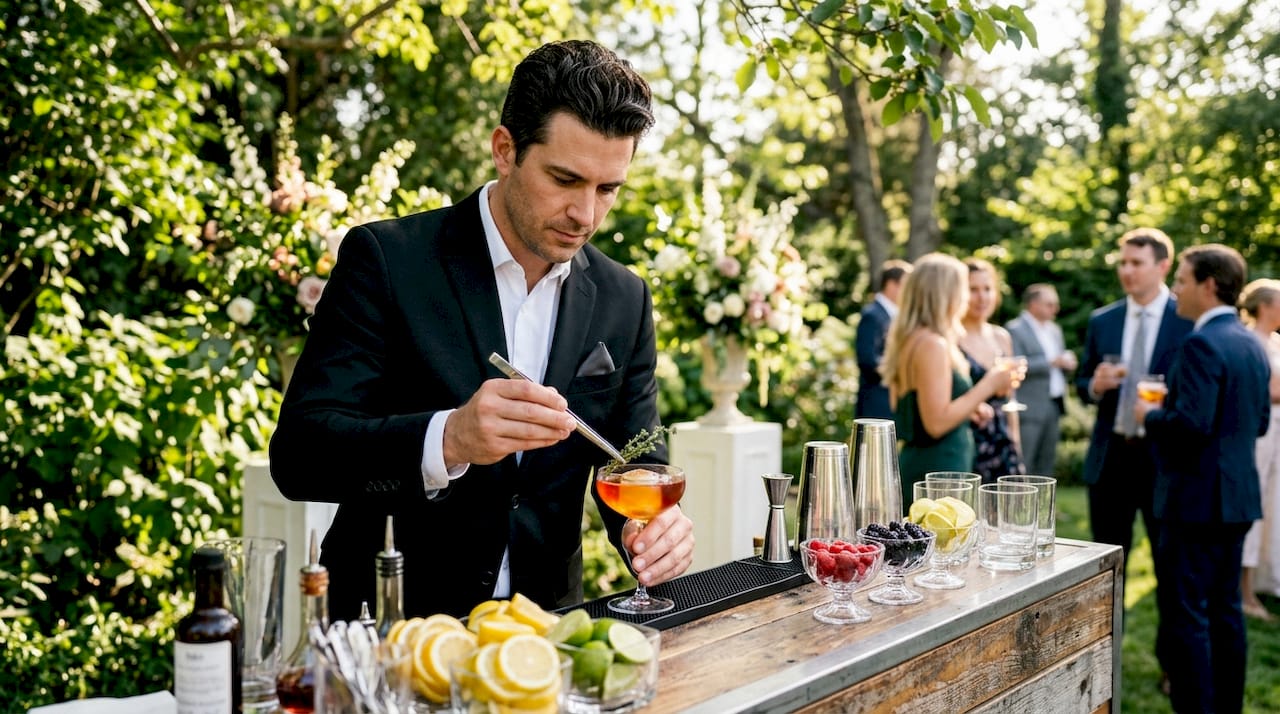
A conference bartending service is a specialized professional bartending solution designed for corporate events, managing beverage logistics, responsible alcohol service, and brand-aligned guest experiences under one coordinated operation. This goes far beyond pouring drinks. A properly staffed conference bar service handles crowd flow, inventory, setup, teardown, and compliance with 2026 certification standards including TIPS and RBS training. For event planners managing professional gatherings in Las Vegas or Henderson, understanding what these services actually deliver is the difference between a smooth networking reception and a logistical failure.
What is a conference bartending service and what does it include?
A conference bartending service is a full-service bar operation deployed at corporate venues, handling everything from pre-event planning to post-event breakdown. The industry term used by hospitality professionals is “mobile bartending service” or “on-site bar catering,” and both phrases describe the same coordinated offering.
Professional bartending for events at this level covers six core functions: drink preparation, bar station design, alcohol quantity estimation, crowd flow management, responsible service compliance, and full setup and teardown. Each function affects the others. A poorly designed bar station creates bottlenecks that slow service and frustrate attendees during peak networking windows.
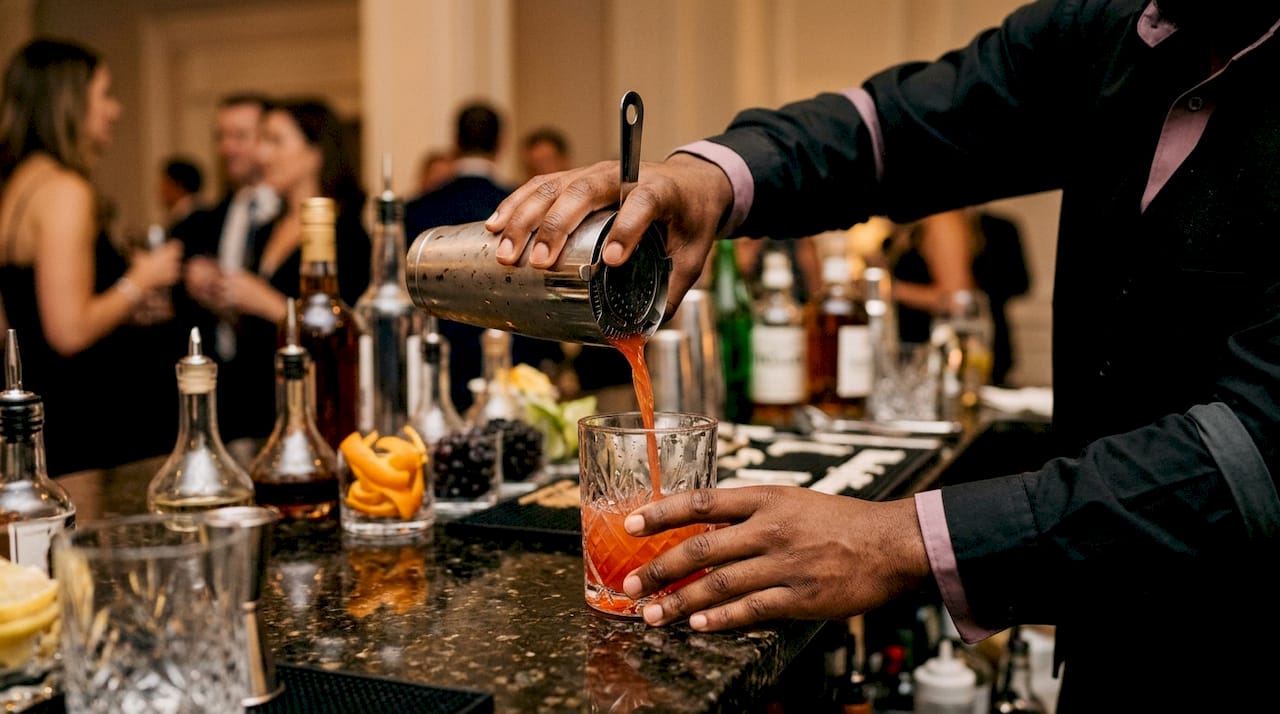
Conference bar service providers also act as logistics managers. They calculate how much alcohol a 200-person reception requires, position bar stations to distribute foot traffic, and coordinate with venue staff on timing. That operational layer is what separates a professional service from simply hiring someone who knows how to pour.
Pro Tip: Book your conference bartending service 4–6 weeks before the event date. Last-minute bookings limit your staffing options and reduce time for menu planning and venue coordination.
What certifications and insurance are required?
Professional conference bartenders are required to hold TIPS or RBS certification as of 2025–2026 industry standards. These certifications train staff to recognize signs of intoxication, refuse service responsibly, and prevent alcohol-related incidents. For corporate event planners, this matters because your company’s reputation is on the line if a guest is overserved.
Insurance is equally non-negotiable. Reputable providers carry $2 million in liquor liability insurance and issue a Certificate of Insurance (COI) naming both the client and the venue as additionally insured. Most conference centers and hotel ballrooms require this COI before allowing any outside bar service on-site.
Here is what to verify before signing any contract with a bartending provider:
- TIPS or RBS certification for every bartender on staff
- $2 million liquor liability insurance minimum
- COI available upon request, naming your company and venue
- State-compliant licensing for alcohol service in Nevada
- Written confirmation of responsible service policies
Skipping this verification step creates legal exposure for your organization. If an incident occurs and your provider lacks proper coverage, your company may absorb the liability.
Pro Tip: Request the COI at least two weeks before your event. Venue approval processes take time, and a delayed COI can hold up your entire event permit.
How do conference bartending services manage logistics and guest flow?
The bar station is a strategic logistical hub at any corporate event, not a passive drink station. Experienced conference bartenders design the bar layout to distribute guest traffic, reduce wait times, and keep service moving during the short, intense networking windows that define most conferences.
High-volume conference success depends on managing peak periods effectively. Batch cocktails and crowd flow management are the two most reliable tools for preventing long lines. Pre-batching a signature cocktail means bartenders pour and garnish rather than build each drink from scratch, cutting service time per guest significantly.
A professional on-site bartending team follows a structured operational sequence:
- Pre-event setup: Bar stations are assembled, stocked, and tested at least 60 minutes before guests arrive.
- Inventory staging: Alcohol, mixers, garnishes, and glassware are organized for maximum speed during service.
- Peak period management: Bartenders shift positions and open additional stations when guest volume spikes.
- Responsible service monitoring: Staff track consumption patterns and flag guests who may need a slower service pace.
- Teardown and reconciliation: After the event, the team breaks down the bar, accounts for remaining inventory, and removes all equipment.
Mobile bartending services that operate at scale also assign bar backs to support lead bartenders. Bar backs restock ice, remove empty bottles, and keep the workspace clean, which lets the lead bartender focus entirely on guest interaction and drink preparation.
Pro Tip: For events over 150 guests, request at least one bar back per two bartenders. The difference in service speed is noticeable, especially during the first 30 minutes when guest arrivals peak.
What do pricing models and packages typically look like?
Conference drink service pricing falls into two main structures: staff-only packages and all-inclusive packages. Understanding the difference helps you build an accurate event budget before you start comparing providers.
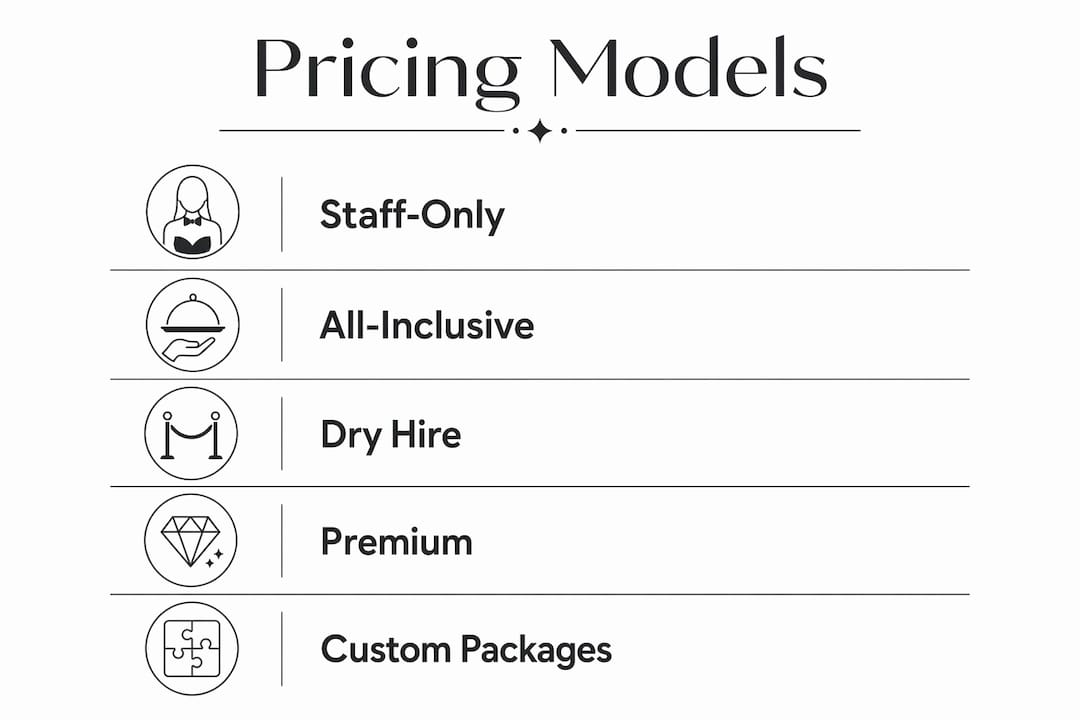
Staff-only packages cover bartender labor only. Bartenders typically run around $69 per hour, with bar backs available at approximately $59 per hour. You supply or separately source the alcohol, mixers, glassware, and equipment. This model works well when your venue already provides bar infrastructure or when you want direct control over product selection.
All-inclusive packages bundle labor with equipment, mixers, garnishes, and sometimes glassware. Premium bespoke packages start near $400 depending on event scope and guest count. These packages reduce coordination complexity because one vendor manages the full bar operation.
The dry hire model is a third option worth knowing. Dry hire reduces beverage costs by 30–60% compared to purchasing through a caterer’s markup. You buy alcohol at retail prices and hire bartenders separately. For corporate planners managing tight budgets, this approach delivers the most control over spend.
Key cost factors that affect your final quote:
- Guest count and estimated drink volume
- Event duration and number of service hours
- Number of bar stations required
- Specialty cocktail menu complexity
- Travel distance to the venue
- Gratuity and service fees
Small events of 50–75 guests typically require one bartender and a straightforward package. Large conferences of 300 or more guests need multiple stations, bar backs, and a lead bartender coordinating the full team.
How does a conference bar service shape brand experience?
Corporate bartending should match brand tone by offering signature cocktails and branded experiences that turn drink breaks into genuine engagement moments. A well-designed bar menu communicates that your organization pays attention to detail, which matters to attendees who form impressions during informal networking time.
Branded cocktails are the most direct tool for this. A company launching a product at a conference can name a signature drink after the product, use brand colors in the garnish, or print custom cocktail cards that double as conversation starters. These details cost little to execute but create a lasting impression.
Professional bartenders integrate into the event tone through appearance and demeanor, not showmanship. At corporate events, consistency and polish matter more than flair. Attendees notice when bar staff are well-dressed, attentive, and efficient. They also notice the opposite.
The bar area itself functions as a natural gathering point. Thoughtful placement near registration or breakout session exits encourages organic networking. Planners who treat the bar as a passive amenity miss an opportunity to shape how attendees move through and experience the event.
Key Takeaways
A conference bartending service is a full operational system, not just a staffing solution, and treating it that way is what separates forgettable events from ones attendees remember.
| Point | Details |
|---|---|
| Certifications are mandatory | Require TIPS or RBS certification and $2 million liability insurance from every provider. |
| Book 4–6 weeks out | Early booking secures certified staff and allows time for menu and venue coordination. |
| Dry hire saves 30–60% | Buying alcohol retail and hiring bartenders separately cuts costs versus caterer markups. |
| Bar layout drives guest flow | Strategic station placement prevents bottlenecks during peak networking windows. |
| Branded cocktails build engagement | Signature drinks aligned with your event theme turn drink breaks into brand moments. |
Why I think most planners underestimate the bar operation
After working in the Las Vegas event hospitality space, the pattern I see most often is planners treating the bar as an afterthought. They finalize the venue, the speakers, the catering menu, and then call a bartending service two weeks out expecting everything to fall into place.
That approach creates real problems. Certified staff books up fast, especially during conference season in Las Vegas. A provider who gets a last-minute call often sends whoever is available, not whoever is best suited for a formal corporate environment. The difference between a bartender trained for high-volume corporate service and one who primarily works casual parties shows up immediately in how they manage a crowd.
The other thing planners consistently underestimate is the COI process. Venues require it. Getting the paperwork wrong or submitting it late can delay your event permit. I have seen planners scramble the week of an event because their bartending provider had never issued a COI before and did not know how.
My honest recommendation is to treat the bar operation with the same planning discipline you apply to catering or AV. Define your guest count, your service hours, and your budget before you make the first call. Ask for certifications and insurance documentation upfront. And if you are running an event over 200 people, insist on a pre-event walkthrough of the bar station layout with your provider.
The bar is where your guests spend their unstructured time. That time shapes how they feel about your event overall. Getting it right is worth the planning effort.
— Brennon
Liquidcouragelv handles corporate events across Las Vegas and Henderson
Liquidcouragelv provides professional bartending for corporate events throughout Las Vegas and Henderson, Nevada, with insured, TIPS-certified staff and fully coordinated bar operations. Whether you are planning a 75-person networking reception or a 400-person conference, Liquidcouragelv scales staffing, bar stations, and service packages to match your event size and brand requirements.
Every engagement includes branded cocktail design, professional glassware coordination, and a COI issued to your company and venue. Liquidcouragelv’s event packages cover staff-only and all-inclusive options, giving corporate planners the flexibility to control costs without sacrificing service quality. Reach out to discuss your event details and get a quote built around your specific conference needs.
FAQ
What is a conference bartending service?
A conference bartending service is a professional, mobile bar operation deployed at corporate events to manage drink preparation, logistics, responsible alcohol service, and guest flow. It differs from standard catering by covering the full bar operation from setup through teardown.
How far in advance should I book a conference bartending service?
Book at least 4–6 weeks before your event date. This timeline secures certified staff and allows enough time for menu planning, COI processing, and venue coordination.
What insurance does a conference bartending provider need?
Providers should carry a minimum of $2 million in liquor liability insurance and issue a Certificate of Insurance naming your company and venue as additionally insured. Most conference centers require this documentation before approving outside bar service.
What is the dry hire model for event bartending?
The dry hire model means you purchase alcohol at retail prices and hire bartenders separately, rather than buying through a caterer. This approach reduces beverage costs by 30–60% compared to standard caterer markups.
How many bartenders do I need for a conference?
One bartender typically handles 50–75 guests for a standard reception. Events over 150 guests benefit from multiple bar stations and at least one bar back per two bartenders to maintain service speed during peak periods.