
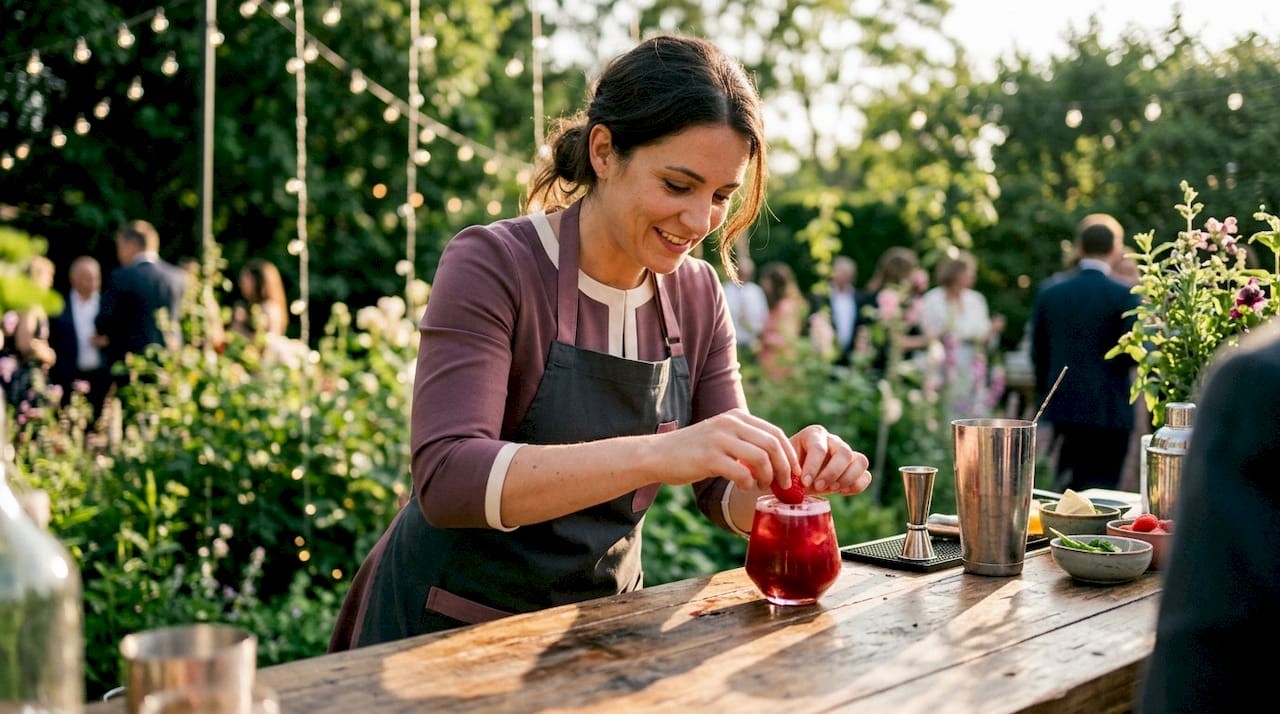
A branded cocktail is a custom drink designed to reflect a company’s identity through color, name, garnish, and presentation. When you create a branded cocktail corporate event experience, you turn ordinary bar service into a live brand activation. Interactive bar elements like flair bartending increase brand recall by up to 82%. That number tells you something important: guests remember what they taste, touch, and watch. This guide covers everything from menu design and cocktail branding strategies to staffing ratios and logistics, so your next corporate event lands with real impact.
What does it take to create branded cocktails for a corporate event?
Creating a branded cocktail experience requires three things: the right equipment, a clear brand brief, and a professional team. Skip any one of these and the experience falls apart at the bar.
Equipment and tools you need
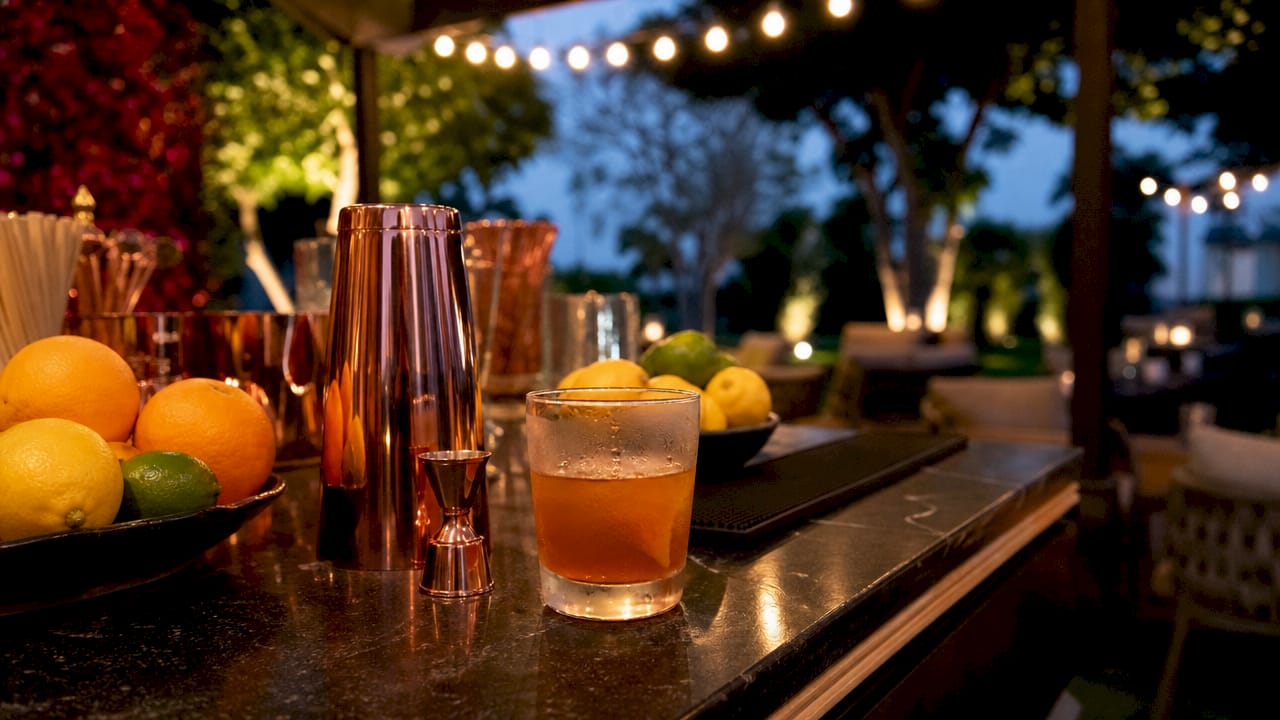
Every professional bar setup starts with the same core kit. You need shakers, jiggers, bar spoons, strainers, muddlers, and a quality ice program. Beyond the basics, branded drinks for events require additional elements that most planners overlook.
- Branded glassware: Logo-etched rocks glasses or custom coupes reinforce identity with every sip.
- Custom stirrers and garnishes: Branded drink stirrers are physical touchpoints guests pick up, photograph, and keep.
- Printed cocktail menus: A designed menu card doubles as a brand artifact and a conversation starter.
- Pre-batch containers: Large-format pitchers or cambros hold pre-mixed cocktails for fast service during peak arrival.
- Speed pourers and bar mats: These keep service fast and the bar surface clean and professional.
What does professional menu design cost?
Bespoke cocktail menu design typically starts around $315 and reaches $950 for custom molecular cocktail programs. That range covers concept development, recipe testing, and printed menu design. For most corporate events, a mid-range investment gets you a fully cohesive menu with three to five signature drinks and matching zero-proof options.
| Service tier | What’s included | Approx. cost |
|---|---|---|
| Basic menu curation | 3–5 drinks, recipe cards | ~$315 |
| Full bespoke design | Custom recipes, branded menus, garnish design | ~$600 |
| Molecular / premium | Specialty techniques, custom glassware, full branding | ~$950+ |
Pro Tip: Request your brand’s Pantone color codes before your first meeting with a mixologist. Matching a cocktail’s color to your brand palette is far easier when the bartender has exact references, not just a logo screenshot.
How to design a professional cocktail menu for your corporate event
The cocktail menu is a marketing tool. It should reinforce your brand message visually and narratively, not just list drink names. The best menus tell a story in four lines or fewer per drink.
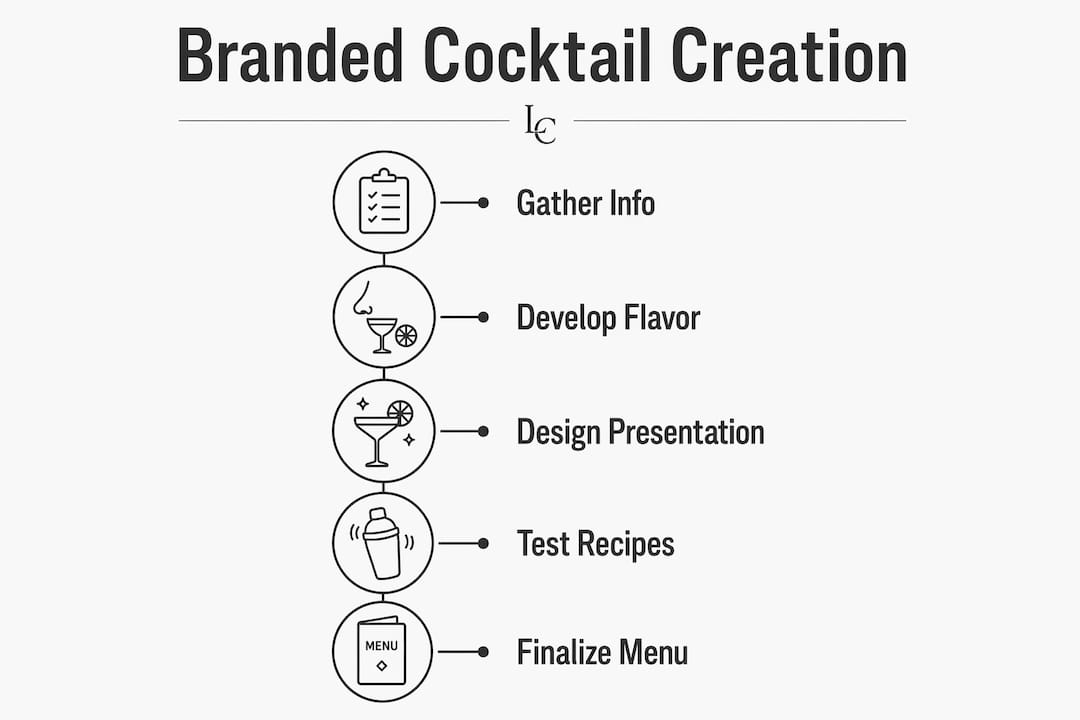
Step-by-step menu design process
- Start with your brand brief. Pull your color palette, campaign theme, and any key messaging. These become the creative constraints that make the menu feel intentional, not generic.
- Limit your selections. A curated menu of 5–8 drinks avoids choice paralysis and keeps guests focused on your branded options. More than eight drinks dilutes the brand story.
- Name every drink deliberately. A cocktail called “The Q4 Closer” or “The Henderson Handshake” does more brand work than “Vodka Lemonade.” Names create memory hooks.
- Match colors to your palette. Signature cocktails that reflect brand colors and campaign themes create visual consistency across the entire event space.
- Add zero-proof options. Premium zero-proof mocktails designed to match alcoholic cocktails in presentation are now standard at professional corporate events. Guests who don’t drink should never feel like an afterthought.
- Integrate typography and layout. Use your brand fonts on the printed menu. A cocktail menu printed in Arial when your brand uses a custom serif font breaks visual consistency immediately.
- Test every recipe before the event. Batch one full recipe at scale and taste it. Flavors shift when you multiply a recipe by 50 servings.
Pro Tip: Build your zero-proof drinks first, then develop the alcoholic versions around the same flavor profile. This approach produces a more cohesive menu and makes inclusivity feel natural rather than bolted on.
Signature vs. standard bar: what’s the difference?
| Feature | Standard open bar | Branded signature bar |
|---|---|---|
| Drink selection | Generic spirits and mixers | Custom named cocktails with brand identity |
| Visual branding | None | Branded menus, glassware, garnishes, stirrers |
| Guest engagement | Passive | Active, memorable, shareable |
| Brand recall | Low | High (up to 82% with interactive elements) |
| Menu design cost | $0 | $315–$950+ |
How can interactive cocktail experiences activate your brand at events?
Brand activation at the bar goes beyond the drink itself. The setup, the performance, and the physical objects guests touch all carry brand weight. The most effective branded drinks for events combine visual consistency with live engagement.
Live flair bartending and demo stations
Flair bartending, where bartenders juggle bottles and perform while mixing, turns the bar into a stage. Guests gather, photograph, and share what they see. This is why interactive bar elements drive such strong brand recall numbers. A demo station where guests watch a signature cocktail being built from scratch adds a narrative layer that a self-serve setup never can.
Branded bar setup and visual consistency
Every surface at the bar is a branding opportunity. Consider these touchpoints:
- Bar front panels: Vinyl wraps or fabric panels in brand colors transform a standard bar into a branded installation.
- Backbar displays: Arrange bottles, branded glassware, and signage so the backbar reads like a brand wall in photographs.
- Custom stirrers and garnishes: Branding done well includes custom-named drinks, typography, branded garnishes, and drink stirrers that guests physically engage with. A stirrer with your logo is a takeaway, not just a utensil.
- Lighting: Colored uplighting behind the bar that matches your brand palette ties the whole setup together in photos.
Pre-batched cocktails for high-volume efficiency
The first 60–90 minutes of any corporate event are the highest-volume period. Fast-pour pre-batched cocktails during this window eliminate lines and keep guests moving through the space. Pre-batching does not reduce quality when done correctly. A well-made pre-batch, chilled and portioned, pours in seconds and tastes identical to a made-to-order version.
“The bar is the first place most guests stop at a corporate event. What they experience there sets the tone for everything that follows.”
Pro Tip: Pre-batch your two most popular cocktails the morning of the event. Keep them refrigerated in labeled cambros. This single step cuts average pour time by more than half during peak arrival.
How do you manage staffing and logistics for branded cocktail service?
Staffing is where most corporate cocktail programs fail. The drinks can be perfect, but a two-deep line at the bar erases the experience. Logistics planning is not optional.
Staffing ratios and team structure
Professional events require one bartender per 75–100 guests for optimal service and reduced wait times. For events over 200 guests, add barbacks to handle ice restocking, garnish prep, and glassware so bartenders never leave the rail.
| Guest count | Bartenders needed | Barbacks recommended |
|---|---|---|
| Up to 75 | 1 | 0 |
| 76–150 | 2 | 1 |
| 151–300 | 3–4 | 1–2 |
| 300+ | 4+ | 2+ |
Operational planning steps
- Map your bar layout before the event. Position bars near entrances to intercept guests early and distribute traffic. A single bar at the back of a room creates a bottleneck.
- Stage supplies in advance. Ice, garnishes, and pre-batched cocktails should be in place 45 minutes before doors open. Running to the back for supplies during service breaks the guest experience.
- Plan for peak arrival. The first 30 minutes after doors open typically sees 60–70% of guests arrive. Your team should be fully operational and pre-batches ready before the first guest walks in.
- Build a breakdown plan. Assign one team member to manage breakdown logistics so bartenders can focus on service until the last guest leaves.
- Confirm contingencies. Know your backup plan for a broken blender, a missing garnish delivery, or a no-show barback. These situations happen. Teams that plan for them handle them without guests noticing.
Key Takeaways
A branded cocktail program succeeds when menu design, visual branding, staffing ratios, and pre-batching work together as a single system.
| Point | Details |
|---|---|
| Limit your menu | Keep drinks to 5–8 options to avoid choice paralysis and sharpen brand focus. |
| Brand every touchpoint | Use custom stirrers, glassware, garnishes, and bar panels for visual consistency. |
| Staff by the ratio | Plan one bartender per 75–100 guests and add barbacks for events over 200 people. |
| Pre-batch for peak hours | Prepare your top two cocktails in advance to cut pour time during the first 90 minutes. |
| Include zero-proof options | Design mocktails to match alcoholic drinks in presentation so every guest feels included. |
Why branded cocktails are the most underused corporate marketing tool
Most corporate event planners treat the bar as a utility. They book a bartender, order a case of wine, and call it done. That approach misses the single most memorable touchpoint at any event.
Guests spend more time at the bar than at any other station. They photograph their drinks, share them on social media, and talk about them with the person standing next to them. A cocktail named after your brand campaign, served in a logo-etched glass with a custom stirrer, does more brand work in 30 seconds than a banner ad does in a week.
The detail I see planners miss most often is the zero-proof menu. Designing a mocktail as an afterthought, usually a sparkling water with fruit, signals to non-drinking guests that they were not considered. A properly designed zero-proof option, built with the same care as the signature cocktail, tells every guest that the event was planned for them specifically.
The other misconception is that branded cocktails require a massive budget. A $315 menu design investment, combined with a $40 order of custom stirrers, produces a fully branded bar experience. The return on that spend, measured in guest engagement and brand recall, is difficult to match with any other event element.
Collaboration between event planners and professional mixologists is what makes this work at scale. The planner brings the brand brief. The mixologist brings the technical knowledge. When those two perspectives meet early in the planning process, the result is a menu that feels both creative and executable.
— Brennon
Liquidcouragelv brings branded cocktail service to Las Vegas events
Liquidcouragelv is a mobile bartending company serving Las Vegas and Henderson, Nevada. The team specializes in corporate event catering that goes beyond standard bar service, including bespoke signature cocktail menus designed around your brand identity, staffed by experienced bartenders who know how to run high-volume service without losing quality.
Whether you need a full branded bar activation for a product launch or a polished cocktail program for a company dinner, Liquidcouragelv builds the experience around your brief. The team handles menu design, staffing ratios, pre-batch preparation, and branded setup so you can focus on your guests. Visit the private events page to start planning your branded cocktail experience in Las Vegas or Henderson.
FAQ
What is a branded cocktail at a corporate event?
A branded cocktail is a custom drink designed to reflect a company’s identity through its name, color, garnish, and presentation. It functions as both a beverage and a brand activation tool.
How many signature cocktails should a corporate event menu include?
A menu of 5–8 signature drinks is the professional standard. This range avoids choice paralysis while giving guests enough variety to feel the menu was curated for them.
How many bartenders do I need for a corporate event?
One bartender per 75–100 guests is the standard ratio. Add barbacks for events over 200 guests to maintain service speed.
Do corporate cocktail events need non-alcoholic options?
Yes. Zero-proof options matching alcoholic cocktails in design and presentation are now a professional standard. Skipping them excludes a portion of your guests and weakens the overall brand experience.
How much does a custom cocktail menu design cost?
Professional bespoke menu design starts around $315 for a curated selection and reaches $950 or more for molecular cocktail programs with full branding integration.