
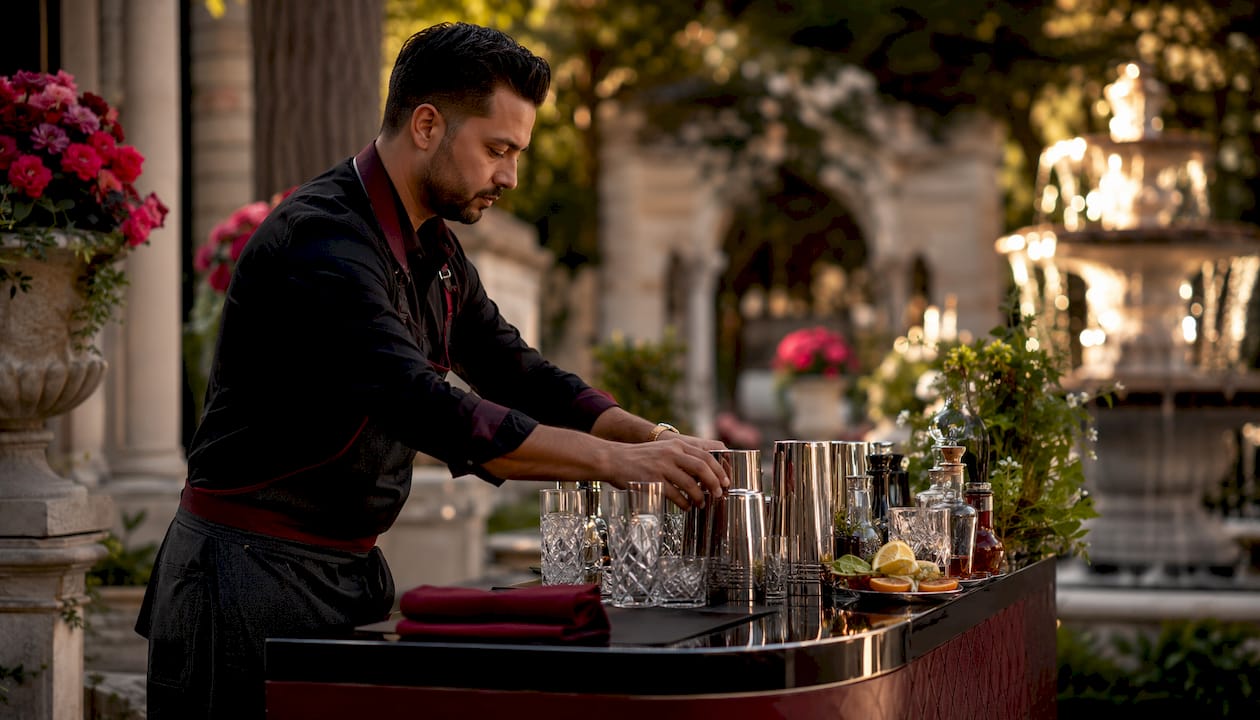
The bar must be fully set and serving the moment guests walk out of the ceremony — not when you expect cocktail hour to begin, and not five minutes after. Specifically, that single timing rule prevents the most common service failure at wedding receptions: a crowd of thirsty guests arriving to an unready bar. For staffing, start with one bartender per 50 guests for a full bar, or one per 75 guests for a simplified beer, wine, or batch-cocktail menu, and add a dedicated barback once your guest count exceeds 150–200.
Table of Contents
- When do bartenders need to set up before the reception?
- How should bartenders run cocktail hour to prevent long lines?
- What staffing formula should you use for bartenders and barbacks?
- When should you open, pause, and close the bar during the reception?
- How do you coordinate bartending with other vendors on the day?
- What are the most common bartending timeline mistakes at receptions?
- Sample wedding reception timeline templates with bartending built in
- What legal and safety rules affect bartending timing at receptions?
- Research-backed rules planners can cite for staffing and timing decisions
- Key Takeaways
- Why professional bartenders are timeline insurance for the host
- Useful sources and further reading for planners
When do bartenders need to set up before the reception?
Setup time is not service time. Those are two separate windows, and conflating them is the most expensive scheduling mistake a planner can make. A bar team needs a dedicated setup window of sufficient length before service begins, and interrupting that window to pour early drinks causes cascading delays that bottleneck the bar right when guests arrive.
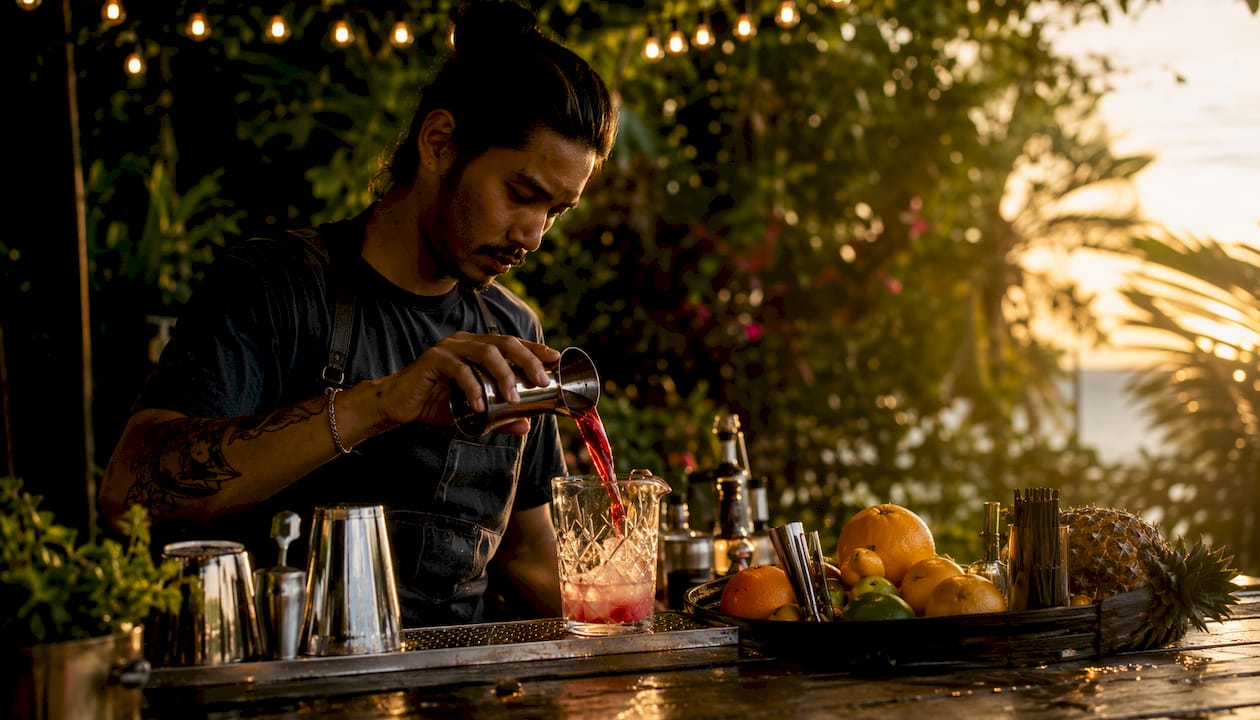
The practical rule: schedule bartender arrival so that setup is fully complete by the time the ceremony ends. Some mobile bar teams bill their start time at ceremony time for exactly this reason — it guarantees the bar is ready, not still being assembled, when guests reach cocktail hour.
Setup checklist every planner should include in the run-of-show:
- Load-in access confirmed with venue (dock, elevator, or service entrance)
- Power and water access verified and tested
- Ice supply delivered and stored (confirm who supplies it, in writing)
- Glassware staged and counted
- Refrigeration units running and at temperature
- Waste and trash receptacles placed
- Bar menu signage and signature drink cards posted
- Backup supplies (garnishes, mixers, napkins) within reach of the bar station
Notify the venue coordinator, the photographer, and the catering captain of the bartender’s arrival time. The photographer needs to know because bar setup is not a photo opportunity, and the caterer needs to coordinate load-in access so two vendor teams are not competing for the same service entrance at the same time. Document the setup deadline in the run sheet as a hard stop: bar setup complete by ceremony start.
Pro Tip: Ask your bar team to do a final walkthrough of the setup five minutes before guests are released from the ceremony. That check catches a missing garnish tray or a glassware shortage before the rush hits.

How should bartenders run cocktail hour to prevent long lines?
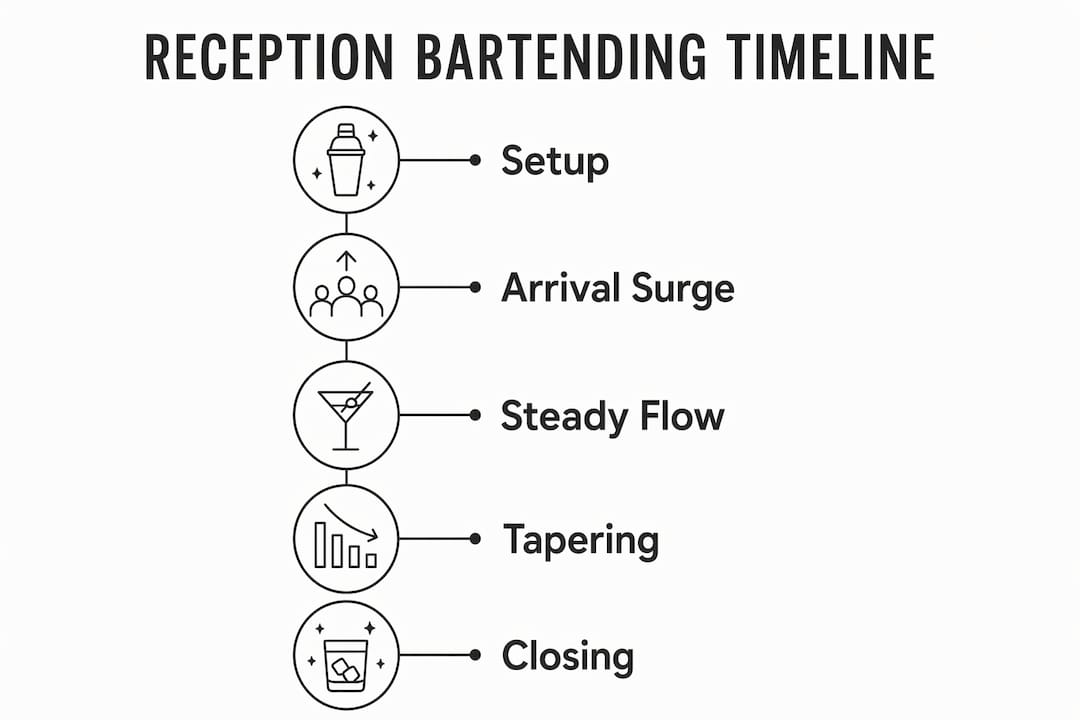
Cocktail hour is the most compressed drinking window of the entire reception, and it runs on a three-phase model that most planners never plan for explicitly.
Phase 1: Arrival surge (0–15 minutes)
Every guest arrives at roughly the same time and wants a drink immediately. Pre-pouring signature cocktails and having staff intercept guests with tray-passed drinks before they reach the bar is the single highest-impact tactic for keeping lines short. A separate grab-and-go zone for beer, wine, and non-alcoholic options diverts the guests who just want something simple and do not need a bartender at all.
Phase 2: Steady flow (15–45 minutes)
The rush levels off. Guests are mingling, and the bar handles a steady stream of orders rather than a wall of people. This is when a simplified menu pays off. Limit signature cocktails to one or two fast builds. Pre-batched cocktails in dispensers cut pour time significantly, keep drinks consistent across hundreds of servings, and reduce the cognitive load on the bartender during a busy stretch.
Phase 3: Taper and transition (45–60 minutes)
Orders slow as guests prepare to move to the reception space. The bar team uses this window to reset: restock ice and glassware, consolidate stations, and prepare for the reception flip. A mid-hour reset here prevents the bar from going into dinner service already depleted.
A few service-style decisions that affect every phase: roaming tray service during the surge is almost always worth the staffing cost. Visible bar menu signage speeds up ordering because guests arrive at the bar already knowing what they want. One clear ordering point with a separate pickup zone keeps the bar area from becoming a crowd.
Pro Tip: Pre-batch your signature cocktail in a large dispenser before guests arrive. It cuts bartender pour time in half and keeps the drink consistent across every serving — no one gets a weak version because the bartender was rushing.
What staffing formula should you use for bartenders and barbacks?
The staffing formula is straightforward, but the trigger rules for adding support are where most planners under-order.
| Service Type | Guests per Bartender | Barback Required? |
|---|---|---|
| Full bar (mixed cocktails) | 1 per 50 guests | Add barback when guest count exceeds 150–200 |
| Beer, wine, batch cocktails | 1 per 75 guests | Add barback when guest count exceeds 150–200 |
| Multiple stations or extended window | 1 per 50–75 guests as needed | Barback generally recommended |
What each role actually does during cocktail hour and the reception:
- Bartender: Takes orders, builds drinks, manages the bar surface, monitors guest consumption, and paces service.
- Barback: Hauls ice, restocks alcohol and mixers, clears empty glasses, manages trash, and keeps the bar surface clean so the bartender never has to stop pouring to restock.
- Bar supervisor (for larger events): Coordinates between stations, handles vendor communication, manages the timeline for pauses and last call, and acts as the point of contact for the coordinator.
The barback trigger rules are worth memorizing. Add a barback when guest count exceeds 150, when you are running multiple bar stations, when the signature cocktail menu involves multi-step builds, or when the service window runs longer than four hours. A bartender who is hauling ice and washing glasses is not pouring drinks, and that is where lines form.
For the cocktail-hour surge specifically, consider adding one extra bartender for that hour alone, even if the dinner reception ratio does not require it. The initial rush after the ceremony is the moment when even a seasoned pro can get overwhelmed without backup.
When should you open, pause, and close the bar during the reception?
Opening the bar
Should align with the banquet license start time. Do not ask bartenders to pour before the license allows it — even a few drinks before the licensed window opens creates venue liability and vendor noncompliance. If the license permits, opening the bar 15 minutes before the official cocktail-hour start time gives early arrivals a drink and prevents a pile-up at the bar the moment the ceremony ends.
Pausing service
For seating, dinner, and toasts requires coordination, not a shouted announcement. Brief the MC or DJ in advance on the exact pause window. The bar team stops taking new orders, the MC transitions guests to their seats, and service resumes after the first course is served. Keep the pause short and communicate it clearly to the bar team so they use the window to restock rather than stand idle.
The best phased close is one guests never notice. Taper alcohol service 30–60 minutes before the event ends, shift to water, coffee, and late-night snacks, and have bartenders quietly begin closing down. Alert your DJ or band to skip a last-call announcement entirely — the mood stays festive instead of ending on a bureaucratic note.
Managing last call is one of the most overlooked parts of the reception timeline. A phased close, per industry best practice, stops alcohol service 30–60 minutes before the event ends and shifts to non-alcoholic options. That window gives guests time to hydrate, eat something, and arrange transportation without the abrupt mood shift of a hard last call.
Pro Tip: Tell the bar team the phased-close time in writing before the event. When the coordinator is managing ten things at once, the last thing you want is a bartender waiting for a verbal cue to start winding down.
How do you coordinate bartending with other vendors on the day?
The bar team does not operate in isolation. Their load-in, setup, and service windows touch the venue, caterer, photographer, and DJ in ways that create problems when left uncoordinated.
Vendor timeline snippet to include in every confirmation:
- Bartenders arrive at [ceremony time minus 90 minutes] for load-in and setup
- Bar setup complete by [ceremony start time]
- Cocktail-hour service opens at [ceremony end time]
- Reception bar opens at [seating complete, approximately 30 minutes after cocktail hour ends]
- Phased close begins at [event end time minus 45 minutes]
Day-of contacts checklist:
- Who confirms ice delivery and quantity (venue or bar team?)
- Who supplies glassware, and is it included in the bar contract or the caterer’s scope?
- Who has keys or access codes for the service entrance and power supply?
- Which staff member is the MC/DJ’s point of contact for pause and restart cues?
- Who does the bar supervisor call if the timeline shifts by more than 15 minutes?
Communication protocol for last-minute changes: the bar supervisor calls the venue coordinator first, not the couple. The coordinator relays the change to the DJ/MC and catering captain. That chain keeps the couple out of logistics and lets them stay present in their event. Document the bar supervisor’s cell number in the run sheet alongside the coordinator’s.
What are the most common bartending timeline mistakes at receptions?
Mistake 1: Treating setup as service time.
The fix is simple: hard-fence setup in the run sheet with a specific start and end time, and communicate to all vendors that the bar is unavailable for service during that window. Bar service timing directly affects the cost of under-reserving setup time — a rushed setup almost always means a delayed open.
Mistake 2: Too many complex signature cocktails.
A four-ingredient craft cocktail takes three times as long to build as a beer or a wine pour. Limit signatures to one or two fast builds during cocktail hour, and offer a pre-batched version when possible. Guests care more about having a drink in hand than about the complexity of what is in it.
Mistake 3: No grab-and-go or non-alcoholic station.
A guest who just wants a sparkling water or a beer should not have to wait in the same line as someone ordering a custom cocktail. A separate beer and wine pickup zone and a dedicated non-alcoholic station divert a significant portion of the crowd and cut average wait times at the main bar.
Sample wedding reception timeline templates with bartending built in
Template A: Standard ceremony + 60-minute cocktail hour + 4-hour reception
- 3:30 PM — Bartenders arrive, begin load-in and setup
- 5:00 PM — Ceremony begins; bar setup complete
- 6:00 PM — Ceremony ends; bar opens for cocktail hour (tray-passed signatures deployed immediately)
- 6:45 PM — Bar team begins mid-hour reset; restock ice and glassware
- 7:00 PM — Guests move to reception; bar pauses for seating
- 7:30 PM — Reception bar opens; dinner service begins
- 9:30 PM — Phased close begins; alcohol service tapers, coffee and water station activated
- 10:00 PM — Bar closes; teardown begins
Template B: Extended cocktail hour (covering couple’s photo session)
- Bartenders arrive 90 minutes before ceremony for setup
- Ceremony ends; cocktail hour opens with full tray-pass service and grab-and-go zone
- Cocktail hour runs 90 minutes instead of 60; add one extra bartender for the extended window
- Mid-hour reset at the 45-minute mark; barback restocks all stations
- At 75 minutes, bar team begins taper; shift to beer, wine, and non-alcoholic only
- Guests move to reception at 90-minute mark; bar resets for dinner service
Template C: Multiple bar stations or split-venue flow
- Station A (cocktail area) opens at ceremony end with full staffing
- Station B (reception/dance floor) opens 30 minutes later as guests transition
- Barback assigned to both stations; rotates on a 20-minute circuit
- Staggered close: Station A closes 60 minutes before event end; Station B closes 30 minutes before end
- Both stations shift to non-alcoholic service simultaneously during phased close
What legal and safety rules affect bartending timing at receptions?
Alcohol service must align with the banquet license start time. Serving even a few drinks before the licensed window opens risks venue liability and puts the bar team out of compliance. Confirm the license start time in writing before the event, and include it in the run sheet as a hard constraint. If you want pre-ceremony drinks, plan them as an official timeline item and verify the license covers that window.
Server certifications matter for timing, not just compliance.
TIPS (Training for Intervention ProcedureS) and ServSafe-certified bartenders are trained to pace service and monitor guest consumption. That training is a timeline asset because a certified bartender slows service proactively before a guest becomes a problem, rather than reacting after the fact. Require certification documentation in the bar contract.
Safety checklist tied to timeline decisions:
- Confirm banquet license start and end times; document both in the run sheet
- Require TIPS or ServSafe certification for all bartending staff
- Schedule phased close 30–60 minutes before event end
- Confirm water and food availability throughout the reception (not just at dinner)
- Designate a non-alcoholic station that is accessible and clearly signed at all times
- Establish an incident-reporting protocol: who the bar supervisor contacts if a guest situation arises
- Confirm event insurance coverage for bartending liability before the event date
This article is general planning information, not legal or professional advice. Confirm current licensing requirements and liability rules with your venue, a licensed attorney, or your state’s alcohol beverage control authority for your specific event.
Research-backed rules planners can cite for staffing and timing decisions
The staffing formulas and timing windows in this guide are grounded in consistent industry practice. Here is a compact reference table planners can use when justifying decisions to clients or venues.
| Full-bar staffing ratio | 1 bartender per 50 guests | [Wedding Bar Guide: Open Bar, Cash Bar & Drink Menu Planning]
| Simplified menu ratio | 1 bartender per 75 guests | [Wedding Bar Guide: Open Bar, Cash Bar & Drink Menu Planning]
| Barback threshold | Add at 150–200 guests or multiple stations | [Wedding Bar Guide: Open Bar, Cash Bar & Drink Menu Planning]
| Phased close window | 30–60 minutes before event end | [Wedding Bar Drinks: Complete Guide]
| Setup window | 60–90 minutes before service | Vendor operational standard |
| Cocktail-hour surge | First 15 minutes; highest demand of the event | Three-phase model |
The arrival surge is the primary driver of every staffing and service-style decision at cocktail hour. Get that window right — pre-pours, tray service, grab-and-go zones — and the rest of the reception timeline tends to run smoothly. Under-staff or under-plan for those first 15 minutes, and the line that forms takes the rest of the hour to clear.
Key Takeaways
The role of bartending in the reception timeline comes down to one principle: the bar must be ready before guests arrive, staffed for the surge, and closed with intention.
| Point | Details |
|---|---|
| Setup before ceremony ends | Schedule bar setup to finish by ceremony start so service is ready the moment guests arrive. |
| Use the staffing formula | Plan your bartending staff according to the size of the guest list and complexity of the bar, and add support staff when the guest count surpasses a sizable threshold. |
| Design for the 0–15 surge | Deploy tray-passed signatures and a grab-and-go zone to handle the arrival rush before lines form. |
| Phase the close | Taper alcohol service 30–60 minutes before event end; shift to water and coffee; skip the hard last-call announcement. |
Why professional bartenders are timeline insurance for the host
Most couples think about bartending as a drinks service. What they are actually buying is timeline protection.
A trained bar team does not just pour. They absorb the logistics that would otherwise fall on the host or the coordinator: ice runs, glassware shortages, a guest who has had enough, a vendor who shows up late to the service entrance. Professional bartenders handle pacing and responsible service so the host can actually be present at their own event. When the host is relaxed, the energy in the room shifts.
The setup timing rule is a good example of how this plays out in practice. When a bar team is scheduled to arrive at ceremony time rather than an hour before guests are released, the setup window gets compressed. The bar is not ready. The coordinator scrambles. The couple hears about it. Scheduling setup to finish by ceremony end is not a vendor preference — it is the structural fix that prevents that entire chain of events.
Liquidcouragelv builds this kind of timeline discipline into every Las Vegas and Henderson wedding we staff. The mobile bar setup process is designed around hard-fenced setup windows, certified staff, and a coordinator-facing communication protocol so nothing falls through the cracks on the day. If you are planning a wedding reception in the Las Vegas or Henderson area and want a bar team that treats your timeline as seriously as you do, view our event packages or reach out to discuss your date.
Useful sources and further reading for planners
The sources below support the staffing formulas, timing recommendations, and coordination checklists in this guide.
- Wedding Bar Guide: Open Bar, Cash Bar & Drink Menu Planning — staffing ratios, phased close timing, and cocktail-hour tactics
- Wedding Bar Game Day: The Day-Of Checklist — day-of operational checklist and license alignment guidance
- Cocktail Hour Bar Plan: Timeline, Menu Strategy, and Shorter Lines — three-phase cocktail-hour model and menu speed tactics
- Why Ceremony Timing Matters for Your Wedding Bar Service — vendor perspective on setup-to-ceremony timing and billing windows
- Bartending Services for Weddings: Your Complete Guide — staffing formula breakdowns and barback rationale
- How to Manage Last Call at Your Wedding Reception Bar — phased close strategies and guest transition timing
- Wedding Liquor Catering Contract Checklist for Couples — contract scope and vendor confirmation items
- Why Cocktail Hour Needs Bartenders: A Planner’s Guide — cocktail-hour staffing rationale for planners