
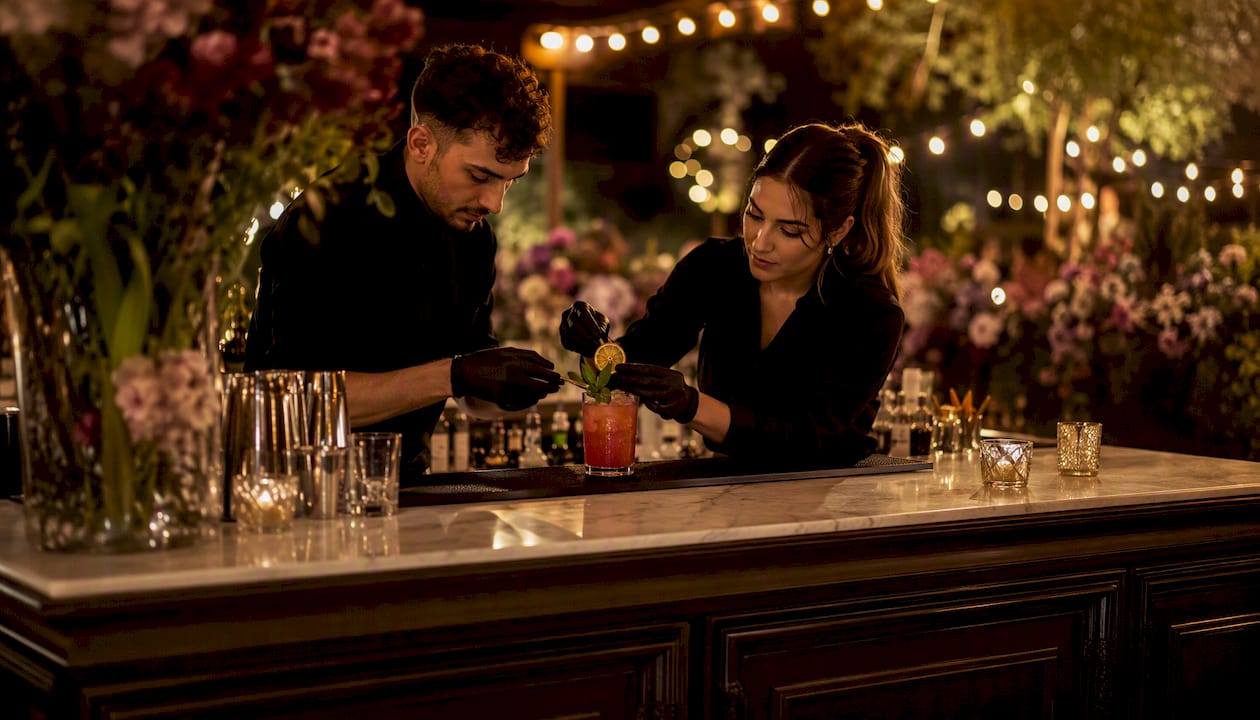
The ten highest-value interactive cocktail stations for weddings, corporate events, and private parties are: build-your-own cocktail bar (best for medium-to-large weddings with moderate staffing), build-your-own mocktail bar (best for inclusive events of any size, zero staff required), champagne or prosecco wall (best for cocktail hours and photo-forward weddings), botanical infusion bar (best for intimate weddings and brand activations), garnish and finishing station (best as an add-on to any staffed bar), tiki punch bar (best for outdoor summer parties), sangria or punch wall (best for high-volume events with minimal staff), signature cocktail station with recipe cards (best for branded corporate events), interactive cocktail wall (best for high-traffic events needing throughput and visual impact), and DIY bitters or infusion station (best for cocktail-enthusiast crowds and gifting moments). The rest of this article covers setup steps, logistics, inclusive options, and when to hand the station over to a professional team.
Key Takeaways
The most effective interactive cocktail station is the one matched to your guest count, staffing capacity, and permit situation before you commit to a theme or décor.
| Point | Details |
|---|---|
| Match station to guest count | Self-serve stations peak at 30–40 guests per hour; hire staffed bartenders for events over 75. |
| Always include zero-proof options | Pre-mixed mocktail jars with equal visual prominence lower stigma and serve every guest. |
| Plan permits and staffing early | Confirm Nevada alcohol permit requirements and staff roles at T-14 days, not the week of. |
| Pre-portion and stage restocking | Prepare a second round of every ingredient before doors open to eliminate the 90-minute gap. |
| Liquidcouragelv for staffed stations | Licensed, insured mobile bartending for Las Vegas and Henderson events, with full setup and teardown. |
Table of Contents
- What makes interactive cocktail stations worth the investment?
- How do you set up a build-your-own cocktail and mocktail station?
- Logistics checklist: permits, staffing, and timelines
- How do you make cocktail stations inclusive for all guests?
- What décor and themes make stations shareable?
- When should you hire professional bartenders instead of going DIY?
- What experienced bartenders know that most planners don’t
- Liquidcouragelv handles the station so you don’t have to
- Sources
What makes interactive cocktail stations worth the investment?
Not every drink format earns its floor space. These ten do, and here is why each one works at a specific event type:
- Build-your-own cocktail bar: Guests choose a base spirit, mixer, and garnish. High engagement, moderate complexity. Best for medium-to-large weddings where moderate staffing can oversee flow.
- Build-your-own mocktail bar: Same format, zero alcohol. Works for any guest count, any venue. No permit triggers, no age-check overhead.
- Champagne or prosecco wall: Guests pull a pre-poured flute from a pegboard display. Minimal interaction, maximum visual payoff. Best for cocktail hours and photo-forward receptions.
- Botanical infusion bar: Guests select botanicals and build a take-home infusion jar. High perceived value, strong gifting angle. Best for intimate weddings and brand activations.
- Garnish and finishing station: An add-on placed beside a staffed bar. Guests add their own herbs, citrus, or edible flowers. Low footprint, high personalization.
- Tiki punch bar: A pre-batched tropical punch with self-serve ladles and garnish options. Best for outdoor summer events where speed matters more than customization.
- Sangria or punch wall: A display-worthy punch bowl or wall tap with seasonal fruit and herb garnishes. Scales to 200+ guests with one restocker.
- Signature cocktail station with recipe cards: One or two branded drinks guests can mix themselves using pre-measured ingredients and printed cards. Best for corporate activations.
- Interactive cocktail wall: A vertical pegboard or illuminated display that holds individual servings. Reduces line length and doubles as a photo backdrop.
- DIY bitters or infusion station: Guests experiment with flavor drops and infusion kits. Niche but memorable. Best for cocktail-enthusiast crowds and gifting-forward events.
How do you set up a build-your-own cocktail and mocktail station?
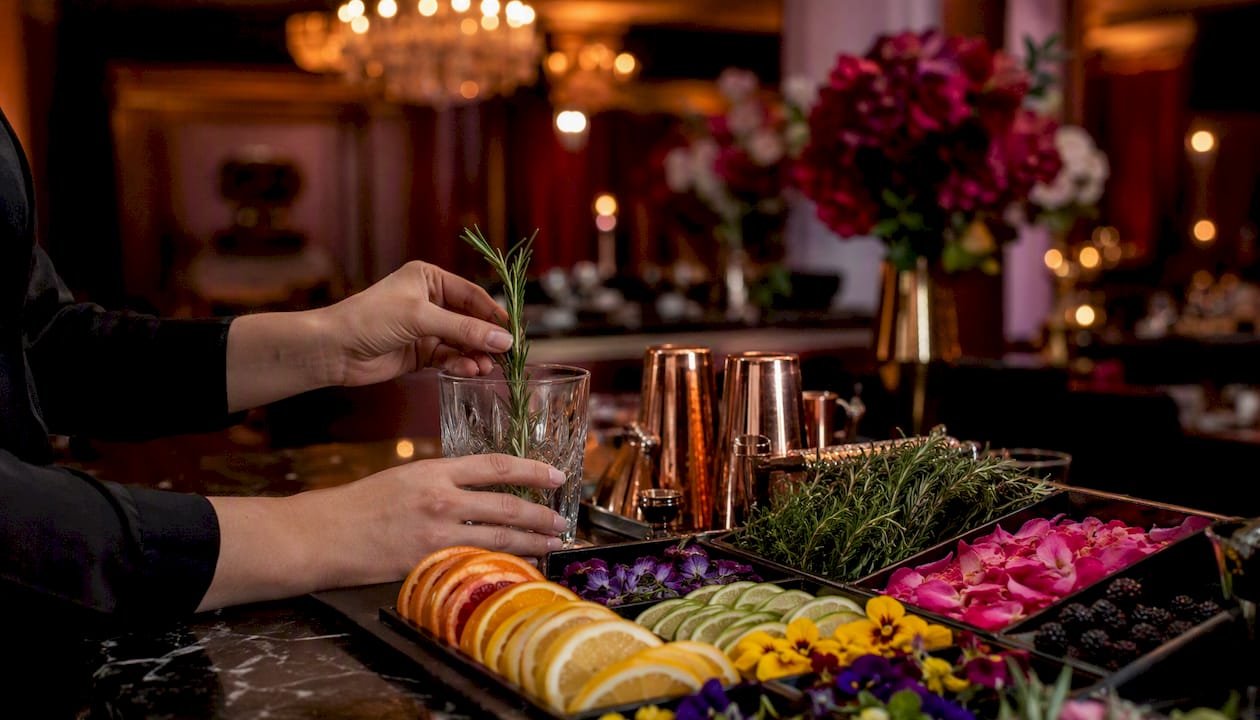
The layout order matters more than the décor. Set up in this sequence and guest flow almost organizes itself.
Step-by-step setup:
- Glassware and ice first. Place glasses at the start of the line with an ice bin and scoop immediately after. Guests fill their glass before touching anything else, which prevents backflow.
- Mixers and syrups next. Line up club soda, tonic, citrus juices, and simple syrup in labeled pitchers or dispensers. Keep alcoholic and non-alcoholic mixers on separate sides of the table.
- Spirits third. Limit to 2–3 base spirits (vodka, tequila, and one whiskey covers most preferences). Fewer choices mean faster decisions and shorter lines.
- Garnishes at the end. Fresh citrus wheels, herbs, and cocktail picks go last so guests finish their drink before reaching for a topping. Use tongs for every garnish, never shared spoons.
- Tools alongside garnishes. A few jiggers, cocktail spoons, and strainers distributed appropriately. Pre-label every tool with its station position.
- Signage throughout. Post a simple menu card at the start of the line, allergen flags at each ingredient, and a “build your drink” instruction card at the midpoint.
Supplies checklist per 50 guests:
- Approximately 60 glasses with a buffer for breakage and doubles
- Two ice bins, adequately filled and restocked regularly during the event
- 4 jiggers, 2 cocktail spoons, 2 strainers, 1 muddler
- Tongs for every garnish station
- Sufficient napkins for guests
- Waste bins for ice/liquid and garnish scraps
Sample mini-menu (3 recipes, portions for one drink):
- The Classic Mule: 2 oz vodka, 4 oz ginger beer, 0.5 oz lime juice, lime wheel garnish.
- Citrus Spritz: 1.5 oz tequila, 3 oz club soda, 1 oz orange juice, orange slice garnish.
- Garden Mocktail: 4 oz tonic, 1 oz simple syrup, 0.75 oz lemon juice, fresh mint sprig.
Pro Tip: Place a “build your drink” card visibly along the station to guide guests mid-build, not at the start. Guests who read it mid-build make fewer mistakes and ask fewer questions, which cuts wait time noticeably.
Logistics checklist: permits, staffing, and timelines
The four things that cause most interactive station failures are understaffed service, missing alcohol permits, inadequate glassware and waste management, and no restocking plan. Address all four before the event date.
- Venue footprint: Each station needs a minimum 6-foot table plus 3 feet of guest-access clearance on the front side. Cocktail walls need wall or pipe-and-drape anchor points.
- Power and water: Ice machines and blenders need dedicated circuits. Confirm with the venue at least 14 days out.
- Insurance and liability: Any event serving alcohol should carry host liquor liability coverage. Verify your venue’s policy and supplement with event insurance if needed.
- Alcohol permit triggers: In Nevada, serving alcohol at a private event on a licensed venue’s premises typically falls under the venue’s license. Off-site or unlicensed venues may require a special event permit from the Nevada Department of Taxation. Confirm with your venue’s coordinator and a licensed caterer before finalizing your setup.
- Age verification: Assign one staff member specifically to ID checks at the station entrance. Never rely on guests to self-police. A wristband system (21+ gets a colored band) is the fastest method for large events.
- Staff roles: Sufficient staff assigned to roles such as ID checking, restocking, and sanitation, scaled to guest count and station number.
- Cleaning schedule: Wipe down surfaces every 30 minutes. Replace tongs and spoons every 60 minutes. Swap garnish trays when they reach half-empty.
Timeline (working backward from event start):
- T-14 days: Confirm venue footprint, power access, and permit requirements. Use a run-of-show schedule to slot station service windows and staff handoffs.
- T-7 days: Order spirits, mixers, garnishes, and rental glassware. Confirm staffing headcount.
- T-3 days: Run a site test. Set up the full station, time a mock guest flow, and identify any bottlenecks.
- Day of: Arrive 2 hours before guests. Ice goes in last, 30 minutes before doors open.
For corporate cocktail receptions, sequencing the station service window within the broader event timeline is covered in detail in this corporate reception guide.
Budget ballparks: A DIY station for 50 guests typically runs $300–$600 in supplies and rentals. A fully staffed station with a licensed bartending team runs $800–$1,500 depending on service length and package scope. Those ranges do not include spirits, which vary widely by brand selection.
How do you make cocktail stations inclusive for all guests?
Self-serve stations lower the stigma around not drinking when mocktails are given equal visual prominence. That means a dedicated mocktail section, not a single labeled bottle tucked at the end of the alcohol row.
- Mocktail section: Mirror the alcoholic side with the same garnish variety and glassware. Pre-mixed zero-proof jars (sealed, labeled, ready to pour) speed service and guarantee consistent flavor.
- Labeling templates: Use three-color flag labels: green for non-alcoholic, red for alcoholic, yellow for allergen alerts (nuts, sulfites, citrus). Place flags on every bottle and pitcher, not just the menu card.
- Cross-contamination control: Keep mocktail mixers on a physically separate section of the table, with dedicated tongs and spoons. Never share tools between alcoholic and non-alcoholic sides.
- Lower-sugar option: Include one unsweetened sparkling water with citrus and herb garnishes as a zero-sugar, zero-proof choice. Guests with dietary restrictions appreciate having something beyond sweet mocktails.
- Allergen card: Post a printed allergen card listing every ingredient at the station. Include common triggers: sulfites (wine-based mixers), tree nuts (orgeat syrup), and gluten (some flavored spirits).
Pro Tip: Pre-mixed zero-proof jars are the single best inclusivity upgrade you can make. Fill 4-oz mason jars with your mocktail base the night before, refrigerate, and set them out labeled and ready. Guests who don’t drink get the same “build your drink” moment without waiting for someone to mix from scratch.
What décor and themes make stations shareable?
Styling choices that increase dwell time and photo sharing come down to three elements: a clear visual anchor, readable signage, and one prop that photographs well from 3 feet away.
- Botanical garden: Terracotta pots, dried florals, kraft paper labels, and a wooden crate display. Pairs naturally with gin, elderflower, and herb-forward mocktails.
- Tropical tiki: Bamboo runners, tiki mugs, paper parasols, and a pineapple centerpiece. Works outdoors and signals “fun” immediately.
- Vintage speakeasy: Dark wood trays, amber bottles, chalkboard menus, and Edison bulb string lights. Strong for indoor winter events and corporate cocktail hours.
- Minimalist modern: White linens, geometric risers, clear acrylic signage, and a single statement floral. Photographs cleanly and fits any venue aesthetic.
- Branded corporate: Custom-printed menus, logo-embossed napkins, and a branded backdrop panel. For corporate branded cocktail stations, the backdrop doubles as a photo op and reinforces brand recall.
Photo-op tip: Place your most visually striking element (a neon sign, a floral arch, or a branded panel) directly behind the station at standing height. Light it from below with warm LED strips. Guests will photograph themselves at the station without being prompted, which means organic social sharing at no additional cost.
When should you hire professional bartenders instead of going DIY?
Hire a staffed team when any of these conditions apply: guest count exceeds 75 for a cocktail station, the event spans multiple stations simultaneously, or the menu includes advanced techniques like molecular mixology or liquid nitrogen effects. Those add-ons raise safety and insurance requirements beyond what a self-serve setup can handle.
What professional bartenders bring that DIY doesn’t:
- A valid Nevada alcohol handler’s card and familiarity with local permit requirements
- Trained ID verification and refusal protocols
- Throughput speed: a skilled bartender serves 50–75 guests per hour; a self-serve station peaks at roughly 30–40
- Flair, hospitality, and the ability to read a guest who has had enough
- Secure alcohol handling, including lockup between service windows
Questions to ask any staffed vendor (in this order):
- What is your bartender-to-guest ratio for a station format?
- Are your staff licensed and insured in Nevada?
- How do you handle restocking mid-event, and who is responsible for supply runs?
- Can you provide a sample run-of-show for the station service window?
For a deeper breakdown of when staffed service pays off versus DIY, the planner’s guide to cocktail hour bartenders covers the decision criteria in detail.
Cost-benefit note: DIY labor plus glassware rental plus spirits often lands within $150–$200 of a staffed flat fee once you account for setup time, cleanup, and the risk of a permit gap. For events over 100 guests, the math almost always favors hiring a licensed team.
What experienced bartenders know that most planners don’t
The most common failure at self-serve stations is not the recipe or the décor. It is the restocking gap: the 20-minute window around the 90-minute mark when ice runs low, garnishes are picked over, and the station looks abandoned. Guests stop using it, and the energy drops.
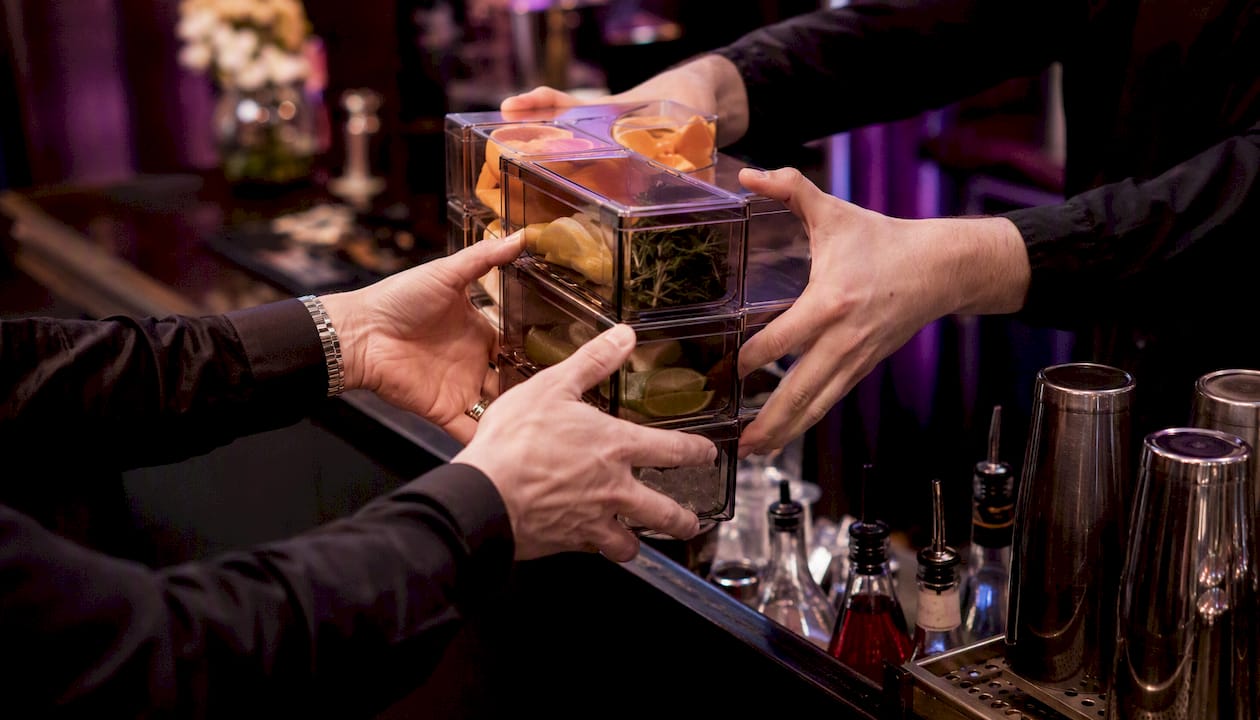
The fix is staging. Before the event opens, pre-portion a second round of every ingredient in labeled containers behind the station. Train your restocker to swap, not refill: pull the depleted tray, drop in the pre-staged replacement, and the station is back at full in under two minutes. That one habit keeps the station looking fresh for the full service window.
A second thing most planners underestimate: glassware math. The standard rule is one glass per guest, but at a self-serve station guests frequently set down a glass, wander off, and grab a fresh one on return. Budget 1.2–1.5 glasses per guest and you will not run short.
Liquidcouragelv handles the station so you don’t have to
Staffed interactive stations remove the permit risk, the restocking gap, and the ID-check liability from your plate entirely. For events in Las Vegas and Henderson, Liquidcouragelv provides licensed bartenders, event insurance, custom menus, branded signage, and full setup and teardown for cocktail stations of any format.
Whether you are planning a wedding reception, a corporate activation, or a private party, the team builds the station to your theme, manages the service window, and handles every compliance detail specific to Nevada venues.
- Licensed and insured staff with Nevada alcohol handler’s cards
- Custom cocktail and mocktail menus with printed recipe cards and allergen labeling
- Branded signage and décor coordination
- Full setup, restocking, and teardown included
- Service area: Las Vegas and Henderson, Nevada
View event bartending packages or book a consultation at Liquidcouragelv to confirm availability for your date.
Sources
- How to Create a Build-Your-Own Cocktail/Mocktail Bar — RW Knudsen
- 9 Clever Cocktail Stations and Displays for Summer Events
- Unforgettable Interactive Cocktail Stations in Bangkok – A Fun, Hands-On Mixology Experience!
- The Botanical Bar Experience – Craft Cocktail Infusions
- The Cocktail Wall | De Cocktailfiets