
Customizing a bar package comes down to six decisions: who your guests are, what the bar serves, how many drinks you need, how many bartenders it takes to pour them, how the bar looks, and what your venue and local rules allow. Settle those in order and the quote becomes easy to compare. Skip one and you will either overspend or run dry at 10 p.m. Below is how we walk Las Vegas and Henderson clients through each step.
TL;DR
- Start with your guest count, event length and crowd type, then choose a drink style (full bar, beer and wine, signature cocktails) before you talk price.
- Plan roughly 1.5 drinks per drinker per hour, front-loaded, and add a buffer rather than guessing.
- Ask what is included: bartenders, liquor, mixers, ice, glassware, bar setup, insurance and licensing. Packages differ most on those details.
- Check your venue early. Henderson city parks and facilities do not allow alcohol, and liquor caterers working in unincorporated Clark County need an event permit filed ahead of time.
- Branding, custom menus and a bar design are add-ons you can choose one by one.
Table of Contents
- Start with the guests, not the menu
- Choose a bar style
- Work out quantities with a method
- Decide how many bartenders you need
- Customize the bar itself
- Compare packages on what they include
- Check the venue and the rules first
- Our perspective
- Build your package with us
- A simple customization timeline
- FAQ
- Sources
Start with the guests, not the menu
Before anyone picks a vodka, answer four questions. They shape every line of the package.
- How many guests, and how many are drinking? A 150-person wedding with a toast-only crowd needs a very different bar from a 150-person product launch at a resort.
- How long is the bar open? Four hours of service is not four hours of steady drinking. Most of the volume lands in the first two.
- What is the mood? A black-tie reception, a trade-show mixer and a backyard birthday in Henderson each call for a different pace and menu length.
- Who is paying for what? Host-paid open bar, a limited bar with a drink-ticket cap, or a cash bar change how you size everything.
Write those down in one paragraph. It becomes the brief you send to every bartending company you contact, and it makes quotes comparable.
Choose a bar style
Most custom packages are built from one of these starting points.
| Bar style | Best for | What you control |
|---|---|---|
| Full open bar | Weddings, galas, milestone parties | Spirit tiers, mixers, garnishes, signature drinks |
| Beer and wine only | Daytime events, casual receptions, tight budgets | Wine varietals, beer styles, non-alcoholic options |
| Signature cocktails plus beer and wine | Most weddings and corporate receptions | One or two named drinks, so the line moves faster |
| Limited or ticketed bar | Conferences, company parties | Drink caps, tickets, hosted hours |
| Dry hire | Hosts who buy their own alcohol | Staff only, you supply liquor and supplies |
The signature-plus-beer-and-wine model is popular for good reason. Two cocktails keep the line short, give the event a personality and cost less than stocking every spirit. For ideas on what to pour, see our guide to selecting wine and beer for your wedding reception.
Pick the spirits and tiers deliberately
You do not need ten bottles. A well-chosen set covers nearly every request: vodka, gin, tequila, whiskey or bourbon, rum and a scotch if your crowd drinks it. Then decide whether you want house pours, mid-shelf or premium labels. A good bartender will tell you where upgrading is noticeable (a margarita with a good tequila) and where it is not (a vodka cranberry).
If a particular label means something to you, say so. Custom packages exist precisely so the bar can reflect the couple or the company instead of a stock list. Our best liquor packages for desert weddings in Vegas page shows how that choice plays out in practice.
Think about the desert
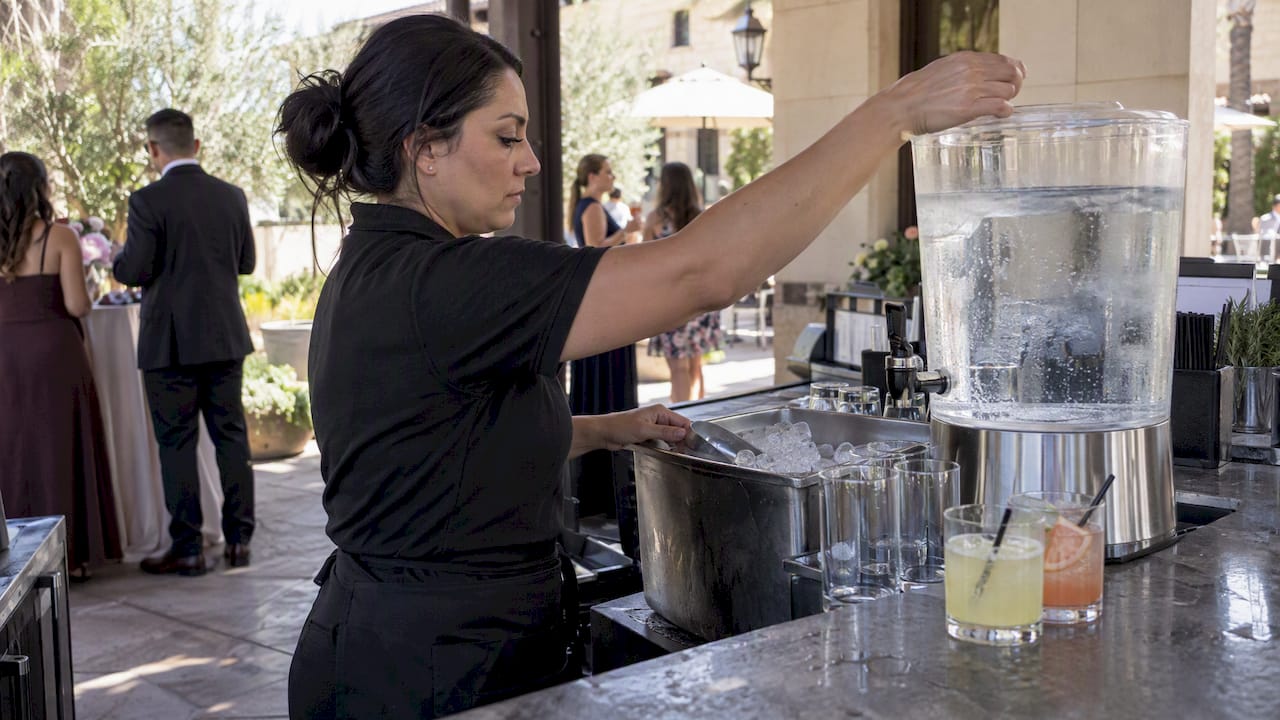
Las Vegas heat changes the menu. Outdoor ceremonies and pool-adjacent receptions push guests toward cold, refreshing drinks and water. Build a hydration station into the package, plan extra ice, and lean on citrus-forward cocktails, spritzes and light beer for daytime. Heavy, creamy or hot drinks rarely earn their place on a July patio.
Work out quantities with a method
Estimating by feel is how events run out of ice. Professional planning models use a simple structure. One published event-planning methodology assumes about 1.5 drinks per drinker per hour, then scales that down as the night goes on: full pace in the first hour, then 0.9 in the second, 0.75 in the third, falling to 0.45 by the sixth hour. The same source notes that the share of guests drinking tends to be higher at small gatherings and lower at very large ones, and that a buffer of about 15% covers heavy pours and spills.
Here is a worked example using those figures. It is a planning illustration, not a guarantee.
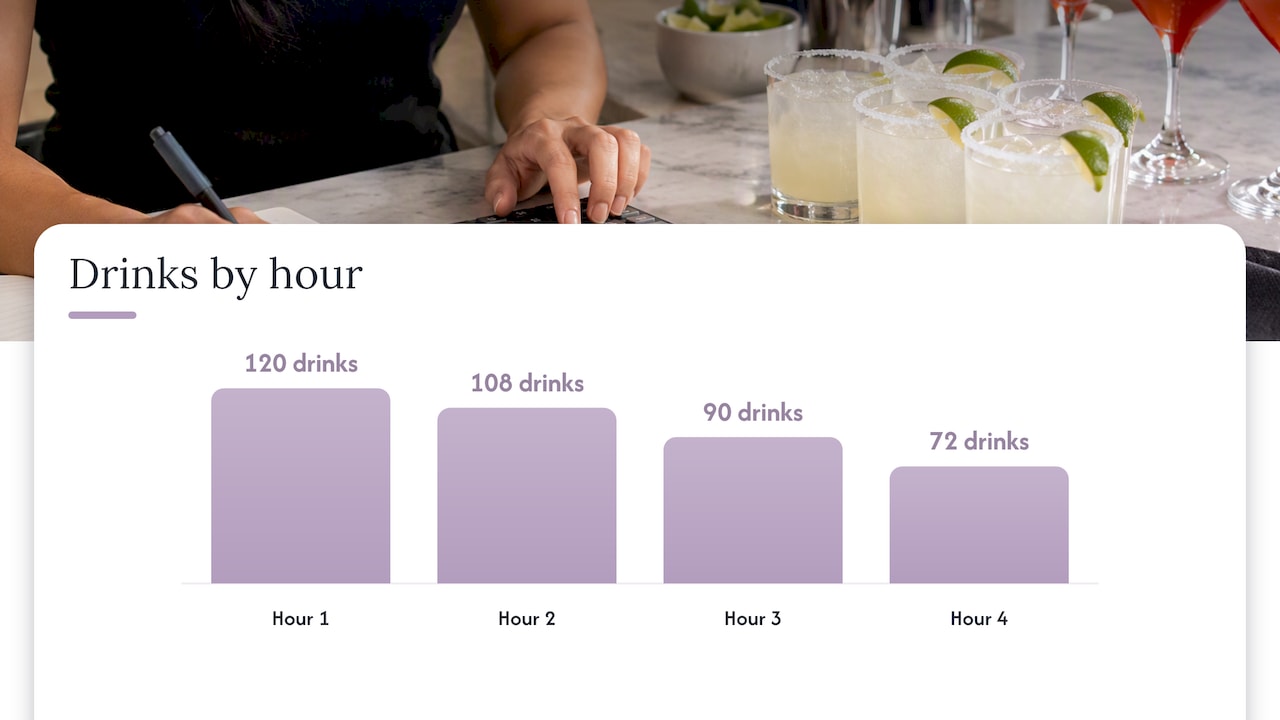
- 100 guests, 4-hour bar, assume 80 of them drink.
- Hour 1: 80 × 1.5 × 1.0 = 120 drinks.
- Hour 2: 80 × 1.5 × 0.9 = 108 drinks.
- Hour 3: 80 × 1.5 × 0.75 = 90 drinks.
- Hour 4: use roughly the same or a slightly lower factor, say 0.6, which gives 72 drinks.
- Total: about 390 drinks. Add 15% and you plan for about 449.
Then split by category. The same methodology cites a common wedding split with 37.5% of drinks going to wine, and corporate events often follow an even beer, wine and liquor split of roughly a third each. Treat those as starting points. A tequila-loving crowd or a craft-beer office will break the pattern, and you know your guests better than any formula.
For more on this, our wedding alcohol quantity estimates for Las Vegas planners goes deeper, and a good bartender will check your math against what they see at similar events.
Do not forget ice, mixers and non-alcoholic options
A package that quotes liquor only is not a package. Ask for ice, mixers, juices, garnishes, cups and napkins to be itemized. Add sparkling water, soda and at least one alcohol-free drink that looks as good as the cocktails. Guests who are driving, pregnant or simply not drinking should not be stuck with a plastic cup of cola.
Decide how many bartenders you need
The bar line is where a party succeeds or stalls. The number of bartenders depends on guest count, menu complexity and how much of the drinking is packed into a short window, such as the cocktail hour or right after dinner.
A few practical rules:
- A short menu serves faster. Two signature cocktails, beer, wine and a few spirits move much quicker than a bar that takes custom orders for anything.
- Shaken and muddled drinks take longer than pours. If you want a muddled mojito bar, add a bartender.
- Cocktail hour is the peak. Guests arrive thirsty and all at once. Our piece on why cocktail hour needs bartenders explains how to staff for it.
- Multiple stations beat one long bar. A second small station near the ceremony space or the dance floor cuts lines and keeps guests moving.
When you request quotes, ask how many bartenders the company recommends for your numbers and why. A confident answer includes your menu, your venue layout and your timeline, not just a headcount formula.
Customize the bar itself
This is where a package stops looking like everyone else’s. Options usually fall into three areas.
Bar design. A portable bar can be styled to your event: wood, mirrored, lit, or built to match a color palette. We offer bar rental packages for hosts who want the bar to be part of the decor.
Branding. For corporate events, logo signage, branded napkins and a drink named for the product or the team turn a bar into a brand moment. Our guide on creating branded cocktails for corporate events covers how to do it without slowing service. For weddings, a monogram sign and a menu card with names for the drinks do the same job.
The menu. Name your signature drinks after something real: where you met, a pet, the company’s flagship product. Print a small menu so guests do not have to ask what is on offer.
If you want a more theatrical experience, you can bring in dedicated cocktail craftspeople instead of standard bartenders. Our overview of mixologists for hire in Las Vegas explains when that is worth it.
Compare packages on what they include
Two quotes that look $500 apart are often not the same package. Use this checklist to make them equal before you compare.
- Number of bartenders and any bar-back or support staff
- Hours of service, and whether setup and breakdown are included in that time
- Who supplies liquor, beer and wine, and how unused bottles are handled
- Mixers, ice, garnishes, glassware or cups
- Bar, tables, signage and any lighting
- Liability insurance and the company’s licensing
- Travel, overtime and gratuity policies
- Alcohol-free drinks and water service
A detailed breakdown is in our article on what a bar package includes for your event. For weddings specifically, use the wedding liquor catering contract checklist for couples before you sign.
It also helps to see how other markets present vendor pricing so you know what a clear quote looks like. For example, this Kansas City wedding vendor cost breakdown lays out ranges openly, which is the standard to expect from any wedding vendor, bartenders included.
Check the venue and the rules first
In Southern Nevada, the venue can decide what your package looks like, and the paperwork is not something you want to discover a week out.
Henderson. The City of Henderson states that no alcohol is permitted in any Henderson facility or park. If you were picturing a toast at a city park, choose a private venue, hotel, restaurant or home that allows alcohol.
Unincorporated Clark County. Clark County says that liquor caterers must submit an event permit form and fees at least ten working days before the event. City-licensed caterers from Las Vegas, Henderson or North Las Vegas must show proof of valid city licensing to work in unincorporated areas. Many resort and Strip properties are in unincorporated Clark County, so ask your bartending company who files what.
The City of Las Vegas. Liquor licensing is covered in Chapter 6.50 of the Las Vegas municipal code, which defines what counts as an alcoholic beverage. A caterer working inside city limits should be able to explain its compliance in plain terms.
Also ask your venue about house rules: outside alcohol policies, corkage fees, required insurance certificates, load-in times and whether they restrict the type of bar you can bring. Get answers in writing, and share them with your bartending company before the menu is final.
Our perspective
We have worked bars in Las Vegas and Henderson for over 20 years, and the pattern is consistent: the best packages are not the biggest ones, they are the ones that were decided in the right order. Couples and planners who start with the guest list, then the venue rules, then the menu, almost always spend less and stress less than those who start by browsing cocktail photos.
Three things we tell clients most often. First, shorten the menu. A tight list with two good signature drinks beats a sprawling one, and it gets guests their drink faster. Second, put money into staffing before decor. A beautiful bar with one overwhelmed bartender is a worse experience than a simple bar with enough hands. Third, ask every vendor about licensing and insurance in the first conversation. We work only in Las Vegas and Henderson, so we know which venues have quirks, and we handle the compliance side so you do not have to.
Customizing should feel like a conversation, not a form. Tell us what the night should feel like, and we will build the package around it.
— Brennon
Build your package with us
If you are planning a wedding, company event or private party in Las Vegas or Henderson, we can build a custom bar around your guest count, venue and budget, including menu, bar design, branding and venue coordination. See our wedding bartending services, our corporate event bartending, or start at Liquid Courage and tell us about your date.
A simple customization timeline
- Four to six months out (weddings) or six to eight weeks out (corporate): lock the venue, confirm alcohol policies and set the guest count range.
- Three months out: choose your bar style and signature drinks, and request quotes using the same written brief.
- Six to eight weeks out: sign the contract, confirm what is included and decide on branding and bar design.
- Two weeks out: finalize the headcount, adjust quantities, and confirm load-in and permit details with your venue and bartending company.
- Event week: share the schedule, including toasts, dinner service and the last call time.
These timings are our working guidelines, not legal requirements. Peak wedding dates in Las Vegas fill early, so earlier is safer.
FAQ
Can I bring my own alcohol and only hire bartenders?
Often yes, and that is called dry hire. You supply the liquor and supplies, and the company supplies the staff. Check your venue’s policy first, because some require that alcohol come only from them or a licensed caterer.
How far ahead should I book a bartending company in Las Vegas?
For weddings, as soon as you have a venue and date, especially for spring and fall weekends. For corporate events, a few weeks is often enough, but conventions and holiday parties book up quickly.
Do I need a permit for a private party?
It depends on where the event is and who serves. Licensed liquor caterers working in unincorporated Clark County must file an event permit at least ten working days ahead, according to Clark County. Ask your bartending company to confirm what applies to your address.
How do I keep the bar line short?
Limit the menu to two signature cocktails plus beer, wine and a few spirits, and add a second bartender or station for large groups. Serve a welcome drink as guests arrive so the first rush is spread out.
Sources
- How the Calculator Works: Methodology, StockTheEvent
- FAQ List, City of Henderson
- Liquor and Gaming Miscellaneous Forms, Clark County
- Chapter 6.50 Liquor Control, Las Vegas Code of Ordinances, Municode