
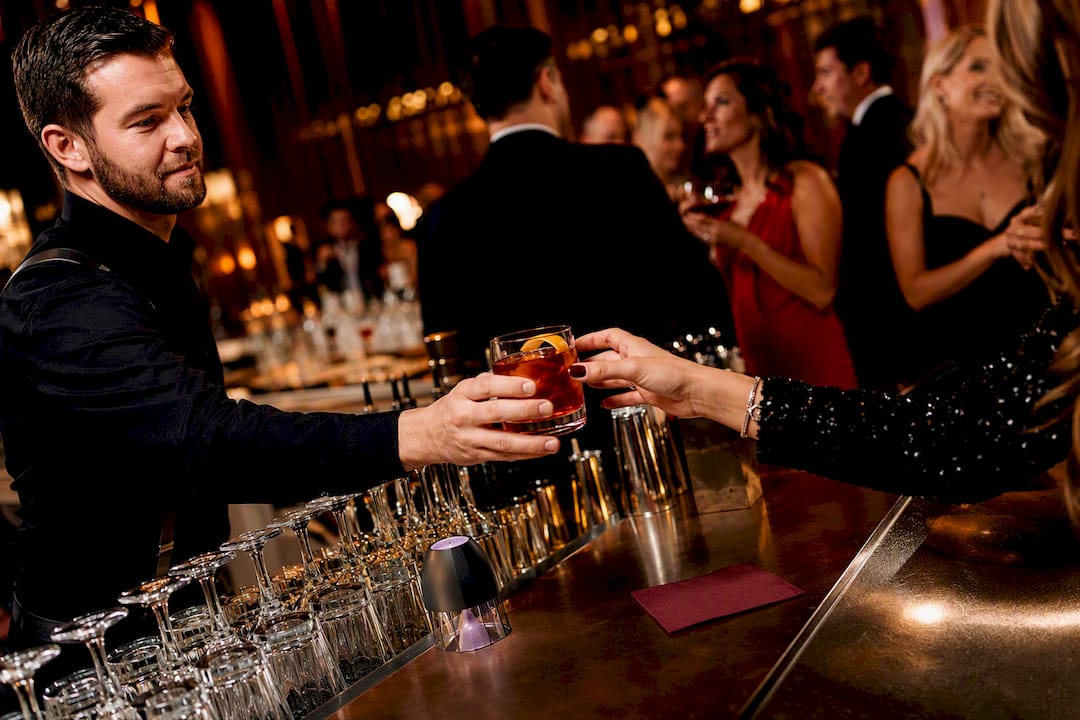
If you control the venue and want maximum net proceeds, hire a mobile bar or go dry hire and run your own bar; if you’re working inside someone else’s restaurant or club, negotiate a clear revenue-share or donate-a-drink deal instead. Either way, three levers decide how much money actually reaches your cause: the revenue-share terms, how tightly you run the clock and how fast your line moves. A turnkey option like Liquid Courage LV removes most of the guesswork for organizers who don’t want to manage licensing and staffing themselves.
TL;DR:
- Hosting a fundraiser at a slow weeknight and negotiating a clear revenue split in writing maximizes earnings and reduces disputes with the venue.
- Staffing should include one lead bartender, one bartender per 30 to 50 guests, and additional support personnel to ensure smooth service and increase donation potential.
- Pre-sale tickets with drink vouchers and a mobile POS system provide better accountability and easier reconciliation than cash-only bars.
- Using a mobile bar service like Liquid Courage LV handles licensing and staffing, allowing volunteers to focus on collecting donations without logistical concerns.
- Planning layout, menu, and timing carefully prevents donation loss from bottlenecks, slow service, or poorly communicated donation messaging.
Table of Contents
- Venue Partnership, Mobile Bar, or Dry Hire: Which Fundraiser Bar Setup Wins?
- What Timing and Revenue-Share Terms Actually Move the Needle?
- How Many Bartenders Do You Actually Need?
- Should You Use Tickets, a POS System, or Straight Cash?
- What Should the Bar Layout Actually Look Like?
- What Does a Realistic Fundraiser Bar Budget Look Like?
- What We See Work Best at Fundraiser Bars
- Let Liquid Courage LV Handle the Bar So Your Volunteers Don’t Have To
- Sources
- FAQ
Venue Partnership, Mobile Bar, or Dry Hire: Which Fundraiser Bar Setup Wins?
The right fundraiser bar setup depends on who’s taking the financial risk and who’s doing the pouring.
Venue partnership means you bring the crowd, the venue keeps its liquor license and staff, and you split proceeds. Negotiate the split before you print a single flyer.
Mobile bar hire puts a licensed, insured bartending team in your space, whether that’s a ballroom, a parking lot, or a backyard. You skip the venue’s cut entirely and keep more of what guests spend, though you’re now responsible for permits and the bar’s presence in a space that may not have one.
Dry hire means you rent the equipment (tables, tubs, glassware) and supply your own alcohol and volunteer labor. It can produce the highest margins on paper, but it also shifts liquor liability, ID checks, and pour control onto people who may have never worked a bar before.
Run through this before locking your setup:
- Who holds the liquor license and insurance for the event?
- Do you have volunteers willing to work a four-hour shift on their feet?
- Is your margin better served by owning 100% of a smaller bar or 15% of a bigger one?
- Does your venue require you to use their in-house bar staff by contract?
What Timing and Revenue-Share Terms Actually Move the Needle?
Most of the money left on the table at fundraiser bars gets lost before the first drink is poured in scheduling and contract terms nobody bothered to negotiate.
- Pick a slow night, not a popular one. A venue is far more willing to hand over its bar on a quiet Tuesday than a Saturday, and industry guidance on hosting bar fundraisers recommends an evening window lasting several hours, often scheduled in the early evening, as the sweet spot for keeping energy high without exhausting staff or volunteers.
- Negotiate the split in writing. That same guidance points to a typical range of a moderate percentage of total sales donated back to the cause, though some venues prefer to donate proceeds from one or two specific menu items instead of a cut of everything. Get the exact number, the exact timing of payment, and whether it’s gross or net sales, documented before the event, not after.
- Build the menu around the ask. A themed cocktail with a name tied to your cause does double duty: it’s easy to feature on social media beforehand, and it gives donors a specific, memorable thing to buy. Pairing that with a pre-sale ticket that includes a drink voucher, priced around $10, locks in a baseline donation before anyone walks through the door.
Pro Tip: Name your signature drink after the cause, not the event. “The Second Chance Sour” gets shared and remembered; “The Fall Gala Special” does not.
How Many Bartenders Do You Actually Need?
Understaffing is the single fastest way to lose donations, because a slow line doesn’t just annoy guests, it stops them from buying a second or third drink, underscoring why guest experience principles that prioritize smooth service and reduced wait times increase satisfaction and retention.
Staffing guidance often calls for about one bartender per few dozen guests, adjusted for event style and volume for VIP-style setups, a ratio that holds up well for fundraiser bars where donors expect a polished experience, not a dive-bar wait. That figure changes the math on almost every budget conversation you’ll have with a committee that wants to cut staff to save money.
A well-run fundraiser bar typically needs:
- A lead bartender or bar manager who owns pour policy and closes out the till
- One bartender per 30 to 50 guests, scaled up for open bar or signature-drink-only events
- A runner or two handling ice, garnish, and empty glass pickup so bartenders never leave the well
- A dedicated cashier or float person, separate from anyone pouring drinks
Certified, responsible-service training matters as much here as at any commercial bar. Responsible beverage service certification covers ID checks and cutoff policies that protect your charity’s reputation as much as any guest’s safety. Pre-batching your signature cocktail and running a separate express station for beer and wine keeps the line moving even during the first-hour rush, when everyone arrives at once. For events with a networking or mingling format, service flow planning matters just as much as headcount.
Should You Use Tickets, a POS System, or Straight Cash?
Cash-only bars are the easiest to run and the easiest to lose money on, because there’s no paper trail if the count comes up short at the end of the night.
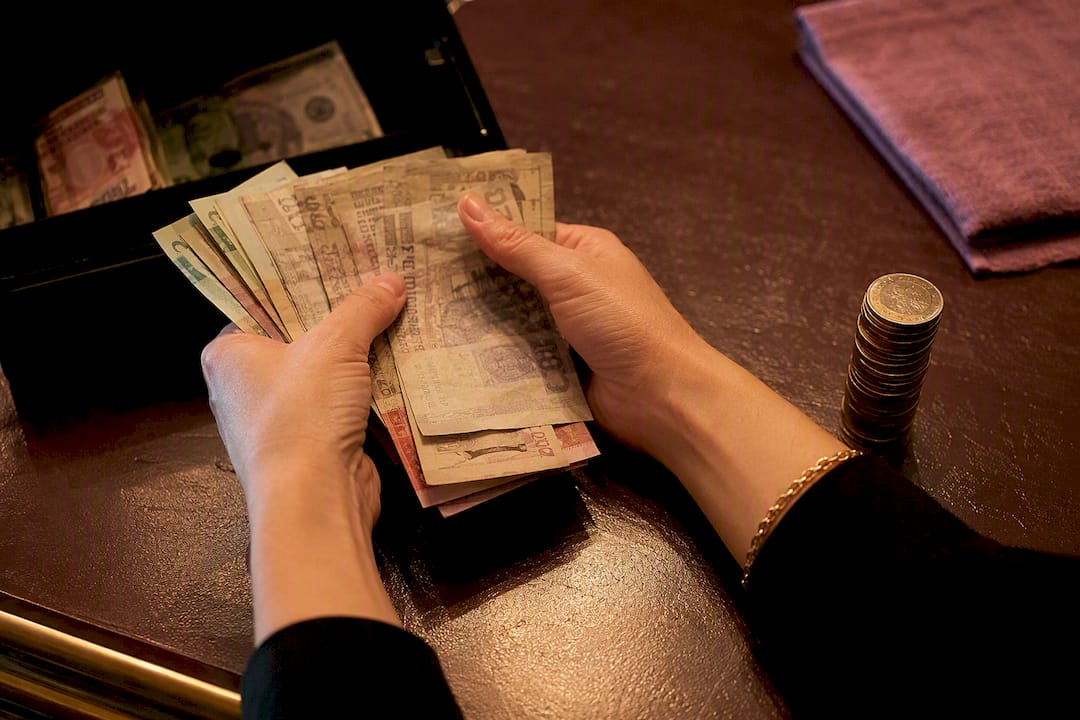
Pre-sale tickets that bundle in a drink voucher solve two problems at once: they lock in revenue before the event and give you a physical count to reconcile against pours. Door tickets work if you’re not pre-selling, but they still beat pure cash for accountability. Mobile POS card readers add a small transaction fee but create a digital sales record that matches what a bar manager counts in the drawer.
A clean setup usually includes:
- Pre-sale tickets with a drink voucher for baseline donation revenue
- A mobile card reader for on-site upsells and additional drink purchases
- A physical stub or voucher system so counts can be checked against pours, not just cash in a box
- One person, and only one person, responsible for closing out the till and filing the final report
Keep every ticket stub, export every POS report, and cross-check both against your reconciliation process before anyone signs off on the final donation number. Disputes over whether a revenue-share deal was based on gross or net sales are one of the most common reasons a fundraiser bar ends on a sour note with the venue, so document that split in writing before the event, not after the receipts are counted.
What Should the Bar Layout Actually Look Like?
Layout is where a lot of fundraiser bars quietly bleed donations, because a cramped setup slows every single transaction all night long.
- Give the bar room to breathe. A minimum clear queue depth of 6 to 8 feet in front of the bar keeps guests from bottlenecking into the walkway behind them.
- Stock for the crowd you actually expect. Budget enough cups or glassware for at least two drinks per guest, plus ice at roughly one pound per person for a warm-weather outdoor event.
- Post pricing and donation messaging where people are already standing still. A simple sign near the point of sale showing where the money goes converts more add-on donations than any verbal pitch.
- Plan an ADA-accessible path to the bar and a clear route for spill cleanup, both things a venue coordinator will ask about before signing off.
- Assign breakdown duties before the event starts, not after everyone’s tired and the trash bags are already full.
What Does a Realistic Fundraiser Bar Budget Look Like?
Numbers make the trade-offs between setup types concrete fast.
A typical budget line-up includes mobile-bar or equipment rental fees, staff hours (using that one-per-30-to-50 ratio), beverage cost, POS or ticketing fees, and consumables like cups, ice, and garnish. If 150 guests each buy a ticket with a drink voucher priced to provide a baseline donation, that’s $1,500 in guaranteed revenue before a single extra drink sells at the bar.
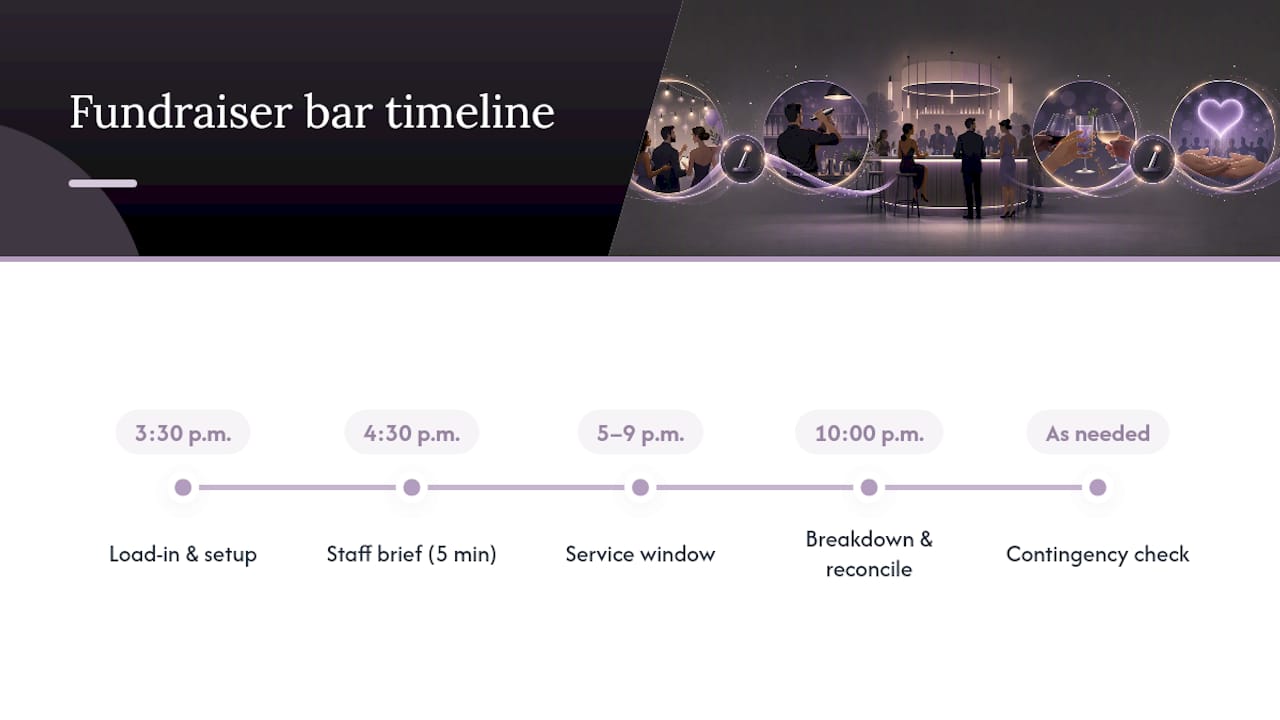
A sample evening runs load-in and setup checks around 3:30 p.m., a five-minute staff briefing at 4:30, a 5 to 9 p.m. service window, then breakdown and reconciliation wrapping by 10. Build in a contingency line for extra ice or an unexpected staffing gap. It’s the cheapest insurance in the whole budget.
What We See Work Best at Fundraiser Bars
The fundraisers that raise the most money are rarely the ones with the fanciest theme. They’re the ones where the bar never gets a line longer than four or five people deep. Committees tend to overspend on decor and underspend on bartenders, then wonder why net proceeds came in low. Liquid Courage LV’s staffing model exists because a team of experienced bartenders moves faster and catches more upsell moments than a well-meaning volunteer ever will. Prioritize speed, put the donation math in writing, and reconcile the numbers the same night.
— Brennon
Let Liquid Courage LV Handle the Bar So Your Volunteers Don’t Have To
A mobile bartending service that handles licensing, staffing, and setup logistics means your volunteers can spend the night collecting donations instead of restocking ice or fumbling with a keg tap. A mobile bar built specifically for an event avoids scheduling fights and revenue-share renegotiations that come with borrowing someone else’s bar staff, and a professional crew can work faster under pressure than a rotating shift of committee members.
Fundraisers booked more than a few weeks out get first pick of staffing and equipment, so reach out early rather than the week of the event. If you’re planning a fundraiser in Las Vegas or Henderson, Nevada, get a sense of what a professionally staffed bar looks like for your guest count and timeline through Liquid Courage LV’s event bartending hiring guide, or request a quote directly to lock in your date.
Pro Tip: Book your bartending team as soon as your venue and date are confirmed. Popular fundraising nights fill up staffing calendars fast.
Sources
For more on donation timing and revenue splits, see WebstaurantStore’s fundraiser night guide and Restaurant365’s responsible service overview.
- How to Host a Fundraiser Night at Your Restaurant or Bar
- Everything you need to know about responsible beverage service certification
- Mobile Bar Rental for Fundraisers Events | Philly Yard Bar
FAQ
How Long Should a Fundraiser Bar Event Run?
Most organizers plan a 4 to 5 hour evening window, commonly 5 p.m. to 9 p.m., on a slower weeknight to keep energy high without overtaxing staff or volunteers.
How Many Bartenders Do I Need for a Fundraiser?
Plan on about one bartender per few dozen guests, adjusted for event style and volume for a VIP-style setup, scaling up if you’re running an open bar or a high-volume signature cocktail menu.
Is a Mobile Bar or Venue Partnership Better for Fundraising?
A mobile bar through a service like Liquid Courage LV gives you full control of margins and staffing without splitting revenue with a venue, while a venue partnership requires less logistics but means negotiating a donation percentage.
What Payment Method Reduces Cash Handling Risk?
Pre-sale tickets with a drink voucher plus a mobile POS card reader create a paper and digital trail that’s far easier to reconcile than a cash-only bar.