
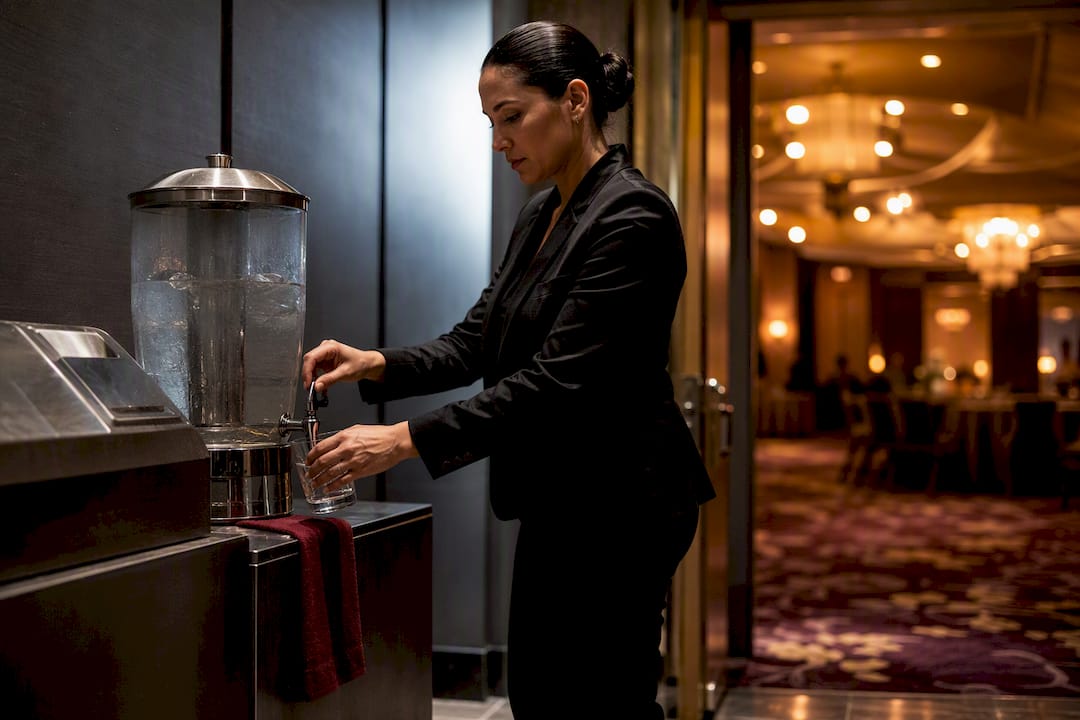
Water and non-alcoholic drinks aren’t an afterthought to your bar program. They’re part of it, and treating them that way starts with one decision: before you compare quotes, pin down who supplies the ice, water, glassware, and mixers. Ask every vendor for a written owner’s list in the proposal. This guide gives you the formulas, checklists, and load-in templates to make that happen.
TL;DR:
- Confirm that water, ice, and glassware suppliers are clearly listed in vendor proposals to avoid scope misunderstandings on event day.
- Calculate ice needs based on 1 to 2.3 pounds per guest, with outdoor events requiring higher amounts and a backup supply essential for larger crowds.
- Place the non-alcoholic station next to the main bar and ensure adequate power, water access, and overflow storage are secured early to prevent setup failures.
- Incorporate non-alcoholic drinks into the initial water and NA planning to ensure appropriate staffing, menu, and presentation standards are met, reflecting parity with alcohol service.
- Staff the bar with one bartender per 30 to 50 guests and include additional personnel for larger events or separate NA stations to prevent bottlenecks during peak demand periods.
Table of Contents
- What Should Be On Your Bar Planning Checklist?
- How Many Drinks and How Much Ice Do You Actually Need?
- What Should Vendor Proposals Actually Say?
- Where Should the Water Station Go, and What Does It Need?
- How Do You Make Non-Alcoholic Drinks Feel Intentional?
- How Many Bartenders and Barbacks Do You Need?
- How Long Should Beverage Service Run, and What Does That Change?
- How Do You Handle Allergies and Dietary Needs at the NA Station?
- How Do You Keep Water and NA Stations Safe and Sanitary?
- How Should You Plan for Waste and Sustainability?
- How Do You Coordinate Beverage Service With the Rest of the Event Timeline?
- Liquid Courage’s Take on Water and NA Planning
- How Liquid Courage Handles Your Water and NA Program
- Sources
- FAQ
What Should Be On Your Bar Planning Checklist?
Lock these items down before you sign anything, not after.
- Guest count and service windows. Cocktail hour only? Full reception? The math for water and ice changes with every added hour.
- A written service model. Get the owner’s list in writing: who supplies alcohol, ice, glassware, mixers, and water.
- Bar and NA station placement. Decide how many bars you need and put the non-alcoholic station right next to the main bar, not tucked in a corner.
- Ice, refrigeration, and power access. Confirm what the venue provides and what the vendor brings.
- Staffing minimums and backup plans. Ask what happens if a bartender calls out two hours before doors open.
- COI and permit responsibility. Someone has to hold the insurance certificate and know who pulls the permit.
- Presentation standards for NA drinks. Matching glassware and labeled recipe cards keep the mocktail station from looking like a leftover.
These variables, guest count, duration, preferences, staffing, and drink mix, are the same ones event bar planning guides point to as the drivers of every downstream decision. Get them wrong at the checklist stage and you’re fixing them live at the event.
How Many Drinks and How Much Ice Do You Actually Need?
Guesswork is how bars run dry at hour three. Use this formula instead.
- Hour one: plan for 2 drinks per guest. People drink faster when they arrive thirsty and the bar line is short.
- Every hour after: drop to 1 drink per guest.
- Outdoor or hot weather: add 20 to 30% on top of your total.
- Water’s share: budget for water making up 35 to 50% of total drink volume. Split it roughly two-thirds still, one-third sparkling unless your crowd skews toward one or the other.
- Ice: 1 to 1.5 pounds per guest indoors, rising to 2 pounds outdoors and up to 2.3 pounds once the thermometer clears 90°F.
Pro Tip: Convert ice pounds to bags before you order. Most bagged ice comes in 10 or 20 pound units, so a 300 guest outdoor wedding at 2.3 pounds per guest needs roughly 690 pounds, call it 35 bags of 20 pounds, plus a 10% buffer for melt and spills.
Here’s how that plays out at three common guest counts, assuming a four-hour outdoor reception:
| Guests | Total drinks (approx.) | Water volume | Ice (outdoor, 2–2.3 lb/guest) |
|---|---|---|---|
| 50 | 300 | 90 | 115 pounds |
| 150 | 690 | 375 | 300 pounds |
| 300 | 1,500 | 525–690 pounds | 690 pounds |
Round up, not down. Running short on ice is far more visible to guests than having ten extra bags stacked in a cooler.
What Should Vendor Proposals Actually Say?
Vendors fall into roughly three buckets: bartending-only or dry hire, where the client supplies alcohol and often ice and glassware; a full beverage program, where the vendor handles everything from spirits to garnish; and bundled liquor catering, which folds bar service into a broader food and beverage package. The scope varies enormously between vendors, and the biggest source of day-of chaos is a planner who assumed one model while the vendor quoted another.
Before you sign, require the proposal to spell out:
- Who supplies alcohol, ice, glassware, mixers, garnishes, and cups, line by line.
- Whether the vendor carries a certificate of insurance and who is responsible for any local permitting.
- What cleanup scope is included versus billed separately.
- Whether non-alcoholic drinks and mocktails are vendor-supplied or something you need to source yourself.
The 15-point checklist approach built for exactly this problem: unclear scope is the single biggest risk in a mobile bar quote, and a written owner’s list closes that gap before it becomes an argument at 6 p.m. on event day.
Pro Tip: If a proposal doesn’t mention non-alcoholic drinks at all, that’s not an oversight you should let slide. Ask the vendor directly, and get the answer in writing before the deposit.
Where Should the Water Station Go, and What Does It Need?
Placement and access decisions made weeks out prevent the failures that show up in the first hour: no ice, no power, a station nobody can reach.
- Put the NA station next to the main bar. Adjacent placement gives non-drinkers the same visual parity and flow as everyone else, rather than a side table that reads as an afterthought.
- Confirm load-in details with the venue. Parking, stairs versus elevator access, and service routes all affect how fast a vendor can set up. Liquid Courage’s load-in logistics templates give you a slot-by-slot format to share with venues ahead of time.
- Nail down power and water access. Most mobile setups need at least one dedicated outlet near the bar and a nearby water source for rinsing glassware. If the venue can’t provide either, ask the vendor about battery-powered coolers or jockey boxes as a workaround. Bar rental setups don’t always come with their own water line, so confirm this at the walk-through, not the week of.
- Plan ice storage and a backup source. A single cooler is not a plan for 300 guests in August. Ask where overflow ice will be stored and who’s driving to get more if you run low.
- Assign replenishment duties. Someone specific refills water dispensers and restocks ice, and there should be a clear signal (a text, a hand signal to the coordinator) for when supply is running low.
Walk the venue with this shortlist in hand: outlet locations, water access point, load-in path width, elevator or stairs, and where overflow ice can sit cold for six hours. If you can’t answer all five on-site, you’ll be improvising during cocktail hour.
How Do You Make Non-Alcoholic Drinks Feel Intentional?
A single pitcher of water on a folding table tells guests the mocktail menu was an afterthought. A designed station tells them the opposite.
A tight NA menu covers most crowds: still and sparkling water, one or two batchable options like iced tea or lemonade, and a single signature mocktail that mirrors your event’s cocktail theme. Pre-batching keeps service fast without asking a bartender to build drinks to order during a rush.
- Match glassware to the main bar. Serving mocktails in the same rocks or coupe glasses as the cocktails, rather than plastic cups, signals parity instantly.
- Add garnishes that mirror the cocktail list. Consistent presentation goes a long way toward making the NA station feel like a real option rather than a consolation prize.
- Decide self-serve versus staffed. Self-serve dispensers work fine for water but a staffed mocktail station moves faster at volume and looks more polished for weddings and corporate events. A hybrid, self-serve water with a staffed mocktail bar, often works best.
- Label for allergens and trace alcohol. Some non-alcoholic beers and wines carry trace ABV, and mixers can contain common allergens. Labeled recipe cards next to a matching setup solve both problems at once.
Pro Tip: Corporate clients specifically respond well to a branded NA station. A simple sign with your company or wedding colors next to the mocktail costs almost nothing and photographs better than a bare pitcher.
How Many Bartenders and Barbacks Do You Need?
Understaffing shows up exactly when you can’t afford it: the fifteen minutes after doors open and the thirty minutes after dinner ends.
- Baseline ratio: plan on one bartender per 30 to 50 guests, adjusting down toward 30 for complex cocktail menus and up toward 50 for simpler beer, wine, and water service.
- Add a barback or dedicated NA attendant once you cross roughly 150 guests, or any time the NA station is staffed separately from the main bar.
- Schedule around surges, not averages. Arrival, the first fifteen minutes of cocktail hour, and the transition after dinner all spike demand well above your hourly average.
- Get overtime and backup staffing in writing. If an event runs long, know the hourly overtime rate before it becomes a surprise on the final invoice.
How Long Should Beverage Service Run, and What Does That Change?
Service duration drives your water and ice math more than almost any other variable. A three-hour cocktail reception and a seven-hour wedding with dinner and dancing need fundamentally different supply plans, even at the same guest count.
Start with your actual bar-open window, not your total event length. If doors open at 5 p.m. and the bar closes at midnight, that’s seven hours of service, not five. Apply the 2-drinks-first-hour, 1-drink-per-additional-hour formula across that full window, and recalculate water and ice totals accordingly since both scale directly with hours, not just headcount.
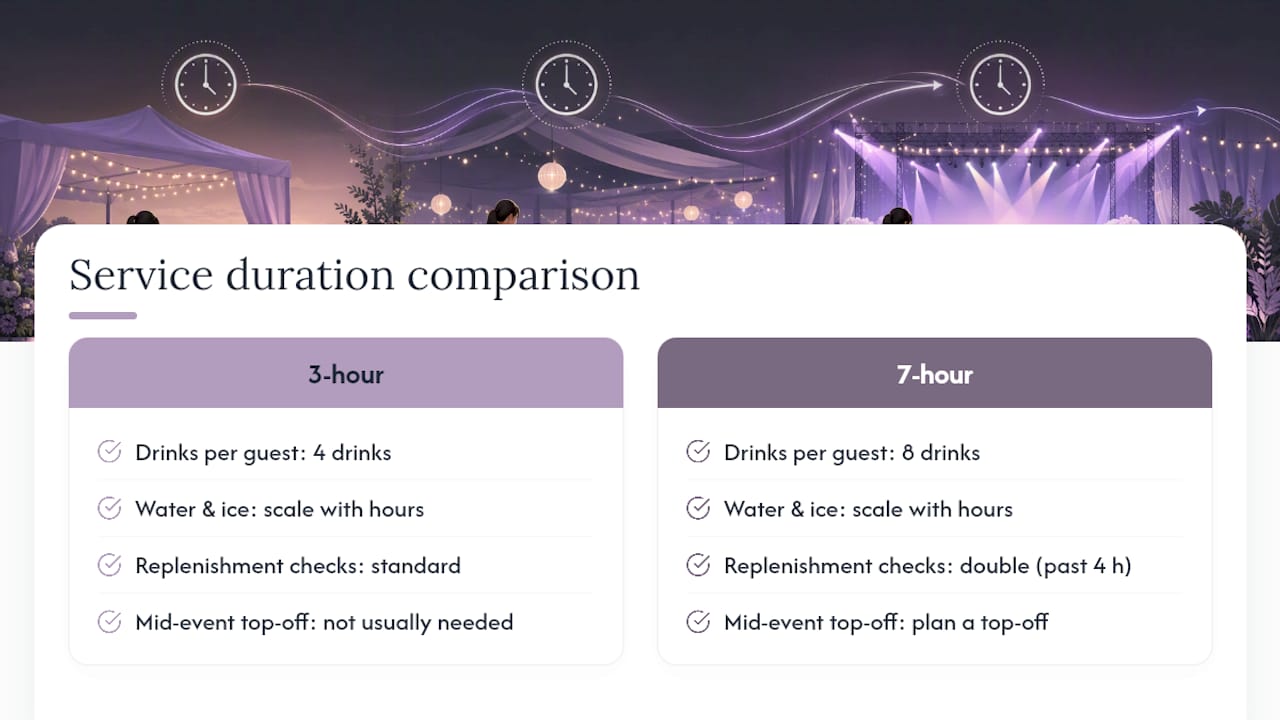
Longer events also mean more ice melt and more water dispenser refills, so double your replenishment checks for anything past four hours. A wedding with a dinner break sees a lull in bar traffic followed by a second surge once dancing starts, so plan a mid-event ice and water top-off rather than assuming your opening supply carries through to last call.
Corporate events with fixed agendas are easier to predict since sessions and breaks are scheduled in advance. Weddings and private parties run looser, and toasts, speeches, or a delayed dinner service can stretch your bar-open window by an hour or more. Build a 15 to 20% time buffer into your ice and water order for any event without a strict run-of-show, since a longer night means more melted ice and more empty water bottles before the last guest leaves.
How Do You Handle Allergies and Dietary Needs at the NA Station?
Non-alcoholic doesn’t mean simple when guests are managing allergies, sugar intake, or other dietary restrictions.
Start with labeling. Every mocktail and batched drink should have a card noting common allergens, citrus, dairy in cream-based drinks, tree nuts in certain syrups or garnishes, so guests can self-select without asking. This matters as much as labeling and matching presentation for parity between the NA and main bar stations.
Offer at least one low-sugar or sugar-free option alongside your signature mocktail. Sparkling water with fresh citrus or herbs covers this without extra prep, and it doubles as a palate cleanser between richer drinks. If your caterer or bartending vendor is batching syrups in-house, ask whether a reduced-sugar version can be made in parallel, most simple syrup recipes scale down without changing the drink’s character much.
Trace alcohol content is worth flagging separately from allergens. Some non-alcoholic beers and wines carry small residual ABV, typically under 0.5%, and guests who are sober by choice or medical necessity need that noted clearly rather than assumed. A simple sign or card solves this.
Finally, ask your vendor directly whether their NA menu can flex around a specific guest need, a nut allergy in the wedding party, a diabetic parent, a pregnant guest avoiding certain additives. Vendors who batch in-house generally have more flexibility to swap an ingredient than ones relying on pre-made mixers, so this is worth confirming at the proposal stage, not the week of the event.
How Do You Keep Water and NA Stations Safe and Sanitary?
Hygiene at a beverage station is invisible when it’s done right and glaringly obvious when it isn’t.
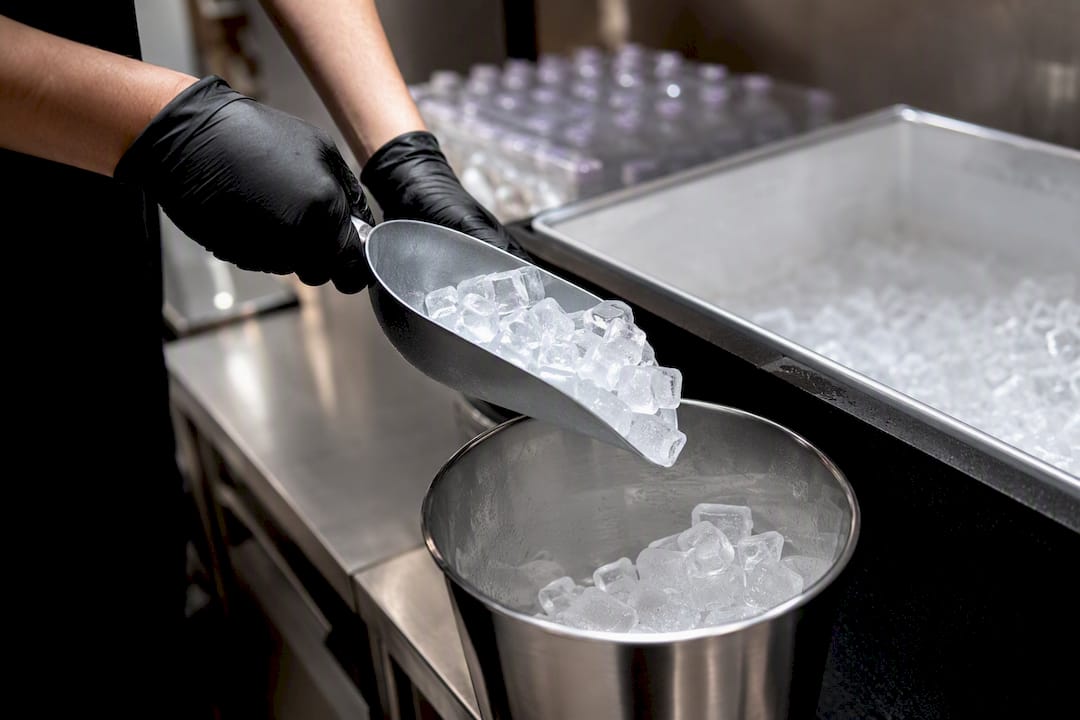
Ice handling is the biggest risk point. Ice should be scooped, never touched by hand, and stored in a sealed cooler or bin separate from bottled beverages to avoid cross-contamination. If your vendor is transporting ice in bags rather than a dedicated ice bin, confirm it stays sealed until it’s poured, not dumped loose into an open cooler that’s also holding drinks.
Water dispensers and pitchers need regular wipe-downs, especially at outdoor events where dust, insects, and heat all accelerate contamination risk. Ask whether the vendor’s staff carries sanitizing wipes or a spray for the station itself, not just the glassware.
Glassware and garnish handling matters just as much as the drinks themselves. Garnishes, citrus wedges, mint, berries, should be prepped with gloved hands or tongs, and any batched mocktail sitting out for more than two hours in warm weather needs either refrigeration or a rotation plan to swap in a fresh batch. This is especially relevant for dairy-based or juice-heavy mocktails, which spoil faster than a straight spirit-and-mixer cocktail.
Finally, confirm handwashing access for staff working the NA station. If the venue doesn’t have a sink within reasonable distance, ask the vendor about portable hand sanitizing stations as a backup, particularly for events running past the four hour mark where staff rotation and fatigue both increase.
How Should You Plan for Waste and Sustainability?
Water and NA stations generate a surprising amount of waste, mostly in the form of plastic cups, bottled water, and ice melt runoff.
Switching from single-use plastic bottles to a refillable dispenser setup with compostable or reusable cups cuts waste volume significantly, and most guests don’t notice or mind the swap as long as the station looks intentional. If your venue or vendor offers glassware for the NA station to match the main bar, that solves both the presentation and the waste problem at once.
Ice melt runoff needs a plan too, especially outdoors. Coolers and ice bins should have a drainage plan that doesn’t flood a walkway or stain a venue floor, and most experienced vendors already build this into their setup. Ask specifically if you’re on a rooftop, in a tent, or anywhere with limited drainage.
For garnish and produce waste, a batching approach that pre-preps only what’s needed for the estimated guest count and service window cuts down on citrus, herbs, and fruit thrown out at the end of the night. This ties directly back to your quantity formulas: overordering water, ice, or garnish “just in case” isn’t a safety margin, it’s waste you’re paying for twice, once to buy it and once to haul it away.
If sustainability is a priority for your event, ask vendors directly whether they offer compostable cup options or a recycling plan for bottles and cans. Not every vendor will, but it’s a fair question to put in the proposal stage alongside your owner’s list.
How Do You Coordinate Beverage Service With the Rest of the Event Timeline?
The bar doesn’t run on its own clock. It runs on whatever the rest of the event is doing, and refills need to happen around that, not on a fixed schedule that ignores it.
Share your full run-of-show with the bartending vendor before the event, not just the bar-open and bar-close times. A vendor who knows dinner starts at 7 p.m. and toasts run until 7:45 can pre-stage a water and ice top-off for the moment guests head back to the bar afterward, rather than getting caught flat during the surge.
Cocktail hour and the immediate post-dinner window are the two highest-demand periods at almost every event, and both deserve a pre-planned refill check rather than a reactive one. Ask your vendor to build a specific refill checkpoint into their internal schedule around these moments, ice restock, water dispenser refill, mocktail batch replenishment, so it happens before the line forms, not after.
Late-night service, especially at weddings running past 10 p.m., often sees a second wind in bar traffic once dancing picks up. If your event has a scheduled after-party or extended bar hours, flag this specifically since it changes both staffing and supply needs for the last stretch of the night.
Finally, build in a five to ten minute buffer between scheduled program moments, speeches, cake cutting, first dance, and bar service resuming. Guests tend to head to the bar in a wave right after any scheduled pause, and a vendor who knows that wave is coming can be ready for it instead of caught behind the line.
Liquid Courage’s Take on Water and NA Planning
Most of the friction in event beverage planning doesn’t come from the drinks themselves. It comes from vague ownership. A vendor says “we handle the bar” and a planner hears “everything is covered,” when what was actually quoted was staff and a styled setup with the client supplying ice and glassware. That gap is where events fall apart at hour two.
Liquid Courage builds proposals around a written owner’s list specifically to close that gap, and our load-in logistics templates exist because venue walk-throughs go faster when everyone is working from the same slot-by-slot schedule instead of a verbal agreement made three weeks earlier. Adapt those slots to your own venue’s access points and share them with your coordinator before the week of the event, not the morning of.
— Brennon
How Liquid Courage Handles Your Water and NA Program
Water and non-alcoholic service can be built into the bar program from the first proposal, not as an add-on requested later. This means having one written owner’s list covering ice, glassware, mixers, and water, so event organizers know exactly what’s included before comparing it against other quotes.
A turnkey package with Liquid Courage covers staffing at the ratios that actually prevent bottlenecks, a menu planning conversation that includes your NA station alongside the cocktail list, and load-in coordination handled directly with your venue. Whether you’re planning a wedding through our wedding events service, a corporate reception through our corporate events packages, or a private party that needs a fully styled setup through our bar rental packages, the same written scope applies. If you’d rather bring your own supplies and just need licensed staff, our dry hire staffing option covers that too.
Ready to see it laid out for your event? Visit Liquid Courage to request a proposal built around your guest count, venue, and service window.
Sources
- How to Book a Mobile Bar Catering Service | The Cocktail Camp (2026)
- 10 Event Bar Planning Tips for a Smooth Guest Experience — The Rolling Shaker
- Non-Alcoholic Beverage Party Checklist for Hosts — TryFloral
- Questions to Ask a Mobile Bartender Before Booking (15-Point Checklist)
FAQ
How Much Water Should I Plan Per Guest?
Water typically makes up 35 to 50% of total drink volume at events, so use your total drink count from the 2-per-hour formula and apply that percentage to figure out water-specific quantities. Split roughly two-thirds still to one-third sparkling as a starting point.
How Much Ice Do I Need for an Outdoor Event?
Plan on 2 to 2.3 pounds of ice per guest for outdoor or hot-weather events, compared to 1 to 1.5 pounds indoors. Round up and confirm your vendor has a backup ice source in case of unexpected heat or a longer-than-planned event.
What’s the Difference Between Dry Hire and Full Beverage Service?
Dry hire means the vendor supplies staff and equipment while you provide alcohol, ice, and often glassware, while a full beverage program means the vendor sources and manages everything. Scope varies significantly between vendors, so always request a written owner’s list before signing. Liquid Courage offers both models through its dry hire staffing and full-service packages.
How Many Bartenders Do I Need for 150 Guests?
Using the one bartender per 30 to 50 guests ratio, a 150 guest event needs roughly three to five bartenders depending on menu complexity, plus at least one barback or dedicated NA attendant once you cross the 150 guest mark.
Does Liquid Courage Handle Non-Alcoholic Drinks Too?
Yes, Liquid Courage builds NA menu planning, including mocktails, still and sparkling water service, and station placement, into its proposals rather than treating it as a separate request. Current pricing and package details are available directly on the Liquid Courage website.