

Yes, in nearly every case: serving alcohol at a temporary event in the Las Vegas area requires an alcohol permit separate from your general special-event permit. Your first move is to figure out which of three agencies actually governs your event site (City of Las Vegas, City of Henderson, or unincorporated Clark County), and whether you’re hiring a licensed liquor caterer who can file on your behalf.
TL;DR:
- A separate alcohol permit is required for nearly every temporary event serving alcohol in the Las Vegas area, depending on jurisdiction and event structure.
- The permit application must be filed with the correct governing agency, either the City of Las Vegas, Clark County, or Henderson, based on exact venue location, not mailing address.
- Clark County charges $10 per service station per day for a liquor caterer permit, doubling the fee if applied less than 10 days in advance, with fees varying by permit type and alcohol served.
- For private events with hired bartenders, a liquor caterer permit is most common; for commercial sell-through events, an off-premise permit applies, and tasting permits are rarely suitable.
- Hiring a licensed liquor caterer usually shifts permit filing responsibilities to them, but organizers must still confirm venue alcohol permissions, document training, and maintain compliance with hours, boundaries, and responsible serving practices.
Table of Contents
- Jurisdiction Triage: Which Agency Handles Your Alcohol Permit?
- What Kind of Alcohol Permit Does Your Event Actually Need?
- What Will Your Alcohol Permit Actually Cost?
- How to Apply for a Las Vegas Event Alcohol Permit, Step by Step
- Should You Hire a Licensed Liquor Caterer or File the Permit Yourself?
- Your Week-Before Compliance Checklist
- Hours, Age Verification, and Where Alcohol Can Legally Be Served
- What Happens If You Violate Your Permit’s Terms?
- How Much Alcohol Can You Actually Serve Under Each Permit?
- Do You Need Liquor Liability Insurance for a Las Vegas Event?
- Official Contacts and Forms for Las Vegas Area Alcohol Permits
- A Local Bartender’s Take on Permit Planning
- Let Liquid Courage LV Handle the Permit Headache
- Sources
- FAQ
Jurisdiction Triage: Which Agency Handles Your Alcohol Permit?
A Las Vegas mailing address fools more event organizers than anything else in this process. Plenty of venues with “Las Vegas” in their address actually sit in unincorporated Clark County, not the incorporated City of Las Vegas, and the two operate under completely different permit systems with different offices, forms, and fees. The same trap catches organizers near Henderson’s borders.
Before you fill out a single form, confirm which government actually has authority over your event’s exact address. Clark County publishes a jurisdiction locator built for exactly this problem, and it’s worth five minutes even if you’re “pretty sure” you know where you stand.
Once you know your jurisdiction, here’s who to contact:
- City of Las Vegas: apply through the city’s Special Event Permit process; call the Special Events office at 702-229-6171 for permit questions.
- Unincorporated Clark County: contact the Clark County Department of Business License, which oversees liquor caterer and off-premise permits.
- City of Henderson: work through Henderson’s Special Events/Police permitting process, which requires its own written alcohol authorization separate from a general event permit.
Venue contracts deserve the same scrutiny. Ask for the venue’s liquor license number outright, then ask whether that license actually extends to your event and your vendors, or whether it only covers the venue’s own in-house service. Many venues assume their liquor license blankets any event on their property. It usually doesn’t cover an outside caterer or a hired bartending crew, which means you still need your own permit even though the room already “has” a license.
Pro Tip: Call the special-events office for your jurisdiction before you sign a venue contract, not after. A five-minute phone call can save you from discovering, two weeks before your event, that your venue’s address puts you under a different agency than you assumed.
What Kind of Alcohol Permit Does Your Event Actually Need?
Three permit types cover most temporary events in the Las Vegas area, and picking the wrong one wastes both time and money.
Liquor caterer permit. This is the permit most weddings, corporate parties, and private events actually need. It requires that whoever serves the alcohol already holds an underlying liquor-caterer business license. You, as the event organizer, typically don’t hold that license yourself. This is why hiring a company that already carries one matters so much: they file the permit application under their existing license rather than you trying to qualify for one from scratch for a single event.
Clark County requires this permit application at least 10 calendar days before the event. Miss that window and the fee doubles, which we’ll break down in the next section.
Off-premise liquor permit. This applies when a for-profit organizer wants to sell or serve alcohol at a location outside a business’s normal licensed premises, and the event itself is being run for commercial gain rather than as a private party. Clark County’s off-premise permit process requires the applicant to already have a coordinating liquor license approved before the event permit can be issued. This isn’t a shortcut around getting properly licensed; it’s an add-on for people who already are.
Alcoholic-beverage tasting permits. These get misunderstood constantly. A tasting permit exists mainly for retail package-liquor contexts, think a wine shop letting customers sample bottles before buying, not as a general workaround for pouring drinks at a wedding or corporate mixer. If you’re planning a private event with a bar, a tasting permit is the wrong tool, even though it sounds like it might apply.
Henderson and the City of Las Vegas each add their own wrinkles. Henderson requires specific written permission to dispense alcohol at a special event, and that permission is separate from the general special-event permit; holding one does not automatically grant you the other. The application packet lists a nonrefundable $125 fee for large-event packets. The City of Las Vegas runs a similar structure: getting your special-event permit approved does not mean alcohol service is automatically included. You need the alcohol authorization addressed explicitly, in writing, before pouring a single drink.
Nevada has no single statewide event liquor permit that overrides these local rules. Licensing authority sits with the city or county where your event physically takes place, according to one industry explainer on event permitting, which is exactly why jurisdiction triage has to come first, not last.
Here’s a quick reference on which permit applies where:
- Private wedding or corporate party with a hired bartender → liquor caterer permit (most common path)
- Commercial event selling alcohol for profit outside a licensed venue → off-premise liquor permit
- Retail sampling of packaged alcohol → tasting permit (narrow use case, rarely applies to events)
- Event in Henderson → written alcohol authorization required regardless of permit type
- Event in City of Las Vegas → separate alcohol approval needed alongside the special-event permit
What Will Your Alcohol Permit Actually Cost?
The core number to remember: Clark County charges $10 per day, per liquor service station, for a caterer permit, and doubles that fee if you apply less than 10 calendar days before your event. That deadline rule catches more organizers than any other part of this process, mostly because “10 calendar days” includes weekends and holidays, not just business days.
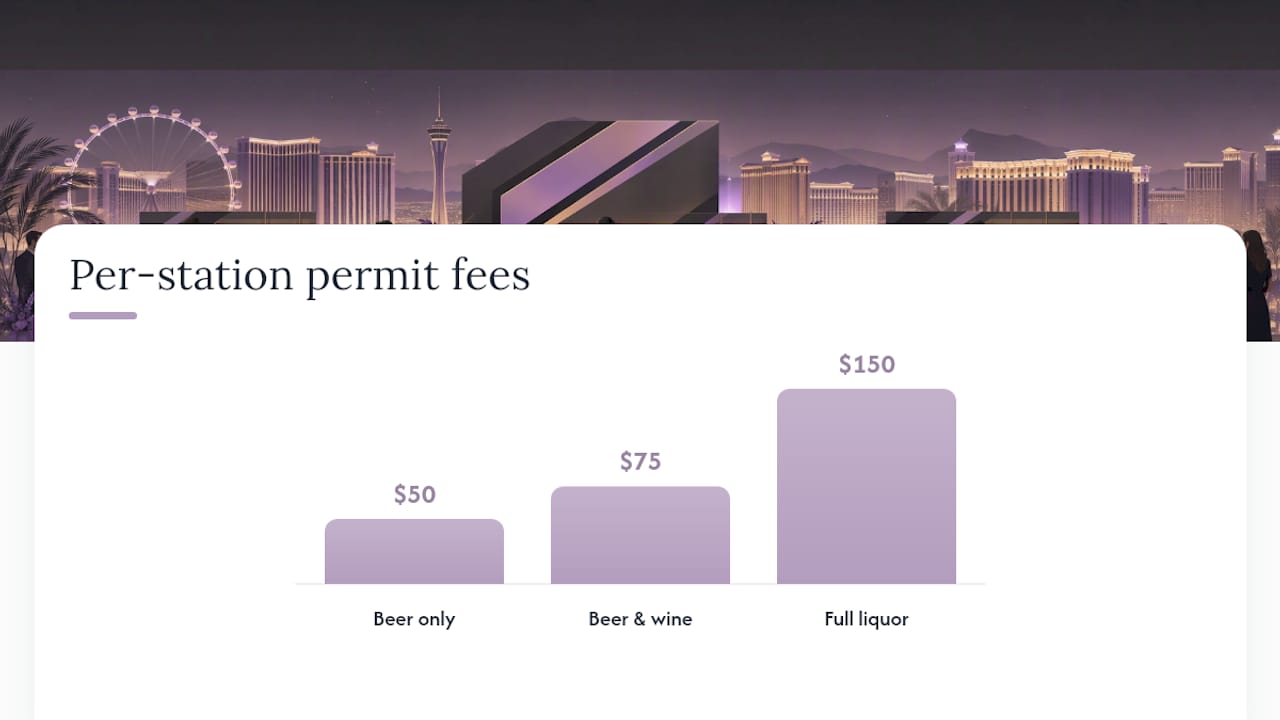
Off-premise permits use a different, tiered structure based on what you’re actually serving:
- Beer only: $50 per service station, per event day
- Beer and wine: $75 per service station, per event day
- Full liquor: $150 per service station, per event day
These figures come straight from Clark County’s off-premise permit fee schedule, and they multiply fast if you’re not careful about how you count stations.
Here’s where organizers lose money without realizing it: a “service station” isn’t your event, it’s every individual point where alcohol gets poured. A main bar, a satellite cocktail station near the pool, a champagne table at the entrance, and a beer tap by the dance floor are four separate service stations, not one. Fees and permit requirements get assessed per station, not per event, so a wedding with three bar setups pays triple what a single-bar wedding pays under the same permit type.
Before you submit anything, map every pour point on your site plan and count them honestly. It’s the single easiest way to avoid a surprise bill.
One more practical note: confirm accepted payment methods before submission day. Clark County’s off-premise application specifies cash, check, or money order payable to the Department of Business License, not a credit card swipe at the counter. Ask where and how your specific jurisdiction issues fee receipts, since you’ll want that paperwork on hand the day of your event in case an inspector asks.
How to Apply for a Las Vegas Event Alcohol Permit, Step by Step
Getting the paperwork right the first time saves you from resubmissions, which is where most of the real delays happen.
- Confirm jurisdiction. Use the county’s jurisdiction locator or call the relevant office directly. Don’t guess based on your mailing address.
- Choose the correct permit type. Match your event structure (private party with a hired caterer, for-profit commercial event, or retail tasting) to the permit categories covered above.
- Complete the application form for that jurisdiction. Clark County’s liquor caterer application requires a full server/employee listing alongside the standard event details.
- Attach your site plan showing every service station, plus a list of servers with their work-card numbers and alcohol-awareness training dates.
- Submit fees through an accepted payment method, well ahead of your jurisdiction’s deadline.
- Obtain written alcohol authorization, separate from your general event permit approval if you’re working in Henderson or the City of Las Vegas.
Documents you’ll want ready before you start the application, not scrambled together the night before:
- Site plan with an accurate service-station count
- Server list with work-card numbers and training dates
- Written proof of venue permission for alcohol service
- Coordinating liquor-license number, if you’re working with an off-premise permit
Clark County’s 10 calendar-day rule for caterer permits is the deadline that trips up the most organizers, mainly because they count business days instead of calendar days and miss it by a weekend. If you’re already inside that window, submit anyway. Being late costs double, but being unpermitted risks the entire event.
After you submit, expect a review period and, depending on your event’s size and jurisdiction, a possible inspection before the day arrives. You’ll receive either the issued permit itself or a written approval letter. Keep a copy on-site during the event; that’s the document an inspector will ask to see first.
Should You Hire a Licensed Liquor Caterer or File the Permit Yourself?
Hiring a licensed liquor caterer usually shifts the filing burden off your plate, since Clark County’s caterer permit structure is built around businesses that already hold the underlying liquor-caterer license. That said, hiring a caterer doesn’t erase your responsibilities. You still need to confirm your venue’s written alcohol permission is in place, and you’re still the one who answers for the event if something goes wrong on-site.
Before you sign with any liquor caterer, verify these five things directly:
- Current liquor-caterer business license number, checked against the county’s own records
- A sample of a prior permit approval they’ve actually obtained
- Insurance limits that match or exceed your venue’s requirements
- Proof of server alcohol-awareness training, not just a verbal assurance
- A written clause in the contract stating who is responsible for permit filing and fee payment
That last point matters more than people expect. Put it in writing: who submits the site plan, who pays the fees, who handles ID checks at the door, and who owns the timeline for filing before the deadline. A verbal handshake on “we’ll take care of the permit” isn’t worth much if the permit never actually gets filed.
Pro Tip: Ask any liquor caterer you’re considering to show you an actual prior permit approval, not just a license number. A license proves they’re allowed to operate; a past approval proves they’ve actually navigated the process successfully before.
A licensed liquor catering company operating in Las Vegas and Henderson typically works through the local fee structures and permit requirements as part of standard event planning. Organizers researching how to avoid doubled permit fees often find that the timeline discipline matters as much as the paperwork itself.
Your Week-Before Compliance Checklist
Run through this the week before your event, not the morning of:
- Confirm your jurisdiction one final time, especially if your venue address is near a city/county border.
- Confirm your permit type matches your event structure.
- Finalize your site plan and count every service station accurately.
- Collect server work-card numbers and alcohol-awareness training records.
- Pay all fees early, before the 10-day deadline where applicable.
- Secure written alcohol authorization, separate from your general event permit.
The most common mistakes are predictable: incomplete site plans that undercount service stations, assuming a venue’s existing liquor license covers your event when it doesn’t, and missing server work-card documentation until someone asks for it on-site. Fix all three by building your paperwork folder a full two weeks out, not two days out.
A few small tactics help on event day itself: post visible signage marking the boundaries of your controlled alcohol area, run a consistent ID-check protocol at every service station (not just the main bar), and designate one person as the single point of contact if a permit inspector shows up.
Hours, Age Verification, and Where Alcohol Can Legally Be Served
Permits typically specify the exact hours alcohol service is authorized, and that window rarely matches your full event schedule. If your reception runs until 1 a.m. but your alcohol authorization cuts off at midnight, the bar closes at midnight regardless of what’s happening on the dance floor.
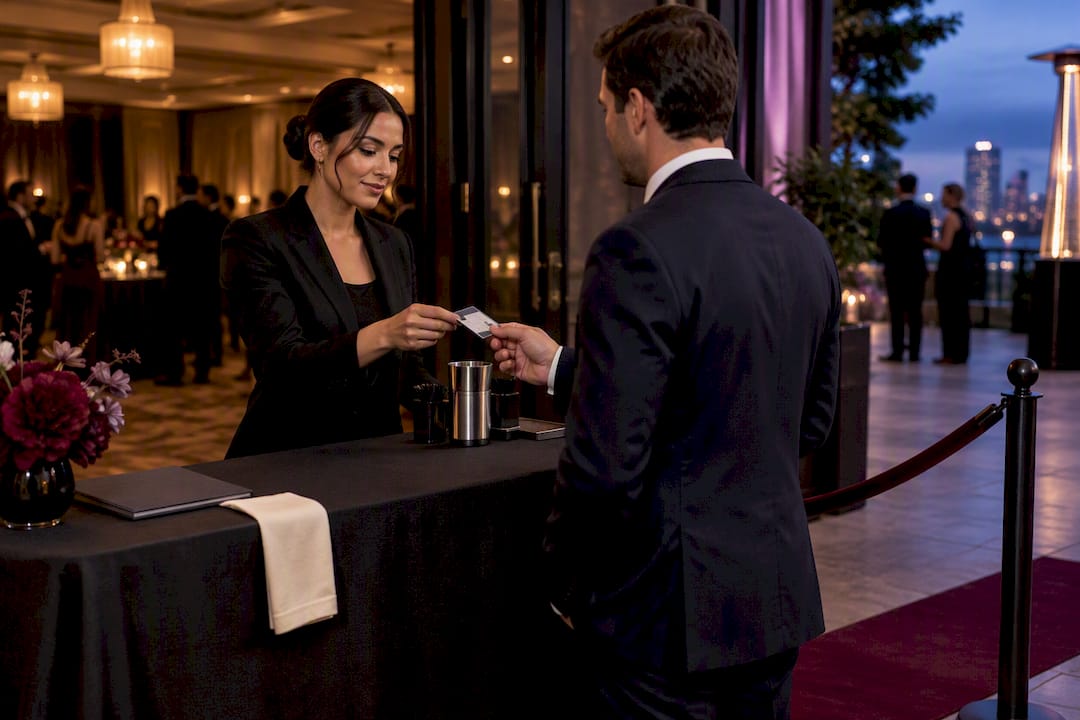
Age verification isn’t optional or informal. Every service station needs a consistent ID-check process, checking government-issued identification for anyone who appears under 30, not just anyone who “looks young.” Nevada’s legal drinking age is 21, and enforcement checks during special events tend to focus heavily on this exact point.
Permits also restrict where alcohol can be served, not just when. Your permit application specifies the physical boundaries of the area authorized for alcohol service, tied directly to the service stations mapped on your site plan. Serving a drink outside that marked boundary, even by a few feet at the edge of a tent or patio, technically violates your permit’s terms. This is exactly why the physical signage marking your controlled area matters as much as the paperwork that got you there. Inspectors check boundaries visually first, then ask questions.
If your event spans multiple areas, indoor ballroom plus an outdoor patio, for instance, confirm whether your permit covers both zones or just one. Some venues require separate authorization for outdoor alcohol service even when the indoor space is already covered.
What Happens If You Violate Your Permit’s Terms?
Serving alcohol outside your permit’s authorized hours, boundaries, or server requirements can trigger fines, and repeated or serious violations can lead to permit revocation for future events. An unpermitted pour, alcohol served with no permit on file at all, carries heavier consequences than a technical violation of an existing permit’s terms, since it’s treated as operating without authorization rather than a paperwork lapse.
Beyond the immediate fine, a revoked or flagged permit history follows you into future applications. Jurisdictions that process repeat event organizers keep records, and a history of violations makes your next application slower and subject to more scrutiny, sometimes including a mandatory site inspection before approval.
The organizer, not just the bartending vendor, typically bears responsibility when something goes wrong, even when a hired caterer was physically pouring the drinks. This is exactly why the written contract clause we covered earlier, spelling out who’s responsible for compliance during the event itself, protects you specifically. If your caterer’s staff oversteps a boundary or misses an ID check, a clear contract at least establishes who was supposed to be watching.
The safest posture is straightforward: treat your permit’s stated hours, boundaries, and server requirements as fixed, not flexible, even when the party’s still going strong and guests are asking for one more round. A permit inspector doesn’t care how good the party is.
How Much Alcohol Can You Actually Serve Under Each Permit?
Permit type shapes not just whether you can serve alcohol, but what kind. The off-premise fee schedule breaks alcohol into three tiers, and your permit only authorizes what you’ve paid for and specified: beer only, beer and wine, or full liquor. A beer-only permit does not let you pour a signature cocktail, even one drink, at a single station, even if you’ve paid the correct fee for every other station at your event.
Liquor caterer permits generally cover full liquor service since the underlying caterer license already qualifies the business to serve mixed drinks, but the permit still ties that authorization to your declared service stations and event dates. You can’t add a station mid-event that wasn’t on your original site plan.
Quantity limits work differently than most organizers expect. Permits don’t typically cap total gallons or bottles; they control where and through what station type alcohol moves, which is why the per-station structure matters so much more than any single volume number. A single full-liquor station serving 300 guests operates under the same fee and authorization as a full-liquor station serving 30, provided both are declared correctly on the site plan.
If your event plans call for a signature cocktail bar alongside a simple beer station, confirm both are separately declared and separately covered, since mixing tiers under a single blanket assumption is one of the fastest ways to end up serving something your permit doesn’t actually authorize.
Do You Need Liquor Liability Insurance for a Las Vegas Event?
Most venues require liquor liability insurance before they’ll let alcohol service happen on their property at all, even when the permit itself doesn’t explicitly mandate it. This coverage protects against claims tied to alcohol-related incidents, intoxication injuries, property damage, and similar liability, that a standard general liability policy typically excludes.
Ask any liquor caterer you’re hiring to show proof of their insurance limits before you sign a contract, not after. Coverage amounts vary by venue requirement, and some upscale properties in Las Vegas and Henderson set minimums well above what a smaller bartending outfit might carry by default. If the caterer’s policy falls short of your venue’s stated requirement, that gap becomes your problem on event day, not theirs.
Even when a venue doesn’t explicitly demand proof of insurance, carrying it anyway is one of the cheapest forms of protection available to an event organizer. A single incident involving an intoxicated guest, whether it’s a fall, a car accident after leaving the event, or a dispute that turns physical, can generate liability costs that dwarf whatever the insurance policy would have cost.
Build insurance verification into the same contract conversation where you’re confirming permit-filing responsibility and server training records. It’s one more line item, but it’s the one that actually protects you if the evening goes sideways.
Official Contacts and Forms for Las Vegas Area Alcohol Permits
Bookmark these before you start your application:
- City of Las Vegas: Special Event Permits portal; call 702-229-6171 for permit questions.
- Clark County: Liquor Caterer License and Permit and off-premise permit forms through the Department of Business License.
- City of Henderson: Special event permit applications, including written alcohol permission requirements.
A Local Bartender’s Take on Permit Planning
Every permit headache we’ve seen at Liquid Courage LV traces back to the same root cause: organizers pick a venue and a vendor before confirming jurisdiction. Triage that first, get your alcohol authorization in writing early, and the rest of the process stops feeling like a scramble. It starts feeling like a checklist, because that’s what it actually is.
— Brennon
Let Liquid Courage LV Handle the Permit Headache
A licensed liquor caterer operating under Nevada’s alcohol-catering framework in Las Vegas and Henderson can absorb the paperwork burden that would otherwise fall to the event organizer.
Our mobile bartending and liquor catering services come with the underlying liquor-caterer license already in place, meaning we file the caterer permit under our own standing license rather than asking you to qualify for one from scratch for a single event. We handle site-plan coordination, keep server training records current, and carry the insurance coverage most venues require before they’ll approve alcohol service at all.
Event organizers still need to confirm the venue’s written alcohol authorization is in place, as that permission may be separate from any general special-event permit, particularly in Henderson. Whether you’re planning a wedding or a corporate event, reach out for a permit-ready quote before you lock in your event date, so the paperwork timeline and your event timeline actually line up.
Sources
- Special Event Permits — City of Las Vegas
- Liquor Caterer License and Permit — Clark County
- Special events permit applications — City of Henderson
FAQ
How Do I Apply for a Special Event Alcohol Permit in Las Vegas?
Start by confirming your event’s exact jurisdiction, since City of Las Vegas, Henderson, and unincorporated Clark County each run separate application processes. For City of Las Vegas events, apply through the Special Event Permit process and call 702-229-6171 with questions; Clark County and Henderson each have their own dedicated forms and contact numbers.
How Much Does an Alcohol Permit Cost for a Las Vegas Event?
Costs depend on permit type and how many service stations your event has. Clark County charges $10 per day per liquor service station for caterer permits, while off-premise permits run $50 to $150 per station per event day depending on whether you’re serving beer, beer and wine, or full liquor.
Which Jurisdictions Require Alcohol Permits for Events?
Every jurisdiction in the Las Vegas area, City of Las Vegas, City of Henderson, and unincorporated Clark County, requires some form of alcohol authorization for temporary events serving alcohol. Nevada has no single statewide event liquor permit, so the specific rules always depend on the local city or county where your event physically takes place.
What’s the Deadline to Apply for a Liquor Caterer Permit in Clark County?
Clark County requires liquor caterer permit applications at least 10 calendar days before the event. Applications submitted less than 10 days ahead are charged double the standard fee, so building in a buffer beyond the minimum is worth the extra week.
Does Hiring a Licensed Caterer Remove My Permit Responsibilities?
Hiring a licensed liquor caterer typically shifts the actual permit filing to the caterer, since they already hold the underlying liquor-caterer license required to apply. You’re still responsible for confirming written alcohol authorization from your venue and jurisdiction, and for putting compliance responsibilities in writing in your vendor contract.