
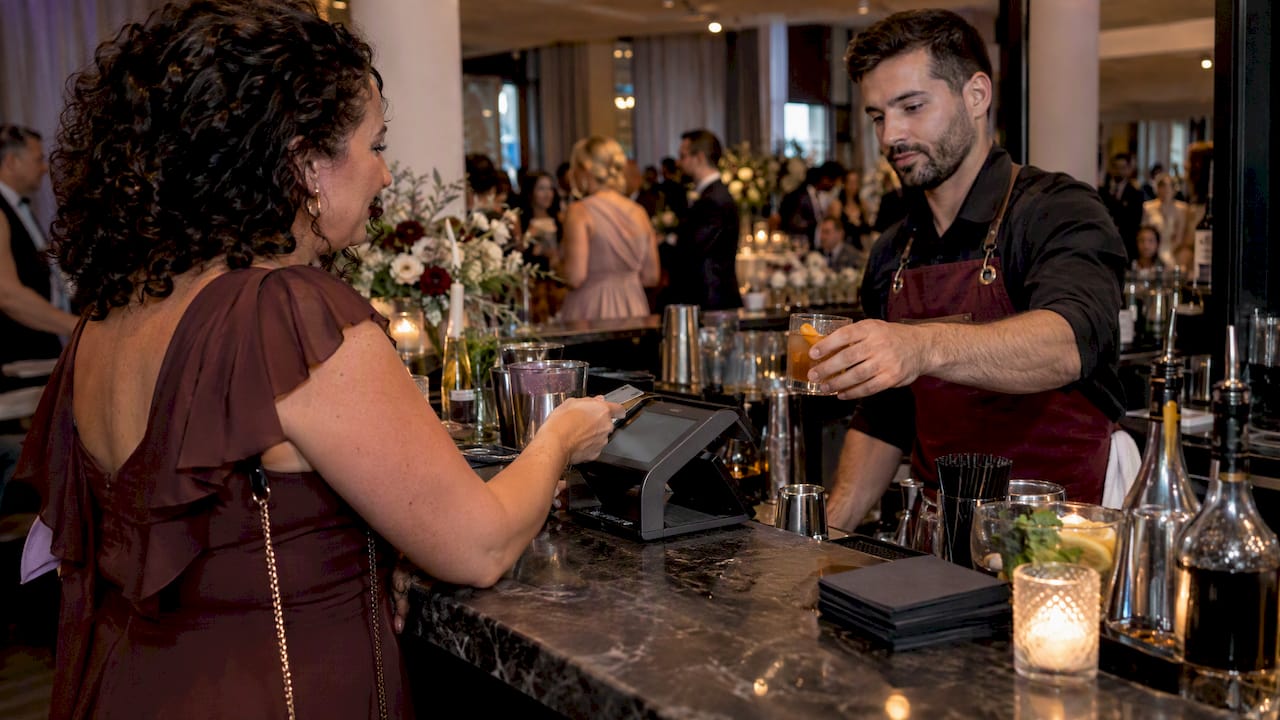
A cash bar means guests pay for their own drinks at the event, which lowers the host’s tab but requires extra payment logistics and can affect guest experience. It works best for budget-conscious weddings, casual receptions, or events where the host wants to control costs without covering every pour. The trade-off is straightforward: you save money upfront, but you give up some control over how smoothly the bar line runs.
TL;DR:
- Hosts may still owe bartender and setup fees, permits or liquor liability coverage, taxes, and gratuities, so request an itemized quote before booking.
- Confirm venue rules on cash bars, outside alcohol, and permits early, because restrictions may determine whether a cash, hosted, or hybrid setup is allowed.
- Formal receptions and older guest lists favor hosted drinks; casual adult only gatherings can choose cash service or a welcome drink followed by cash.
- Card readers make cashless service practical, but budget processing fees, confirm signal and backup power, and post prices and card tipping rules.
- Plan one bartender per several dozen guests, adjusting for menu complexity and service speed, and keep a spare card reader and cash float available.
Table of Contents
- What is a cash bar and how does it compare to an open bar?
- Typical costs and fee components to budget for
- Pros and cons of a cash bar for weddings and events
- How guests pay and cashless options to consider
- Step-by-step checklist for setting up and running a cash bar
- When does a cash bar actually make sense?
- How we keep cash bar setups running smoothly
- A planner’s quick take on cash bars
- Let us handle your cash bar setup
- FAQ
What is a cash bar and how does it compare to an open bar?
At a cash bar, guests order drinks directly from the bartender and pay per item, often with a tip jar or line for gratuity nearby. Hosts typically still cover bartender fees, setup charges, and sometimes liquor liability costs, even though guests handle the drink purchases themselves. Some hosts soften the arrangement by covering water, soda, or a single welcome drink before switching to cash-only service for the rest of the night.
Here’s how the main formats stack up:
- Open bar: Host covers every drink for every guest, no payment from guests at all.
- Hosted bar: Host pays for a set menu or a limited time window, then the bar may close or switch to cash.
- Limited bar: Host covers beer, wine, and a few mixed drinks, while guests pay for premium liquor.
- Cash bar: Guests pay for everything they order, with the host often still covering setup and staffing.
Typical costs and fee components to budget for
Even when guests are paying for their own drinks, hosts rarely get away without covering some costs. Venue and vendor guides commonly list bartender fees and setup charges as routine line items that apply regardless of whether the bar is open, hosted, or cash. These fees usually cover staffing, bar equipment, and basic setup, separate from whatever guests spend at the bar itself.
Budget for these pieces separately:
- Bartender and setup fees: charged per event or per bartender, independent of drink sales.
- Drink pricing: set per item, often tiered by beer, wine, and liquor.
- Permits or liquor liability coverage: required in many venues before alcohol service begins.
- Taxes and gratuities: added on top of quoted fees and drink prices.
Service charges and gratuities can add a meaningful percentage to the total bar cost, so it helps to ask vendors upfront whether their quote already includes them or whether those costs land on top. Getting a full breakdown before the event avoids surprises on the final invoice.
Pros and cons of a cash bar for weddings and events
A cash bar lowers the host’s bill and keeps spending predictable since costs are based on setup and staffing fees rather than every drink poured. Guests also get to control their own spending instead of feeling obligated to drink what’s been paid for.
The downside shows up in guest experience. Some guests expect drinks to be covered at a wedding, and a cash-only setup can feel at odds with that expectation. Lines can also slow down when guests are fumbling for payment, and tipping etiquette gets murky when there’s no clear signage.
- Pros: lower host cost, guest control over spending, simpler post-event invoicing.
- Cons: possible guest dissatisfaction, slower service during rushes, confusion over tipping norms.
Guest mix matters here. An older crowd or a formal reception tends to expect a hosted bar, while a casual, adult-only gathering is usually more forgiving of a cash setup.
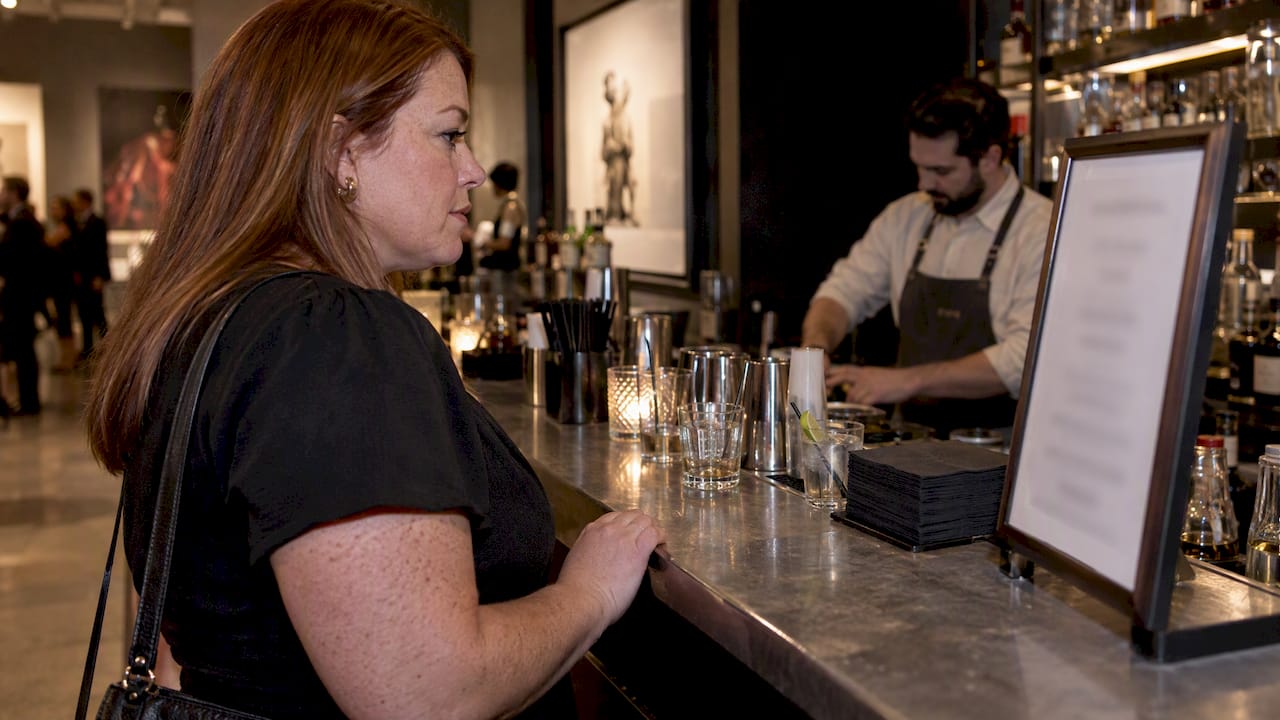
Pro Tip: Post drink prices and a suggested tip amount at eye level near the bar to cut down on hesitation and speed up the line.
How guests pay and cashless options to consider
Cash-only bars still exist, but most events now offer at least one cashless option. Mobile POS systems and card readers make it practical to accept cards at a pop-up or event bar, though processing fees and occasional transaction delays are worth planning around. Hosts or guests typically absorb those processing costs depending on how drink prices are structured.
A few payment setups to consider:
- Cash-only: simplest to manage, but requires a dedicated cash box and change on hand.
- Card-only via mobile terminal: faster reconciliation, but needs reliable signal and backup battery power.
- Hybrid cash and card: most flexible for guests, though it requires staff trained on both systems.
If you go cashless, clear signage matters just as much as the hardware. Guests should know ahead of time that cards are accepted, what the price list looks like, and whether tips can be added to the card transaction or need to go in a jar.
Step-by-step checklist for setting up and running a cash bar
Running a cash bar smoothly comes down to preparation well before guests arrive.
- Confirm venue policy on cash bars, outside alcohol, and any required liquor permits.
- Set the drink menu and pricing in advance so bartenders and guests both know what’s available.
- Arrange POS hardware if accepting cards, including a backup card reader and charged battery packs.
- Staff appropriately, generally planning for one bartender per several dozen guests depending on how fast you need service to move.
- Prepare supplies: cash box, receipt pads, signage for prices and tipping, and a stocked inventory plan.
- Set up the bar layout so the line flows in one direction and doesn’t block other event traffic.
- Post pricing and tip signage clearly before doors open.
- Reconcile cash and close out card terminals at the end of the night, comparing totals against inventory used.
Pro Tip: Keep a backup bar plan on hand, extra ice, a spare card reader, and a small float of cash, so a single hiccup doesn’t shut down service.
When does a cash bar actually make sense?
Cash bars tend to work well for budget-driven weddings, casual receptions, and adult-only events where guests expect to cover their own drinks. They’re a harder sell at formal events, with older guest lists, or at venues with strict alcohol service rules that limit how bars can be run.
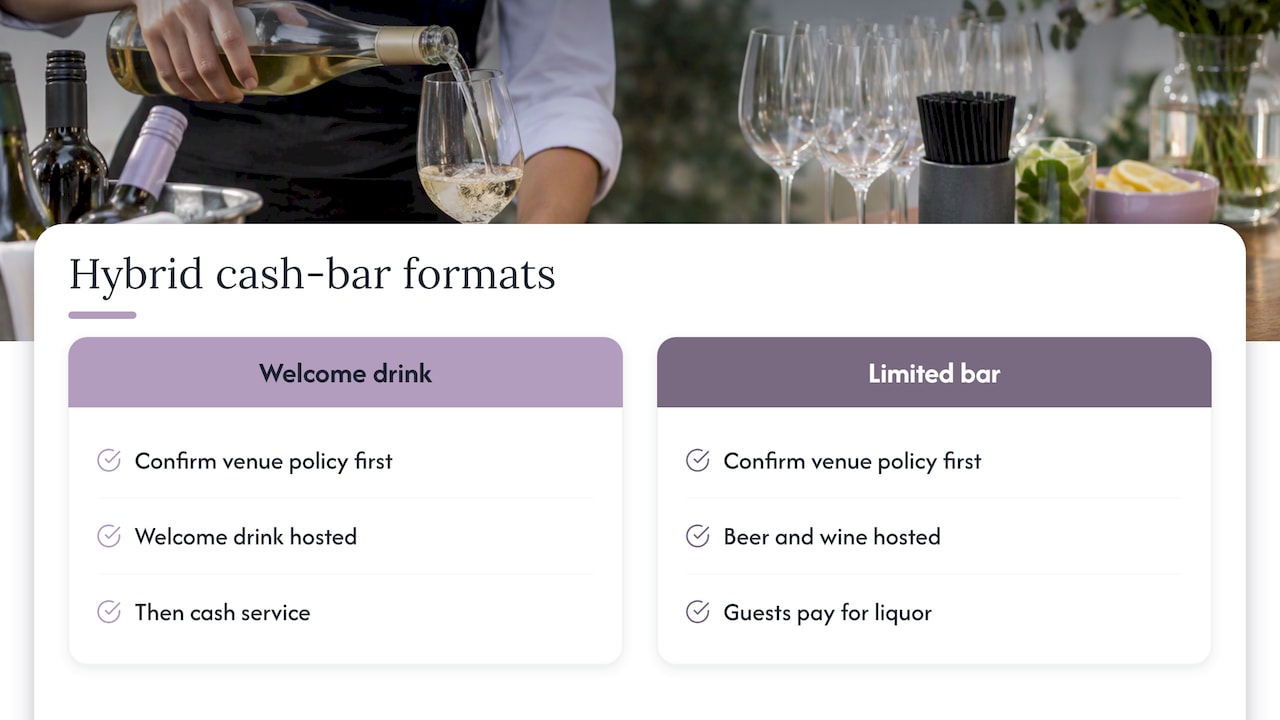
If a fully cash bar feels like too much of a trade-off, a hybrid approach often bridges the gap: a hosted welcome drink followed by cash service, or a limited bar covering beer and wine while guests pay for liquor. Checking venue policy early helps you figure out which version is even allowed before you build the rest of the plan around it.
How we keep cash bar setups running smoothly
We handle mobile bartending, liquor catering, and bar rental packages for weddings, corporate events, and private parties. Part of that work includes a backup bar plan and permit checklist we walk through with hosts before the event, along with staffing ratio and VIP bar setup guidance so the right number of bartenders are on hand for the guest count and pace of the event. Quality barware and tools make a visible difference too, and resources like these country club bar essentials show how much setup details affect service speed at high-volume bars.
A planner’s quick take on cash bars
A cash bar makes sense once guest count and budget push an open bar out of reach. The highest-impact fix is clear pricing signage at the bar itself, and checking venue rules early saves headaches later.
— Brennon
Let us handle your cash bar setup
If you’d rather not manage bartender staffing, permits, and payment logistics yourself, we run the entire bar operation for you. Our mobile bartending and liquor catering services cover everything from staffing to a backup bar plan in case anything goes sideways mid-event, plus bar rental packages for hosts who want a turnkey setup rather than assembling supplies and signage on their own.
Whether you’re planning a wedding, a corporate event, or a private party, we coordinate the pricing, staffing ratios, and permit details so the cash bar actually runs the way you pictured it. Get in touch through our mobile bartending and liquor catering services to check availability for your date.
FAQ
How much does it cost for a cash bar?
Costs vary by venue and vendor, but hosts typically still pay bartender and setup fees even when guests cover their own drinks. Those fees are usually quoted separately from drink prices, so ask for a full breakdown before booking.
What is the bartender-to-guest ratio for events?
A common planning rule is one bartender per several dozen guests for standard service, with a tighter ratio for VIP or high-volume bars. The right number depends on how fast you want the line to move and how complex the drink menu is.
Can bartenders earn a significant income working events?
Earnings depend heavily on event size, tipping culture, and local market rates, and no single figure applies across all markets or event types. Tips and hourly rates both factor in, so income varies widely from one event to the next.
Do you need actual cash for a cash bar?
Not necessarily. Mobile POS systems and card readers make card payment practical at most events, though it helps to keep a small cash float on hand as a backup in case a card is declined or connectivity drops.
What’s the difference between a cash bar and a hosted bar?
A hosted bar means the host pays for some or all drinks, while a cash bar means guests pay for what they order themselves. Many events land somewhere in between, covering a welcome drink or a limited menu before switching to cash for the rest of the night.