
Call liquor is a specific, recognizable brand a guest asks for by name, such as Tito’s or Bacardi. Top shelf is the premium tier above it: higher-priced, often aged or small-batch spirits like Grey Goose or single malt Scotch. Well liquor sits below both. It is the house pour a bar uses when nobody names a brand. If you are planning a wedding, corporate event or private party, the tier you pick shapes your bar budget and how the night feels.
Below we explain how the tiers work, where the labels get fuzzy, what the choice means for an event bar in Las Vegas or Henderson, and how to decide without overspending.
TL;DR
- Well is the default house liquor, call is a named mid-priced brand, and top shelf is the premium tier. The lines between call and top shelf vary from bar to bar.
- A “call” drink is defined by the guest naming the brand. A top-shelf drink is defined by price and quality. Many top-shelf drinks are also call drinks.
- For most events, a call-brand bar with one or two premium upgrades is the best balance of guest impression and budget.
- The bartender’s prep, fresh citrus and house-made syrups matter as much as the label on the bottle.
- If liquor is served at your Las Vegas or Henderson event, the caterer must be properly licensed. Ask before you sign.
Table of Contents
- What well, call and top shelf actually mean
- Call vs top shelf at a glance
- How the industry tiers spirits by price
- Is top shelf worth it for an event?
- What counts as top shelf is changing
- How to choose a tier for your Las Vegas or Henderson event
- Do not forget the permit side
- Our perspective: the tier matters less than the plan
- Plan your bar with Liquid Courage
- FAQ
- Sources
What well, call and top shelf actually mean
The three terms describe how a drink is ordered and priced more than any legal category. No regulator defines them. Each bar or caterer draws its own lines, which is why you will see slightly different lists from one menu to the next.
Well (or rail) liquor. A well or rail drink is usually served when the customer does not specify a brand. Ask for a vodka soda and you get the bar’s house vodka. The name comes from the well, the area right in front of the bartender where the most-used bottles sit. These are the lowest-cost bottles the bar has.
Call liquor. A call drink is made with a brand the guest “calls for” instead of the house well brand, and these drinks tend to cost more. Order a Bacardi and Coke instead of a rum and Coke and you have placed a call order. In practice, call brands are the widely recognized, reasonably priced names. Bartenders in industry forums typically put brands like Tito’s, Absolut or Stoli in the call tier, with Ketel One or Grey Goose a step up in top shelf.
Top shelf (premium) liquor. Top-shelf liquor is the premium tier, traditionally kept on the highest shelves of the back bar and priced above call brands. Think aged whiskeys, small-batch tequilas and the most prestigious vodkas and gins.
Why the terms overlap
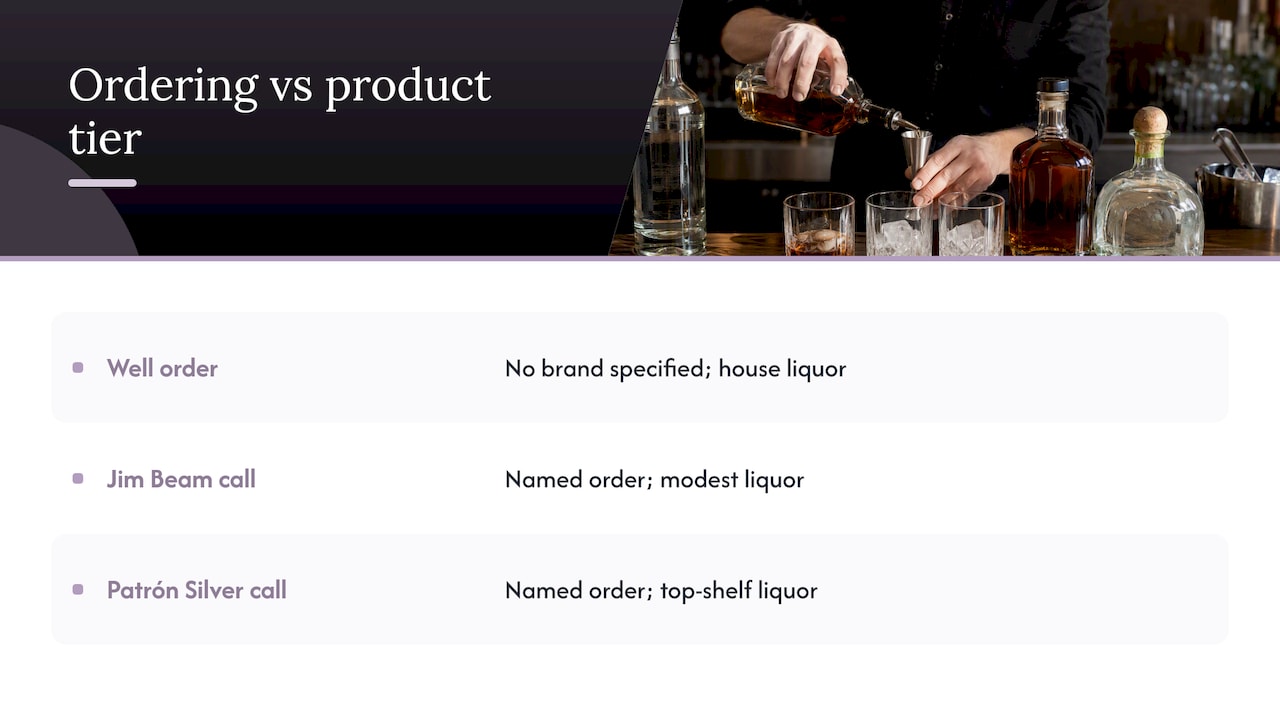
The confusion behind most searches for call versus top shelf comes from one fact: “call” describes the act of ordering, while “top shelf” describes the product tier. A call drink is often made with top-shelf liquor, because guests tend to ask for a higher-quality spirit by name, but it does not have to be expensive. A guest who asks for Patrón Silver by name is making a call order with a top-shelf product. A guest who asks for Jim Beam is making a call order with a modest one.
For event planning, it is cleaner to think in three pricing tiers: well, call, top shelf. Then ask your bar service what brands they place in each.
Call vs top shelf at a glance
| Well | Call | Top shelf | |
|---|---|---|---|
| How it is chosen | House default, no brand named | Guest or host names a recognized brand | Premium brand, usually named |
| Typical brands | Bar’s house pour | Widely known mid-priced labels | Aged, small-batch or luxury labels |
| Price to the host | Lowest | Middle | Highest |
| Best for | Large casual crowds, mixed drinks | Weddings, company parties, most private events | Milestone events, VIP areas, sipping spirits |
| Impression on guests | Functional | Familiar and trusted | Special |
How the industry tiers spirits by price
If you want an objective yardstick, the spirits industry has one. The Distilled Spirits Council of the United States (DISCUS) groups spirits into Value, Premium, High-End Premium and Super-Premium by supplier revenue per 9-liter case. The cut-offs vary by category, but for the 2025 tables the rough bands are under about $70 to $75 for Value, about $70 to $130 for Premium, about $120 to $200 for High-End Premium and about $170 to $180 and up for Super-Premium.
Those are supplier revenue figures, not what you pay at a bar, so they are not a menu price list. They are useful as a rough map:
- Well usually lines up with the Value tier.
- Call usually spans the upper Value and Premium tiers.
- Top shelf usually means High-End Premium and Super-Premium.
This is our reading of how bar tiers map onto the industry bands, not an official equivalence. Still, it explains why a jump from call to top shelf feels larger than the jump from well to call.
Is top shelf worth it for an event?
It depends on what you want the bar to say about the event, and on how guests will drink.
The cost question
Per pour, top shelf costs more. But one useful nuance comes from bar operations: top-shelf spirits carry a higher percentage pour cost, yet produce a larger dollar profit per drink than well or call spirits. That is a bar-owner’s view, and it matters for hosts in one way: the upgrade is as much about setting a premium tone as about the liquid itself. Bar operators note that premium options raise the perceived luxury of an event, which is why they appear at high-stakes corporate functions and weddings.
The taste question
The honest answer is that top shelf shines when the spirit is the star: a neat pour, an old fashioned, a martini, a tequila served on the rocks. When a spirit is buried in cola, juice or a sweet cocktail, guests rarely notice the difference between a good call brand and a premium one. If your crowd mostly orders vodka sodas and rum and Cokes, a strong call lineup gives you nearly everything top shelf would, for less.
The craft question
The bottle is only part of the drink. Upscale mobile bartending often involves full bar prep, such as house-made syrups, cordials, shrubs and fresh-pressed citrus, which lifts the guest experience whether a call or top-shelf spirit is in the glass. A well-made margarita with fresh lime on a call tequila will often beat a lazy pour of premium tequila with bottled mix. When you compare quotes, ask what goes into the drinks, not only which brands are listed.
What counts as top shelf is changing
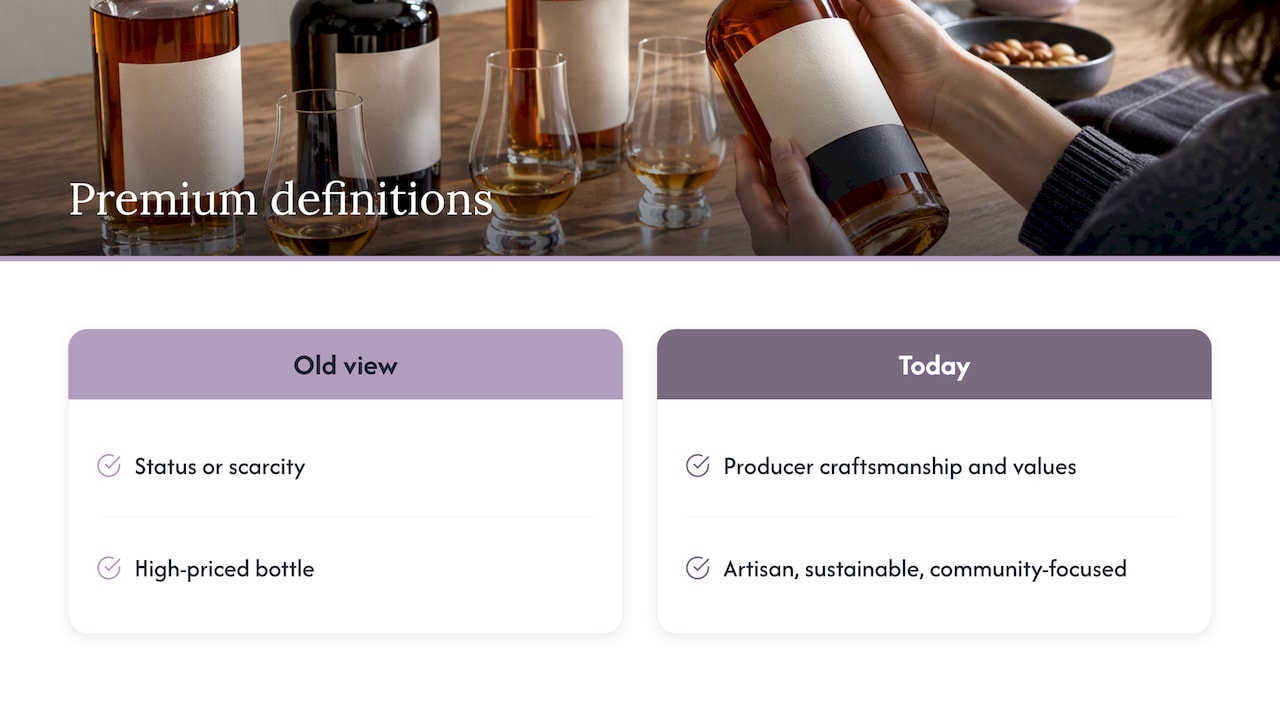
The old picture of a dusty bottle on the highest shelf is fading. Punch notes that top shelf once signaled status or scarcity, and at its most literal is simply a high-priced bottle. Today, many bartenders and hosts define premium by the producer’s craftsmanship and values, such as artisan, sustainable or community-focused distillers, rather than price alone.
For planners, this opens a useful option. Instead of paying for the most expensive recognizable label, you can choose a few spirits that fit the event: a local or craft gin for a garden wedding, or a well-aged bourbon for a client dinner. A short, curated list can feel more premium than a long wall of famous names.
How to choose a tier for your Las Vegas or Henderson event
Here is the framework we walk couples and planners through.
- Start with the guest count and the drinking pattern. A five-hour wedding reception drinks differently from a 90-minute corporate reception. Longer events and bigger crowds push most hosts toward call or a call-and-premium mix.
- Decide what the bar should signal. A product launch for a luxury brand may need top shelf throughout. A team celebration rarely does.
- Split the tiers by spirit. Vodka, tequila and whiskey are the most requested. Upgrade those, and keep gin, rum and others at call level if your guests rarely order them.
- Use a signature cocktail to carry the premium. One or two named cocktails built on a premium spirit add the feel of top shelf without pricing every pour that way. Our craft cocktail wedding menu examples show how this works.
- Leave room for the rest of the bar bill. Staffing, bar setup, ice, mixers, garnish and glassware all count, so do not spend the whole budget on bottles. Our guide on what a bar package includes lists what to look for in a quote.
If you are weighing a premium bar against other wedding costs, it helps to see how couples elsewhere divide their money. This breakdown of vineyard wedding costs in Kansas City shows how much a venue can shape the rest of the budget. Prices in Las Vegas will differ, but the exercise of ranking your priorities is the same.
Three sample setups
The relaxed backyard party in Henderson. Well is not necessary here. A call lineup of one vodka, one tequila, one whiskey, one rum and one gin, plus beer and wine, covers nearly every order.
The wedding reception. Call as the base, with a premium tequila and whiskey, and two signature cocktails. Guests see recognizable names, and the couple controls the cost.
The executive client reception. Top shelf for the spirits people sip, and call for mixers-heavy drinks. Add branded cocktail names or custom bar signage if the event is a corporate showcase.
Do not forget the permit side
Who pours matters as much as what is poured. Clark County requires liquor caterers to submit a Liquor Caterer Event Permit form with fees at least ten working days before the event, and city-licensed caterers from Las Vegas, Henderson and North Las Vegas must show proof of valid city licensing to work in unincorporated areas. The county also notes that temporary events involving the sale of goods or services need a business license.
Rules differ by venue and jurisdiction, so confirm your situation with the venue and the licensing office. Our guides on event alcohol permits in Las Vegas and private residence alcohol permits in Nevada cover the common scenarios.
Our perspective: the tier matters less than the plan
We only work in Las Vegas and Henderson, and we have been behind bars at weddings, corporate events and private parties for over 20 years. The question we hear most is whether top shelf is worth it. Our honest answer is: sometimes, and rarely for the whole bar.
Guests remember how quickly they got a good drink, whether the bartender was friendly, and whether the bar looked like it belonged at the event. They remember a brand name much less often. That is why we build packages around the whole bar: licensed and insured staff, a menu that fits your theme, compliance with Las Vegas municipal code, and branding options when the event calls for them. Then we help you spend the premium budget where guests will notice it.
If you tell us your guest count, your venue and your mood for the night, we can usually propose a tier mix in one conversation. Most of the time that mix is call-based, with a few smart upgrades.
— Brennon
Plan your bar with Liquid Courage
We provide mobile bartending and liquor catering for weddings, corporate events and private parties in Las Vegas and Henderson, with custom packages, bar rentals and venue coordination. Looking at a wedding? See our wedding bartending in Las Vegas. Planning a company event? Look at our corporate event bartending. Or contact us through our main page with your date and guest count, and we will build a package around the tier that suits you.
FAQ
What is the difference between call and top shelf liquor?
Call liquor is any recognized brand a guest asks for by name, usually mid-priced. Top shelf is the premium tier: higher-priced, often aged or craft spirits. A call drink can be made with a top-shelf spirit, so the two overlap, but top shelf always costs more than a typical call brand.
Is top shelf liquor worth the extra cost?
It is worth it when the spirit is served neat, on the rocks or in a spirit-forward cocktail like a martini or old fashioned. In sweet or heavily mixed drinks, most guests cannot tell a good call brand from a premium one. Many hosts upgrade only a few spirits or a signature cocktail.
What is considered call liquor?
Call liquor means widely known brands such as Smirnoff vodka, Bacardi rum or Jim Beam bourbon. Sources like The Spruce Eats describe these as popular, reasonably priced brands. The exact list varies by bar, so ask your bartender or caterer for their tier lists.
Why is it called top shelf?
The name comes from bar layout. Premium bottles were traditionally displayed on the highest shelves of the back bar, above the call brands and the well. Today the term is used as a general label for premium spirits, even when the bottles are not literally on the top shelf.
Do I need a licensed caterer to serve liquor at my event in Las Vegas?
If a caterer is serving alcohol at your event, they must hold the right licensing and permits. In Clark County, liquor caterers submit an event permit form at least ten working days ahead. Ask any bartending company to confirm its licensing and insurance before you sign.
Sources
- What Is The Difference Between A Well, Call, And Top-Shelf Drink, Food Republic
- What is the Difference Between Top Shelf and Well Drinks, Local Bartending School
- Call drink, The Oxford Companion to Spirits & Cocktails
- Top Shelf: Definition, PourIQ Glossary
- Annual Economic Briefing Support Tables 2025, DISCUS
- The Best Top-Shelf Liquor for Cocktails, PUNCH
- Swift & Granite Bartending, The Knot
- Liquor and Gaming Miscellaneous Forms, Clark County
- Temporary Events and Film Permits, Clark County
- What Is the Difference between a Well and a Call Drink, The Spruce Eats