
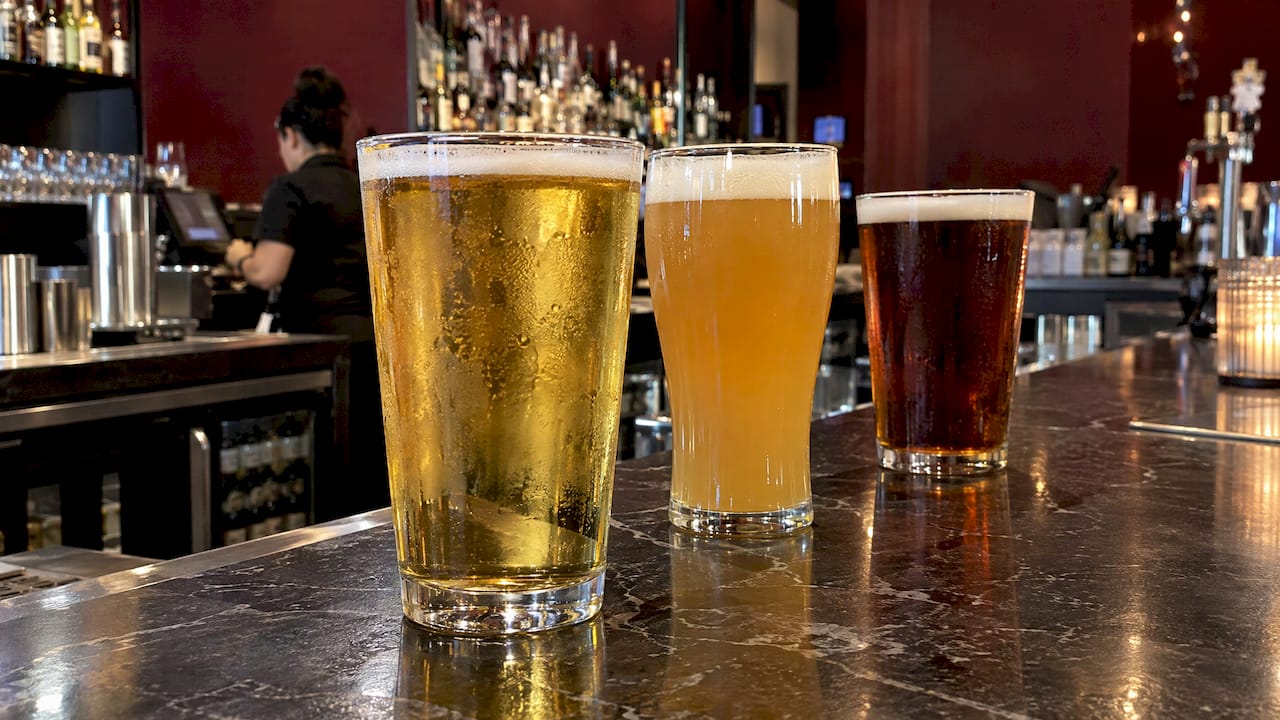
A good corporate beer selection is short, familiar at the center and interesting at the edges: one easy light option, one or two styles with more flavor, and a local or seasonal pick if the budget allows. The harder part is everything around the list: how many bars you need, how much to order, and who pours it. For corporate events in Las Vegas and Henderson, we build the beer menu together with the staffing, which is why our corporate event bartending starts with your guest list, not a tap list.
TL;DR
- Offer three beers as a baseline: a light, easy-drinking one, a medium-bodied one and a bold or hoppy one. Add a fourth, seasonal or local, if the budget allows.
- Always keep one familiar, mass-appeal beer on the menu. It keeps the whole crowd included.
- Plan roughly two drinks per guest in the first hour and one per hour after, then add a buffer.
- Match the lineup to the event: lighter styles for daytime conferences, richer ones for seated dinners.
- Staffing, food and nonalcoholic options matter as much as the beer itself.
Table of Contents
- Start with the guests, not the tap list
- How many beers is the right number
- Keep one familiar beer on the list
- Match the styles to the kind of event
- Watch the strength over a long evening
- How much beer to order
- Staffing the bar so the beer actually gets served
- Responsible service belongs in the beer plan
- A simple checklist before you finalize the menu
- Perspective
- Let us build the bar around your beer list
- FAQ
- Sources
Start with the guests, not the tap list
The most common mistake in corporate beer planning is choosing what the organizer likes. A company event brings together people of different ages, backgrounds and drinking habits, many of whom are talking to colleagues or clients and want a drink they do not have to think about.
Before you pick a single beer, answer four questions:
- Who is coming? A sales kickoff of 200 people has a different palate range than a 40-person executive dinner. Clients, partners and out-of-town guests widen the range further.
- How long does it run? A two-hour reception and a six-hour trade show evening call for different strengths. High-alcohol beer early in a long event creates problems toward the end of the night.
- Is there food? Beer served alongside appetizers or a meal is easier on guests than beer on its own, and food shapes which styles taste good.
- What else is on the bar? If you are also serving cocktails and wine, guests spread across three categories and the beer list can be shorter.
That last point matters more than planners expect. A bar that offers beer, wine, a signature cocktail and a nonalcoholic option does not need six beers. Our bar planning guide for corporate events walks through how guest count changes what you stock and how many bartenders you need.
How many beers is the right number
For most corporate events, three is the working number. One planning guide recommends a three-beer minimum covering light, medium-bodied and bold or hoppy styles, with a fourth seasonal or local specialty if the budget stretches. The same guide says two options can be enough when many guests prefer wine or cocktails, and that a beer-forward crowd may warrant four to six.
The reasoning is practical. Every extra beer means more inventory to buy, chill, track and restock. It also slows guests down at the bar, where a long list invites questions. A short list lets a bartender pour quickly and keeps the line moving.
Here is how that looks in practice:
| Event type | Beers to offer | What it covers |
|---|---|---|
| Cocktail-heavy reception | 2 | One light, one flavorful |
| Standard corporate party or mixer | 3 | Light, medium-bodied, hoppy or bold |
| Beer-forward client event or brewery-themed night | 4 to 6 | Adds a seasonal, a local pick and a darker style |
| Seated dinner with wine service | 2 to 3 | Light lager plus one richer option |
These are starting points, not rules. The test is simple: can every guest find something they would happily drink within five seconds of reading the menu?
Keep one familiar beer on the list
Guests at a corporate event are not at a beer festival. Many just want a cold, light beer in their hand while they talk. A selection made only of experimental styles can leave them without a choice.
A useful principle: include at least one familiar, easy-drinking option next to your more interesting beers. The same guide calls this inclusive, not downgrading. An event-bar planning article in a trade publication makes a similar point, suggesting a basic beer-and-wine bar can start with several domestic and imported beers, with microbrews as a growing addition.
When you only have room for a few beers, build them like this:
- The anchor: a light lager or pilsner that nearly everyone accepts. It is the beer that will be poured most.
- The step up: a pale ale, amber, wheat beer or dark lager with real flavor but no extreme bitterness. It suits the guest who wants something a little more interesting.
- The statement beer: a hop-forward IPA or a local craft pick for the enthusiasts. Keep it in a smaller quantity.
A useful rule when ordering is to weight the anchor heavily. Because it will move fastest, give it the largest share of your supply, then split the remainder between the step-up and the statement beer. Your exact proportions depend on the crowd, which is where a conversation about the guest list pays off.
Match the styles to the kind of event
The same lineup does not suit a 10 a.m. conference break and an evening client dinner. Think in terms of how long guests will drink and what else they are doing.
Daytime conferences and networking
Light, crisp and low in alcohol is the safe direction: lagers, pilsners, wheat beers and lighter session-style ales. Guests are on their feet, often moving between sessions, and want something refreshing that will not slow them down. If your event is built around conversation, our guide to networking event bar service covers how bar layout and menu length affect the flow of the room.
Seated dinners and executive gatherings
A dinner gives you room for richer styles: a malty amber, a dark lager, a Belgian-style ale or a stout. Beer is poured slowly alongside food, so fuller flavor works. Keep the lighter anchor available regardless, since not every executive wants a heavy beer with the main course.
Summer events and outdoor venues
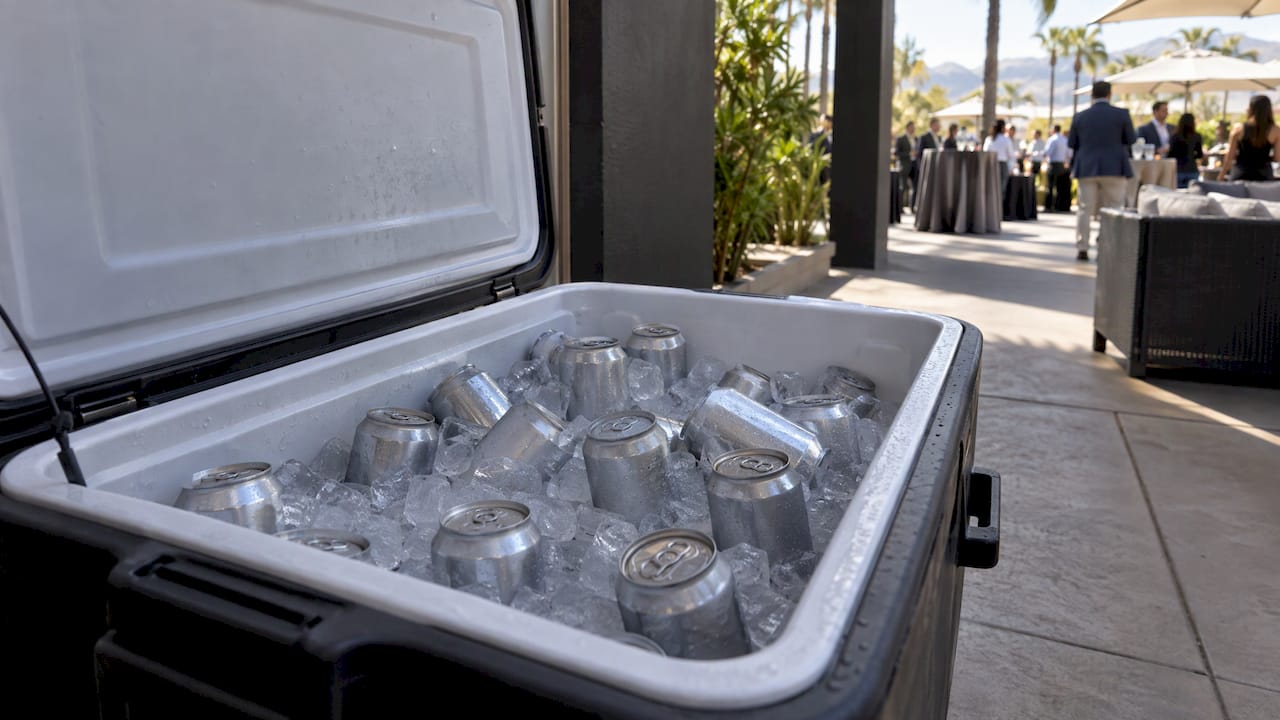
From late spring through early fall in the Las Vegas valley, heat changes everything. Lighter, cooler, more refreshing beers go further, and a heavy double IPA or imperial stout can feel wrong in the afternoon sun. A fruit-leaning wheat beer or a shandy-style option is an easy seasonal addition. Keeping beer cold is its own logistics task outdoors, so confirm ice and cooler capacity with your bar provider before the event.
Tasting-style or brewery-themed events
If beer is the point of the evening, offer more styles and serve smaller pours. The order matters: go from lightest to heaviest, so a strong dark beer does not dull the palate before the delicate ones. A trade-publication guide to event bars adds a nice touch for this kind of event: it suggests inviting a local craft brewer to talk with guests, and notes that many small brewers will do this for free.
That last idea works well for team-building and client entertaining. A local brewery story gives people something to talk about, which is exactly what a networking event needs. If you are building a wider program around a local theme, the company party beverage station ideas we have collected show how to pair a beer station with other drinks.
Watch the strength over a long evening
Craft beer is often stronger than the light lagers people grew up on. A 9% double IPA is a very different drink from a 4% lager, and corporate guests are often drinking in front of colleagues and clients, with a drive or a flight home ahead of them.
Some practical guidance:
- Keep high-alcohol beers to a small share of the menu, and never make them the only grab-and-go choice.
- For events lasting more than three or four hours, lean toward lower-alcohol styles.
- Put the strong styles on the menu as an option, not the default.
- Offer smaller pours of strong beers if the format allows.
This is not about limiting the fun. It is about an event where people are still sharp when they shake the CEO’s hand at the end of the night.
How much beer to order
A widely used rule of thumb is two drinks per guest in the first hour and one per hour after that, based on a 12 oz serving. One catering quantity calculator uses that formula and suggests a 15 to 20 percent beverage buffer. For corporate events it also expects an attendance rate of roughly 85 to 90 percent of invited guests, which is worth building into your count.
Here is a worked example. Say 100 guests are expected at a three-hour evening reception.
- Total drinks per guest: 2 in the first hour plus 1 for each of the next two hours, so 4.
- Total drinks for 100 guests: 400.
- With a 15 to 20 percent buffer: roughly 460 to 480 drinks.
- Not every drink is beer. If only a third of guests choose beer, that is around 150 to 160 beers, and the rest is wine, cocktails and nonalcoholic drinks.
The split between categories depends on your crowd, and this is where local experience helps. A cocktail-forward group in Las Vegas will drink less beer than a casual team party, and a group at an afternoon outdoor event will drink more. We help organizers set these quantities when we plan the bar, because the right number depends on your guest list, your venue and how long the event runs.
Two more details to settle early:
- Format: bottles, cans or kegs. Kegs need the right coupler for the tap, and sizes and availability vary by brand and region, so check with the distributor before committing. Fresher kegs matter most for hop-forward craft beers, which fade quickly.
- Ordering lead time: some brands need advance ordering. Settle your list well before the event, not the week of.
Staffing the bar so the beer actually gets served
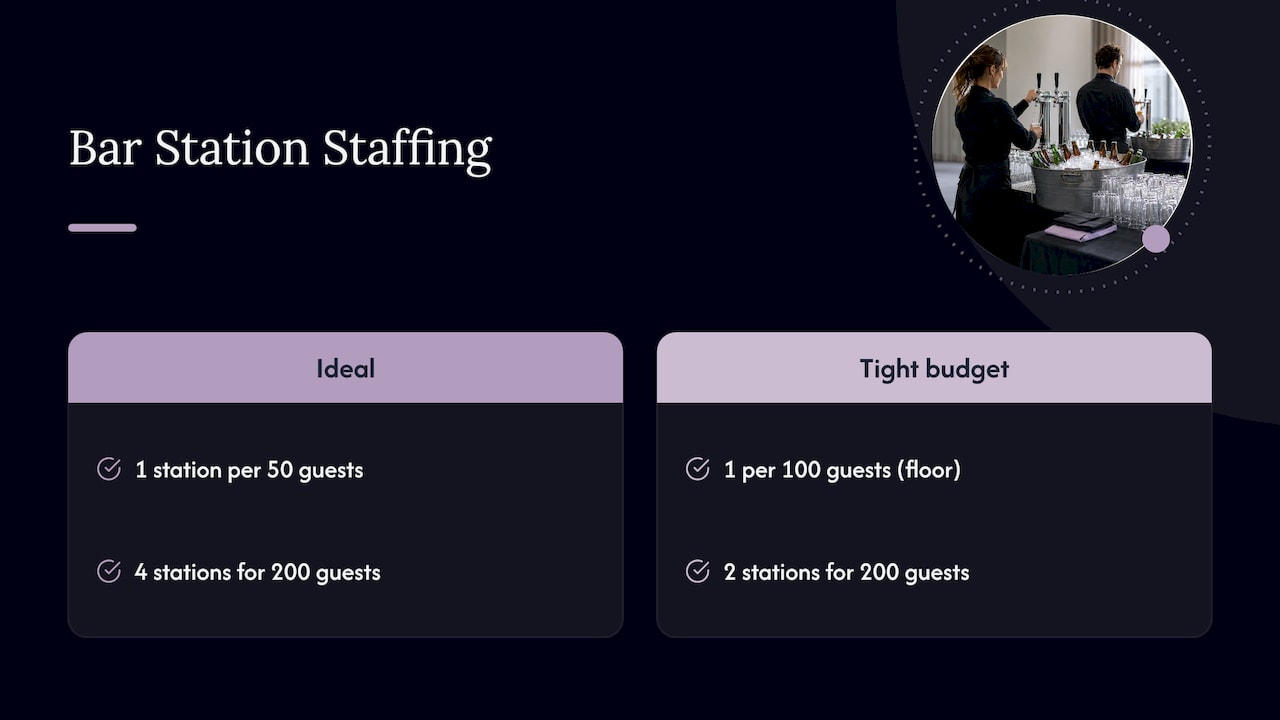
The best beer menu fails if guests wait twenty minutes for a drink. A trade-publication guide to event bars recommends one bar station per 50 guests as the ideal service level, with one per 100 as the floor on a tight budget and nothing lower. For a 200-person event, that means four stations if you want the lines to stay short, and two at the absolute minimum.
Beer is faster to serve than cocktails, which helps. Even so, a bar that pours only beer and wine still needs enough hands to open bottles, pour cans, restock coolers and clear empties. Staffing also includes running ice, managing stock and keeping the bar clean through the evening.
If your cocktails are part of the menu, prepping some of them ahead of time keeps lines short. Our piece on faster bar service at events explains how batching works alongside a beer lineup.
Responsible service belongs in the beer plan
Alcohol at a company event carries responsibility for the host. A few habits make the difference:
- Serve food with drinks. Food slows alcohol absorption, and an event with only drinks and no food is harder to manage.
- Make nonalcoholic options visible. Guests who abstain for health, dietary or designated-driver reasons should not feel like an afterthought. Good nonalcoholic drinks and nonalcoholic beer belong on the same menu, not tucked behind the bar.
- Know the age and intoxication rules. One guide to alcohol service at special events advises following state age-verification and driving-intoxication rules, offering food, and disclosing drink allergens.
- Give bartenders the authority to say no. A trade-publication guide advises empowering bartenders to refuse service to guests who are intoxicated, and notes that many events drop shots in favor of mixed drinks to slow consumption.
- Plan the ride home. If the venue is away from the Strip or guests are coming from several hotels, arranging group transport is part of hosting. This guide to corporate event transportation covers how to think through it.
We operate in Las Vegas and Henderson with strict compliance with Las Vegas municipal code, and we are fully licensed and insured. For you as the host, that means the people pouring your beer know the rules and handle them at the bar.
A simple checklist before you finalize the menu
- Count your guests, then apply an attendance estimate.
- Decide how many beers fit, given what else is on the bar.
- Choose one familiar anchor, one step-up and one statement beer.
- Check strength against event length.
- Confirm format, supply and lead time with the distributor.
- Set quantities with a buffer.
- Plan stations and staff at one per 50 guests.
- Add food and nonalcoholic options.
- Decide branding for the bar, if your company wants the beer service to carry its look. Our guidance on corporate bar branding covers menus, signage and bar fronts.
Perspective
We have poured at enough company events to know that the beer list is rarely what people remember. What they remember is whether the line was short, whether the bartender was friendly and whether there was something they wanted to drink.
That is why we start with the guest list, not the brands. A tight lineup of three well-chosen beers, a bar with enough hands and a visible nonalcoholic option beats a long list that slows everyone down. Our approach rests on more than 20 years of experience, full licensing and insurance, and strict compliance with Las Vegas municipal code, and it is built for planners who want one team to take care of the bar.
We also see the bar as part of your brand. A menu that fits the event, a bar that looks the part and staff who present well all make your company look organized. Turnkey packages and bar branding options exist for exactly that reason: you should not have to chase beer, glassware, ice and staff from five different places.
Brennon
Let us build the bar around your beer list
If you are planning a corporate event in Las Vegas or Henderson, we handle mobile bartending and liquor catering, with custom package options, bar branding and venue coordination. Tell us your guest count, your venue and the feel you want, and we will shape the beer selection and the staffing around it. See our corporate events service to start, or look at how a mobile bar setup works from load-in to last pour.
For bar-only needs, our bar rental packages are another way to get a finished bar for your event.
FAQ
How many beers should I offer at a corporate event?
Three is a good baseline: a light option, a medium-bodied option and a bold or hoppy one. If a large cocktail or wine menu is also offered, two can be enough. A beer-forward crowd or a brewery-themed event can support four to six.
What is the safest beer for a mixed crowd?
A light lager or pilsner is the easiest choice, since most guests will accept it. Pair it with one more flavorful but not extreme beer, such as a pale ale, wheat beer or amber. Keep stronger, bitter styles as a smaller option.
How much beer do I need per guest?
A common rule is two drinks in the first hour and one per hour afterward, at 12 oz each, plus a buffer of 15 to 20 percent. Only a share of guests will choose beer, so the final beer count depends on how much wine, cocktails and nonalcoholic drinks you are also serving.
Should I include nonalcoholic beer or drinks?
Yes. Some guests are driving, abstaining or simply pacing themselves. Putting nonalcoholic options on the main menu makes them feel like part of the event, and pairing drinks with food helps slow alcohol absorption.
Can you help with beer selection for our Las Vegas or Henderson event?
Yes. We provide mobile bartending and liquor catering for corporate events in Las Vegas and Henderson, including custom packages and venue coordination. Share your guest count and event format, and we can plan the beer selection and bar staffing together.
Sources
- Planning an Event Bar
- Craft Beer at Weddings: Selection, Kegs, and Presentation
- Catering Quantity Calculator
- Event Serving: A Guide to Alcohol Service at Special Events and Catered Affairs
- Corporate Event Transportation: A Decision-First Guide