
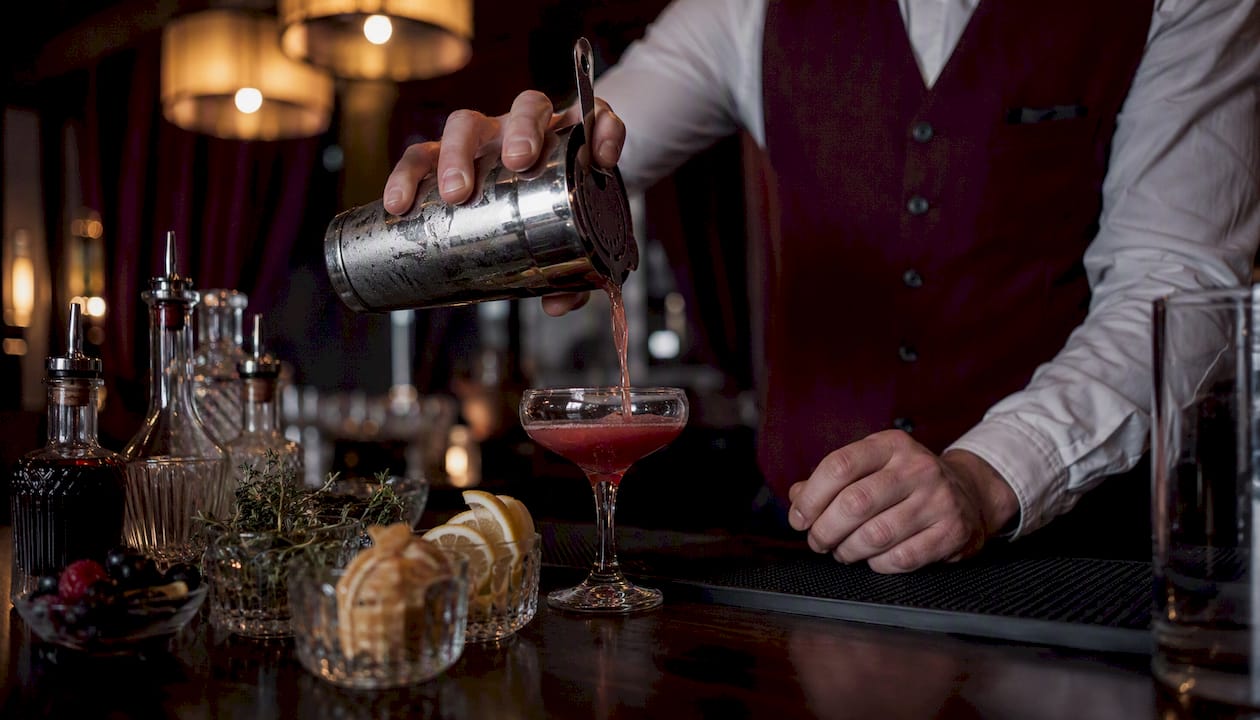
Yes, hire a licensed, insured mobile bartending service for your wedding, corporate event, or private party rather than going the DIY or unlicensed-vendor route. A professional team brings certified staff, venue-compliant insurance, and the guest-flow experience that keeps a bar line from becoming the story of the night. If you searched for bartending jobs OKC hoping to staff an event, you’re really looking for staffed mobile bartending and liquor-catering, and the fastest path to a good outcome is lining up your paperwork before you call anyone.
Do this first:
- Pull your venue’s bar rules and your final (or estimated) guest count.
- Ask every vendor you’re considering for a certificate of insurance (COI) and staff certifications up front, not after you sign.
- Get the scope in writing: what’s included, what’s excluded, and who’s providing the alcohol.
Three things worth confirming before you get attached to a quote: the vendor’s COI limits actually match what your venue requires, their bartenders carry responsible-service training like TIPS or ServSafe Alcohol, and their proposal reads like a contract, not a price list.
Key Takeaways
Hiring a licensed, insured mobile bartending service works because it pairs venue-compliant insurance and certified staff with the guest-flow experience that keeps your event running on schedule.
| Point | Details |
|---|---|
| Confirm the service model | Know upfront whether you’re booking dry hire, bartender-for-hire, or full-service liquor catering. |
| Collect the paperwork early | Request a COI, server certifications like TIPS or ServSafe Alcohol, and any required permits before signing. |
| Match staffing to guest flow | Plan for approximately one bartender per several dozen guests, adjusting staffing for more complex menus or rapid guest arrivals. |
| Get scope in writing | A contract should spell out alcohol/ice/mixer responsibility, timing, overage policy, and cancellation terms. |
| Book with permit lead times in mind | Some permits take 30 to 105 days to process, so start vendor outreach well before your event date. |
| Liquid Courage LV as an example | Serves Las Vegas and Henderson with insurance documentation, certified staff, and staffing guidance ready for venue review. |
Table of Contents
- What a Mobile Bartending Service Actually Provides
- What to Ask and What to Request in Writing
- Staffing Ratios, Setup Needs, and How Pricing Breaks Down
- Coordinating With the Venue on Insurance and Permits
- What Happens on Event Day
- How to Choose a Provider and Red Flags to Avoid
- How Liquid Courage LV Fits the Checklist
- Why the Boring Details Are What Actually Save Your Event
- Get Your Event Bar Sorted Without the Guesswork
- Sources
What a Mobile Bartending Service Actually Provides
Pouring drinks is the smallest part of the job. A professional crew manages the line at your bar, paces service so nobody’s stranded at the signature cocktail table, and cuts off a guest gracefully before things go sideways. That’s the difference between a bar that just exists and one that actually works the room.
Most mobile bartending packages include staffing, a portable bar setup, glassware or disposable-ware options, ice, mixers, and garnishes, plus breakdown and cleanup at the end of the night. What varies is who supplies the alcohol itself. Full-service liquor catering means the vendor sources, transports, and serves everything, while “dry hire” means you buy the alcohol and the vendor brings the staff, equipment, and execution. Dry hire tends to save money and gives couples more control over brand selection, but it shifts inventory math (how much vodka is enough for 120 guests?) onto you.
There’s a third model worth knowing: bartender-for-hire, where you’re renting labor only and supplying both the alcohol and the bar setup. It’s the cheapest option and the one with the most room for gaps.
Pro Tip: Ask specifically who handles batching cocktails, restocking garnishes mid-event, and refilling ice. Vendors quietly split this responsibility differently, and it’s the detail most contracts leave vague.
What to Ask and What to Request in Writing
Interview vendors the way you’d interview a contractor, because the stakes (a room full of thirsty guests and a rented venue) are similar. Ask these questions on every call:
- Is this dry hire, bartender-for-hire, or full-service liquor catering?
- Who supplies alcohol, ice, and mixers, and what happens if we run short?
- How many bartenders are included for our guest count and service style?
- What’s your backup plan if a staff member cancels?
- What are your setup and teardown windows, and do they include gratuity or overtime?
Then request documents, not promises:
- A certificate of insurance (COI) naming your venue if required.
- Proof of server certification, such as TIPS or ServSafe Alcohol training for staff.
- Any permits relevant to your event and location.
- A written contract or proposal, not just a verbal quote.
Before you sign anything, ask direct logistical questions about space needs and supply responsibility so the numbers on paper match what actually shows up. Insist the contract spells out start and end times (including last call), what happens if your guest count changes, cancellation and rescheduling terms, liability language, and the vendor’s explicit right to cut off service to an intoxicated guest. That last clause protects you as much as it protects them.
Staffing Ratios, Setup Needs, and How Pricing Breaks Down
Bartender count isn’t a flat formula. It depends on guest count, how long the bar runs, and whether you’re serving a slow cocktail hour or a corporate crowd arriving in one dense wave right at 6 p.m. A vendor worth hiring asks about arrival patterns and menu complexity before quoting staffing, because a signature-cocktail menu with muddled fruit takes far more labor per drink than a beer-and-wine setup.
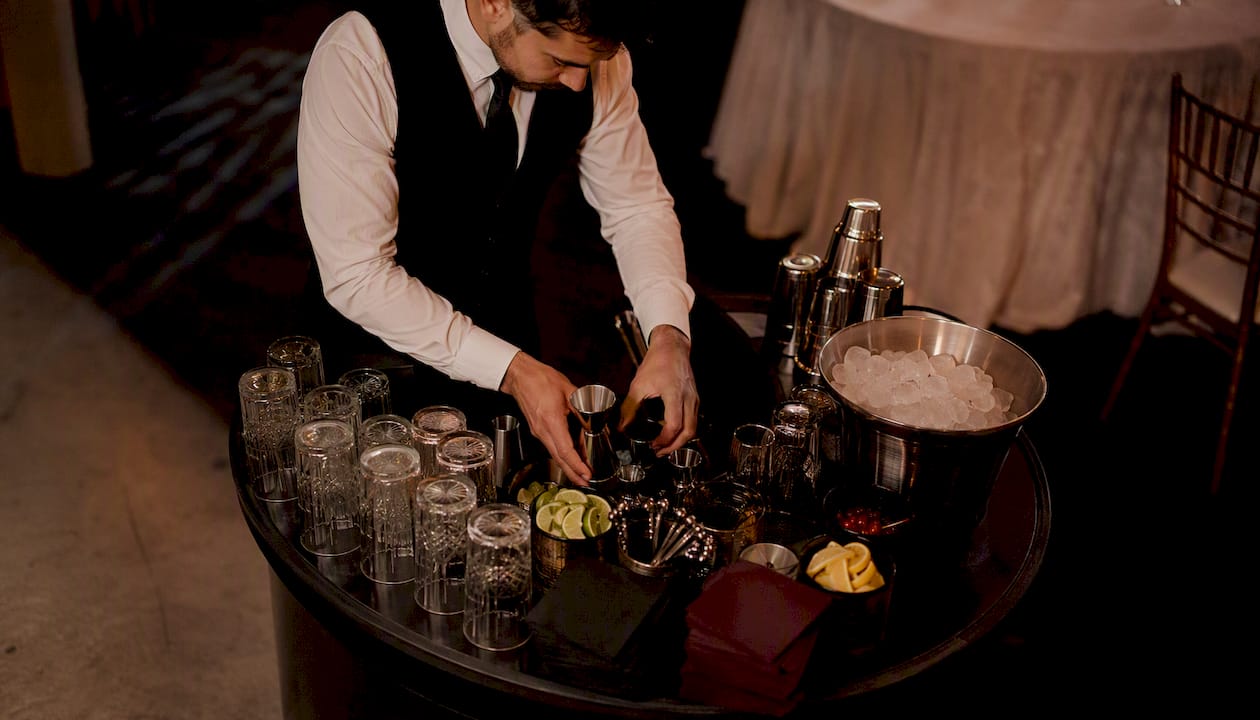
As a rough guide, one bartender per 50 to 75 guests works for a standard open bar; tighten that ratio for craft cocktail menus or fast corporate arrival waves, and add a barback once you cross roughly 100 guests to keep ice, glassware, and garnishes flowing without pulling a bartender off the rail.
Pricing usually breaks into a handful of components: labor (bartenders and barbacks by the hour), equipment rental (the bar itself, glassware, coolers), the drink package itself, insurance or permit pass-through costs, and travel or overtime fees if your event runs late or sits outside the vendor’s normal service area.
| Package Type | Typical Structure | What Drives the Price |
|---|---|---|
| Dry hire (staff + equipment only) | Flat labor rate plus equipment fee | Bartender count, hours, bar rental |
| Per-head drink package | Price per guest for a set menu | Guest count, drink complexity, hours |
| Full-service liquor catering | All-inclusive per-head or flat fee | Alcohol cost, staffing, insurance, permits |
| Cash bar / host bar hybrid | Base staffing fee plus per-drink charges | Staffing hours, POS or card-processing setup |
Coordinating With the Venue on Insurance and Permits
Your venue, not just your vendor, sets the real bar for what counts as acceptable coverage. Many venues require insurance limits that sit well above what your state legally mandates, which means a vendor who’s technically compliant with the law can still get turned away at the door.
By the numbers: Standard liquor liability and general liability policies for mobile bartending vendors are common, but permit costs and requirements swing widely by state. Some states let one catering license cover events statewide, while others require a separate permit for every single event, and those per-event fees add up fast if you’re planning multiple bookings.
Work the coordination in this order:
- Ask your venue directly what COI amount and vendor documentation they require.
- Request that exact COI, plus proof of server certification, from every vendor you’re seriously considering.
- Confirm who is responsible for permits (the venue, the vendor, or you) and how far in advance that paperwork needs to be filed, since permit processing can take 30 to 105 days depending on the license type.
Space and utility access matter too. Ask about load-in access, power and water availability, and the physical footprint the bar setup needs, since a 10-foot mobile bar doesn’t fit everywhere a venue coordinator assumes it will.
What Happens on Event Day
A typical timeline looks like this: the crew arrives one to two hours before doors open for load-in and setup, service starts at your scheduled time, last call happens 30 to 60 minutes before the event’s official end, and breakdown wraps within an hour after that. Confirm ahead of time who at the venue grants load-in access and at what time, since a locked loading dock at 3 p.m. can blow the whole schedule.
Beyond pacing drinks, a good crew tracks the details that keep guests happy and events out of trouble: nonalcoholic options for designated drivers and guests who don’t drink, awareness of allergy or dietary notes if you’ve flagged them, and calm, practiced handling of both long lines and overserved guests. The morning of your event, confirm the vendor’s arrival time, get a direct on-site contact number, make sure your venue contact and the bar staff have met (even by phone), and lock in your final guest count if it’s still moving.
How to Choose a Provider and Red Flags to Avoid
Score every proposal against five things: scope clarity, insurance and permits, staffing logic, contract terms in writing, and real references or past event examples. A 15-point comparison checklist is genuinely useful here, because two quotes that look identical on price often cover completely different responsibilities once you read the fine print.
Watch for these red flags:
- A COI that can’t be verified or that the vendor is slow to produce.
- Vague or shifting answers about who supplies alcohol, ice, or mixers.
- No backup staffing plan if someone calls in sick.
- Nothing in writing, only a verbal quote or a text message estimate.
- Hesitation or evasiveness about past venue experience.
Pro Tip: Score each proposal 1 to 10 across those five criteria, then compare totals side by side. It turns a gut feeling into a number you can actually defend to a co-planner or a partner who wasn’t on the call.
How Liquid Courage LV Fits the Checklist
Liquid Courage LV operates as a mobile bartending and liquor-catering company serving Las Vegas and Henderson, Nevada, with packages built for weddings, corporate events, private parties, and standalone bar rentals. On the checklist above, that means a certificate of insurance ready for venue review, staff trained in responsible service, staffing recommendations based on your guest count and event style, and package options that scale from a small private party to a full corporate activation.
Planners working with Liquid Courage LV can request a sample proposal and checklist to speed up their own internal review process, especially useful for corporate planners who need to route a contract through procurement. If you’re comparing vendors right now, ask for the same documentation from every one of them, and see who actually delivers it without a delay.
Why the Boring Details Are What Actually Save Your Event
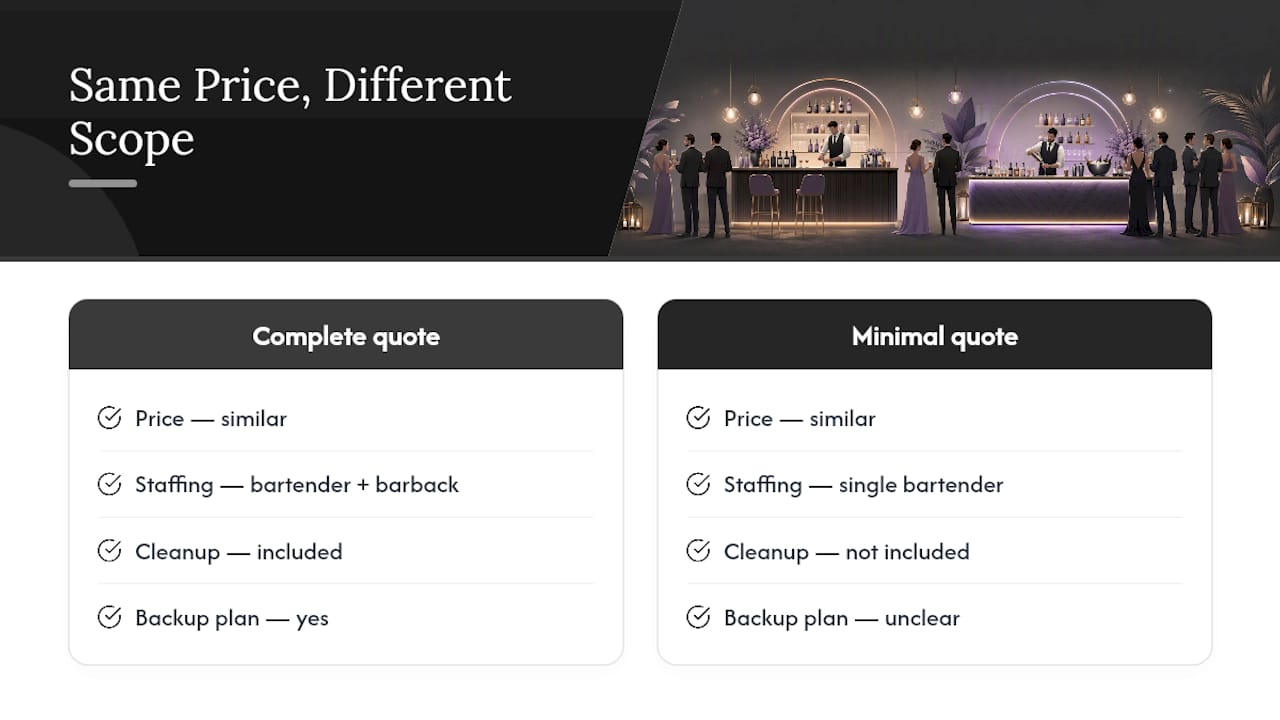
The most common mistake organizers make isn’t picking the wrong drink menu. It’s underestimating staffing and treating scope like it’s identical across every quote. Two proposals at nearly the same price can mean completely different things: one includes a barback and full cleanup, the other doesn’t, and you won’t know until the bar is three-deep with no one restocking ice.
I’ve seen the gap play out at both weddings and corporate mixers. A wedding with 150 guests and one bartender turns cocktail hour into a 20-minute wait, and that’s the memory guests actually walk away with. A corporate happy hour with a clear staffing plan and a barback moves fast enough that people talk to each other instead of the person next to them in line. Neither difference has anything to do with the alcohol itself.
The one-line reassurance I’d give any planner: vendors who’ve done this long enough always have a backup plan for a no-show staff member, and if a vendor can’t answer that question directly, that’s worth more than any other red flag on your list.
Get Your Event Bar Sorted Without the Guesswork
If you’re planning a wedding, corporate event, or private party in Las Vegas or Henderson, Liquid Courage LV builds packages around the exact checklist covered above: insurance documentation ready for your venue, trained staff, and a proposal that spells out scope instead of leaving it vague.
Planners can request a wedding liquor-catering contract checklist that covers the exact clauses to look for before signing with any vendor, along with a sample COI reference and staffing recommendations based on guest count and event style. Corporate planners comparing service levels for a networking event or holiday party can review the conference bartending service guide for staffing and pacing details specific to high-volume arrivals.
Ready to compare a real proposal against the checklist you just read? Request a personalized quote from Liquid Courage LV and see exactly what’s included before you commit to any vendor.
Sources
Planners who want to dig deeper into any single piece of this process have solid places to start:
- How to Start a Mobile Bartending Service: Licenses & Insurance – LegalClarity
- Mobile Bar Liquor License Cost: Trailer & Wedding Bars (2026)
- How to Book a Mobile Bar Catering Service
- Questions to ask a wedding bartender
- How to Choose a Mobile Bartender: 15 Questions to Ask Before You Book
Permit rules and insurance minimums shift by state and even by municipality, so when something in your contract or your venue’s requirements doesn’t match what you’ve read here, your venue coordinator or local alcohol beverage control agency has the final word, not a blog post.