
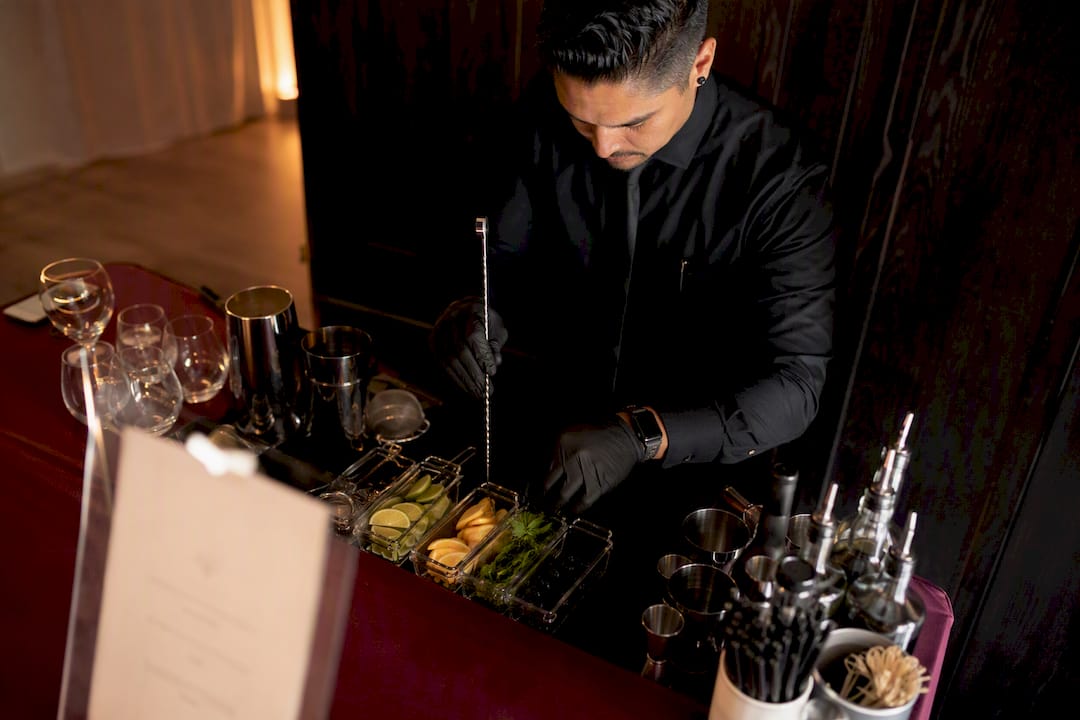
Liquid Courage is the mobile bartending and liquor-catering provider we recommend for weddings, corporate events, and private parties across Las Vegas and Henderson. The team runs TAM-carded staff, permitted service models, and folding-bar setups that meet Clark County requirements without the months-long wait tied to trailer licensing.
Booking lead time runs anywhere from a few weeks to several months, depending on season and guest count. Peak wedding months (spring and fall) and major convention weeks fill fastest.
- Weddings: cocktail hour through reception, with signature drink menus
- Corporate events: badge-friendly service for conferences, holiday parties, and team-building functions
- Private parties: birthdays, milestone celebrations, and backyard events
Start your request through the event bartending hiring guide to see package options before you lock a date.
Key Takeaways
Hiring the right bartending provider in Las Vegas or Henderson comes down to matching the service model (dry hire, folding bar, or trailer) to your venue and permit timeline before comparing price.
| Point | Details |
|---|---|
| Confirm dry hire vs. wet hire | Decide who buys the alcohol first; it determines which licensing path your vendor needs. |
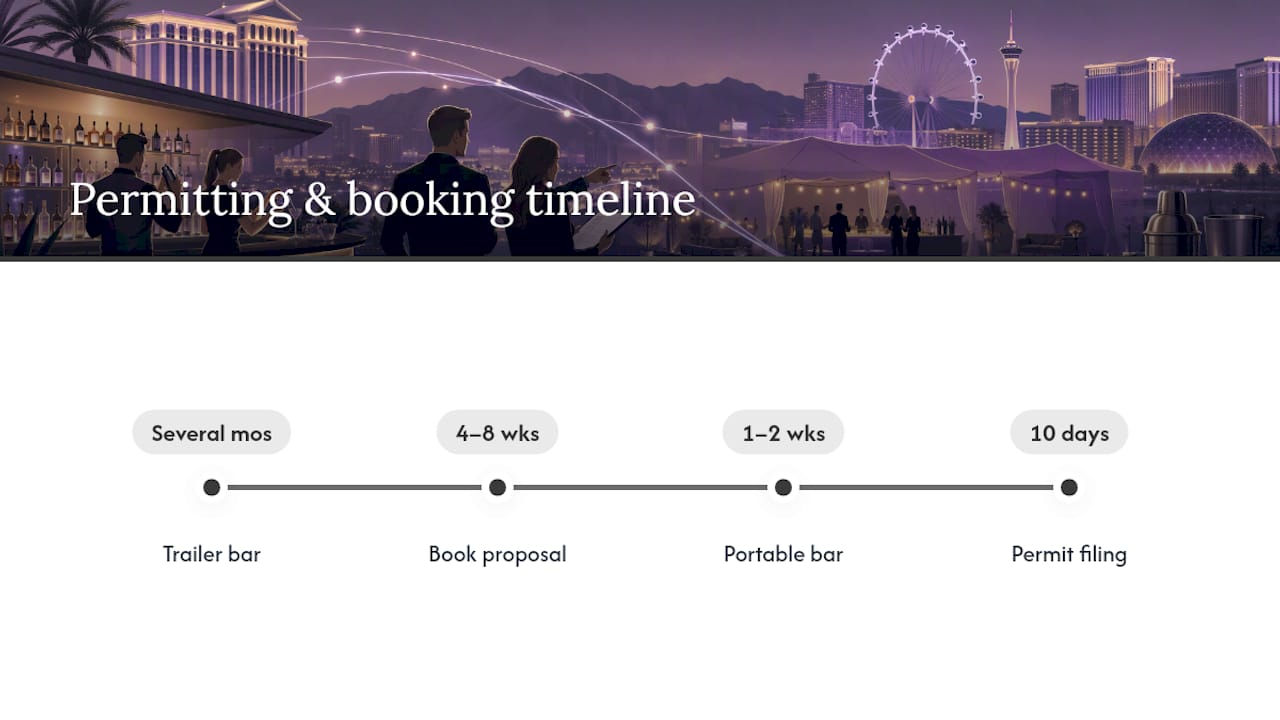
| File permits ten days out | Clark County requires liquor caterer permit applications at least ten calendar days before the event to avoid doubled late fees. |
| Request TAM cards and insurance | Ask for TAM card numbers and a certificate of insurance naming your venue before signing. |
| Compare itemized quotes | Break down hourly rates, gratuity, mixers, and travel fees rather than comparing bottom-line totals. |
| Book Liquid Courage for Nevada events | Liquid Courage offers permitted, TAM-carded bartending with folding-bar setups ready in days for Las Vegas and Henderson events. |
Table of Contents
- What does mobile bartending and liquor catering actually cover?
- How do you vet a bartending vendor before signing?
- What permits does a Nevada liquor caterer need?
- How should you compare bartending quotes?
- What does the day-of timeline look like?
- The gap between vendor roundups and what planners actually need
- How Liquid Courage handles the checklist for you
- Frequently asked questions about hiring bartending services
- Sources
What does mobile bartending and liquor catering actually cover?
Bartending careers in the event world split into two very different service models, and picking the wrong one can cost you a permit denial or a scrambled last-minute vendor swap. Understanding the difference up front saves both money and stress.
- Dry hire. You, the host, buy the alcohol; the vendor supplies bartenders, tools, and setup. This model sidesteps Nevada’s retail liquor licensing entirely, though the vendor still needs a Nevada business license and TAM-carded staff.
- Wet hire. The vendor purchases and sells the alcohol as part of the package, which turns them into a retailer under Nevada’s three-tier system and triggers a different permit path with longer processing.
- Portable folding bars vs. mobile trailers. Folding bars avoid Mobile Unit classification and can be operational fast, while trailers often require plan review, a three-compartment sink, and a commissary contract before they ever pour a drink.
- Full-service packages. A complete package usually bundles bartenders, glassware, mixers, a point-of-sale system for cash bars, and backup staffing in case someone calls out.
Venue restrictions often decide this for you. A hotel ballroom or backyard rarely has room or utility hookups for a trailer, which is exactly why most Las Vegas events run on portable bar setups instead.
How do you vet a bartending vendor before signing?
Vetting a vendor is where most planning mistakes happen, usually because nobody asks the awkward questions until the contract is already signed. Build your checklist around three things: staffing math, paperwork, and contract language.
Staffing ratios. A general starting point is one bartender per 50 to 75 guests per bar station, though open bars with elaborate cocktail menus need tighter ratios. Ask the vendor to show their math for your guest count, not just quote a flat number.
Credentials to request:
- A current Nevada business license (or explicit confirmation the vendor operates dry-hire and doesn’t need retail licensing)
- TAM card numbers for every bartender working your event
- A certificate of insurance naming your venue and, if applicable, the event sponsor
- Proof of the Clark County Liquor Caterer Permit application, or confirmation of who’s filing it
Contract must-haves:
- Who purchases the alcohol (this defines dry vs. wet hire in writing, not just verbally)
- Cancellation policy and refund windows
- Overtime rates if your event runs long
- Corkage fees, if you’re supplying your own bottles
- Last-call timing and breakdown procedure
- A named backup staffing plan if a bartender is sick or a no-show
A ready-made version of this exact request list lives in Liquid Courage’s practical hiring guide for planners, which you can send straight to any vendor you’re comparing.
Pro Tip: Ask every vendor the same question: “What happens if your lead bartender cancels the morning of my event?” A vague answer, or worse, no answer, tells you more than their price sheet does.
Red flags are easy to spot once you know where to look: no proof of licensing or insurance, vague or shifting staffing numbers, and pricing that sits noticeably below every other quote you’ve gathered. Underpriced bartending almost always means uninsured, unlicensed, or both.
What permits does a Nevada liquor caterer need?
Permits are the part planners underestimate most, and the timeline matters as much as the paperwork itself. Clark County requires a Liquor Caterer Permit application submitted at least ten calendar days before the event, and the vendor must already hold a current liquor caterer business license before that application even gets considered.
Late applications aren’t just risky, they’re expensive: Clark County charges double the standard permit fee for late submissions, on top of a per-station fee that runs around $10 per service location per day.
- The permit application requires a full employee roster, including TAM card numbers and alcohol-awareness training dates for every server
- A vendor running wet hire (selling the alcohol themselves) needs the liquor caterer license itself, not just the event permit
- Trailers or vehicle-based setups may trigger Mobile Unit plan review, adding infrastructure requirements folding bars never face
- Some venues require a temporary food establishment permit alongside the liquor permit; confirm this with your venue coordinator early
- Zoning and venue-level alcohol approval sit on the planner’s side of the checklist, not the vendor’s, so confirm it before you book
City-level retail liquor licensing is its own animal. Las Vegas business-license guidance for alcoholic caterers warns that suitability and background checks can stretch six to nine months, which is why most planners on a normal timeline lean on dry-hire vendors who already hold current licensing rather than starting that clock themselves.
How should you compare bartending quotes?
Two quotes that look wildly different in price often cover wildly different things, so line-item comparison matters more than the bottom-line number.
Pricing generally shows up in three shapes: per-bartender hourly rates, which fit small private parties best; per-station flat fees, common for weddings and corporate events with a fixed bar count; and full-package flat rates, which bundle staffing, equipment, and mixers into one number for larger events.
Before you compare, ask every vendor to itemize:
- Base hours covered, and the overtime rate beyond that
- Whether gratuity is included or added separately
- Glassware and mixer costs (included or billed separately)
- Travel and setup fees for your specific venue
- Who handles the permit application and its fee
If your budget’s tight, dry hire is usually the biggest lever since you’re only paying for labor and equipment, not marked-up alcohol. Trimming the cocktail menu to three or four signature drinks, reducing the number of stations, or shortening the service window from five hours to three all cut costs without cutting quality.
What does the day-of timeline look like?
A bar setup that looks simple on paper can turn into a logistics headache if the venue and vendor aren’t talking before event day.
- Arrival and setup. Portable folding bars typically need 60 to 90 minutes of setup time; anything trailer-based needs considerably longer and a clear parking or loading path.
- Power and water. Confirm your venue has accessible outlets near the bar location, and ask the vendor what water access (if any) their setup requires.
- Service flow. Station placement should account for guest traffic patterns, not just where it looks good in photos; crowded entry points near a single bar create bottlenecks fast.
- Breakdown. Confirm last-call timing with your venue’s curfew, and build 30 to 45 minutes into the schedule for teardown and glassware collection.
Pro Tip: Send your vendor a copy of the venue’s load-in map and electrical layout at least a week out. It’s a five-minute email that prevents a bartender from discovering the outlet is on the far side of the room ten minutes before doors open.
The gap between vendor roundups and what planners actually need
Most guides to hiring event bartenders read like product roundups: five vendors, five bullet points, no context for why any of it matters in Nevada specifically. That’s backward. The permit timeline should shape your vendor choice, not come as a surprise after you’ve already picked one.
The biggest blind spot I see in conventional planning advice is treating dry hire and wet hire as interchangeable line items on a quote sheet. They’re not. One keeps your vendor out of retail liquor licensing entirely; the other puts them squarely inside it, with all the paperwork that follows. A planner who doesn’t ask this question up front risks discovering the answer ten days before the wedding, right when the county’s permit clock is at its tightest.
If there’s one thing worth prioritizing first, it’s this: ask about licensing and staffing backup before you ever discuss cocktail menus. Pretty drink lists don’t matter if the bar can’t legally open.
How Liquid Courage handles the checklist for you
Liquid Courage is built around exactly the checklist above, so you’re not chasing licensing questions on your own timeline. The team runs on Nevada’s dry-hire model with TAM-carded bartenders, current business licensing, and folding-bar setups that skip the Mobile Unit delays trailers carry, meaning setup measured in days, not months.
Booking includes help with the permit paperwork itself, insurance documentation your venue will ask for, and coordination on load-in logistics so nothing gets discovered the week of the event. Lead times vary by season, but most planners should request a proposal several weeks to months in advance for weddings and corporate events, with earlier requests during peak convention months. Start with the mobile bartending services page to see current package options, or send your event details through the hiring guide to get a proposal built around your guest count and venue.
Frequently asked questions about hiring bartending services
How far in advance should I book a bartending service in Las Vegas?
Most planners should request a proposal 4 to 8 weeks before the event, and earlier during peak wedding season or major convention weeks. Permit filing itself only needs ten days, but staffing availability tightens well before that.
Do I need a permit if my bartender is dry hire?
Yes, in most cases. Even under dry hire, your caterer typically still needs the county’s event-specific permit and a Nevada business license, though they avoid the retail liquor licensing that wet hire triggers.
What’s the difference between a portable bar and a mobile bar trailer for permitting?
Portable folding bars avoid Mobile Unit classification and can be licensed and operational within one to two weeks. Trailers often require plan review, commissary agreements, and infrastructure like a three-compartment sink, pushing timelines to several months.
What should be in my bartending contract?
At minimum: who purchases the alcohol, cancellation terms, overtime rates, corkage policy, last-call timing, and a named backup staffing plan in case a bartender cancels.
How many bartenders do I need for my event?
A common starting ratio is one bartender per 50 to 75 guests per bar station, adjusted upward for elaborate cocktail menus or open bars with high guest turnover.
Sources
- Nevada Mobile Bartending Laws | TAM Cards, Licensing & Compliance
- Liquor Caterer License and Permit | Clark County
- City of Las Vegas — Business License Instruction Sheet (Alcoholic Caterer)
Check each link directly against your event date and venue before finalizing any contract.