
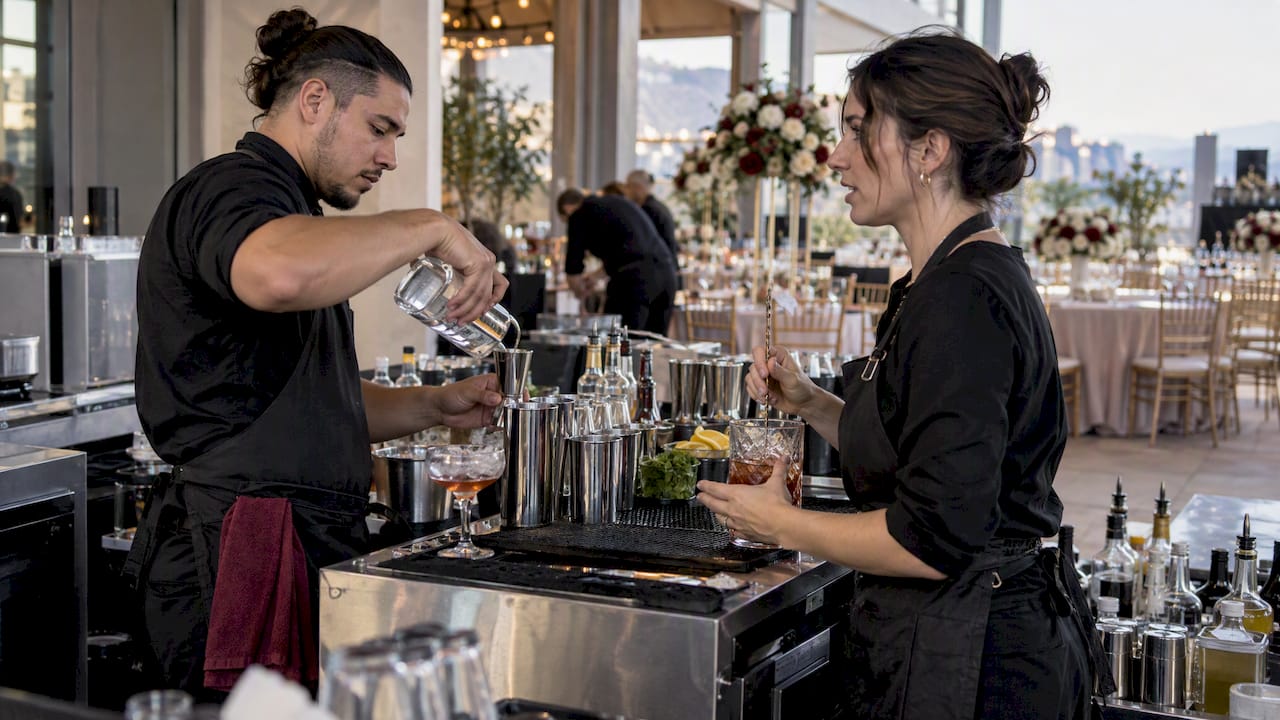
A bartender’s job centers on hospitality and running a bar efficiently, while a mixologist’s work centers on recipe development, flavor pairing, and cocktail technique. In practice, the two labels overlap constantly: plenty of working professionals pour drinks fast on a busy Friday and tinker with a new bitters recipe on Tuesday. The titles describe an emphasis, not a hard boundary.
TL;DR:
- Mixologists focus more on recipe creation and flavor techniques, often working behind the scenes on infusions, tasting panels, and menu design.
- Bartenders prioritize speed, guest interaction, and operational tasks like managing orders, POS systems, and restocking during busy shifts.
- Industry wages for bartenders average around $16.12 per hour with significant tip variation, and career progression usually moves from bartender to management or consulting.
- The term “mixologist” is more valued in high-end venues with a focus on cocktail development, while “bartender” remains the default in casual settings.
- Guest expectations often judge skill by presentation and speed rather than job title, leading to blurred distinctions in practice.
Table of Contents
- Key differences: role emphasis and day-to-day duties
- Skills, training, and building a portfolio for bartending vs mixology
- Career outlook and pay: what authoritative data shows
- Industry debate and common misconceptions about ‘mixologist’
- Hybrids: how one person can combine both roles
- Impact of cocktail culture and trends on the roles
- Consumer perceptions and expectations distinguishing the two
- Regional or cultural differences in the use of the terms
- Examples of signature drinks or techniques unique to mixologists vs bartenders
- What planners actually need: bartender or mixologist?
- Finding reliable bar service for your next event
- FAQ
- Sources
Key differences: role emphasis and day-to-day duties
The clearest way to separate the two roles is to look at what fills someone’s shift. A bartender’s day runs on speed, memory, and people skills: taking orders over a loud room, running a POS system, checking IDs, restocking, and reading a crowd before it gets out of hand. A mixologist spends more time behind the scenes, testing recipes, building tasting panels, and working with bitters, tinctures, and house-made syrups for a seasonal menu.
Typical bartender tasks include:
- Taking drink orders and managing a fast-paced service line.
- Running point-of-sale systems, tabs, and nightly cash-outs.
- Checking identification and monitoring guests for over-service.
- Restocking liquor, garnishes, and glassware between rushes.
Typical mixologist tasks include:
- Developing and documenting new cocktail recipes with exact ratios.
- Running tasting sessions to refine flavor balance before a menu launch.
- Sourcing or making bitters, infusions, and house syrups.
- Designing seasonal or themed drink menus for a venue or brand.
In most hiring situations, the titles get used interchangeably on a job posting, especially at casual restaurants and sports bars where speed matters more than branding. Upscale cocktail lounges, hotel programs, and brands building a signature drink list tend to specifically seek out a mixologist, because they want someone who treats the bar as a kind of test kitchen rather than just a service station.
Skills, training, and building a portfolio for bartending vs mixology
Both roles share a baseline: free pouring accurately, checking IDs correctly, following sanitation rules, and memorizing dozens of recipes under pressure. Where they diverge is in the extra layer a mixologist builds on top of that foundation, including a sensory vocabulary for describing bitterness, acidity, and texture, careful recipe documentation, and working knowledge of tinctures, infusions, and food-pairing principles.
Training paths vary by goal:
- Attend a bartending school or certification course for fast, standardized service skills.
- Take an apprenticeship or barback role under an experienced bartender or bar manager.
- Study culinary pairing and flavor theory through short courses or workshops.
- Read primary cocktail texts and historical bartending manuals to understand technique origins.
A useful next step for either path is building a small portfolio. A bartender benefits from speed-test videos and service references from managers; a mixologist benefits from sample menus, documented recipe tests, and before-and-after notes on how a drink changed through revision.
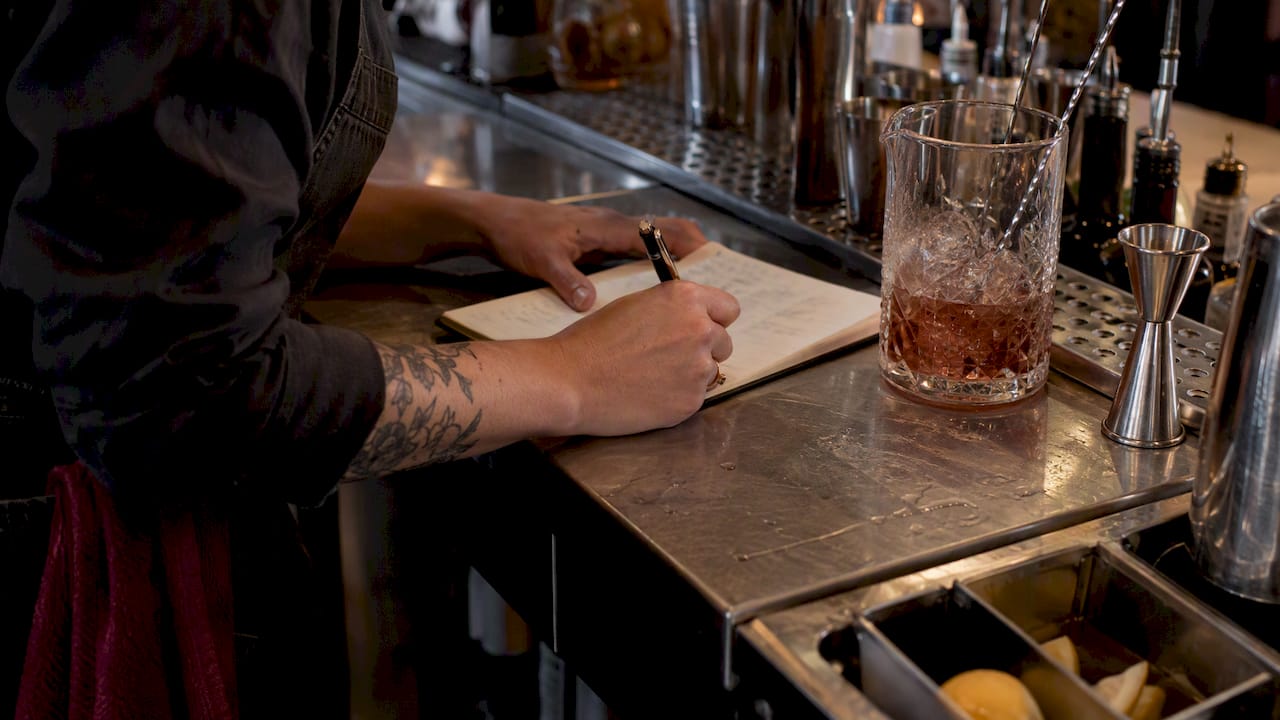
Pro Tip: Keep a simple notebook of every recipe you test, including the exact ratios and what you changed between versions. It becomes your portfolio without any extra work later.
Career outlook and pay: what authoritative data shows
The U.S. Bureau of Labor Statistics reports a median hourly wage for bartenders of $16.12 as of May 2024, with tips typically making up 55% to 85% of total take-home pay. That tip share means two bartenders with the same base wage can take home very different amounts depending on venue type and shift.
Pay also shifts by setting. BLS industry wage tables show bartenders working at drinking places earning an hourly mean wage of $16.64, with an annual mean of $34,620 as of the May 2023 estimates, figures that vary again by restaurant, hotel, or private event work.
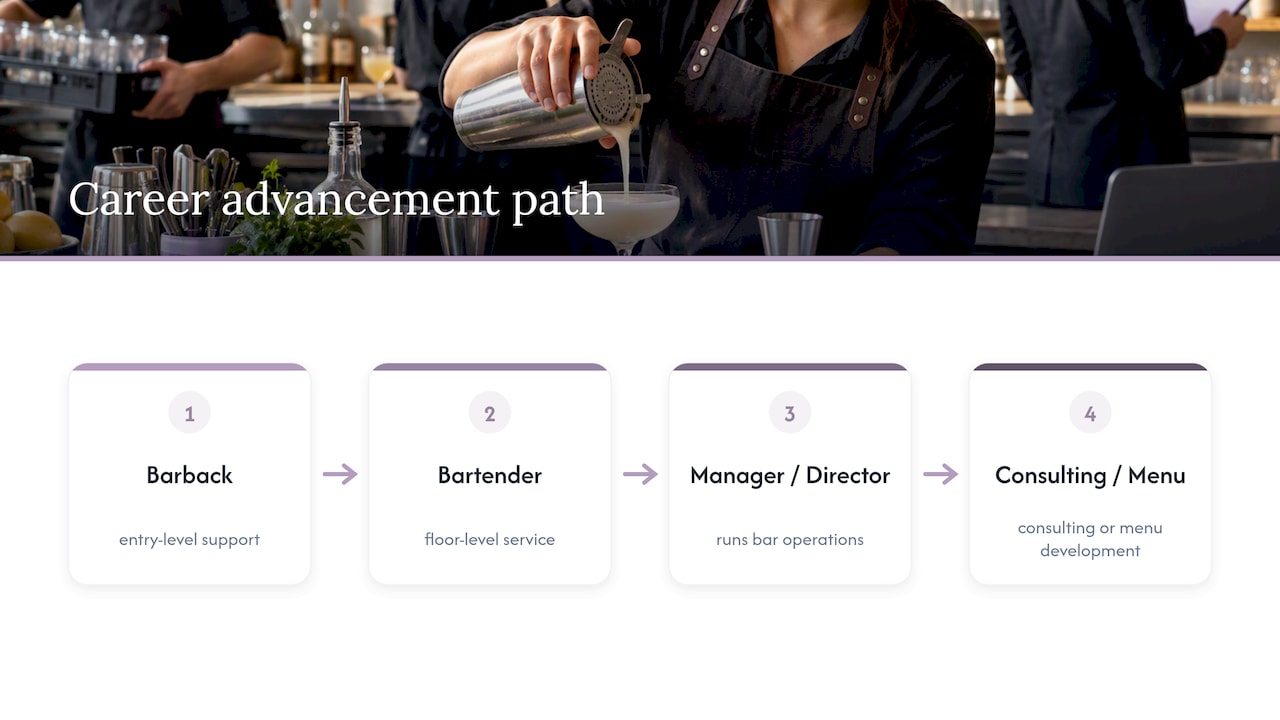
A common advancement path runs from barback to bartender, then to bar manager or beverage director, and eventually into consulting or menu development work, often the point where someone starts marketing themselves as a mixologist rather than a bartender.
Industry debate and common misconceptions about ‘mixologist’
Not everyone in the trade embraces the word “mixologist.” Some bartenders see it as a self-important label for work that good bartenders have always done, while others use it deliberately to signal technical skill and menu-building experience to employers and guests. Food & Wine’s coverage of the debate shows both defenses and pushback of the term across the beverage press, and the choice carries real consequences: a venue advertising for “mixology” usually expects cocktail research and development, while one advertising for a “bartender” usually prioritizes speed and guest interaction.
A mixologist serves drinks; a bartender serves people.
That line, often repeated by bartending veterans including Jim Meehan, captures why some professionals resist the mixologist label even while practicing the same techniques: they see hospitality, not recipe design, as the core of the job.
Hybrids: how one person can combine both roles
Most working professionals land somewhere between the two labels. A craft cocktail lounge rewards someone who can build a new drink and still turn tickets quickly during a rush, while a high-volume nightclub rewards raw speed above all else, and private events often ask for a middle ground: reliable service with a few standout signature drinks.
- Practice building two or three new recipes a month without slowing down your regular service speed.
- Time yourself on standard drinks regularly so creative work never becomes an excuse for slow pours.
- Market yourself as a bartender when speed and reliability are the selling point, and as a mixologist when a venue specifically wants recipe development.
Event work in particular rewards this hybrid approach, since clients often want both a smoothly run bar and a few branded drinks worth talking about.
Impact of cocktail culture and trends on the roles
The craft cocktail movement reshaped what guests expect from both roles. As menus built around house-made syrups, barrel-aged cocktails, and global spirit categories spread from big-city bars to neighborhood restaurants, the bartender’s job absorbed more of the mixologist’s traditional work. A bartender at a mid-tier restaurant today is far more likely to be asked about a drink’s ingredients or origin than one working the same job two decades ago.
Trends also move fast enough that neither title stays static for long. Low-ABV and nonalcoholic cocktails, clarified milk punches, and smoke-infused garnishes cycle through menus within a few seasons, pushing bartenders to pick up techniques that once belonged strictly to specialist mixologists. At the same time, social media has turned presentation into part of the job: a visually striking drink spreads online regardless of whether the person who made it calls themselves a bartender or a mixologist.
For event-focused service, trend awareness matters without letting it slow the line. Building a few on-trend cocktails into an event menu works well when the recipes are tested and batched ahead of time, so guests get a current, interesting drink without a backed-up bar.
The practical result is that cocktail culture has blurred the functional gap between the two titles even as the stylistic debate over the word “mixologist” continues. Guests increasingly expect craft-level drinks from anyone behind a bar, which raises the baseline skill level expected of a standard bartending job.
Consumer perceptions and expectations distinguishing the two
Guests often form opinions about which title fits a bartender based on presentation and pacing rather than any formal distinction. A bartender who explains an ingredient, suggests a pairing, or garnishes with visible care gets read as a mixologist by most guests, regardless of what the job posting called the role. Conversely, someone working fast behind a packed bar during a weekend rush reads as a bartender even if they built the night’s specialty cocktail themselves earlier that day.
This perception gap matters most at events and upscale venues, where guests arrive with specific expectations. A wedding guest expecting a full open bar with quick turnaround has a different standard than a guest at a corporate launch party expecting a signature drink built around the brand. Mismatched expectations, a slow line at an event that promised craft cocktails, or a plain pour at an event that promised mixology, tend to generate the most guest complaints regardless of which title the staff actually held.
Because of this, many venues and planners now describe the experience they want rather than the job title, asking for “craft cocktails with fast service” instead of specifying bartender or mixologist. That shift reflects a broader reality: guests judge the drink and the wait time, not the label on the staff badge.
Regional or cultural differences in the use of the terms
The word “mixologist” carries different weight depending on where and when it gets used. In large markets with established craft cocktail scenes, cities with a dense concentration of cocktail-focused bars, the term carries more professional weight and often appears in job postings for high-end lounges and hotel bars. In smaller markets or more casual dining regions, “bartender” remains the default term regardless of skill level, and “mixologist” can read as an unusual or overly formal choice on a menu or business card.
Internationally, the terminology split looks different again. Some markets favor British and European bartending traditions that emphasize classic technique and formal training through established guilds and competitions, while American cocktail culture has leaned more heavily on the “mixologist” branding popularized during the 2000s craft cocktail boom. Neither tradition is more correct, but the vocabulary signals different things to guests depending on where they are.
For event-based work specifically, regional cocktail culture shapes guest expectations more than the title does. A couple planning a wedding in a city known for cocktail culture may expect a built-out menu with signature drinks worth describing on a card, while the same budget in a market with a more traditional open-bar expectation goes further toward simply keeping the line moving.
Examples of signature drinks or techniques unique to mixologists vs bartenders
A standard gin and tonic, a well-poured beer, or a classic rum and coke sit squarely in bartender territory: known recipes, consistent execution, and speed matter more than invention. A mixologist’s signature work looks different, often involving a drink built from scratch for a specific menu, batch-tested over several rounds before it ever reaches a guest.
The martini offers a useful case study in how the same drink splits along these lines. Cocktail historians trace its origins to late 19th and early 20th century bartending manuals, including recipes attributed to Jerry Thomas and William Boothby, long before “mixologist” existed as a job title. A bartender today pours a standard martini from memory in under a minute. A mixologist’s version might involve house-infused vermouth or a custom garnish built specifically for a client’s event menu.
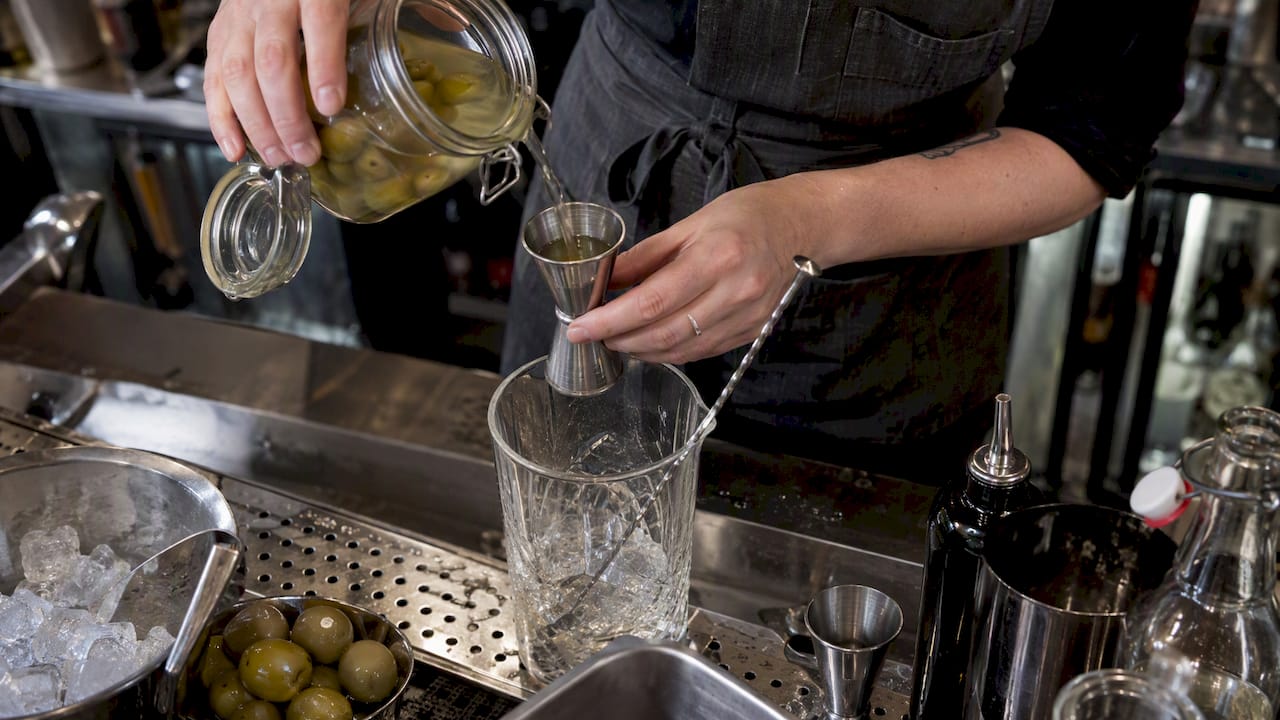
The dirty martini shows the same split in technique. A standard dirty martini adds olive brine to the classic recipe, while an “extra dirty” version roughly doubles that brine amount, a small but exact ratio change that separates a bartender following a known formula from a mixologist adjusting it deliberately for a specific flavor profile. For a quick primer on getting that ratio right at home, Broken Tee Vodka’s martini guide walks through the basics clearly.
What planners actually need: bartender or mixologist?
Working events for years taught me that the title matters far less than the fit. A wedding needs a steady hand who can keep a line moving during toasts; a corporate launch often wants a signature drink worth posting about. Most good event staff do both, shifting the balance depending on the night.
— Brennon
Finding reliable bar service for your next event
Sourcing an individual mixologist for a one-off event means vetting recipes, licensing, and reliability on your own, and it still leaves the service side of the night uncovered. We built Liquid Courage around solving both problems at once: staffed, insured bartenders who keep the line moving, with the option to build a branded cocktail menu into the package when a planner wants something memorable.

- Bartending staff who handle service, stock, and compliance without extra coordination on your end.
- Custom bar branding and menu options for weddings and corporate events, built from our bar rental packages.
- Turnkey setup for private parties through our private bartender services, so you book once and the bar is handled.
If your event calls for dependable service with room for a signature drink or two, check availability for your date and we will put together a package around it.
FAQ
What is the 50% rule in bartending?
It is a cost-control concept rather than a formal industry standard tied to any single source.
What is higher than a bartender?
Career paths typically move from bartender to bar manager or beverage director, roles that oversee staffing, purchasing, and menu development across an entire venue. From there, some professionals move into consulting or brand ambassador work for spirits companies.
What does “dirty” mean in bartending?
“Dirty” describes adding olive brine to a cocktail, most commonly a martini, and an “extra dirty” version roughly doubles that brine amount. It is a specific, measurable modification rather than a vague flavor note.
Can a bartender make $100,000 a year?
It is uncommon but possible in high-volume venues, upscale hotels, or steady private event work where tips and base pay stack favorably. The median hourly wage for bartenders sits at $16.12, so six-figure earnings depend heavily on tip share, venue type, and hours worked rather than the base rate alone.
Can a bartender call themselves a mixologist?
Yes, since neither title requires a license or certification, and many professionals use both terms depending on the audience. The more useful distinction is the actual work performed: recipe development and menu design point toward mixology, while fast, guest-focused service points toward bartending.
Sources
- Bartenders : Occupational Outlook Handbook: : U.S. Bureau of Labor Statistics
- Mixologist vs. Bartender: What Are the Differences? | Indeed
- Mixologist vs. bartender — Food & Wine
- A twist in brine: the history of the dirty martini — Chilled Magazine