
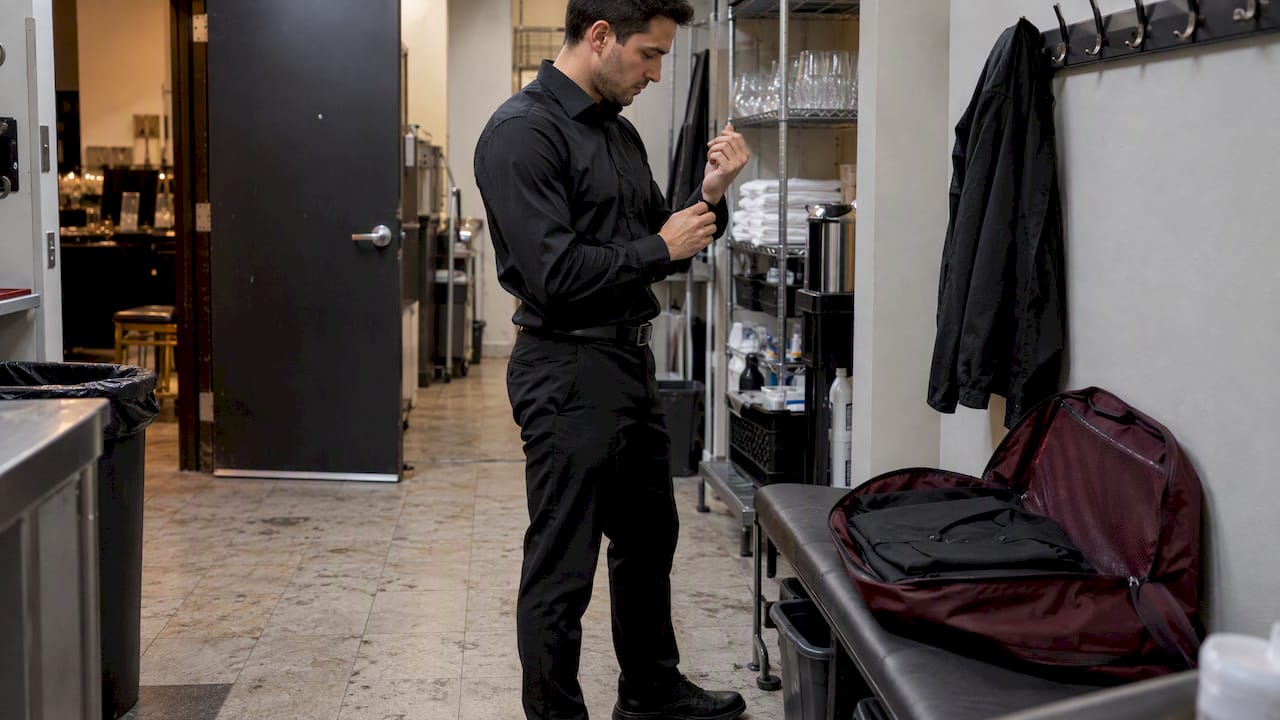
When no uniform is specified, default to a solid dark shirt, dark tailored trousers, closed-toe non-slip shoes, and minimal accessories. This combination reads as professional in almost any setting while keeping you safe and mobile through a long shift. Always confirm the venue or client’s specific requirements before you commit to an outfit, since their rules override this baseline.
TL;DR:
- Neighborhood bars may allow dark jeans and polos; cocktail lounges expect tailored trousers, while black tie is reserved for clients who request it.
- Bartenders spend nearly all shifts standing, so choose closed toe service shoes with slip resistant soles and inspect tread before it wears down.
- When handling exposed garnishes or ice, secure hair and keep nails clean; venues may also require covered tattoos and prohibit dangling jewelry.
- Before each booking, confirm shirt color, logos, supplied aprons or ties, and venue conditions; pack a spare shirt plus stain and repair supplies.
Table of Contents
- Standard uniform components and how to choose fabric and fit
- Footwear and socks: why safety comes before style
- Matching your outfit to the venue’s formality
- Grooming, jewelry, and hygiene rules that affect your job
- Confirming dress code and packing a backup outfit
- What planners expect from mobile bartending staff
- Why appearance still matters behind the bar
- A turnkey option for planners who’d rather skip the uniform logistics
- FAQ
- Sources
Standard uniform components and how to choose fabric and fit
Dark, solid colors like black, navy, or dark green have become the default for bartender uniforms because they hide spills and stains while still looking put together. A shirt soaked in grenadine or citrus juice is far less noticeable on black cotton than on a pale blue oxford.
For tops, button-front shirts and fitted polos both work, but sleeve length matters more than style. Short sleeves or sleeves you can roll securely above the elbow keep cuffs out of ice bins and garnish trays. A practical outfit guide recommends a solid, clean, well-fitted dark shirt paired with black or very dark trousers, and warns against ripped, frayed, or branded clothing unless the employer has approved it.
Tailored trousers are the safer bottom choice for most gigs. Dark jeans pass at casual neighborhood bars but rarely work at cocktail lounges or formal private events, where tailored black pants are the expected standard. Stretch blends and breathable cotton mixes help you move through a packed bar without feeling restricted, according to guidance on bartender clothing choices.
A few additions round out the look:
- Add an apron or vest when the venue wants a defined silhouette or extra pocket space for tools.
- Keep one spare shirt on hand since spills happen within the first hour of most shifts.
- Choose wrinkle-resistant fabrics that survive a bag or car trunk without needing ironing.
- Avoid heavily textured or shiny materials that look inconsistent with servicewear.
Footwear and socks: why safety comes before style
Shoes matter more than almost any other clothing choice because bartenders spend nearly the entire shift standing, according to the BLS Occupational Requirements Survey. That much time on your feet, combined with wet floors and tight spaces behind the bar, makes slip resistance and support functional requirements rather than preferences.
Closed-toe service shoes or sturdy work sneakers with slip-resistant soles are the standard. Avoid dress shoes with slick leather soles and skip open-toe or sandal-style footwear entirely, even at outdoor events where it might seem breathable. Dark socks that match your pants round out the look without drawing attention.
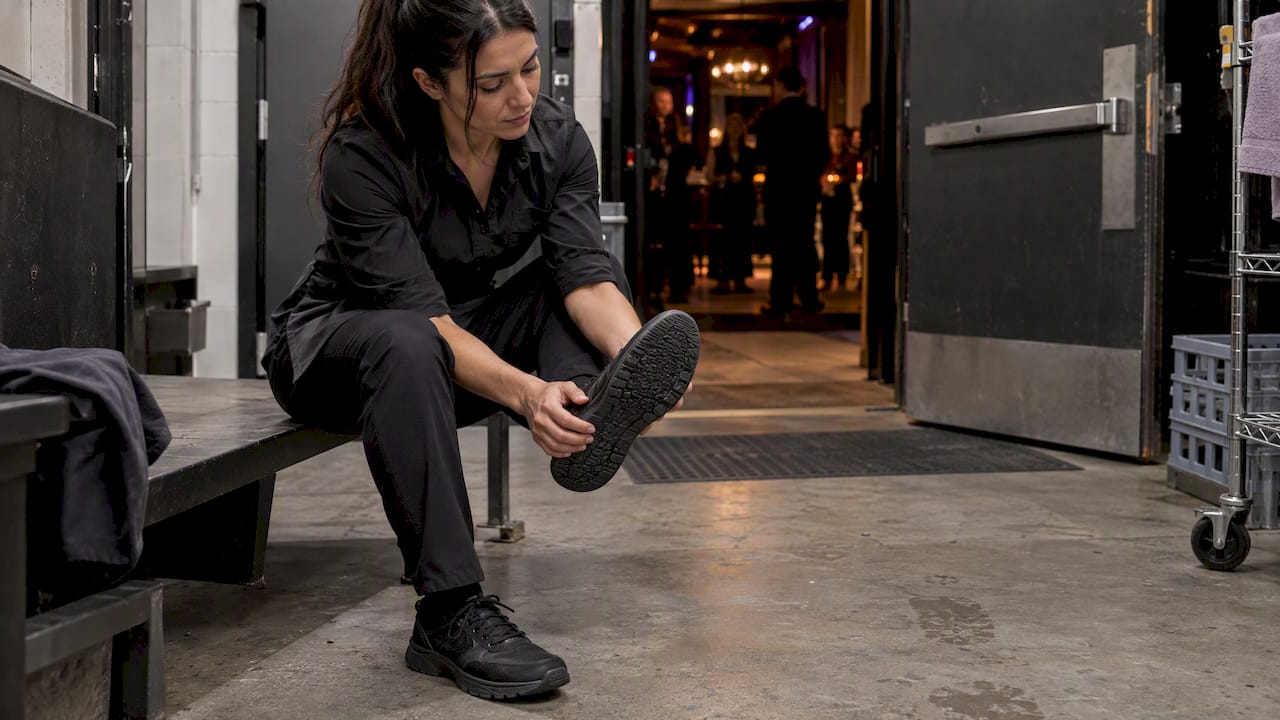
Check your soles regularly. Worn tread loses grip long before the shoe looks beat up, and a quick insole swap can extend a pair’s useful life by months.
Pro Tip: Keep two pairs in rotation so one is always fresh while the other breaks in, rather than running a single pair into the ground.
Matching your outfit to the venue’s formality
Dress codes shift noticeably depending on where you’re working. A clear sense of the formality ladder helps you pack the right outfit before you even know the specifics.
- Casual neighborhood bar: Dark jeans or chinos with a branded or plain polo are usually fine.
- Cocktail lounge: Tailored black pants and a collared shirt are the norm, sometimes with a vest.
- Private event: Black servicewear is the common baseline, with a white shirt and black tie requested for more formal service.
- Black-tie gig: A tuxedo is required, but only when the client specifically asks for it.
Branded polos or T-shirts supplied by an employer are acceptable at casual venues and some corporate functions, but they rarely pass at weddings or upscale private events unless the planner explicitly approves them. Staffing guidance on private-event bartending notes that requirements swing widely between a backyard barbecue and a formal gala, so the same closet won’t cover every booking.
Seasonal exceptions exist too. Outdoor summer events and beach bars sometimes allow lighter fabrics or short sleeves, but the core expectation, dark and non-slip, still applies even when the setting feels relaxed.
Grooming, jewelry, and hygiene rules that affect your job
Hair restraints matter most when you’re handling exposed garnishes or scooping ice by hand. The FDA Food Code influences how local health departments regulate hair control and hygienic practices for anyone working near food-contact surfaces, and bartenders often fall under stricter rules than servers who only carry drinks.
A few other details shape how you’re perceived and how safely you work:
- Skip dangling bracelets or long necklaces that could swing into glasses or get caught during fast pours.
- Keep visible tattoos covered with long sleeves or a buttoned collar if the venue has a conservative policy.
- Trim and clean your nails since you’re handling garnishes and glassware all night.
- Avoid heavy perfume or cologne that competes with the bar’s own aromas.
Confirming dress code and packing a backup outfit
Before any shift or private event, ask a short list of questions so you’re never guessing. Confirm the shirt color and whether a logo is required, whether aprons, vests, or ties will be supplied, and what the temperature or venue setup will be like.
Pack smart so a wardrobe issue never becomes a crisis:
- Bring a spare shirt in case of spills or stains.
- Pack a second pair of shoes if your schedule allows for a change.
- Carry a small stain-remover pen and a few safety pins for quick fixes.
- Keep a mini sewing kit for a popped button or loose hem.
Pro Tip: Check in with the lead bartender or event manager as soon as you arrive so you can match what the rest of the staff is wearing before service starts.
What planners expect from mobile bartending staff
Event planners typically ask for a consistent baseline: black servicewear for most private parties, with a white shirt and black tie reserved for elevated service like formal dinners or upscale weddings. Getting those details in writing before the event avoids last-minute confusion about colors, ties, or vests.
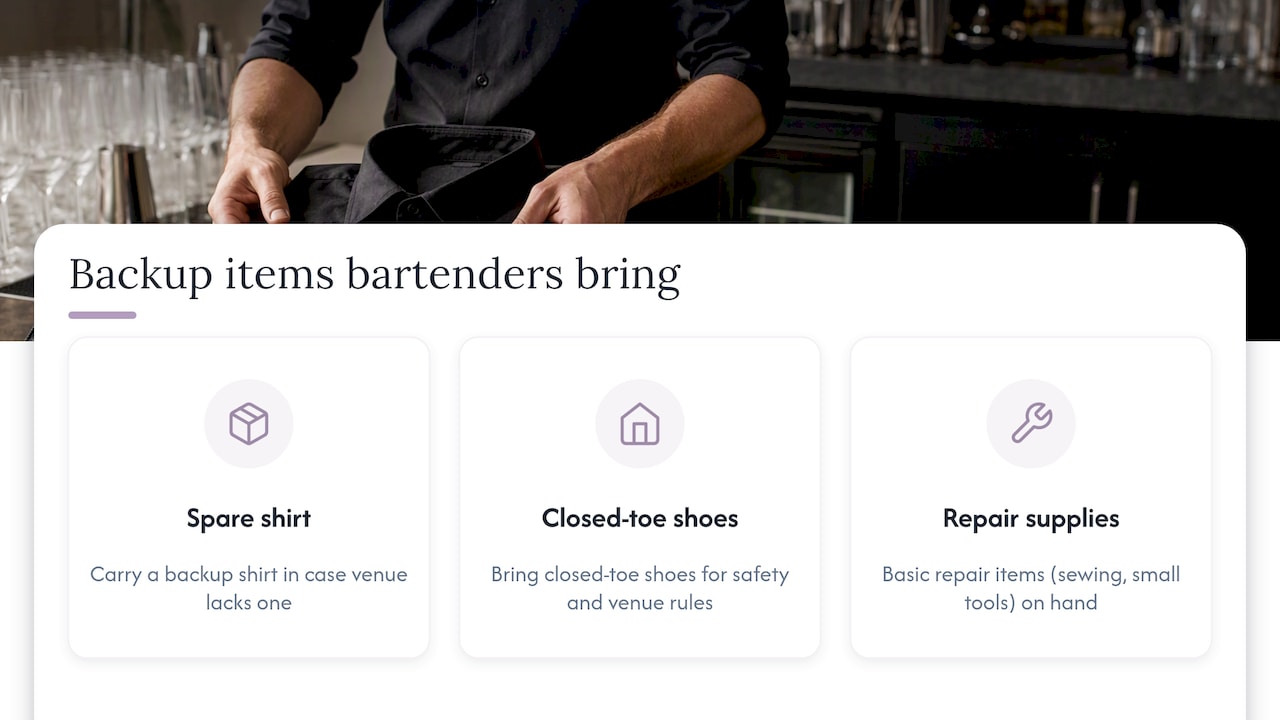
Mobile bartending staff who work private events regularly carry a small spare kit, a backup shirt, closed-toe shoes, and basic repair supplies, because venues and planners don’t always supply formal items on site. That habit lines up with staffing guidance for garnish storage and hygiene and with broader expectations around what planners look for during cocktail hour. Planners who confirm attire details early almost always get smoother service on the day.
Why appearance still matters behind the bar
A clean, well-fitted outfit does more than look good. It signals to guests that the person mixing their drink takes the job seriously, and that trust shows up in tips and repeat requests. Function should win over flash every time, since a bartender who can’t move freely or who’s distracted by slipping shoes will serve slower no matter how sharp the shirt looks.
Treat your clothing choices the same way you’d treat your bar tools: practical, reliable, and ready before the shift starts.
— Brennon
A turnkey option for planners who’d rather skip the uniform logistics
Coordinating dress codes across a full bar staff for a wedding or corporate event takes real planning, confirming colors, sourcing ties, checking that everyone shows up in matching shoes. We built our mobile bartending and liquor catering services around removing that burden from the planner’s plate entirely.
Staff arrive uniformed, prepared, and ready to match whatever formality your event calls for, whether that’s a backyard celebration or a black-tie reception. We handle the presentation details so you can focus on the guest experience instead of tracking down spare shirts. If you’re planning a wedding, our wedding event services cover staffing and bar setup together.
- Staff presentation and uniforming handled before your event starts.
- Bar setup, liquor catering, and staffing coordinated together.
- A single point of contact instead of managing multiple vendors.
Reach out through our private bartender services page to check availability for your date.
FAQ
What is the dress code for bartenders?
Most venues expect dark, solid-colored clothing, closed-toe non-slip shoes, and minimal accessories unless a specific uniform is provided. Private events often raise that baseline to black servicewear or a white shirt with a black tie, so confirming requirements with the client or venue before the shift is standard practice.
What are the 5 P’s of bartending?
Definitions vary across training programs and no single source defines a standardized list, so treat any version you encounter as one operator’s shorthand rather than an industry standard. Focus instead on the practical basics covered here: appearance, safety, preparation, and clear communication with venue staff.
Can a bartender make $1000 a night?
Bartender pay depends heavily on venue, event type, and tip structure, and no official wage data supports a flat nightly figure like that as typical. The BLS Occupational Requirements Survey tracks physical demands and standing time rather than nightly earnings, so treat any specific nightly figure you see elsewhere with caution.
Is bartending a tough job?
Bartending is physically demanding: bartenders spend nearly their entire shift standing, often during late or irregular hours. That combination of constant movement, fast-paced service, and long hours on your feet makes supportive footwear and practical clothing a genuine necessity rather than a style choice.
Sources
- Bartending Dress Code for Private Parties
- Bartender Outfits: What do Bartenders Wear?
- Bartenders : Occupational Requirements Survey (BLS) factsheet
- FDA Food Code 2026