
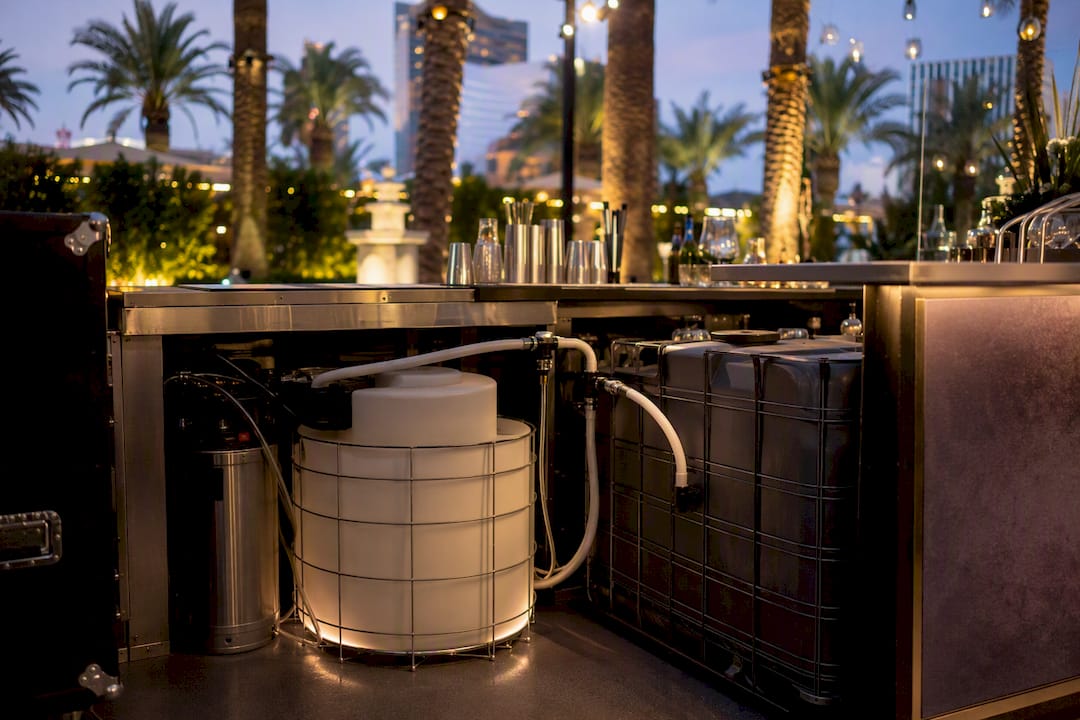
Most venues cannot hand a bar vendor a working sink, so bar water access usually falls on the bartending company to solve with tanks, not taps. The first move is simple: ask the venue directly whether there’s a potable water inlet and an approved drain near the bar setup, and get the local health department’s take before you assume either way. Trailers almost always trigger extra requirements, like sinks and a commissary contract, that a folding bar does not.
TL;DR:
- Venue water hookups should have standard thread sizes and a backflow preventer to meet health department safety requirements.
- Portable tanks and external fill ports can ensure water access when venue plumbing is limited or inaccessible.
- Greywater disposal requires a designated drain or haul-off service, avoiding on-site dumping on ground or storm drains.
- Contractually, venues typically provide the water inlet and drain, while vendors supply tanks, hoses, and sinks, with clarity on responsibilities avoiding surprises.
- Local health department regulations specify tank sizes, sink counts, and sanitization standards, making direct consultation essential to compliance.
Table of Contents
- What Counts as Usable Water Access for a Mobile Bar
- Venue Water-Access Checklist: What to Ask, Measure, and Photograph
- Temporary Fixes When the Venue Has Limited Hookups
- Permits, Tank Sizing, and Commissary Rules to Know
- Who’s Responsible: Venue vs. Vendor in the Contract
- Liquid Courage LV’s Take on Water Access Planning
- Get Your Water Access Checklist From Liquid Courage LV
- Where to Verify Permit and Tank Sizing Rules
- Sources
What Counts as Usable Water Access for a Mobile Bar
A venue either has a mains hookup you can tap into, or your bar shows up self-contained. Those are the only two real options, and mixing them up is where planners get burned.
A true venue hookup means a potable water inlet with real pressure, plus an approved drain or sewer connection nearby, ideally within a reasonable hose run of where the bar sits. Ballrooms, country clubs, and established event spaces often have this. Backyards, warehouses, and raw outdoor sites usually don’t, which means the bar has to bring water access with it.
When the bar is self-contained, a few things have to be true regardless of venue. There needs to be a freshwater supply, either a food-grade tank or a hose run with backflow prevention, plus a separate hand-wash sink that’s never used for ice or drink prep. Wastewater needs somewhere legal to go: a greywater tank or an approved sewer discharge point, never the ground or a storm drain.
A permitted mobile setup typically runs a freshwater tank, a greywater tank sized larger than the freshwater tank, a water pump, a water heater, food-grade hoses, and sinks matched to what the local health department requires. That last part varies enough by jurisdiction that guessing is a bad strategy, which is exactly why the next step is a checklist, not a shopping list.
Venue Water-Access Checklist: What to Ask, Measure, and Photograph
Before you sign a venue contract or lock a bar vendor, walk the space with a short, specific list of questions. Vague answers here turn into expensive surprises the week of the event.
- Ask about the inlet type and thread size. A standard garden hose thread is easy to adapt to; a commercial or non-standard fitting means the vendor needs to bring an adapter or skip the hookup entirely.
- Ask whether a backflow preventer is installed. Potable connections without one are not safe to use for drink service, and health-department guidance generally requires one on temporary hose connections.
- Ask exactly where greywater can go. Some venues have a designated drain; others expect the vendor to haul wastewater off-site entirely.
- Ask about staff restroom distance. Bartenders need reasonably close access for hand-washing breaks, separate from the guest hand-wash station at the bar.
- Ask about on-site hot water and its temperature. Sanitizing glassware and hands both depend on it.
- Photograph the inlet and drain locations, the vertical clearance above them, any slope in the surface, the ground or flooring under the planned bar spot, and the distance from that spot to the nearest service entrance.
If the venue can answer all six clearly and the inlet is compatible, plumbing may genuinely be sufficient. If any answer is “not sure” or “there isn’t one,” plan on vendor-supplied tanks from the start rather than discovering the gap during setup.
Temporary Fixes When the Venue Has Limited Hookups
Most Las Vegas and Henderson venues fall somewhere in the middle: partial plumbing, no reliable drain, or an inlet that’s technically there but hard to reach. That’s where a few practical workarounds come in.
- Portable potable tanks with exterior gravity fill ports let the bar arrive full and get refilled without needing to be moved. Sizing runs commonly in the 15 to 50 gallon range depending on guest count and bar duration.
- Foot-pump hand-wash stations work well for alcohol-only setups where a full plumbed sink isn’t required, though this depends on what’s permitted where.
- Color-coded, labeled hoses for potable versus greywater lines prevent the kind of cross-contamination that inspectors flag immediately.
- Greywater tanks emptied through an approved sewage transport service or dumped only at a designated servicing area, never on-site.
Pro Tip: If a venue can’t accommodate a trailer’s footprint or plumbing needs, a folding or portable bar often sidesteps the whole problem, since it typically avoids the commissary and three-compartment sink rules that apply to trailers. You can read more about how those setups work in this guide to portable bar units.
Permits, Tank Sizing, and Commissary Rules to Know
Whether a bar needs a full commissary contract usually comes down to one classification question: is it a trailer or vehicle-based unit, or is it a folding setup? Jurisdictions that regulate mobile food and beverage units often classify trailers dispensing alcohol as “mobile units,” which can require plan review, a commissary agreement, and daily servicing for water fill and waste disposal.
A few code items show up across most local guidance. A three-compartment sink is standard for trailers handling glassware washing, alongside a separate hand-wash sink. Freshwater tanks need to be food-grade, and greywater tanks should run roughly 15% larger than the freshwater tank so wastewater capacity never becomes the limiting factor mid-event. Hot water temperature minimums for sanitizing are also commonly specified.
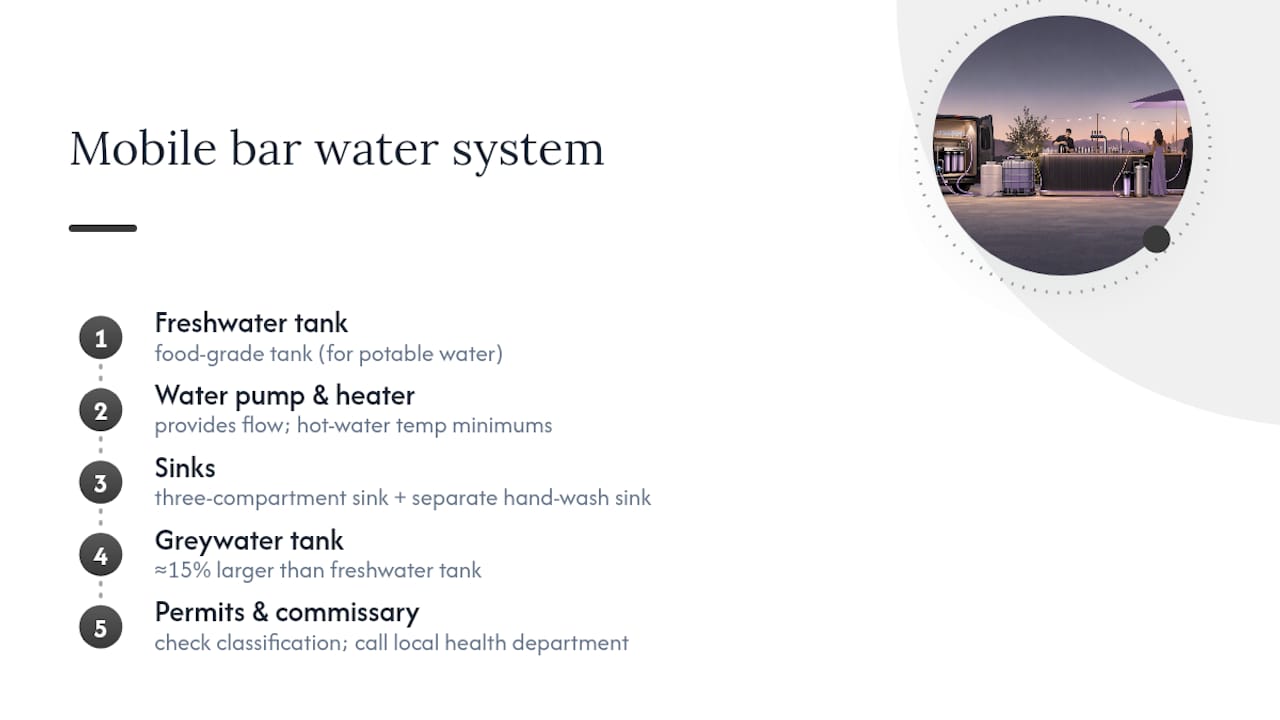
Before buying tanks or signing a commissary contract, call the local health department directly and confirm your setup’s classification. That one call can save you from equipment purchases you didn’t actually need, since some folding-bar configurations fall outside these rules entirely.
Who’s Responsible: Venue vs. Vendor in the Contract
The usual split is straightforward: the venue provides the hookup and an approved drain if one exists, and the vendor provides everything else, hoses, tanks, sinks, unless the contract says otherwise. That “unless” clause is where most disputes start.
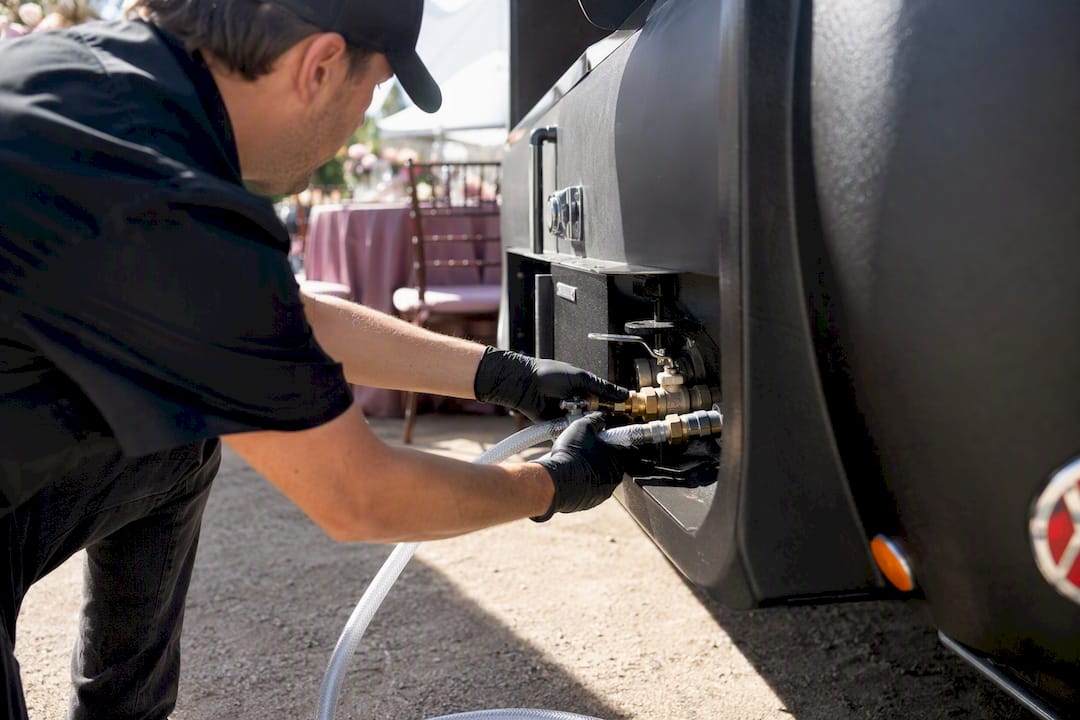
A solid contract spells out the confirmed inlet type and location, exactly where greywater gets disposed of, a timeline for setup and tank emptying during the event, and who’s liable if wastewater ends up somewhere it shouldn’t. It should also guarantee inspection access if the health department wants to check on-site.
Budget for tank fills, potential commissary fees, and sewage transport costs, since these rarely show up on a first quote. A wedding liquor catering checklist built around these exact contract points helps couples catch gaps before they become event-day problems.
Liquid Courage LV’s Take on Water Access Planning
Every site walk we do starts the same way: photos of the inlet and drain, a check on whether a backflow preventer exists, and a quick call to confirm permitting classification before anyone commits to a trailer setup. That sequence has saved more than one wedding from a last-minute scramble.
When a venue can’t support a trailer’s needs, we lean on portable potable tanks, clearly labeled greywater tanks, and exterior fill ports rather than forcing a setup that doesn’t fit the space. A folding bar is often the better call for backyard weddings and smaller corporate events specifically because it sidesteps commissary requirements a trailer would trigger. The gap between what a venue promises and what it can actually deliver on water access is almost always bigger than planners expect, and closing that gap before the contract is signed is cheaper than closing it the morning of the event.
— Brennon
Get Your Water Access Checklist From Liquid Courage LV
Chasing down inlet specs, backflow details, and drain locations on your own eats into planning time you don’t have. Liquid Courage LV handles that walkthrough for you, confirming venue hookups, bringing portable tanks and hand-wash stations when a site needs them, and coordinating commissary requirements so you’re not the one on the phone with a health inspector.
We build this into every quote for weddings, corporate events, and private parties across Las Vegas and Henderson, so the bar shows up ready regardless of what the venue can or can’t provide. If you want a head start, pull our wedding liquor catering contract checklist before your next venue walkthrough, or reach out for a consult on your event’s bar package and we’ll flag the water logistics before they become a problem.
Where to Verify Permit and Tank Sizing Rules
Venue answers and vendor experience only go so far. For binding requirements, check your local health department’s mobile food and beverage guidance, since Clark County’s mobile establishment document and similar jurisdictional guides spell out tank sizing, sink counts, and disposal rules in detail. When a rule reads ambiguous for your specific setup, a direct call to the health department beats any guide, including this one.
Sources
- Mobile Bar Water System & Plumbing Guide | What You Need
- Requirements for Operating Temporary Food Service Establishments
- Mobile Food Establishment Guidance Document (Clark County)
- Nevada Mobile Bartending Laws | TAM Cards, Licensing & Compliance