
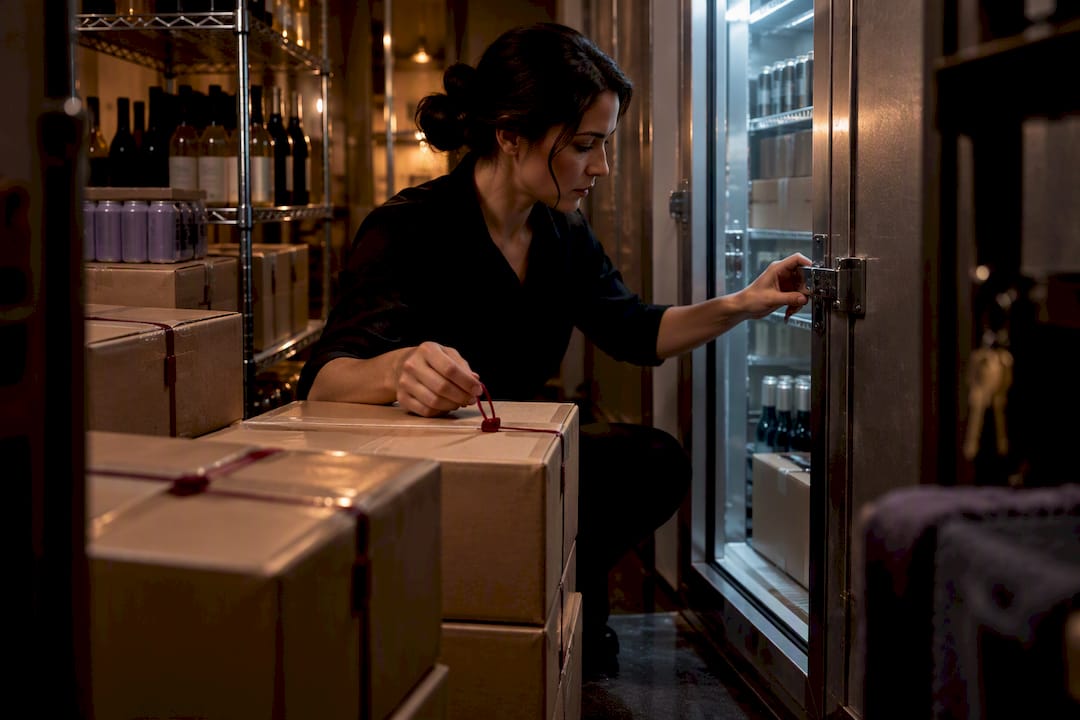
The licensed caterer or permit holder, not the venue, controls alcohol from delivery to disposal. Three rules govern everything else: alcohol stays only at the permitted location, only during the dates and times the permit approves, and only under documented, supervised custody. Before you sign anything, ask to see the actual permit language, confirm the delivery window in writing, and require a signed receipt at drop off.
TL;DR:
- The permit must specify exact storage and delivery windows, venue address, staffing, and service stations to ensure lawful alcohol handling onsite.
- Delivery verification requires signed manifests, photographed sealed cases, and a designated supervisor responsible for custody and security upon arrival.
- Alcohol must be kept in locked, supervised areas separate from guest access, with staff carrying visible ID and signed off at shift changes.
- Beer and wine need to arrive already chilled and stay in refrigeration or coolers for the entire event, with separate, properly labeled ice for cooling and drinking purposes.
- Proper documentation, including signed manifests and detailed inventory logs, is essential for legal compliance and dispute resolution, not just physical security measures.
Table of Contents
- What Permits Must Cover for Alcohol Storage at Venue
- How Alcohol Should Be Received and Secured On-Site
- Temperature Rules for Chilled Alcohol and Ice at Venue
- What Records Should Track Alcohol Inventory at Venue
- Contract Clauses That Protect Alcohol Storage at Venue
- What We Check Before Every Delivery
- What Planners Consistently Get Wrong
- How Liquid Courage Handles Storage, Security, and Permits
- Sources
- FAQ
What Permits Must Cover for Alcohol Storage at Venue
A permit that only lists the event date is not enough. It needs to spell out the exact address, the delivery or receipt window, the storage dates and times, how many service stations are running, and who is staffing them. Miss one of those details and you have a permit that technically doesn’t cover what’s actually happening on-site.
Clark County requires a Liquor Caterer Event Permit, and the permit application asks for submission at least ten working days before the event. File late, and you can be charged double the fee as specified by the local permit authority. That is not a rounding error on an invoice. It is a real financial penalty that lands on whoever agreed to handle the paperwork, so nail down that responsibility in your contract before deadlines sneak up.
Permit text commonly requires that receipt and storage dates be listed explicitly, so alcohol is lawfully on-site only during that approved window, matching how many state-level catering packets structure the requirement.
Confirm these before you sign off on any caterer:
- The permit lists your exact venue address and the correct event date.
- Delivery and storage windows are written in, not assumed.
- The number of service stations matches your actual bar setup.
- Staff working alcohol service are named on the application.
- Any required venue or special-event permit is filed separately and coordinated with the caterer’s paperwork.
The Clark County temporary event FAQ also lists per-station fees, including a $10 charge per liquor service location, which matters if your event runs multiple bars, with fees per service location as regulated.
How Alcohol Should Be Received and Secured On-Site
Delivery day is where most storage problems start, and it’s also the easiest point to lock down with a few habits. When the truck arrives, someone from the catering team should sign a manifest, verify that cases are sealed, and photograph the delivery with a timestamp. That photo matters more than people think. It’s the difference between “we received twelve cases” and “we think we received about twelve cases” if a dispute comes up later.
Once alcohol is on-site, it needs a defined home. A locked staging room, a lockable cooler, or a supervised service tent all work. What doesn’t work is stacking cases behind a curtain where any guest, vendor, or wandering child can walk up to them.
- Confirm a named on-site supervisor from the caterer takes custody at delivery.
- Verify the storage area locks and identify who holds the key.
- Restrict access to staff only, not general venue personnel.
- Check that bartenders carry visible ID or a valid work card.
- Confirm the supervisor’s phone number in case something goes wrong mid-event.
Trained staff matter here too. Alcohol-awareness training isn’t just a box to check. It’s what separates a bartender who cuts someone off gracefully from one who causes a scene.
Pro Tip: Ask your caterer for a copy of their delivery photo and signed manifest by the next morning. If they can’t produce it quickly, that tells you something about how tight their process actually is.
Temperature Rules for Chilled Alcohol and Ice at Venue
Warm beer and watery wine are the fastest way to hear complaints at cocktail hour, but the bigger issue is food safety, not just taste. Beer and white wine need to hold near refrigeration temperature for the full event window, not just at delivery. For a four-hour reception, that usually means arriving already cold and staying in coolers or refrigerated units, not sitting in ambient heat waiting for a bartender to get to them.
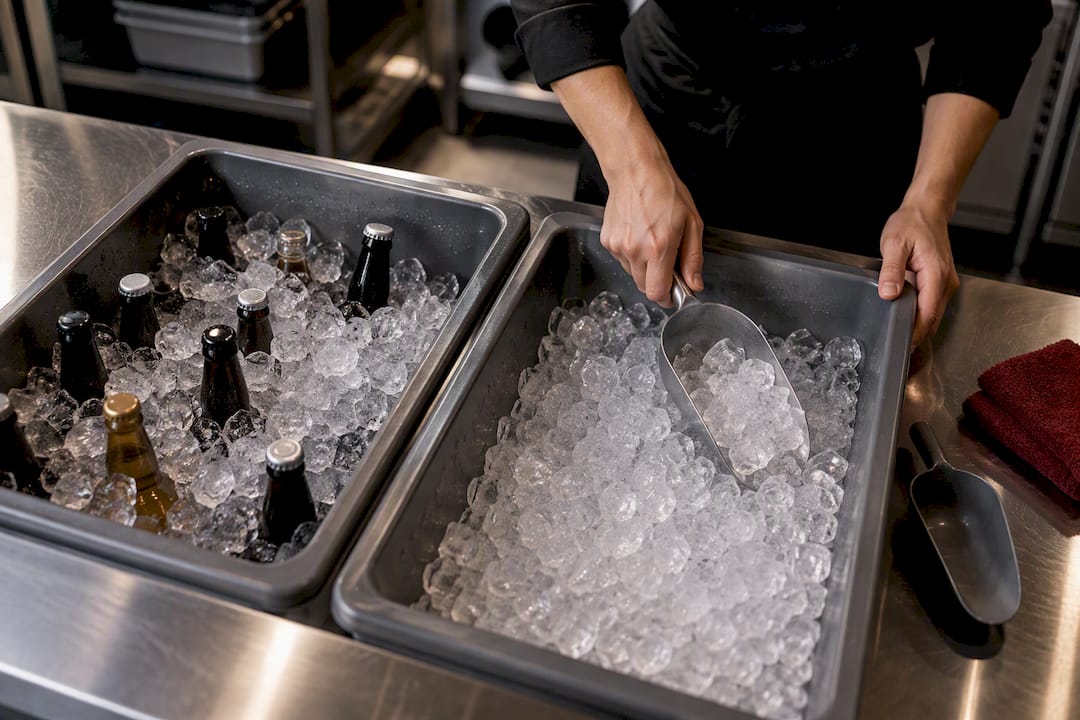
Ice handling trips up more caterers than you’d expect. Cooling ice, the kind packed around bottles to chill them, should never touch drinking ice or get scooped into the same bin as ice going into a cocktail. That’s not a formality. Federal food-safety guidance under the Food Safety Modernization Act calls for hazard analysis and preventive controls precisely because cross-contamination risks like this are easy to overlook and hard to trace back once someone gets sick.
Perishable mixers, garnishes, and any TCS food items follow the same clock. Guidance on safe food handling recommends refrigerating prepared items within two hours of prep or cooking.
Quick checks worth running yourself:
- Beer and wine arrive already chilled, not room temperature.
- Cooling ice and drinking ice sit in separate, clearly marked containers.
- Perishable mixers and garnishes stay refrigerated until service.
- A working thermometer is on-site if the event runs long or outdoors.
What Records Should Track Alcohol Inventory at Venue
Good documentation isn’t paperwork for its own sake. It’s what proves lawful custody if a permit inspector shows up, and it’s what settles the “did we actually get everything we ordered” argument before it starts.
At delivery, you want a signed manifest, an itemized count, and photos of sealed cases. During the event, someone should be logging pours or tracking ticketed drink sales, especially at shift changes when one bartender hands off to another. Gaps at shift change are where inventory numbers quietly go sideways.
- Record itemized counts and get a signed receipt at delivery.
- Log pours or ticket sales throughout service, not just at the end.
- Have the outgoing and incoming supervisor both sign off at shift changes.
- Count remaining stock at closeout, with the same detail as the delivery count.
- Document who transports leftover alcohol and where it goes.
Federal alcohol recordkeeping standards from the TTB require separating and clearly marking tax-determined versus non-tax-determined product, along with documentation of any alternation of storage premises. Some operations must retain these records for years, which is a good reminder that a sloppy closeout count today can become a real problem later if anyone ever needs to reconstruct it.
Contract Clauses That Protect Alcohol Storage at Venue
Your contract should say, in plain language, who files the permit, who pays for it, and who is responsible for displaying it on-site. Vague division of duties here is how permits get forgotten until three days before the event.
Spell out the exact delivery and storage windows in the contract itself, matching what’s on the permit application. Require proof of liability insurance, and add indemnity language that puts the permit holder on the hook for violations tied to their own paperwork or storage practices, not yours.
Cover the ugly scenarios directly:
- What happens if the permit gets filed late, and fees double.
- What happens if a permit is denied or an inspection fails.
- Who absorbs the cost if either of those delays or cancels service.
- A requirement for post-event reconciliation, signed by both parties.
Pro Tip: Ask for the exact contract language your caterer uses for permit responsibility. If they hesitate to share it before booking, that’s worth asking about directly. A wedding liquor catering contract checklist is a useful reference if you want to see what these clauses actually look like in practice.
What We Check Before Every Delivery
Three checks catch most problems before they become problems. First, the permit is physically present and its dates match the actual delivery window, not just the event date. Second, delivery arrives sealed with a signed receipt in hand. Third, storage is locked, restricted, and has one named supervisor accountable for it.
The most common misstep we see is planners assuming the venue’s general liquor license covers catered alcohol. It usually doesn’t. The other is mixing cooling ice with drinking ice because nobody labeled the coolers. Both are avoidable with a five-minute walkthrough before doors open. Our mobile bar setup guide covers the logistics side of this in more detail, and our notes on Nevada permit timing walk through how the ten-day window actually plays out for local events.
What Planners Consistently Get Wrong
The conventional wisdom treats alcohol storage as a venue problem. It isn’t. It’s a custody problem, and custody sits with whoever’s name is on the permit. Most disputes I’ve seen traced back through event postmortems don’t start with theft or spoilage. They start with a planner assuming someone else confirmed the delivery window matched the permit, or that “the venue handles that.”
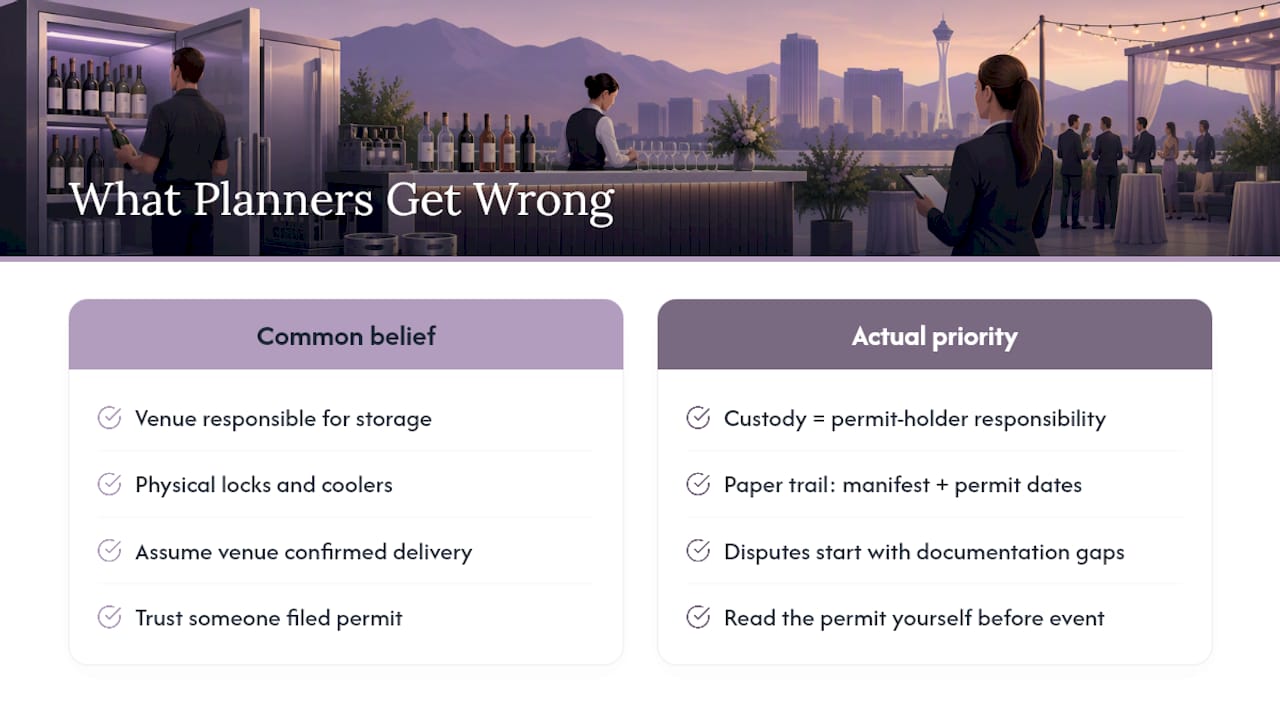
Here’s what actually deserves your attention first: the paper trail. Not the lock on the storage room, not the brand of cooler. A signed manifest and a permit with the right dates on it will save you in a dispute far more reliably than a padlock will. Physical security matters, but it’s the easy part. Documentation is where planners get lazy, because it feels like busywork until an inspector or an insurance adjuster asks for it.
If you take one thing from this: read the permit yourself before the event, don’t just take someone’s word that it’s filed. Five minutes of reading saves you from a very bad conversation later.
— Brennon
How Liquid Courage Handles Storage, Security, and Permits
Liquid Courage provides mobile bartending and liquor catering services with experience in delivery, storage, and reconciliation documented in accordance with local code.

If you want to see what a storage and compliance addendum actually looks like before you book, ask us for sample permit language and a delivery checklist specific to your venue. We’ll walk through your event date, confirm what your venue already covers, and build the storage and staffing plan around it. Start by looking at our mobile bartending and liquor catering services or check availability for your date directly.
Sources
Skip the secondhand summaries when it matters. Go to the source that actually issues the permit or sets the recordkeeping standard.
- Liquor caterer permit application (Clark County Department of Business License)
- TTB industry circulars 18-3
- Food safety preventive controls (Healthy People / FSMA summary)
FAQ
Who Legally Controls Alcohol at an Event?
The licensed caterer or permit holder controls the alcohol from delivery through disposal, not the venue and not the event host. This includes custody, storage, and any leftover product at closeout.
Can Alcohol Stay at the Venue Before or After the Permitted Dates?
No. Permits typically restrict alcohol to the venue only during the dates and times listed on the approved application, covering delivery, storage, and service windows.
How Far in Advance Should a Liquor Caterer Permit Be Filed?
In Clark County, applications should go in at least ten working days before the event, since late filings can be charged double the standard fee.
Should Cooling Ice and Drinking Ice Be Kept Separate?
Yes. Ice used to chill bottles should never be scooped into drinks or stored with ice meant for consumption, a basic separation rule tied to food-safety cross-contamination guidance.
Does Liquid Courage Handle Permits and Storage Documentation?
Liquid Courage manages licensed, insured mobile bartending and liquor catering across Las Vegas and Henderson, including delivery documentation and storage handling. Ask directly for pricing and package details since rates depend on your event size and date.