
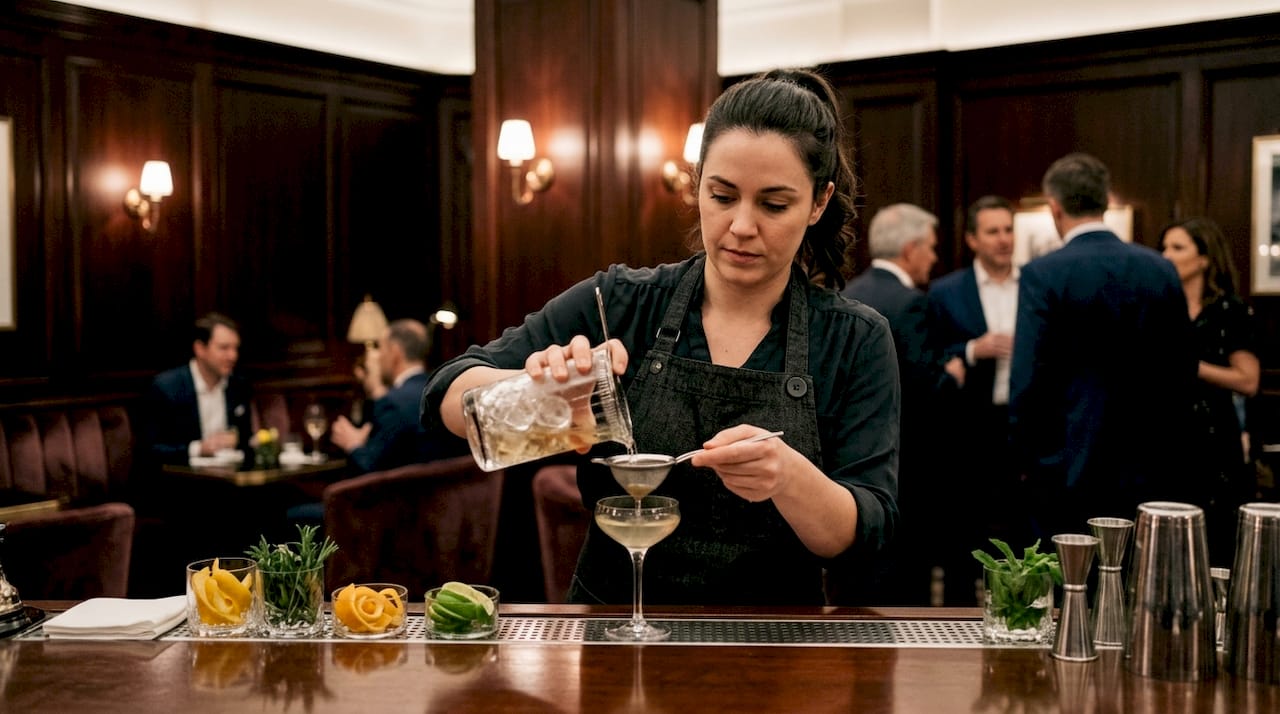
A cocktail hour without professional bartenders is defined by one thing: chaos. Guests cluster at an unmanned table, drinks run out, ice melts, and the host spends the first hour of their own event pouring wine instead of greeting people. Understanding why cocktail hour needs bartenders goes beyond the obvious. Professional bartenders manage staffing ratios, control bar flow, read the room, and handle every behind-the-scenes detail that separates a polished event from an awkward one. This guide gives event planners and hosts the benchmarks, strategies, and real-world context to staff cocktail hours correctly.
Why cocktail hour needs bartenders: staffing ratios and service capacity
The industry standard for cocktail hour staffing is 1 bartender per 40 guests to keep wait times under 2 minutes. That ratio tightens during the cocktail hour specifically because every guest arrives at once, orders simultaneously, and expects a drink in hand before the first toast. For a 5-hour event overall, 1 bartender per 50 guests may suffice, but the cocktail hour peak demands the tighter 1:40 ratio. Drop to 1 bartender per 100 guests and wait times stretch to 8–15 minutes, which kills the energy before the event even starts.
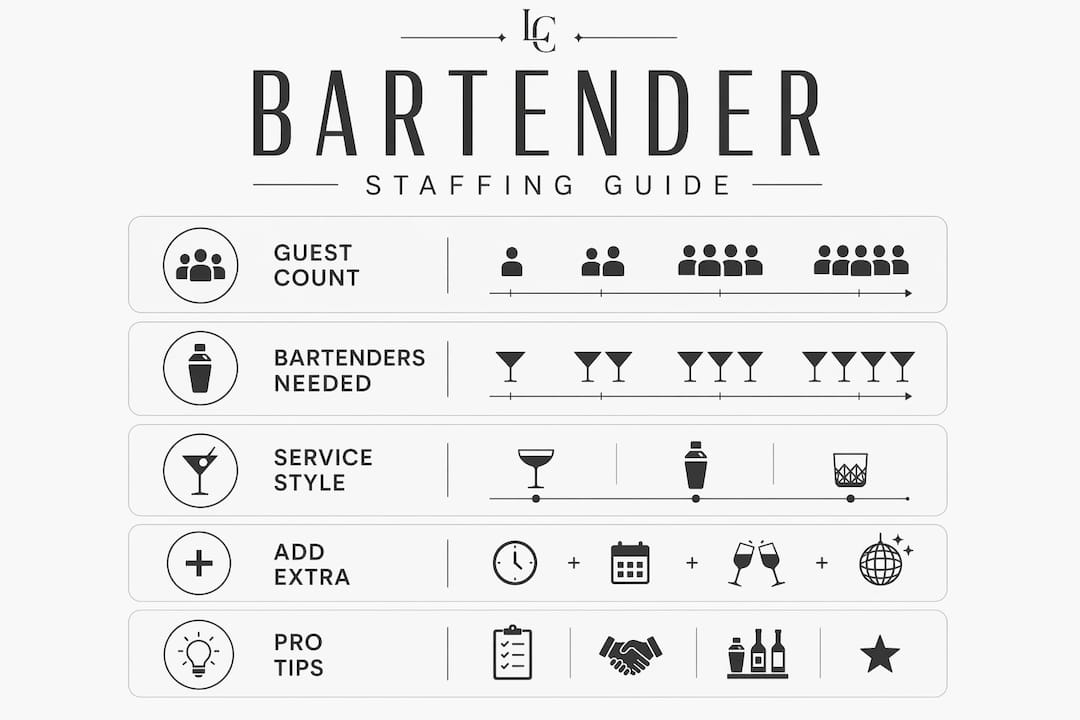
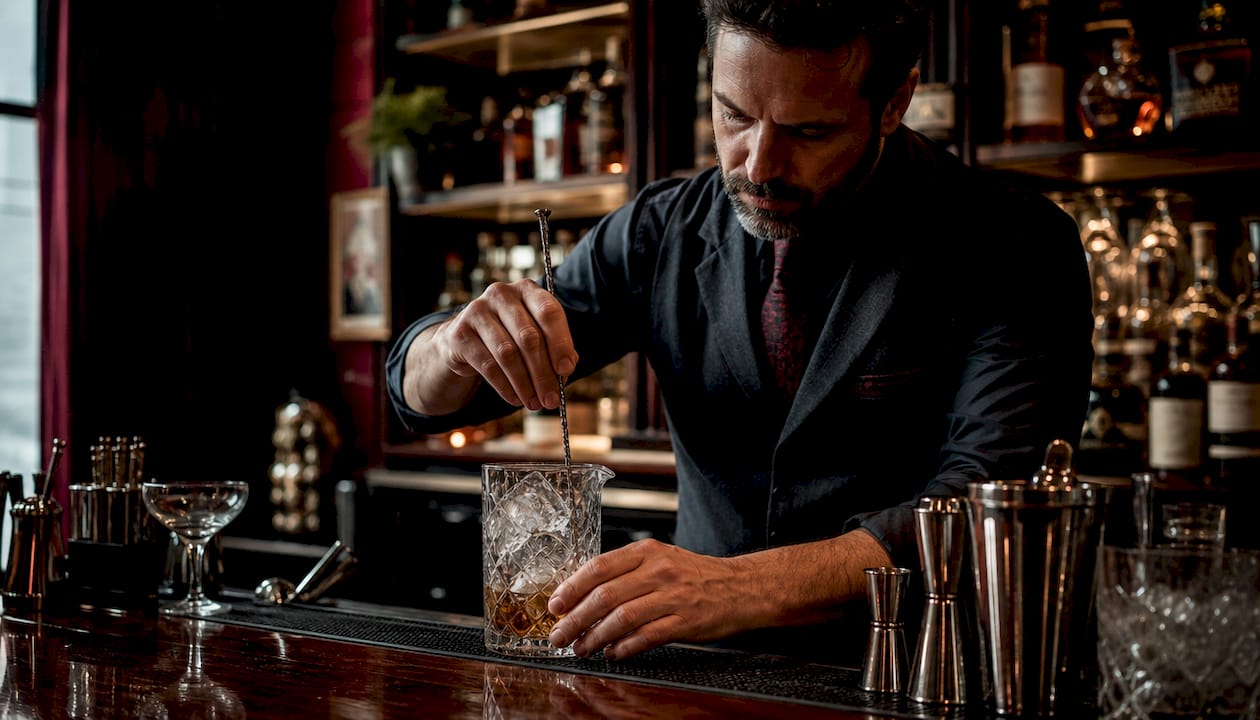
Output capacity matters just as much as headcount. A skilled bartender can produce 60–100 drinks per hour when serving beer, wine, and simple mixed drinks. That number drops considerably when the menu includes craft cocktails requiring muddling, layering, or multiple ingredients. That means a cocktail menu full of mojitos and old fashioneds requires more bartenders than a menu of gin and tonics and sparkling wine, even for the same guest count.
| Guest count | Bartenders needed (cocktail hour) | Service style |
|---|---|---|
| Up to 40 | 1 | Full bar or craft cocktails |
| 41–80 | 2 | Full bar or craft cocktails |
| 81–120 | 3 | Full bar or craft cocktails |
| Up to 75 | 1 | Beer and wine only |
| 150+ | 4+ | Full bar, recommend barback support |
Pro Tip: If your cocktail menu includes more than two labor-intensive drinks, add one extra bartender beyond the standard ratio. The cost is far lower than the guest experience you lose to a 10-minute wait line.
How do professional bartenders enhance the cocktail hour experience?
The bar is the social nucleus of any event. Bartenders are not just drink dispensers. They are the first hospitality professionals guests interact with, and they set the tone for everything that follows. A bartender who makes eye contact, remembers a guest’s order, and cracks a well-timed joke does more for event energy than any floral arrangement.
Professional bartenders provide what the hospitality industry calls frictionless hospitality. They handle every logistical detail behind the bar so the host never has to think about it. That includes:
- Calculating and managing ice volume so the bar never runs dry mid-event
- Staging glassware in advance to avoid scrambling during peak service
- Monitoring bar layout to prevent bottlenecks and keep the line moving
- Tracking which bottles are running low and rotating stock without interrupting service
- Keeping the bar surface clean and organized so the space looks intentional, not improvised
“The best bartenders don’t just pour drinks. They read the room, manage the energy, and make every guest feel like the bar was set up specifically for them. That’s the difference between a service worker and a hospitality professional.”
Professional bartenders also manage guest safety without making it awkward. They discreetly control alcohol service by slowing pours, suggesting water, and redirecting guests who have had enough, all without embarrassing anyone or creating a scene. That protects the host from liability and keeps the event on track.
What staffing models balance cost and quality during cocktail hour?
Smart staffing does not mean maximum staffing. It means putting professional bartenders where they create the most value and adjusting the model for lower-intensity periods.
-
Use a hybrid staffing model. Hire professional bartenders for the cocktail hour peak, then transition to a self-serve wine and beer station during dinner. Hybrid bar staffing can reduce labor costs by 30–50% depending on event size, without sacrificing the guest experience during the moments that matter most.
-
Open multiple bar stations. One bar for 150 guests creates a single point of failure. Two or three stations spread across the venue distribute the crowd, cut wait times, and give guests a reason to move around. That movement also improves the social energy of the room.
-
Add barbacks for large events. A barback handles restocking, ice runs, and glass retrieval so the bartender never leaves the bar. One barback can support two to three bartenders and dramatically increases the effective output of the whole team.
-
Use cocktail servers for passed drinks. Pre-batched cocktails served on trays by roaming servers reduce bar traffic by 20–30% during the first 15 minutes of cocktail hour, when the rush is steepest. This is especially effective at weddings and corporate receptions where guests are still finding their footing.
| Staffing approach | Best for | Cost impact |
|---|---|---|
| Full bartender team | Craft cocktail menus, 100+ guests | Higher upfront, best experience |
| Hybrid bartender + self-serve | Budget-conscious events, 50–150 guests | 30–50% labor savings |
| Bartenders + barbacks | Large events, 150+ guests | Moderate cost, high efficiency |
| Passed cocktails + bar | Weddings, corporate receptions | Reduces bar congestion significantly |
Pro Tip: For Las Vegas events, where guest counts often spike and the bar is a centerpiece of the experience, always staff for your maximum expected attendance, not your RSVP count. Walk-ins and plus-ones are common.
How do bartenders manage event timing and transitions?
Experienced bartenders pace service by reading room dynamics and adjusting drink offerings in real time. That skill is what separates a professional from someone who just knows how to pour. Timing is everything during a cocktail hour, and a skilled bartender manages it without being told.
The key moments where bartender judgment shapes the event:
- The opening surge. The first 10–15 minutes of cocktail hour are the busiest. A prepared bartender has drinks pre-batched or pre-poured for the most popular orders so the line moves before it forms.
- The mid-hour lull. Guests settle into conversations and orders slow. A good bartender uses this window to restock, wipe down, and reset the bar for the next wave.
- The transition to dinner. As guests move to their seats, the bartender shifts the menu from cocktails to wine service or digestifs, reading the room to know when to make the switch without a formal announcement.
- The late-night shift. Toward the end of the event, a professional bartender naturally slows service, introduces water and non-alcoholic options, and manages the wind-down without creating friction.
The ability to anticipate surges and lulls is not something you get from a self-serve station or a well-meaning friend behind the bar. It comes from experience, attention, and genuine investment in the event’s success.
Key Takeaways
Professional bartenders are the single most important staffing decision for cocktail hour because they control service speed, guest experience, safety, and event flow simultaneously.
| Point | Details |
|---|---|
| Staff at 1:40 ratio | Use 1 bartender per 40 guests during cocktail hour to keep wait times under 2 minutes. |
| Match staff to menu complexity | Craft cocktail menus require more bartenders than beer and wine service for the same guest count. |
| Use hybrid staffing to save money | Bartenders for peak hour plus self-serve during dinner can cut labor costs by 30–50%. |
| Bartenders manage more than drinks | They handle ice, glassware, bar flow, safety, and social energy throughout the event. |
| Timing and transitions require skill | Experienced bartenders pace service and shift menus without being directed, keeping the event on schedule. |
What I’ve learned after watching too many hosts skip the bartender
Here is the uncomfortable truth about cocktail hours without professional bartenders: the host always pays for it, just not in money. They pay in stress, in awkward silences while guests wait for drinks, and in the slow realization that the first hour of their event set a tone they can’t recover from.
Attitude and energy matter more than raw technical speed when you are hiring for events. A bartender who is warm, attentive, and genuinely engaged with guests will outperform a technically skilled but cold professional every single time. Warmth and coachability predict event success better than years of experience. That is counterintuitive for planners who default to hiring based on a resume, but it is consistently true.
The other mistake I see regularly is hosts treating the bartender as a last-minute detail. They finalize the venue, the catering, the florals, and then scramble to find someone to run the bar two weeks out. The bartender is not a detail. They are the first person every guest interacts with. That interaction shapes how guests feel about the entire event before the main program even starts.
The mobile bar setup conversation also gets overlooked. Planners assume a venue bar is sufficient, but a mobile bar positioned strategically in the cocktail hour space changes the entire flow. It puts the bar where the guests are, not where the venue decided to put it 20 years ago.
Hire for presence. Plan the bar position early. Staff to your peak, not your average. Those three decisions will do more for your cocktail hour than any signature drink menu.
— Brennon
Liquidcouragelv brings professional bartending to Las Vegas cocktail hours
Planning a cocktail hour in Las Vegas or Henderson means managing a crowd that knows what good service looks like. Liquidcouragelv provides mobile bartending and liquor catering services for weddings, corporate events, and private parties throughout the Las Vegas valley. Every setup is staffed to the cocktail hour standard, with bartenders who manage flow, timing, and guest experience from the first pour to the last call.
Whether you are planning an intimate private party or a large corporate reception, Liquidcouragelv handles the bar logistics so you can focus on your guests. From mobile bar setup to full staffing and beverage catering, the team brings the bar to you. Review available event packages to find the right fit for your cocktail hour.
FAQ
How many bartenders do I need for a 100-person cocktail hour?
Two bartenders is the standard for 100 guests during cocktail hour, based on the 1:40 staffing ratio. Add a third if your menu includes craft cocktails that take longer to prepare.
Do you need a bartender for cocktail hour if you have a venue bar?
A venue bar without a dedicated bartender for your event creates the same wait time and flow problems as no bar at all. Professional bartenders staffed specifically for your guest count and menu are what make the difference.
What is the benefit of hiring bartenders versus a self-serve setup?
Professional bartenders manage service speed, guest safety, bar logistics, and social energy in ways a self-serve station cannot. Self-serve works for low-traffic periods but fails during the cocktail hour peak when all guests arrive at once.
How does cocktail complexity affect how many bartenders I need?
A bartender producing 60–100 drinks per hour on simple orders will produce far fewer on craft cocktails. Plan for one additional bartender for every two labor-intensive cocktails on your menu.
Can a barback replace a second bartender at smaller events?
A barback supports the bartender with restocking and logistics but does not serve drinks. At events under 80 guests, a single experienced bartender with a barback is often more cost-effective than two bartenders, and the service quality stays high.