
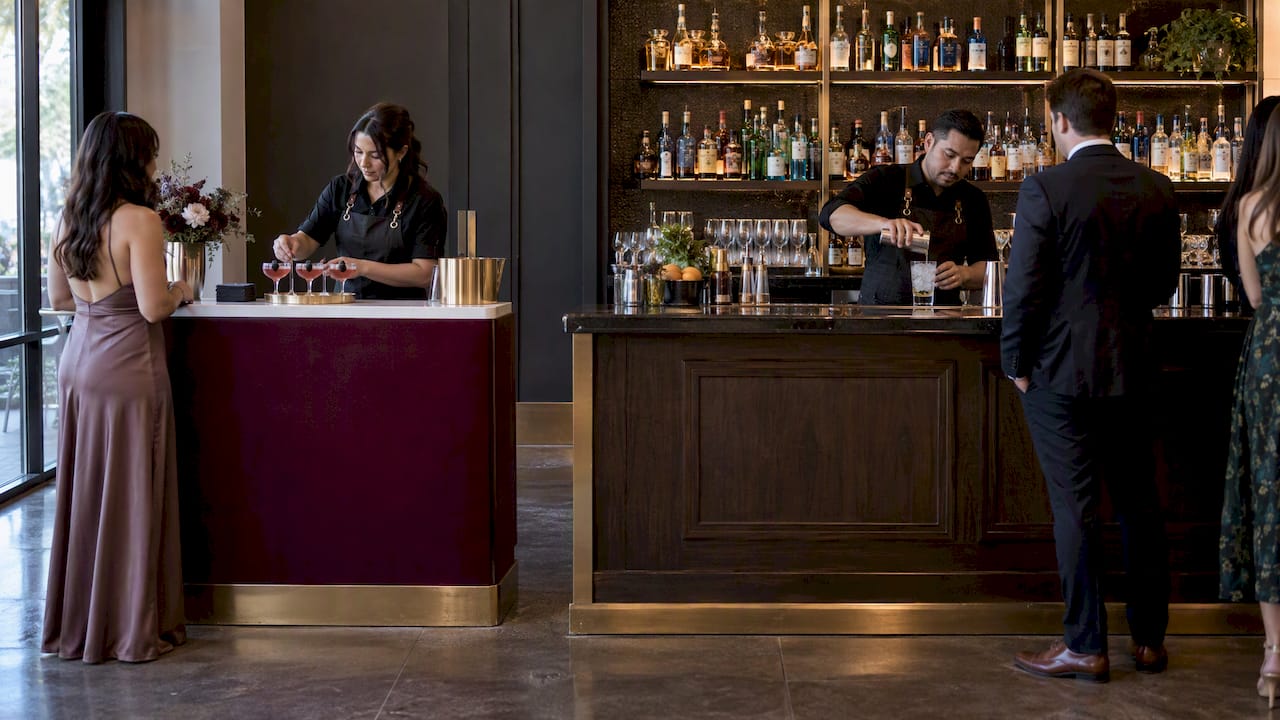
A signature cocktail bar serves a short, planned menu: usually two or three named drinks, often with beer and wine. A full bar stocks a broad liquor selection so guests can order nearly any mixed drink. The signature bar costs less, moves faster and feels more personal. The full bar gives guests the most freedom. Which one fits depends on your guest list, your budget and how long the party runs.
We are a mobile bartending company serving only Las Vegas and Henderson, so this guide is written for events here: weddings, corporate receptions and private parties. It covers what each setup includes, what drives the price, how staffing changes and how to decide.
TL;DR
- A signature bar is a curated menu of two or three drinks, often paired with beer and wine. A full bar covers most liquors, mixers and garnishes for any order.
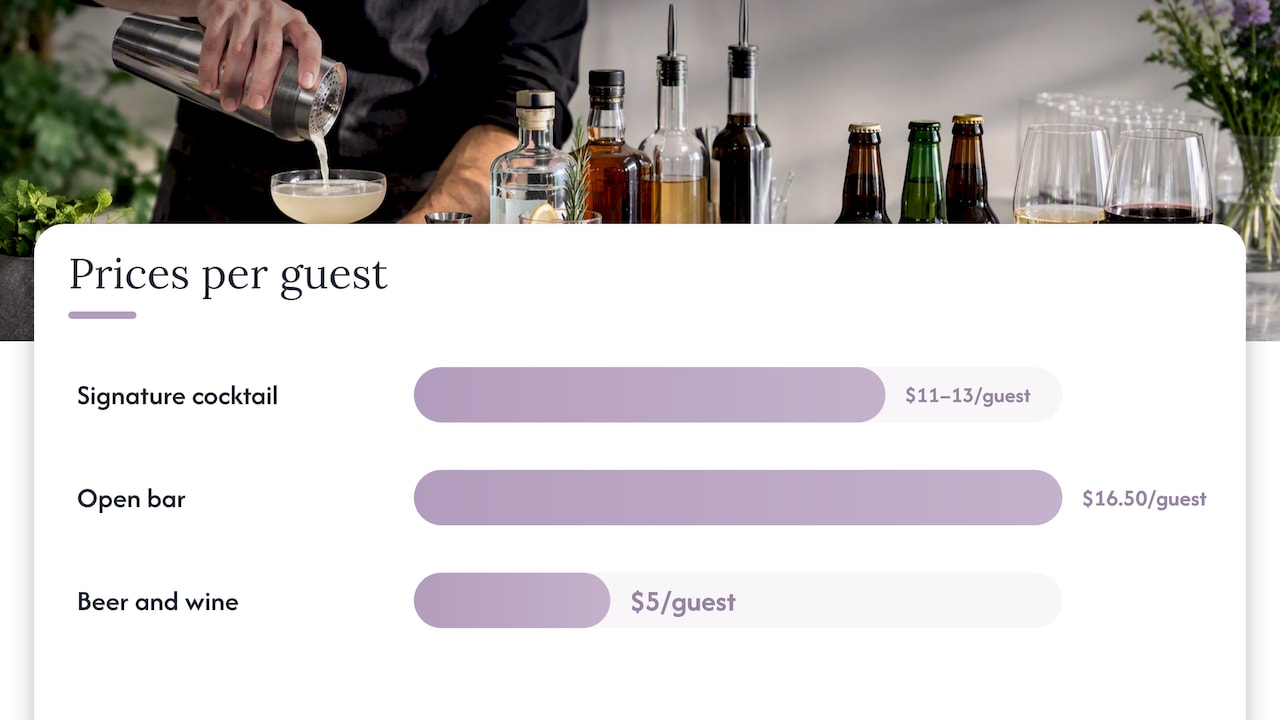
- One wedding publication puts signature cocktails at roughly $11 to $13 per guest against about $16.50 for an open bar. The figures date from 2017, so use them for proportion, not for budgeting.
- Full cocktail service needs more staff. At 100 guests, one staffing guide suggests 2 bartenders plus a barback.
- A hybrid is common: signature drinks, beer and wine all night, with a fuller bar for one window of the evening.
Table of Contents
- What a signature cocktail bar actually is
- What a full bar means
- Side-by-side comparison
- What it costs
- Staffing: where the two setups really differ
- How to choose
- Questions to ask any bar provider
- Our perspective
- Plan your bar with us
- FAQ
- Sources
What a signature cocktail bar actually is
A signature cocktail is a drink the host picks in advance. At weddings it is typically one or two predetermined cocktails, often named for the couple or tied to their story, served at cocktail hour or the reception. At corporate events the same idea becomes a branded drink: the company colors in the glass, a name that echoes the product launch or the conference theme.
The menu is short on purpose. Because the recipes are fixed, a bartender can batch ingredients ahead of time and pour fast. Most signature setups also include beer, wine and a nonalcoholic option so no guest is left with a single choice. The Knot recommends keeping it to no more than two or three signature drinks, and that matches what we see: past three, you are running a small full bar with extra prep.
What a full bar means
A full bar, often sold as an open bar, stocks the standard spirits (vodka, gin, rum, tequila, whiskey and usually scotch or bourbon), plus mixers, juices, bitters, garnishes, beer and wine. Guests order what they like, and the bartender makes it. Guests can ask for a Manhattan, a margarita or a simple rum and Coke.
Two terms get mixed up here. “Open bar” describes who pays: the host covers drinks, guests do not. “Full bar” describes what is stocked. You can have a full bar that is a cash bar, or an open bar that is limited to beer, wine and signature drinks. When you compare quotes, ask each provider to say in writing what is stocked and who pays, so you compare the same thing.
Side-by-side comparison
| Factor | Signature cocktails (with beer and wine) | Full bar |
|---|---|---|
| Guest choice | Limited, curated | Nearly unlimited |
| Personalization | High: names, colors, story | Lower, unless you add a branded drink |
| Cost control | Easier, with a fixed menu | Harder, with more variables |
| Speed of service | Faster, especially with batching | Slower, with every drink made to order |
| Staffing | Lighter | Heavier, often with a barback |
| Supplies and rentals | Fewer bottles, less glassware variety | More bottles, tools and garnishes |
| Best fit | Weddings, receptions, themed corporate events | Large evening parties, mixed-age guest lists, long events |
The pattern holds in published guidance. A South African wedding publication says an open bar suits a large evening reception that prioritizes guest choice, while signature cocktails suit hosts who want personalization, a curated experience and cost control.
What it costs
Price depends on guest count, hours, staff and ingredients. Public numbers are scattered and vary by source, so treat the following as ranges for comparison.
- Signature versus open bar, per guest. The 2017 article above compared roughly $11 to $13 per guest for a signature cocktail with about $16.50 for an open bar at a 170-guest wedding. It put beer and wine alone at about $5 per person.
- Savings from the hybrid approach. One wedding blog says a signature cocktail plus beer and wine approach saves 30% to 40% against a full open bar. That is a rule of thumb, not a quote.
- Signature bar service fees. A 2026 pricing guide puts a mid-market signature cocktail bar at a 3-hour US event at $500 to $1,200, shaped by recipe development, ingredient sourcing and decor.
- Las Vegas labor. A local staffing guide lists 2026 hourly bartender rates from $40 for beer and wine service to $65 for mixologists running signature menus.
Two things are easy to miss. First, a signature menu is not free of labor. Recipe development, testing and sourcing happen before the event, and the same Quotably guide treats them as legitimate line items in a quote. Second, the savings come mostly from the narrower spirit selection, not from the drinks being cheaper to mix. Grey Goose notes that limiting liquor choices can cost less than an open bar that has to make any drink requested.
Our own pricing is built per event, since guest count, hours, bar style and menu change the number. We do not publish a flat rate, and we will not quote you a figure here. What we can do is give you a written quote that separates staff, bar setup, ingredients and any custom menu work, so you can see where the money goes.
Taxes and itemized invoices in Nevada
Ask for an itemized invoice. The Nevada Department of Taxation has told event planners that bartender and setup or strike fees are among services it identifies as taxable when necessary to complete a sale, and that itemizing helps distinguish taxable from non-taxable charges. That notice dates from 2012, so confirm current treatment with the Department or your accountant, especially for a large corporate contract. A line-by-line quote makes that conversation easy.
Staffing: where the two setups really differ
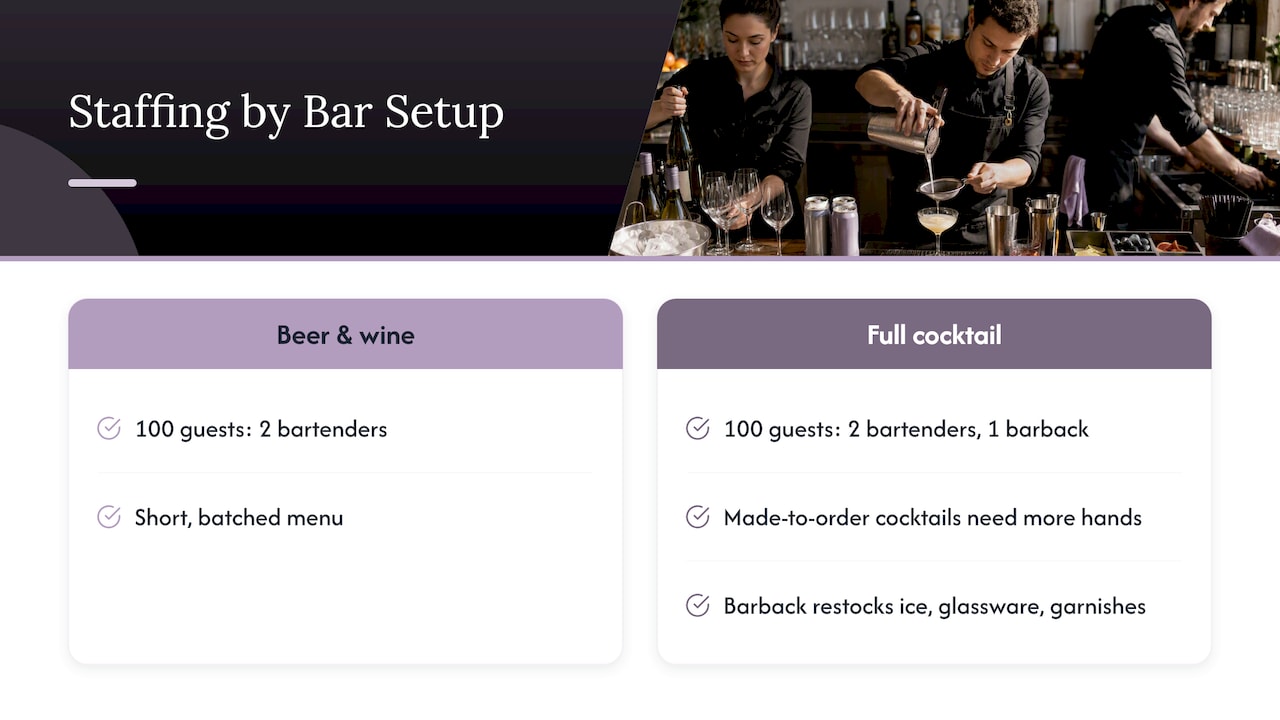
Guests judge a bar by the line. A short menu with batched drinks keeps it moving. A full bar with made-to-order cocktails needs more hands.
For a 100-guest event, one Las Vegas staffing guide recommends 2 bartenders for beer and wine, or 2 bartenders plus a barback for full cocktail service. The barback matters more than people expect. By restocking ice, glassware and garnishes, the barback keeps bartenders at their stations and prevents queues. Our own guide on the bartender to guest ratio at 100 guests goes through the fixes in more detail.
Batching helps the signature route even more. When the drink is premixed, a pour takes seconds. We wrote up how that works in faster bar service with batch cocktails. Batching is harder to apply to a full bar, because you cannot predict every order.
Staffing also shapes the guest experience. HMG+ Staffing notes that understaffing creates visible lines and frustration. Its corporate guidance also treats a quality nonalcoholic option as important, and we agree. Budget a real mocktail, not just soda.
Cocktail hour is the most crowded stretch of the night, since everyone arrives thirsty at once. Our planner’s guide on why cocktail hour needs bartenders explains how to staff that window. If you also book live music, sizing the ensemble matters too, and this piece on cocktail hour band size shows how volume affects guests talking near the bar.
How to choose
Work through these questions in order.
- What is the budget ceiling per guest? If the number is tight, start with signature drinks plus beer and wine. You can add a fuller bar later if there is room.
- How long is the event? A two-hour cocktail reception does well on a short menu. A six-hour wedding with dancing, where guests drift toward whiskey and tequila by 10 p.m., tests a limited bar.
- Who is coming? Mixed-age or international guest lists tend to ask for more variety. A group of coworkers at a product launch is usually happy with a branded drink and a good beer.
- How much do you want the drinks to say about you or your brand? If a named cocktail is part of the story, signature is the clear pick.
- How much space and staff does the venue allow? Some venues limit bar footprints or have their own alcohol rules. Ask early.
A few setups that work
- Wedding, 120 guests, outdoor evening reception. Two signature drinks (one spirit-forward, one light and citrusy), local or favorite beers, a red and a white, and a mocktail. Cheaper than a full bar, quicker at the line, and the menu sign becomes part of the decor.
- Corporate holiday party, 200 guests, ballroom. A full bar for the first 90 minutes while people mingle and networking is the goal, then a branded drink and beer and wine for the rest of the evening. This puts the budget where guests are most active at the bar. Our guide to branded cocktails for corporate events shows how to carry the company identity into the glass.
- Private party, 40 guests. A small group makes a full bar manageable and affordable. Add one signature cocktail as the welcome drink.
- Convention or conference reception. Attendees arrive in waves and speed matters. A tight menu with batching generally keeps lines short. See our notes on the convention bartending package.
The hybrid is often the answer
Many hosts do not pick one. One common compromise is an open beer-and-wine bar with one signature cocktail, with an optional cash bar for other liquor drinks. Another is to lead with signature drinks and move to a broader bar later in the night. Our wedding and corporate clients use both patterns, and we price the bar by window so you pay for the full selection only when you want it.
Questions to ask any bar provider
A bar package is only comparable if you know what it includes. Before you sign, get answers in writing to these:
- Which spirits, mixers, beer and wine are included, and who buys them?
- How many bartenders and barbacks are on the staff, and for how many hours, including setup and breakdown?
- Is the bar itself, glassware, ice and garnish included?
- Are recipe development and tastings charged separately?
- Is the provider licensed and insured, and will they supply proof for the venue?
- What happens if the guest count changes or the event runs over?
We break down the typical contents in what a bar package includes, and our wedding liquor catering contract checklist covers the contract side.
Our perspective
After more than 20 years behind bars at weddings, corporate events and private parties, we have a simple view: the signature-versus-full-bar question is really a question about where you want guests’ attention. A signature bar puts it on the drink you chose. A full bar puts it on the guest’s own taste.
We lean toward signature drinks plus beer and wine for most weddings. They look good, they keep lines short, and they let a budget stretch toward other things. We lean toward a fuller bar when the event runs long, the crowd is varied, or the host simply wants nobody to hear “we don’t have that.” In either case, we would rather talk you out of a menu you do not need than sell you more bottles.
The one thing we push on is staffing. A beautiful menu with too few bartenders is a bad bar. We plan the team around the menu and the room, we follow Las Vegas municipal code, and we are fully licensed and insured.
— Brennon
Plan your bar with us
We handle mobile bartending, liquor catering and bar rentals in Las Vegas and Henderson, with custom menus, bar branding and venue coordination. For a wedding, start with our wedding bartending services. For a company event, see our corporate event bartending. Tell us the date, venue, guest count and which setup you are leaning toward, and we will put together a custom package.
FAQ
Is a signature cocktail bar cheaper than a full bar?
Usually, yes. A short menu means fewer bottles, less prep variety and fewer bartenders, and one wedding blog cites savings of 30% to 40% when pairing a signature drink with beer and wine. The gap shrinks if you add custom recipe work, so compare itemized quotes.
What does “open bar” mean at a wedding?
It means the hosts pay for guests’ drinks, so guests do not pay at the bar. It does not by itself say which drinks are offered. An open bar can be full liquor or limited to beer, wine and signature cocktails, so confirm the menu.
How many signature cocktails should I serve?
Two is a good number, and three is the ceiling. The Knot recommends no more than two or three. Pair them with beer, wine and a nonalcoholic option.
How many bartenders do I need for 100 guests?
A Las Vegas staffing guide suggests 2 bartenders for beer and wine, or 2 plus a barback for full cocktail service. Longer events or short cocktail hours may call for more.
Sources
- Cost of Signature Cocktails vs. Open Bar at Your Wedding
- Signature Cocktail and Drink Ideas for a Wedding or Event, Grey Goose
- 41 Wedding Signature Drinks, The Knot
- Open Bar vs Signature Cocktails, Wedding Etc.
- Wedding Cocktail Hour Ideas, Paperlust
- Signature Cocktail Bar Pricing (2026 Guide), Quotably
- How Many Bartenders Do You Need for a Vegas Event, XS Staffing
- How Event Bartenders Elevate the Guest Experience, HMG+
- Nevada Department of Taxation, Tax Notes, July 2012
- Cocktail Hour Band Size for Planners