
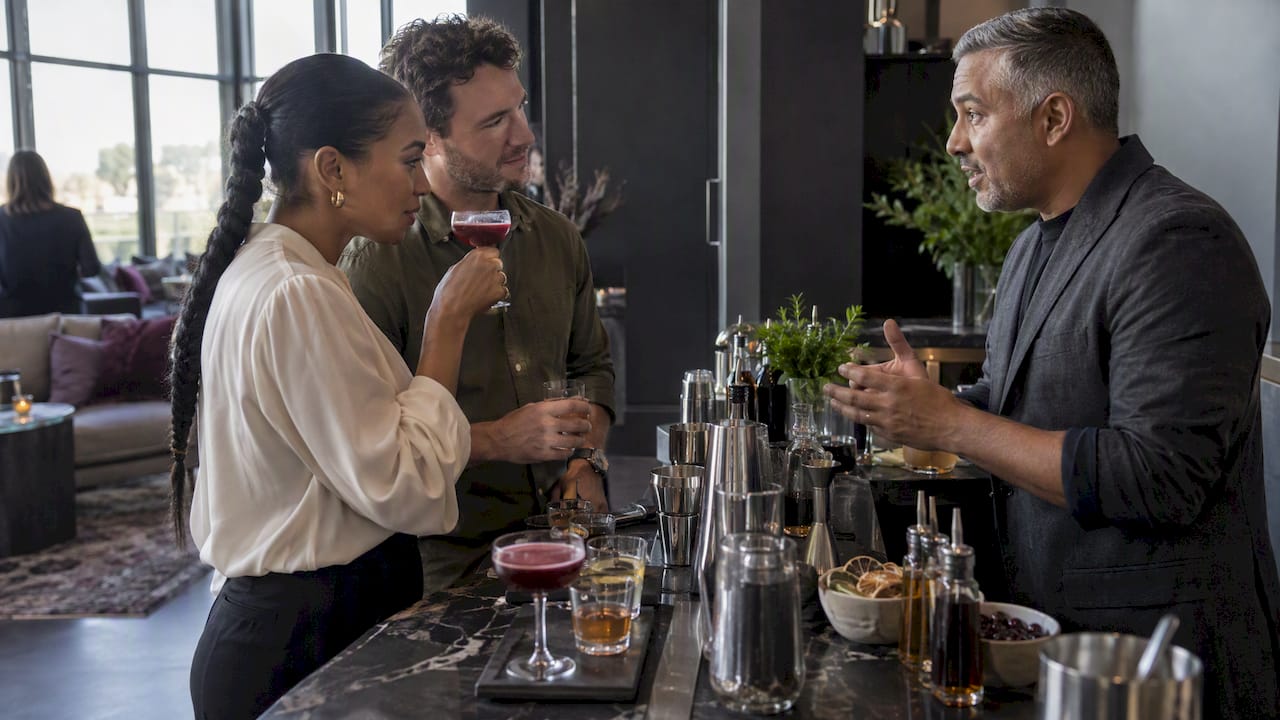
An event cocktail tasting is a test run for your bar menu. Before a wedding, gala or corporate reception, you, your planner and your bartending team sample the proposed drinks, judge flavor and presentation, change what needs changing and lock the menu in. Done well, it takes about an hour, costs far less than fixing a bad menu on the night, and tells you whether the team you hired can deliver what the proposal promised.
This guide covers how a tasting works, how many drinks to pour and in what order, what to do about guests who do not drink, and the Nevada rules that touch a tasting in Las Vegas and Henderson.
TL;DR
- A tasting is a planning step: you sample the proposed drinks, adjust them and approve the final menu before the event.
- A typical flight is four cocktails with pours of 0.75 to 1 ounce each, ordered from light and bright to rich and high-proof.
- Bring the decision makers, a plan for the guest count and the event’s theme, and decide ahead of time what you will change.
- Offer real alcohol-free options, and treat them as part of the menu rather than an afterthought.
- In Clark County, liquor at a temporary event can trigger permit requirements, so confirm them early with your bar provider.
Table of Contents
- What an event cocktail tasting is
- When a tasting is worth doing
- How a tasting works, step by step
- What to bring and who should come
- How the pour plan changes for weddings and corporate events
- Plan for guests who do not drink
- Nevada rules that touch a tasting
- What to ask the bartending team at the tasting
- Is the tasting included?
- Perspective: how we run tastings
- Book a tasting with Liquid Courage
- FAQ
- Sources
What an event cocktail tasting is
Caterers have always offered food tastings. Special Events magazine describes an event tasting as a chance for clients to taste a caterer’s menu offerings before the event, and its experts say the practice covers weddings, social events, nonprofit galas, conferences, expos, holiday parties and corporate functions. The same article frames the session as a time to discuss goals, assess flavor and presentation, identify modifications and lock in details.
A cocktail tasting applies the same idea to the bar. It is not a bar crawl, a distillery tour or a public tasting night at a restaurant, which is what most search results for this phrase show. It is a private working session between the people paying for the event and the people who will run the bar.
There is a reason these sessions are more common than they used to be. A bartender interviewed by Tales of the Cocktail said rising expectations for fresh, creative drinks have made advance signature-cocktail tastings increasingly common at weddings and corporate events. A signature drink is the one item guests will remember and photograph, so it is the one you least want to approve from a description on paper.
When a tasting is worth doing
Not every event needs one. A simple open bar with beer, wine and a handful of classic cocktails is predictable, and a proposal tells you most of what you need. A tasting earns its time when any of these is true:
- You want a custom signature cocktail. Two names for a couple’s favorite drinks, or a branded drink for a product launch, are a recipe nobody has tasted yet.
- The bar is part of the brand. A corporate client with a color palette, a logo on the bar front and a drink named after a campaign needs the drink to match the brand promise.
- The guest count is large. At 200 guests, a drink that takes 90 seconds to build will create a line. A tasting shows you what is practical at speed.
- The menu mixes tastes. Spicy, smoky, herbal or low-sugar requests are easy to get wrong.
- You are choosing between two providers. A tasting is the fairest test of how a team handles detail, timing and communication.
If you are still comparing bar services, our guide to hiring a mobile bartender in Las Vegas walks through the questions to ask before you book a tasting at all.
How a tasting works, step by step
1. Set the goals before the session
Write down three things: the guest count, the mood (relaxed cocktail hour, formal toast, high-energy party) and any hard limits such as budget, dietary restrictions or venue rules. The team can only improve the menu if they know what it has to do. Corporate hosts should add the brand details: colors, a tagline, any sponsor drinks.
2. Pick four drinks, not twelve
A typical tasting flight runs four cocktails, with pours between 0.75 and 1 ounce so tasters stay clear-headed and engaged. That guidance comes from a bar-education company writing about tastings at venues, but the logic carries straight over to a private session: past four or five drinks, everything starts to taste the same.
If you have more candidates than that, split them across two sessions or ask the bartender to shortlist from your brief. A good shortlist usually includes:
- One light, refreshing drink for the first hour of the event.
- One crowd-pleaser built on a spirit most guests already like.
- One signature drink that is specific to you or your brand.
- One spirit-forward or richer option for later in the evening.
3. Taste in the right order
Sequence matters because alcohol and sugar dull the palate. The advice from the same source is a progressive arc: start light, low in alcohol or high in acid, move through more complex sours or stirred drinks in the middle, and finish with high-proof or aged spirits. A sparkling or citrus-led drink goes first, a boozy old-fashioned style goes last.
Bartender Julia Momose of Kumiko says a drink progression deserves the same care as a chef’s tasting menu, with attention to temperature, texture and glassware. In practice, that means asking for the drinks in the glasses you will use at the event, not in tasting cups. A coupe, a rocks glass and a tall glass change how a drink smells and feels, and you want to judge the version your guests will hold.
4. Keep the pours small and the palate clean
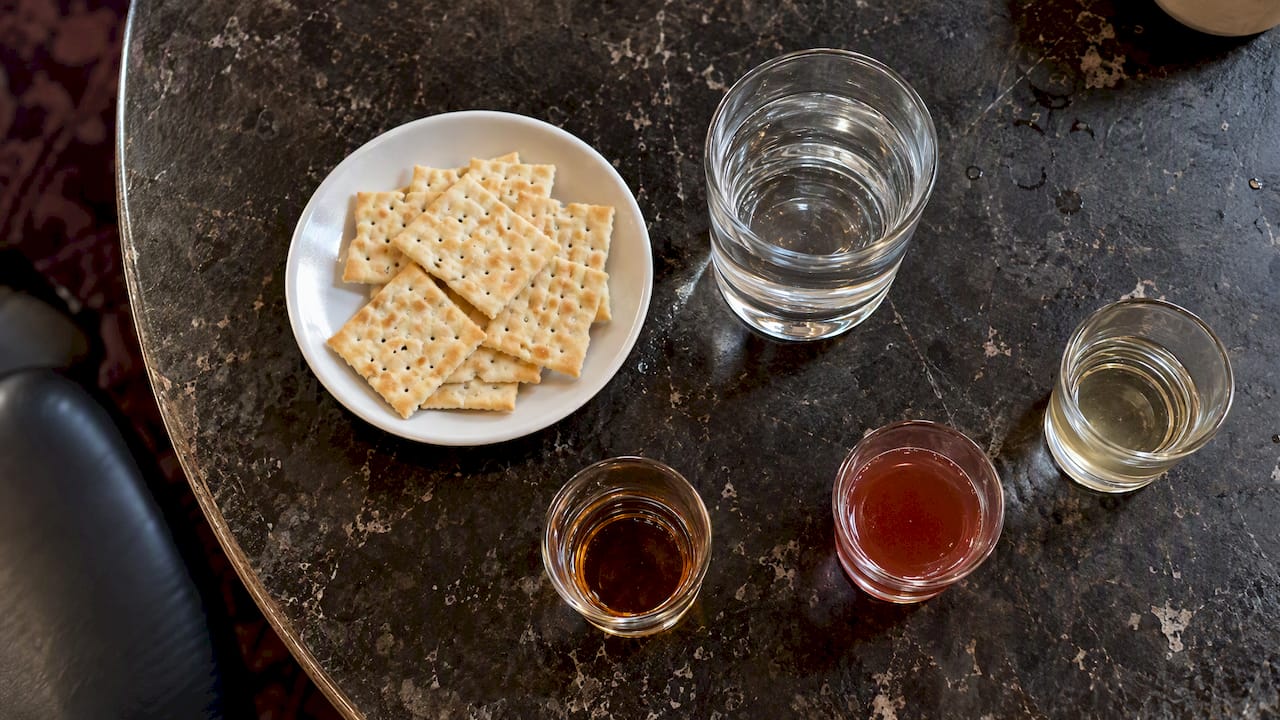
Serious Eats’ spirits-tasting guide uses a reference pour of 1.5 ounces per spirit per taster and notes that a 750-milliliter bottle yields about 25 ounces, or 16 such servings. That figure is for neat spirits, and cocktail tastings should run smaller, as the 0.75 to 1 ounce range above suggests. The same guide recommends water, palate cleansers and a spit option, and says neutral spring water and plain crackers work for cleansing the palate between tastes.
Put a glass of still water in front of every person and a small plate of unsalted crackers or bread in the middle of the table. If you are tasting several drinks with the same base spirit, the water matters even more.
5. Score each drink, then decide
Give everyone a small card and have them rate each drink on three things: balance (sweet, sour, bitter, strength), look and aroma, and how well it will hold up at a busy bar. Ask the bartender how long each takes to make and which parts can be batched in advance. A drink that scores high but takes two minutes per cocktail is a candidate for a pre-batched version, or for a passed-tray format.
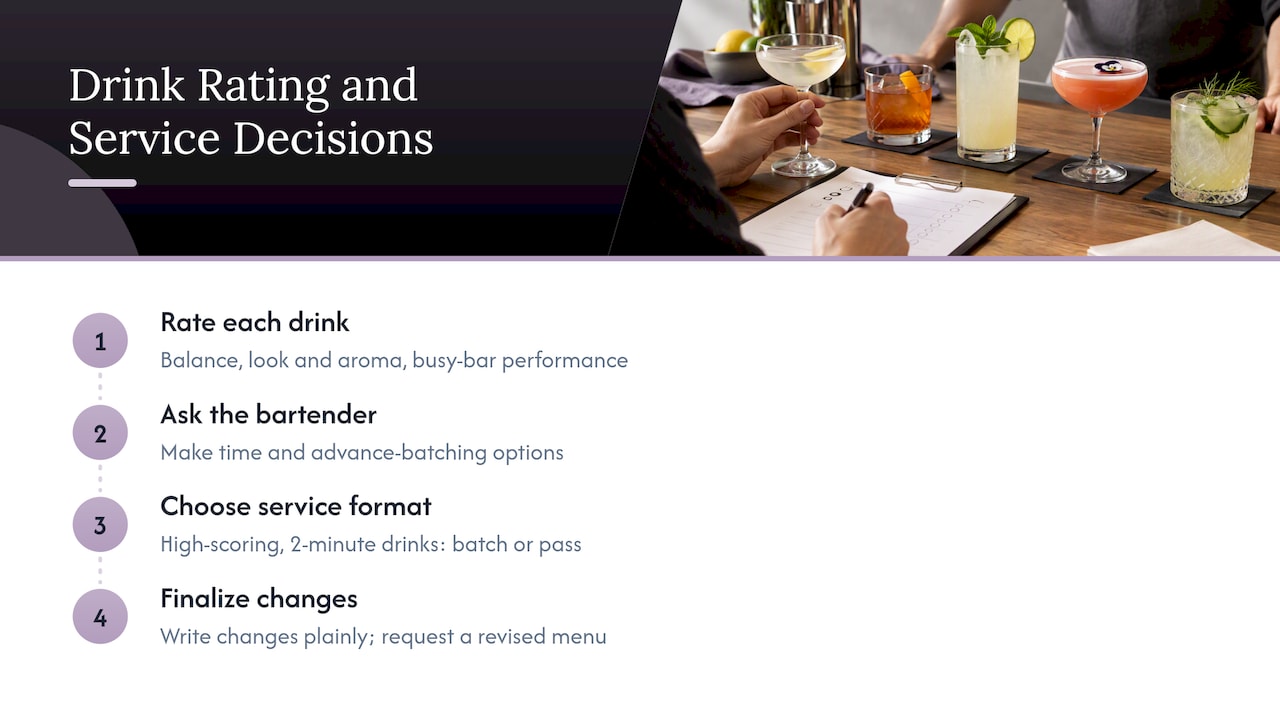
Before you leave, write down changes in plain language: less sweet, add a salt rim, swap the garnish, move the citrus to a different spirit. Ask for a revised menu in writing so the final version is on paper, not in memory.
6. Think about the take-home
Tastings that feel designed are the ones people remember. Bar educators suggest tools such as flavor wheels, short stories behind each drink and branded take-home notes to increase engagement and extend brand visibility. For a wedding, that might be a printed menu card with the drink names. For a corporate event, it might be a small card with the drink’s story and your logo.
What to bring and who should come
Keep the group small: the people who will actually approve the menu. For a wedding, that is usually the couple and perhaps the planner. For a corporate event, it is the event lead, one brand or marketing voice, and whoever holds the budget. A tasting with eight opinions produces no decisions.
Bring:
- Your guest count and event timeline, including when the bar opens and closes
- A color palette, invitation or brand guidelines
- A list of drinks you already love or hate
- Dietary and allergy notes for guests, including anyone who avoids alcohol
- A photo of the venue bar area or a floor plan
The visual side of the bar is part of the decision. If you are building a look around the drink menu, these corporate event décor ideas show how color, backdrops and styling can frame a feature drink so it photographs well.
How the pour plan changes for weddings and corporate events
Weddings
Couples usually taste for two outcomes: a signature cocktail that feels personal, and a short list of reliable classics. Aim for one or two signature drinks and keep the rest simple. Beer, wine and a few well-made standard cocktails cover most guests, and the signature drinks add the personality. Our team covers this in more detail in our guide to wedding beverage catering for Las Vegas couples, and the wedding liquor catering contract checklist lists what to confirm in writing once you have chosen.
Corporate events
Corporate tastings are about speed, brand and consistency. A cocktail reception for a few hundred people needs a menu that bartenders can repeat without slowing the line. Ask the team to demonstrate the fastest version of each drink, and test whether the brand element (a colored garnish, a custom ice cube, a logo on a napkin) survives repetition. Our corporate cocktail reception best practices cover the service-flow side, and the bar staffing guideline of one bartender per 30 to 50 guests helps you check that your menu fits the number of hands behind the bar.
Plan for guests who do not drink
A good tasting is not only for the people who drink. A share of your guests will not, and the reasons are varied. The National Institute on Alcohol Abuse and Alcoholism lists driving, pregnancy or planning for pregnancy, medication interactions, medical conditions and reevaluating a relationship with alcohol among them, and advises hosts not to call attention to people who decline a drink.
The same guidance suggests offering varied alcohol-free options such as water, juice and sparkling soda alongside food, and labeling anything that contains alcohol. For your tasting, that translates into a few concrete steps:
- Ask the bartender to build one or two zero-proof drinks with the same care as the signature cocktail, and taste them in the same flight.
- Use the same glassware and garnish so nobody holds an obviously different drink.
- Make sure menu cards mark which drinks contain alcohol.
Cornell Health adds practical event-side advice: provide food and nonalcoholic drinks, keep exits clear, and have sober hosts check on guests and help arrange transportation. In Las Vegas, where guests may be staying on the Strip or traveling between venues, the transportation point deserves a line in your event plan.
Nevada rules that touch a tasting
A private tasting at a kitchen table is simple. The rules matter when the tasting is at a venue, or when the event itself serves liquor.
Liquor at temporary events. Clark County states that temporary events in unincorporated Clark County that include liquor must apply for a liquor caterer permit under county code 8.20.240. Las Vegas and Henderson have their own city processes, so ask your bar provider which jurisdiction your venue sits in. We keep a plain-language walk-through on off-premise liquor permits in Nevada, and a wider checklist at Nevada alcohol rules for event pros.
Public tasting events. If you are organizing a tasting open to the public, such as a brand activation with sampling booths, the Southern Nevada Health District has its own checklist. It requires event coordinators to equip tasting booths properly, including handwashing stations with warm water of at least 100°F within 10 feet of the booth. A private planning session for a wedding does not fall in this category, but a public corporate sampling event might.
Who sells the alcohol. If the bar is dry hire, where you buy the liquor and the company provides only staff, who buys and who sells matters. Rules on how alcohol may be bought and sold are strict, and your provider should explain exactly how its model complies. See our page on dry hire staffing for how that format works.
Taxes on the invoice. The Nevada Department of Taxation has said that setup and strike fees and bartender fees are taxable services tied to a taxable sale, and that planners should itemize invoices, because those who do not must charge sales tax on the entire charge. That guidance dates from 2012 and covers event planners, so confirm current treatment with the department or your accountant. For you as a client, the practical point is to ask for an itemized proposal, with the tasting, staffing, bar rental and drinks listed separately. Our explainer on the beverage catering proposal shows what each line should look like.
What to ask the bartending team at the tasting
The drinks are only half of what you are testing. Use the session to see how the team works:
- How do they handle feedback? Good teams take notes and propose fixes on the spot.
- Can they scale it? Ask how the recipe changes for 50, 150 or 300 guests.
- What will they bring? Ask about bar setup, glassware, ice, garnish and mixers, and who handles each.
- Who will be at the event? The person at the tasting should be the person, or part of the team, running your bar.
- What happens with the approved menu? It should end up in your contract with the drink specifications.
- Are they licensed and insured? Ask for proof, and check the venue’s own requirements.
Is the tasting included?
Practices vary by provider. Some include a tasting in higher packages, some charge a fee that is credited to the booking, and some do not offer one at all. Ask before you sign. Our bar packages are custom, so we build the tasting around what your event needs, and we do not publish fixed prices. Our guide on what a bar package includes lists the usual components so you can compare proposals line by line.
Perspective: how we run tastings
We have worked behind bars in Las Vegas and Henderson for over 20 years, and the most common regret we hear is not about the drinks. It is about a decision made too late. A couple who approves a signature drink from a menu description, or a corporate team that gets the brand-colored cocktail the night before, is guessing.
Our view is simple. Taste early, taste with the glass you will use, and taste with the people who will make the final call. Keep the flight to four drinks. Always include something zero-proof that the host would be happy to serve to the CEO or the bride’s grandmother. And ask the bartender what will go wrong at 200 guests, because a good one will have an honest answer.
We also think a tasting should be a conversation about logistics, not only flavor: where the bar sits, where the line forms, where the ice comes from, how glassware gets cleared. Those details decide whether the drink you loved in the tasting tastes that good at 9 p.m. on the night.
— Brennon
Book a tasting with Liquid Courage
We provide licensed, insured mobile bartending and liquor catering for weddings, corporate events and private parties, only in Las Vegas and Henderson. If you want to plan a menu with a tasting, start with our wedding bartending page or our corporate events page, or see the full range of mobile bartending and liquor catering. We offer custom packages, menu and bar branding, and venue coordination, and we will tell you plainly what suits your guest count.
FAQ
How many cocktails should be in an event tasting?
Four is a good number. A typical flight uses four cocktails with pours of 0.75 to 1 ounce, which keeps tasters alert enough to judge each drink. If you need to compare more, run a second round on another day.
How long does a cocktail tasting take?
Plan on about an hour for a flight of four drinks, plus time to discuss logistics such as the bar layout and timeline. Allow extra time if you are testing a custom signature drink that needs several adjustments.
Do I need a permit for a private cocktail tasting?
A private planning session usually does not, but the event itself might. Temporary events with liquor in unincorporated Clark County must apply for a liquor caterer permit, and Las Vegas and Henderson have their own processes. Ask your bar provider which applies to your venue, and confirm with the issuing office.
Should guests who do not drink be included?
Yes. Offer alcohol-free drinks that are as carefully made as the cocktails, in the same glassware, and mark clearly which drinks contain alcohol. Do not draw attention to anyone who declines a drink.
Is a tasting worth it for a small party?
For a simple bar with classic drinks, probably not. It is worth it if you want a custom signature cocktail, a branded drink or a larger guest count, where a recipe that does not scale can cause long lines.
Sources
- Special Events magazine, The Tough Subject of Tastings (2025)
- Tales of the Cocktail, Everything You Need to Know About Cocktail Catering
- Advanced Mixology, Cocktail Tasting Events at Bars
- Liquor.com, The Ideal Strategies for Creating a Cocktail Tasting Menu
- Serious Eats, Cocktail 101: How to Conduct a Spirits Tasting
- NIAAA, tips for hosting a party including guests who may not be drinking
- Cornell Health, Tips for Lower-Risk Drinking
- Clark County, Temporary Events and Film Permits
- Southern Nevada Health District, Event Coordinator Checklist for Tasting Events
- Nevada Department of Taxation, Tax Notes Issue 179
- Atlanta Corporate Event Ideas