
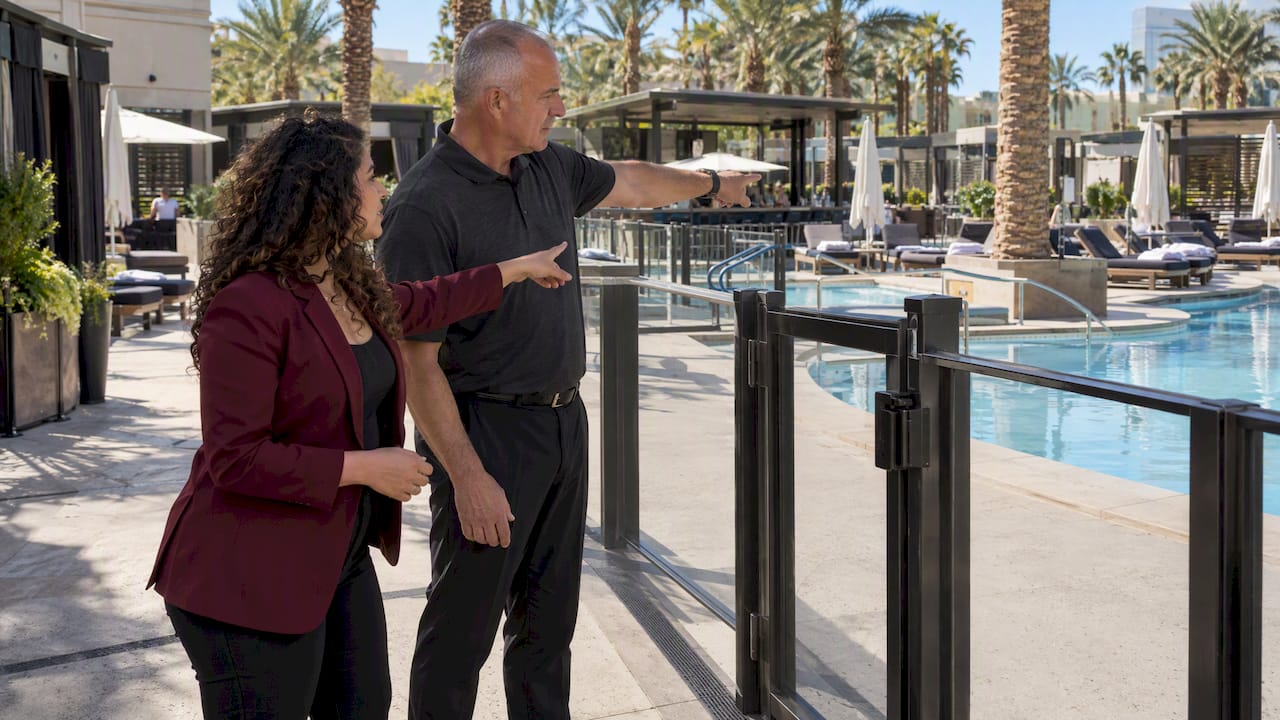
Alcohol is allowed at Las Vegas pool events in four main contexts: resort dayclubs, ticketed pool parties, private pool rentals where the host permits it, and any event served by a licensed liquor caterer. Every context shares the same baseline: guests must be 21 or older, most commercial venues ban outside alcohol, and off-premise service generally requires a Clark County permit. Before anything else, confirm the venue’s written policy, start permit paperwork early, and hire only licensed, trained staff.
TL;DR:
- All alcohol service at Las Vegas pools requires guests to be 21 or older, with strict ID checks at entry and policies on intoxication.
- Private pool rentals depend on the host and platform rules, while most commercial venues ban outside alcohol and enforce glass container restrictions.
- Obtaining a Clark County Liquor Caterer Permit requires submitting paperwork at least 10 working days in advance and confirming vendor licensing and insurance.
- Open-container and public drinking laws do not typically apply to pools, but glass bans and proximity restrictions near sensitive facilities are common considerations.
- Planners should verify venue-specific rules, secure necessary permits early, and coordinate with licensed vendors to ensure legal and safe alcohol service.
Table of Contents
- Which venue types allow alcohol at pool events and how they differ
- Age, ID, and how venues enforce intoxication rules
- Open container and public drinking rules in Clark County
- Common venue house rules you should expect at Las Vegas pools
- Permits, timelines, and fees for alcohol service at events
- What to verify when hiring a caterer or mobile bar
- Safety, transport, and event logistics that reduce risk
- Planner checklist from booking to event wrap
- How local mobile bartenders handle permits and venue coordination
- Hiring a licensed bartending team to handle the compliance side
- FAQ
- Sources
Which venue types allow alcohol at pool events and how they differ
Not every pool in Las Vegas handles alcohol the same way, and the differences affect everything from your budget to your guest list.
Resort dayclubs run the tightest ship. They check ID at the door, often require 21+ entry on weekends, and sell drinks through open-bar packages or bottle service with set time windows. Ticketed pool events follow a similar model: your ticket price frequently includes a drink package valid only during the event’s scheduled hours, after which standard bar pricing kicks in.
Private pool rentals work differently. Whether alcohol is allowed comes down to the host’s own rules and, if the property is booked through a rental platform, that platform’s policies on parties and alcohol service. A homeowner hosting a backyard pool party has more flexibility than a dayclub guest, but also carries more personal liability if something goes wrong.
Catered or off-premise events sit in their own category. If you want a bar at a private residence, a rented venue, or any space that isn’t already licensed to sell alcohol, you generally need a licensed liquor caterer to serve it legally.
- Resort dayclubs: strict ID checks, set bar hours, bottle service common.
- Ticketed pool events: drink packages tied to event duration.
- Private rentals: alcohol allowed only with host and platform approval.
- Off-premise events: require a licensed caterer for legal service.
Age, ID, and how venues enforce intoxication rules
Nevada’s legal drinking age is 21, and Las Vegas pool venues take ID checks seriously. Expect every guest to show a government-issued ID at entry, not just those who look young, since most dayclubs and pool events card everyone as a matter of policy.
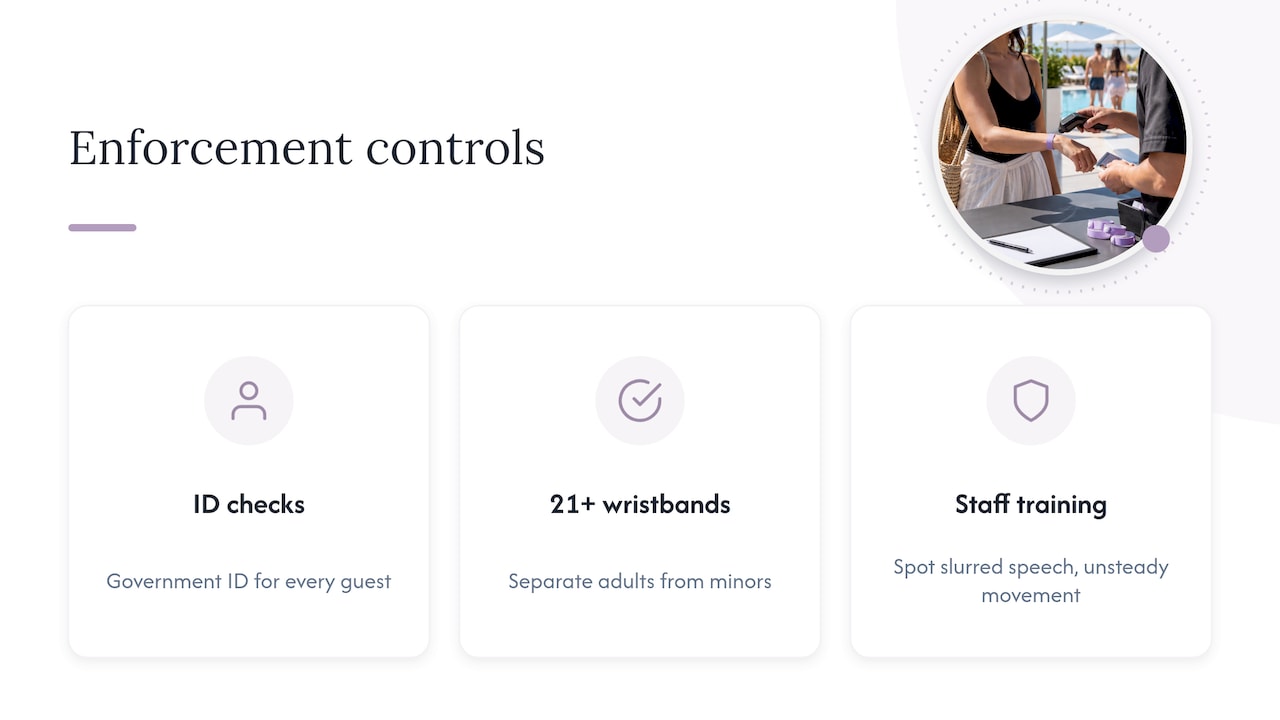
Venues also reserve the right to deny entry or remove guests who appear visibly intoxicated, and that typically comes with no refund on admission or drink packages, as several venue policies make explicit, including Laguna Pool at Palms Place and Liquid Pool at The Venetian. For planners running a private or ticketed event, wristbands separating 21+ guests from minors (at family-friendly pool parties) make enforcement easier for staff and reduce disputes at the door. Train bartenders and door staff to watch for slurred speech, unsteady movement, and repeated drink orders in a short window, since those are the standard cues used to cut someone off before a situation escalates.
Open container and public drinking rules in Clark County
Las Vegas has a reputation for relaxed public drinking, but that reputation only applies in specific zones, and pool events add another layer of restriction on top.
Open-container tolerance mostly applies to pedestrian areas on parts of the Las Vegas Strip, not to pools, parking lots, or residential streets. Most commercial pool venues ban glass containers outright, a restriction Laguna Pool at Palms Place lists specifically among its prohibited items, which means planners serving alcohol poolside should default to plastic cups or canned drinks regardless of venue type. Proximity restrictions near schools, hospitals, and certain public facilities can also affect outdoor events held close to those locations, so it’s worth checking an address against local zoning before locking in a venue.
No alcohol or smoking in some pool areas is a standing recommendation from local police, according to a Las Vegas police safety reminder issued ahead of summer pool party season, alongside posted rules and guest limits. That advisory matters for residential and community pool events especially, where enforcement is less automatic than at a staffed resort dayclub.
- Glass containers: banned at most commercial pool venues.
- Public drinking: limited to specific Strip pedestrian zones, not pools.
- Proximity limits: check distance from schools and hospitals before planning outdoor service.
- Fencing and signage: helps mark alcohol-free zones clearly for guests and staff.
Common venue house rules you should expect at Las Vegas pools
Alcohol rules are just one piece of a longer list of house rules at most Las Vegas pools, and ignoring the rest can get your event shut down just as fast as an open-container violation.
Outside food and beverages are banned at nearly every commercial pool venue in the city, though complimentary water is typically available poolside. Beyond that, expect a long list of prohibited items: glass, vapes, professional camera equipment, and inflatables show up repeatedly across published venue policies, and some venues add zero-tolerance language for marijuana and other controlled substances, as Liquid Pool’s FAQ states directly. Dress codes get enforced strictly, and security checkpoints with bag checks are standard at resort pools.
- No outside food or drink, with complimentary water usually provided.
- Glass, vapes, professional cameras, and inflatables commonly banned.
- Dress codes and bag checks enforced at entry.
Management at these venues retains broad discretion to refuse entry, which means planners should communicate every rule to guests in advance rather than let them find out at the gate.
Pro Tip: Send a one-page rules sheet with your event invite so guests already know the dress code and prohibited items before they show up.
Permits, timelines, and fees for alcohol service at events
If your pool event needs alcohol served by a caterer rather than a venue’s own bar staff, Clark County requires a Liquor Caterer Permit, and the paperwork has real deadlines attached.
According to the Liquor Caterer Permit application, caterers must submit their event permit at least 10 working days before the event, and fees run $10 per liquor service station. File late and the county charges double. Other licensees applying for off-premise permits may face a shorter window, as Clark County’s Liquor and Gaming forms page notes a two working day timeline for established licensees in some categories, so confirm which permit type applies to your specific vendor and event before assuming a deadline.
| Permit type | Lead time required | Fee |
|---|---|---|
| Liquor Caterer Permit | At least 10 working days | $10 per service station |
| Late Liquor Caterer Permit | Less than 10 working days | Double the standard fee |
| Off-premise permit (established licensees) | As little as 2 working days | Varies by licensee category |
For pool events held at public parks or county-managed outdoor spaces, you may also need to coordinate alcohol permits alongside separate special-event or parks approvals, since the liquor permit alone doesn’t cover venue use. Planners booking a park setting should also review park alcohol permit rules before finalizing a date, since timelines there run on a separate track from the liquor permit itself.
What to verify when hiring a caterer or mobile bar
Hiring a licensed vendor doesn’t automatically mean every compliance box is checked, as exemplified by Healthy Catering in the Bay Area & Sacramento showing how vendors present compliance and permit coordination. Planners still need to confirm specific documentation before signing a contract.
- Ask for the vendor’s current liquor license and proof of liability insurance in writing.
- Request a roster of staff work-card numbers and the dates of their alcohol-awareness training.
- Confirm a named on-site supervisor will be present for the full duration of alcohol service.
- Keep a copy of the submitted permit application on hand in case a venue or inspector asks for it day-of.
Permit applications themselves require this level of detail. The Liquor Caterer Permit application asks for employee work-card numbers and training records as part of the submission, which means a vendor who can’t produce that paperwork quickly is probably not actually permitted to serve. Skipping this step exposes the host to fines, an on-the-spot event shutdown, or civil liability if something goes wrong during service.
Safety, transport, and event logistics that reduce risk
Compliance paperwork handles the legal side, but a safe pool event also depends on logistics that permits alone don’t cover.
Set a clear cutoff time for alcohol service, generally 30 to 60 minutes before the event ends, and designate at least one sober supervisor whose only job is watching for guests who need to be cut off. Arrange rideshare staging areas away from the pool deck, or organize shuttle transport for larger private events, so no one drives impaired. Post clear signage marking any no-alcohol zones, particularly around shallow ends or areas near children if the event is mixed-age, and make sure venue security or local emergency contacts are reachable the moment something goes sideways.
- Set a firm alcohol service cutoff before the event officially ends.
- Designate a sober supervisor separate from bar staff.
- Stage rideshare pickup away from the pool deck.
- Post signage for any no-alcohol zones clearly.
Pro Tip: Keep venue security’s direct contact, not just the front desk number, saved in your phone before the event starts.
Planner checklist from booking to event wrap
A pool event with alcohol service runs smoother when you work through the same sequence every time, regardless of venue type.
- Confirm the venue’s written alcohol policy, glass-container rules, and any proximity restrictions before booking.
- If hiring a caterer, verify their license and insurance, collect the staff roster with training proof, and submit the Liquor Caterer or off-premise permit at least 10 working days ahead, per Clark County’s guidance.
- Communicate house rules, dress code, and prohibited items to guests before the event date.
- Day-of, staff ID checkpoints, keep alcohol service in designated zones, confirm the on-site supervisor is present, and have permit paperwork accessible.
- Stage transport options and keep emergency contacts visible to your event staff throughout.
Planners juggling multiple vendors often find it easier to avoid doubled fees by locking in permit timing early, a point covered in more detail in guidance on avoiding doubled Nevada permit fees.
How local mobile bartenders handle permits and venue coordination
The most common mistake we see is a host assuming a venue rental automatically includes permission to serve alcohol. It doesn’t, and discovering that a week before the event leaves no time to file a Liquor Caterer Permit properly. Experienced local vendors build permit prep, work-card collection, and venue liaison into their process from the first phone call rather than treating it as a last-minute scramble. Catching that gap early is usually the difference between a smooth pool event and one that gets shut down at the gate.
— Brennon
Hiring a licensed bartending team to handle the compliance side
Most of the friction in this article, permits, work cards, insurance proof, disappears when you hire a company that already has it on file. Liquid Courage handles mobile bartending and liquor catering for weddings, corporate events, and private parties across Las Vegas and Henderson, with licensed and insured staff who manage the paperwork so you don’t have to track deadlines yourself.
Before you hire any vendor for a pool event, ask for proof of license, current insurance, a staff roster with work-card numbers, and a sample of the permit forms they file. If you’re building a bar setup for a private pool party, our bar rental packages cover the equipment and staffing together.
- Confirm license and insurance before signing any contract.
- Request a staff roster showing work-card numbers and training dates.
- Ask to see a sample permit filing so you know the paperwork is current.
Check available dates for your event through our private bartender services page and get the permit side handled alongside your bar.
FAQ
What are the restrictions on swimming pools in Las Vegas?
Most Las Vegas pool venues ban outside food and alcohol, prohibit glass containers, and enforce dress codes with security checks at entry. Venues also reserve the right to deny entry or remove guests who are visibly intoxicated, typically without a refund, as Laguna Pool’s guest rules state directly.
What is the 2-2-2 rule for alcohol?
There’s no official “2-2-2 rule” recognized in Clark County or Nevada alcohol licensing guidance, and the term doesn’t appear in county permit documentation. Planners should rely on the actual permit timelines instead, such as the 10 working day lead time for a Liquor Caterer Permit.
Is it legal to drink alcohol in public in Las Vegas?
Open-container drinking is tolerated in specific pedestrian areas on parts of the Las Vegas Strip, but that tolerance doesn’t extend to pools, parking lots, or most residential areas. Local police advisories also recommend against alcohol in some community pool areas, according to a recent police safety reminder.
Can I walk around with a bottle of liquor in Vegas?
Carrying an open bottle of liquor in public isn’t part of the limited open-container allowance on the Strip, and most pool venues separately ban outside alcohol and glass containers entirely. If you want alcohol at a private or rented venue, the legal route is hiring a licensed liquor caterer rather than bringing your own bottles.
Sources
- Liquor Caterer Permit application (Clark County Department of Business License)
- Laguna Pool at Palms Place — guest rules and FAQs
- Summer pool parties prompt safety reminder from Las Vegas police (FOX5 Vegas)
- Liquid Pool — FAQs (Tao Group Hospitality)