
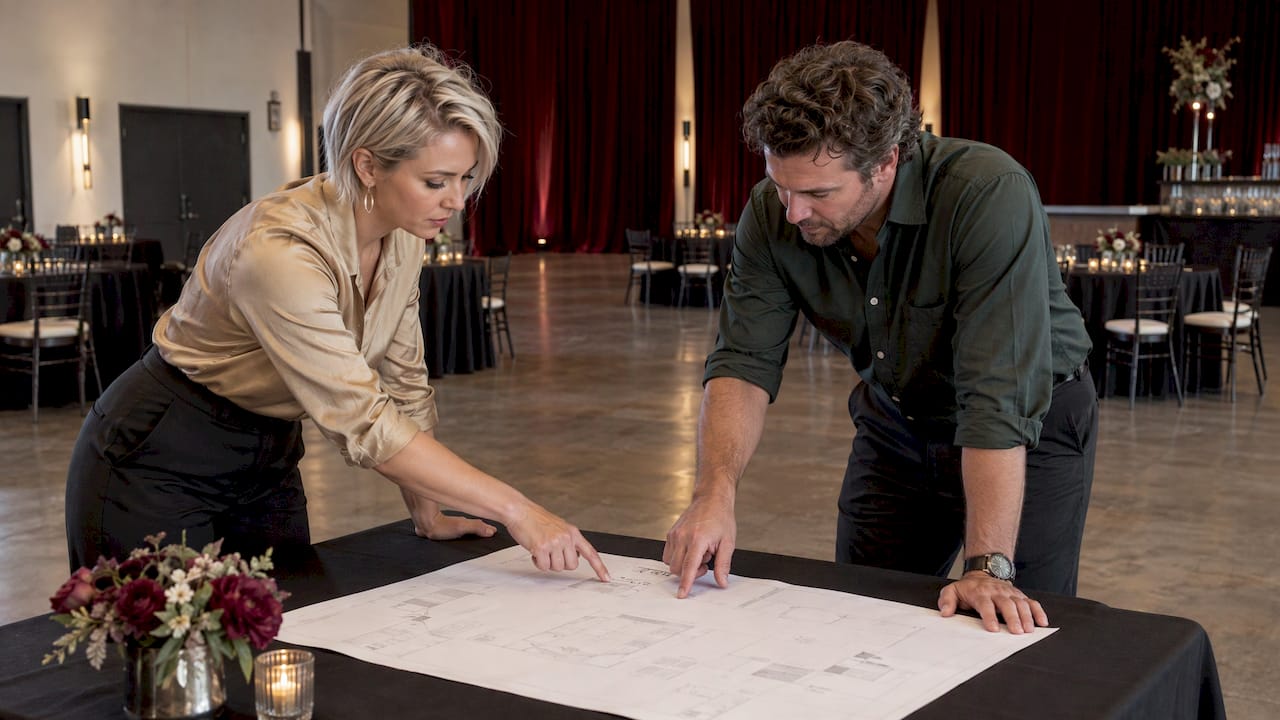
A workable bar staffing plan starts with one number: guests per bartender. For a full bar, plan about one bartender for every 40 guests, add one barback for every two bartenders, and build in extra paid hours for setup and breakdown. Then match the number of bars to where your guests will actually gather, and confirm the Las Vegas or Henderson permit and card requirements before you sign. We handle mobile bartending and liquor catering only in Las Vegas and Henderson, so the plan below is written for events in those two cities.
TL;DR
- Use roughly 1 bartender per 50 guests for beer and wine, 1 per 40 for a full open bar and 1 per 35 for cocktail-heavy, high-volume events.
- Add 1 barback for every 2 bartenders once the event runs past three hours, and expect billed hours to start well before your guests arrive.
- Place bars where guests gather (cocktail hour, reception entrance, dance floor), and keep queues out of walkways and exits.
- In Las Vegas, serving alcohol at a permitted event involves a special event alcohol permit, 21+ service and Alcohol Awareness Cards for staff.
- A signed package with a licensed bartending company turns the plan into a contract: staff, bars, stock and permits in one place.
Table of Contents
- Start with the ratio, then adjust for your event
- A worked example: 150 guests, five hours
- A corporate example: 160 guests, three hours
- Roles on a well-staffed bar
- Where the bars go
- Match the plan to the venue’s rules
- Build your own staffing plan in seven steps
- What is included in a bar package
- Perspective
- Let us build the plan with you
- FAQ
- Sources
Start with the ratio, then adjust for your event
The ratio is the backbone of any bar staffing plan. According to a published event staffing calculator, the usual figures are:
| Bar style | Guests per bartender |
|---|---|
| Beer and wine only | 50 |
| Full open bar | 40 |
| High-volume cocktail event | 35 |
The same source adds one barback (the person who restocks ice, glassware, garnish and bottles so the bartender never leaves the station) for every two bartenders at events longer than three hours.
Why do the numbers differ? A pour of beer or wine takes seconds. A shaken cocktail takes a minute or more, and a menu with six signature drinks slows every order. If your couple wants a custom cocktail menu, or your corporate client wants a branded drink, plan on the tighter ratio.
Four things that push the number up
- Short service windows. A cocktail hour compresses most of the first-round demand into 30 to 45 minutes. If guests all arrive thirsty at once, you want the extra hands there.
- Complex menus. Every extra ingredient, garnish or specialty glass adds seconds to each drink.
- Heat. Las Vegas summers and outdoor venues in Henderson mean faster consumption of water, ice and cold drinks. Ice use climbs, so barbacks matter more.
- Long events. Staff need breaks. A bar that runs six hours with no relief ends up with tired bartenders and slow lines in hour five.
If you are deciding between rounding down and rounding up, round up. One extra bartender costs far less than a 20-minute line at your own reception.
A worked example: 150 guests, five hours
Take a wedding with 150 guests, a five-hour reception and a full bar with two signature cocktails.
- Bartenders: 150 ÷ 40 = 3.75, rounded up to 4.
- Barbacks: one for every two bartenders, so 2.
- Total bar crew: 6 people.
Now the hours. The calculator source says agencies typically bill from crew call time, 1.5 to 2 hours before the event starts, through breakdown, 45 to 90 minutes after it ends, and that counting only event hours understates staffing cost by 25 to 35%. For a five-hour reception, that means roughly 7.25 to 8.5 paid hours per person, not 5.
If the same couple switches to beer and wine only, 150 ÷ 50 = 3 bartenders. If they add a champagne toast and a cocktail hour with a dedicated bar, the plan changes again, which is where bar placement comes in.
A corporate example: 160 guests, three hours
Corporate crowds drink differently from wedding crowds. Many guests arrive straight from work, queue in the first 45 minutes and then taper off. For 160 guests with a full bar, 160 ÷ 40 = 4 bartenders. With a three-hour event, a barback is optional by the guideline above, but for a networking mixer where lines hurt conversation, adding one still protects the experience. Our guide to networking event bar service covers how to space service points so people keep mingling rather than queuing, and our piece on corporate event guest count and bar planning walks through how headcount, RSVP drop-off and stock fit together.
Two corporate details often get missed:
- Open versus ticketed drinks. Drink tickets or a two-drink limit change the volume. Decide this before the staffing count, not after.
- Program timing. If a CEO speech or award segment runs at minute 45, bartenders should not be at their busiest during it. Mark the running order, then time bar rushes around it.
Roles on a well-staffed bar
Small events need two roles. Larger events need more.
- Lead bartender. Runs the station, sets pours and handles ID checks. Nevada’s legal age to serve, sell and pour alcohol is 21, and minors are not allowed in bars or taverns, so the lead should be someone who will hold the line on ID.
- Bartenders. Mix and pour.
- Barbacks. Restock ice, glassware, mixers and garnish, and clear empties.
- Supervisor. On events with three or more bars, one person who moves between stations and redeploys staff to whichever line is longest.
What you want is no one leaving a station to fetch ice. That single change shortens lines more than adding another person behind the bar.
Where the bars go
Staffing and placement are one decision. Two bartenders at the wrong spot do less than two at the right one.
Weddings usually need up to three service points:
- A cocktail hour bar near the ceremony exit, so guests are served within a minute of walking out.
- A main reception bar, away from the dance floor speakers so people can order without shouting, but visible from the seating area.
- An optional late-night or lounge bar, if the party runs long.
Our take on why cocktail hour needs bartenders explains why that first hour is the one worth staffing most heavily.
Corporate events work best with a bar near the entrance, to catch arrivals, and a second one deeper in the room to pull people through the space.
Some general rules hold anywhere:
- Keep queues clear of walkways, doorways and emergency routes.
- Put the bar close to, but not inside, the food area. Spreading food and drink stations around the room splits the crowd naturally, and these party setup and food station ideas show how guest flow changes when stations are spread out.
- Give every bar power, water access or ice storage within reach. A bar with a long ice run needs a barback more.
- Two smaller bars usually move guests faster than one big one, as long as each has its own backup stock.
If you are planning a bar for a large crowd, our high volume bar service guide for Las Vegas covers staffing and setup for peak demand in more depth.
Match the plan to the venue’s rules
Las Vegas and Henderson venues each have their own policies, and hotel ballrooms, private estates, parks and pool decks do not all work the same way. Staffing choices depend on them. Here is what the official sources say.
Permits and who must be on site
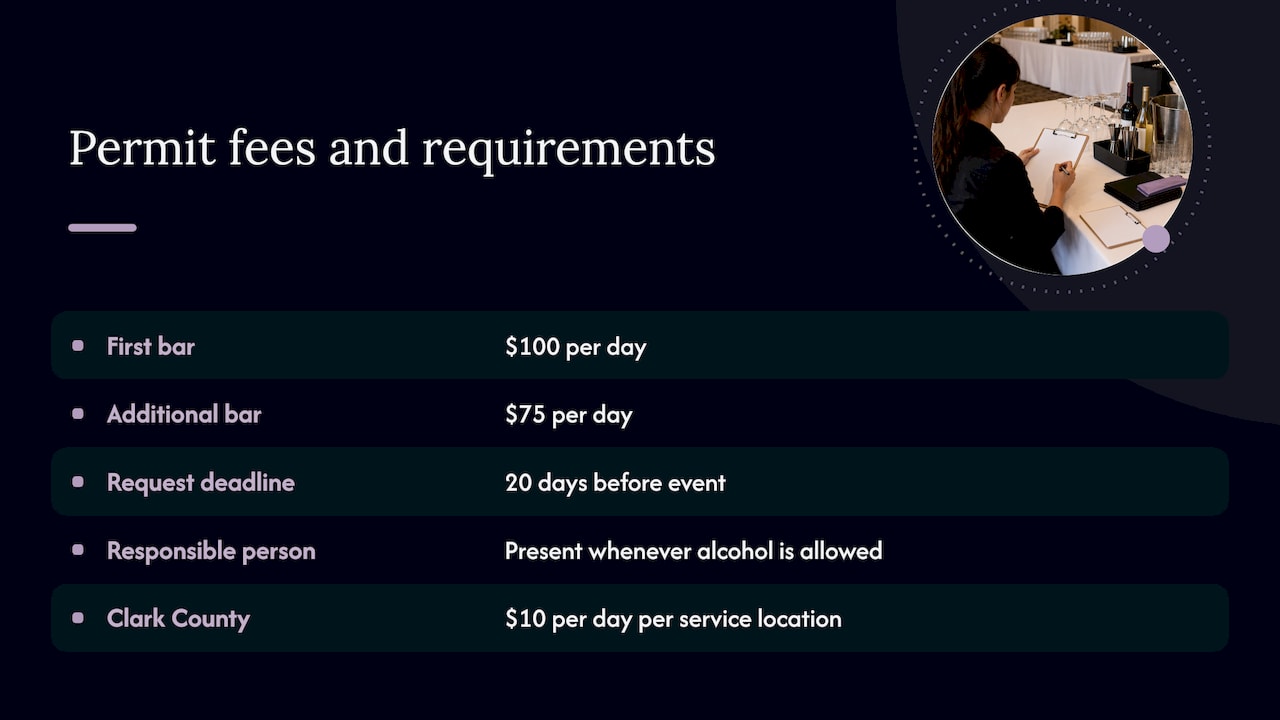
In the City of Las Vegas, a Special Event Alcohol Permit costs $100 for the first bar per day, plus $75 for each additional bar per day. It is issued together with an approved Special Event Permit and limits service to the premises and times on the license. This is why your bar count is also a cost decision: each additional bar adds to the permit fee.
The city’s time-limited alcohol license document says the license must be requested 20 days before the event. The person responsible on the license must be present whenever alcohol is allowed on the site and must hold a Work Card, Alcohol Awareness Card and Health Card. Service is restricted to guests 21 and older with an approved security plan.
For events in unincorporated Clark County, a liquor caterer permit is supplemental to special event permitting. The Clark County application form lists fees of $10.00 per day per liquor service location. Check with the issuing office for your venue’s current rules, since your venue may fall under a different jurisdiction than you expect.
Our own pages go deeper on specific situations: event alcohol permits in Las Vegas, permit rules for Las Vegas parks, pool events and private residences.
Parks need a staffing line on the site plan
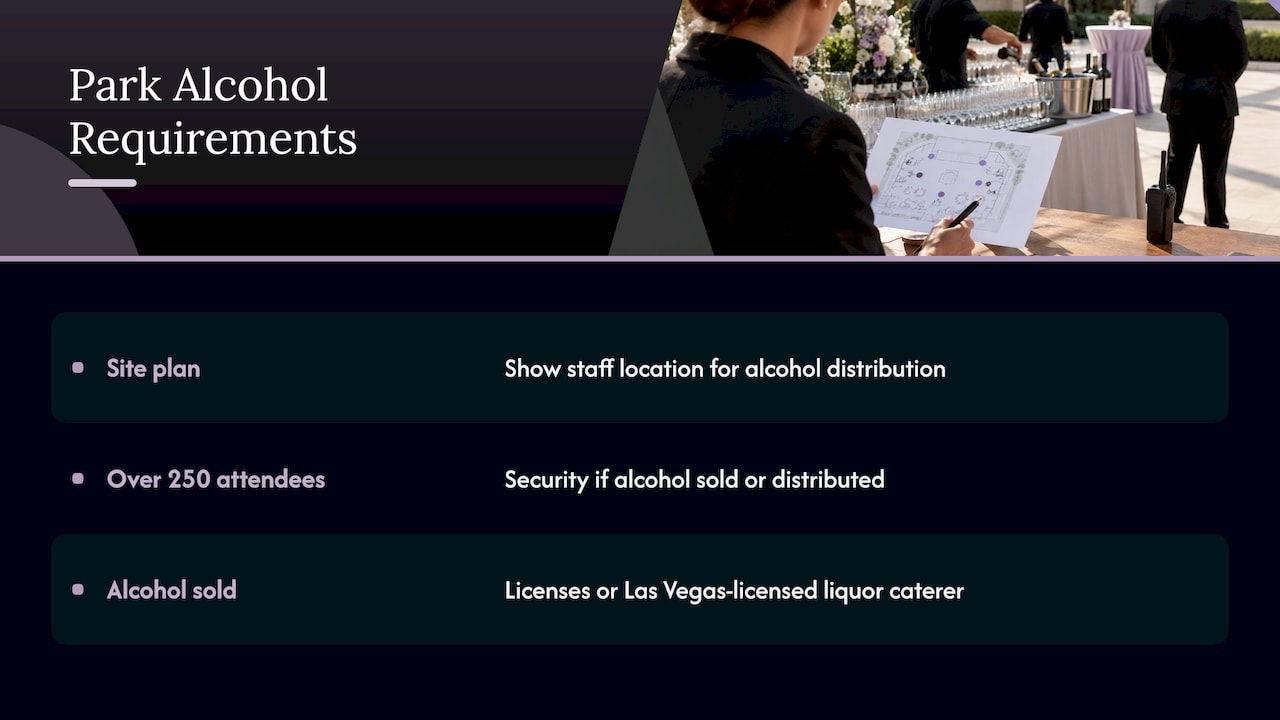
The City of Las Vegas park event handbook says that if alcohol will be provided, the site plan must show where staff will distribute it. For events with anticipated attendance over 250 where alcohol is sold or distributed, the same handbook calls for contracted security. When alcohol is sold, the permit holder either obtains the proper licenses or hires a City of Las Vegas licensed liquor caterer. So for a park wedding or corporate picnic, the bar staffing plan is part of the paperwork, not just a day-of detail.
Staff cards
Nevada requires alcohol awareness training, known as the ACT card, for people who serve alcohol in Clark County. Under NRS 369.630, bartenders, cocktail servers and food servers at alcohol venues need it. Whoever you hire, ask that every person on your bar crew holds a current card. A professional bartending company treats this as a baseline, not an extra.
Build your own staffing plan in seven steps
- Fix the guest count. Use the confirmed number, not the invite list. Corporate RSVPs drop off more than wedding RSVPs.
- Pick the bar style. Full bar, beer and wine, or a limited signature menu. This sets the ratio.
- Divide the guest count by the ratio. Round up.
- Add barbacks. One per two bartenders for longer events.
- Add hours. Count crew call, event and breakdown, not just the event.
- Place the bars. Match each to a gathering area and mark them on the floor plan.
- Confirm permits and cards. Match the number of bars to what your permit covers, and give the venue your staffing and security plan if it asks for one.
Doing all seven yourself means coordinating the bartenders, the barbacks, the stock and the paperwork across several vendors. That is where plans slip, and where a single provider helps.
What is included in a bar package
When you compare quotes, compare what each package actually includes. Our guide to what a bar package includes lists the usual items. At minimum, ask whether the quote covers:
- The number of bartenders and barbacks by role
- Setup and breakdown hours
- Bar equipment or bar rental
- Glassware, ice and garnish
- Permit handling
- Drink menu design and any bar branding
For weddings, a signed contract matters as much as the staffing count. Our wedding liquor catering contract checklist covers what to see in writing, and our wedding beverage catering guide for Las Vegas covers how drink service fits into the day.
Perspective
Most staffing plans fail in the same place: nobody owned the whole thing. A planner books bartenders, a caterer brings ice, a venue sets the bar rules, and no one checks that the numbers match the permit.
We run mobile bartending and liquor catering only in Las Vegas and Henderson, with over 20 years of experience behind it. That focus means we work to the Las Vegas municipal code, bring fully licensed and insured staff, and build turnkey packages so the bartenders, the bar and the menu arrive as one plan.
Our advice: decide the bar style first, round the bartender count up, and give the barback role as much thought as the bartender role. A bar that never runs out of ice or glasses moves faster than a bar with one more person on the pour.
Brennon
Let us build the plan with you
If you are planning a wedding or corporate event in Las Vegas or Henderson, we provide mobile bartending, liquor catering and bar rental with custom package options, bar branding and venue coordination. Tell us the date, venue and guest count, and we will turn the ratios above into a staffing plan for your event. See our wedding bartending services, our corporate event bartending or bar rental packages.
If you already have a venue with its own bar setup and only need qualified hands, our dry hire staffing puts professional bartenders behind your bar.
FAQ
How many bartenders do I need for 100 guests?
For a full open bar, 100 ÷ 40 gives 2.5, so plan for three bartenders. For beer and wine only, two is the usual figure at 1 per 50 guests. A cocktail-heavy menu or a short service window is a reason to move to the higher number.
How many barbacks do I need?
A common planning figure is one barback for every two bartenders at events longer than three hours. With four bartenders, that means two barbacks. They keep ice, glassware and garnish moving so bartenders stay at their stations.
Do bartenders in Las Vegas need a special card?
Yes. Clark County requires bartenders and other alcohol-serving staff to hold an Alcohol Awareness (ACT) card under NRS 369.630. For permitted events in Las Vegas, the person responsible on the license also needs a Work Card and Health Card. Confirm requirements with the city or county office that issues your permit.
How far ahead should I book?
For weddings and larger corporate events, book as soon as your date and venue are set, since permit requests in Las Vegas must be made 20 days before the event and the staffing plan feeds into that application. Bar rental and custom menus take additional lead time, so earlier is better.
Does the number of bars change the permit cost?
In the City of Las Vegas, a Special Event Alcohol Permit costs $100 for the first bar per day and $75 for each additional bar per day. Plan your bar count with that in mind, and see the city’s alcohol license page for current details.
Sources
- Free Event Staffing Calculator
- Las Vegas Parks Special Events Policies Handbook
- City of Las Vegas Alcohol Licenses and Related Business Licenses
- City of Las Vegas Time Limited Alcohol License
- Clark County Liquor Caterer Permit Application
- ServSafe Nevada key laws
- Nevada ACT Card guide
- Party setup and food station ideas