
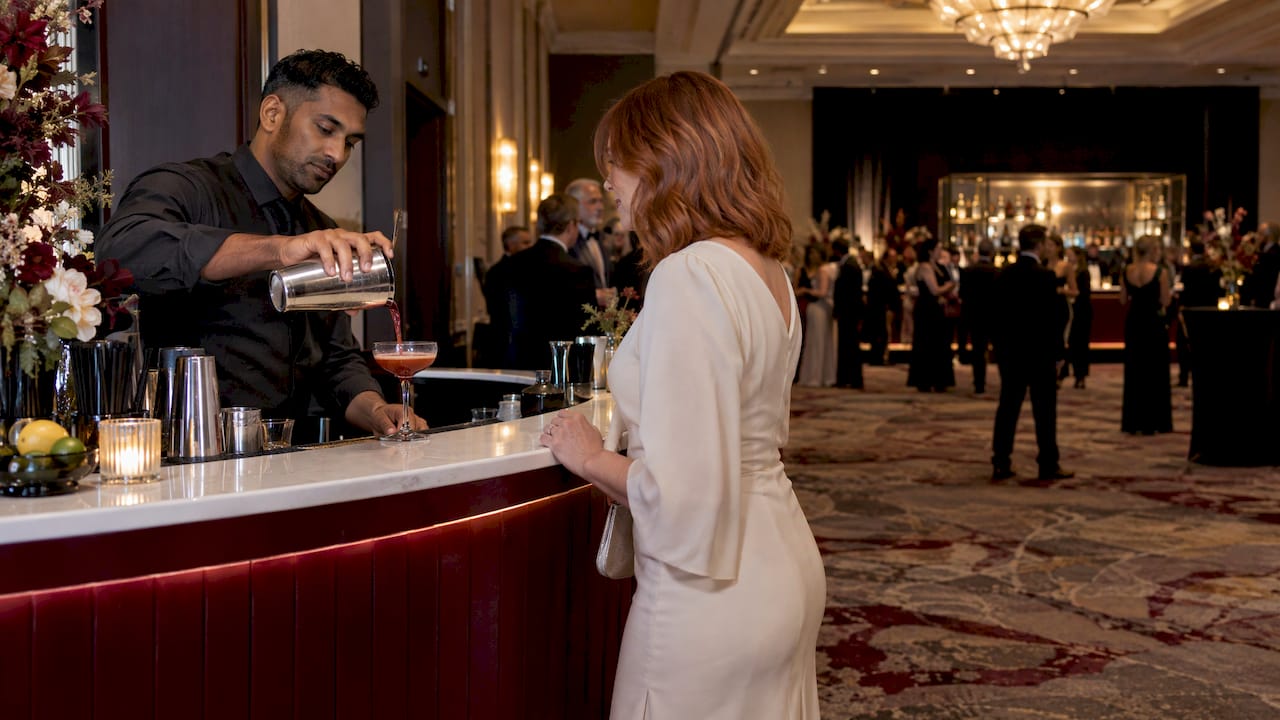
A satellite bar is a second, smaller bar placed away from your main bar so guests do not all queue in one spot. To set one up well, you decide what it serves, put it where guests naturally gather, stock it so it runs on its own, and staff it with its own bartender. In Las Vegas and Henderson, you also confirm that the permit for your event covers every bar location. This guide walks through each step, with the planning details we would want in front of us before a wedding or corporate event.
TL;DR
- A satellite bar is a second service point with a limited menu, placed to pull traffic away from the main bar.
- Put it where guests already gather (cocktail hour area, patio, lounge, near the dance floor) and never across a traffic route.
- Stock it to run alone: its own ice, chilled drinks, glassware or cups, garnishes, trash and power if needed.
- Give it its own bartender. A satellite bar without dedicated staff just moves the line.
- In Las Vegas, time-limited alcohol licenses must be requested 20 days before the event, and service is limited to the permitted location and hours.
Table of Contents
- What a satellite bar is and when it earns its place
- Why peaks, not averages, decide the number of bars
- Where to place a satellite bar
- What a satellite bar should serve
- Equipment and supplies checklist
- Setting up the bartender’s station
- Staffing the main and satellite bars
- Las Vegas and Henderson rules to check first
- A worked example: a 200-guest wedding in Henderson
- Common mistakes that slow a satellite bar down
- Our perspective
- Plan your bar setup with Liquid Courage
- FAQ
- Sources
What a satellite bar is and when it earns its place
Think of the main bar as the home base and the satellite as an outpost. The main bar carries the full menu. The satellite carries a shorter one and sits somewhere else in the space. Guests who would have waited ten minutes for a drink now have a closer, faster option.
It is not simply “another bar.” A full second bar needs a full second set of bartenders, stock and equipment. A satellite works because it is deliberately narrow: beer and wine, water and soft drinks, or a single signature cocktail. Because the menu is short, one bartender can keep it moving.
You should consider a satellite bar when:
- Your guest count is large enough that one bar creates a visible line at peak moments, such as right after the ceremony or when dinner service ends.
- The venue has distinct zones, such as a ceremony lawn, a cocktail terrace and a ballroom, and guests spend time in more than one.
- You are hosting a corporate event with a short networking window where everyone wants a drink at the same moment.
- The venue has a pool, patio or lounge that guests will drift to, and you want drinks to follow them.
If your event is small and the layout is one room, a single well-staffed bar is usually enough. If you are unsure, tell us your guest count, venue and timeline and we will tell you whether a second point of service will help. You can reach us through our mobile bartending and liquor catering page.
Why peaks, not averages, decide the number of bars
Most guests do not drink evenly across a four-hour reception. Demand bunches up: the first twenty minutes of cocktail hour, the moments after toasts, and the break between dinner and dancing. A bar that looks fine on paper for 150 guests can still produce a long line when 100 of them walk up in the same half hour.
That is why we plan around the busiest window rather than the total event length. Ask yourself:
- When will the most people want a drink at once?
- Where will they be standing when that happens?
- How far will they have to walk to get one?
The answers tell you where a satellite bar belongs. If the busiest moment is cocktail hour, the satellite goes at the cocktail space. If it is the dance floor after dinner, it goes near the dance floor. Our guide on why cocktail hour needs bartenders covers that first rush in more detail.
The same logic applies to headcount planning generally. Working from your guest list and menu, rather than from a flat number, is the idea behind planning by guest count, which applies to anything you serve at an event, not only candy.
Where to place a satellite bar
Placement is the part that makes or breaks the setup. A well-stocked satellite in the wrong spot is ignored or, worse, creates a new jam.
Put it where guests already are
Common locations are a cocktail-hour space, a patio, a lounge area, a VIP section or the edge of a dance floor. The goal is to meet guests where they naturally stand, so they do not cross the whole venue for a drink. For ideas on how the layout of a space changes guest flow, this planner’s guide to adding bars for guest flow shows the same principle in a very different venue.
Keep it out of traffic routes
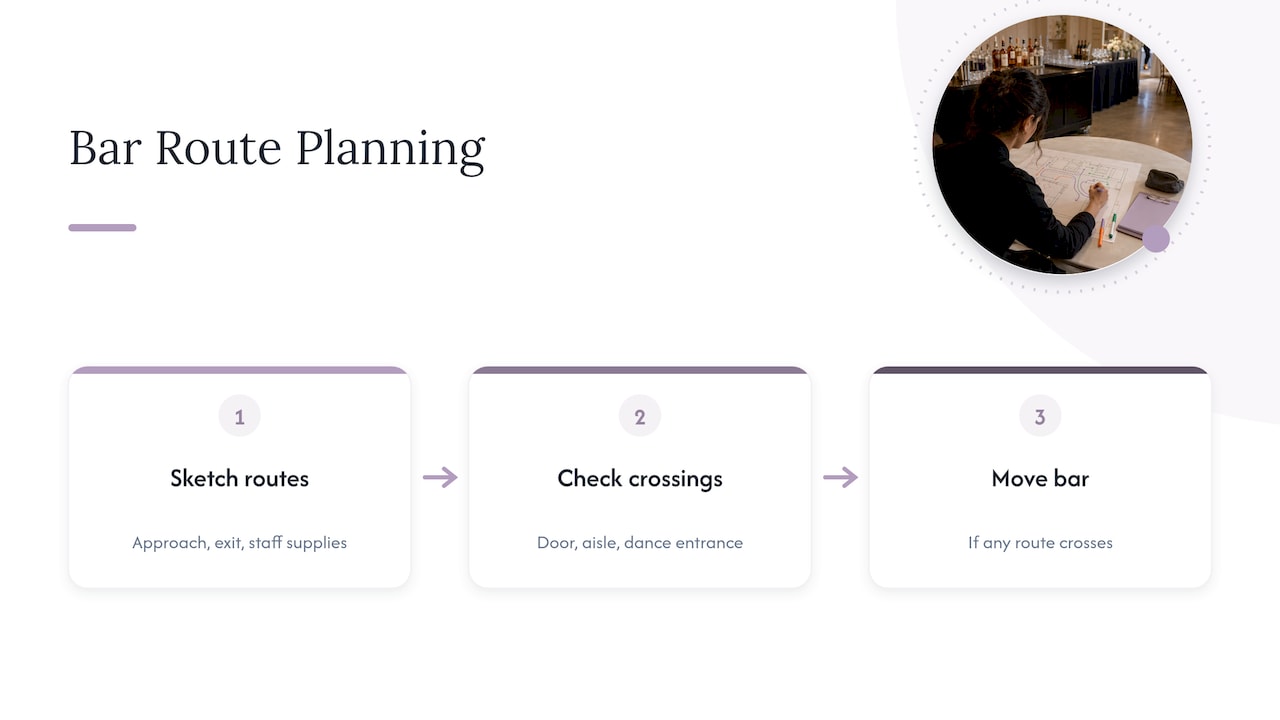
Before setup, walk the space and sketch three routes: a guest approaching the bar, a guest leaving with a drink, and a staff member moving supplies. If any of those routes crosses a dance-floor entrance, a dining aisle or the main door, move the bar. A bar that blocks a doorway will feel crowded even when it is not busy.
Space it away from the main bar
If the two bars sit side by side, you have just built one large bar. Put real distance between them, ideally out of each other’s sight lines, so guests choose the closer one rather than the one they can see with a shorter line.
A common three-point arrangement
For larger weddings, a layout we often see is three service points: one at the cocktail-hour space, one as the main reception bar and one satellite for the second half of the evening. The cocktail-hour bar can be moved or broken down after that part of the event, and the satellite takes over the overflow later.
| Location | Best for | Suggested satellite menu |
|---|---|---|
| Cocktail terrace or patio | First-rush guest flow | Signature cocktail, wine, water |
| Beside the dance floor | Late-evening refills | Beer, seltzers, water, soft drinks |
| Lounge or VIP area | Guests who stay seated | Wine, beer, one featured cocktail |
| Poolside or outdoor space | Guests moving in and out | Cold drinks, water, simple mixed drinks |
The table shows starting points, not rules. Your venue and your guest list shape the final plan.
What a satellite bar should serve
The discipline that makes a satellite work is a short menu. Typical options are:
- Beer, wine and water only. The easiest to run and the fastest to serve.
- One signature cocktail plus the basics. Guests get the drink the couple or company chose, without a bartender needing every ingredient in the house.
- Pre-batched drinks. A spritz or punch-style cocktail prepared ahead can be poured quickly.
- Non-alcoholic options. Always include good ones. Sparkling water, a mocktail or a craft soda keeps non-drinkers and drivers happy, and it keeps the line at the alcohol bar shorter.
The main bar handles everything else: full cocktails, anything built to order, anything that needs a larger back bar. When guests learn that the satellite is fast and the main bar has the full list, they sort themselves.
If you want a menu that fits your theme, our wedding events in Las Vegas service includes custom menu and bar branding options, so the satellite can carry the same look as the main bar.
Equipment and supplies checklist
A satellite bar should be able to run for the whole event without a bartender leaving to restock. A good mobile-bar equipment list from Toast includes a portable bar, drinkware, shakers, jiggers, strainers, muddlers, refrigeration or coolers, ice bins, speed rails, storage, mixers, garnishes, cutting boards, a menu display, handwashing equipment, cleaning supplies and power. Here is how we group it for a satellite:
The bar itself
- A portable bar or bar top with a stable, level surface
- Storage underneath or behind for backup stock
- A menu sign so guests know what is on offer without asking
- A trash and recycling spot within the bartender’s reach
Ice and cold storage
Ice is the item people most often underestimate. Keep drinking ice separate from ice used to chill bottles and cans. Chill beer, white wine and water well before the doors open so the first guests do not get a lukewarm drink. Removable ice bins and coolers make refilling easier and keep melting water away from the working surface.
Tools and speed access
Only stock the tools the short menu needs. A satellite serving beer, wine and one cocktail does not need a full set of muddlers and every specialty spirit. Speed rails keep the high-demand bottles at hand.
Glassware or cups
Check what the venue allows before you decide. Some venues, pools and outdoor spaces restrict glass, and Toast suggests considering shatterproof or disposable cups in those cases, with glass racks for safe transport and storage when glass is allowed. Ask about this early. It changes your order and your look.
Garnishes and mixers
Pre-cut garnishes, stored in a covered container, and measured mixers keep the signature drink consistent from the first pour to the last.
Power and water
If you plan to use blenders, lights or a refrigerated unit, confirm there is power at the spot you picked. Satellite locations such as a lawn or terrace corner are often the ones with no outlet nearby.
Setting up the bartender’s station
What happens within arm’s reach matters more than how big the bar looks. Bols describes a bar station as a production cell and recommends keeping ice, high-volume spirits, modifiers and essential tools within a 24 to 36 inch primary reach zone. The practical point for a satellite: the bartender should be able to make the most common drink without taking a step.
A simple way to set it up:
- Put ice and the fastest-moving item at the bartender’s strongest hand.
- Place the second most popular item next to it.
- Keep garnishes and mixers in the next reach zone.
- Put backup stock below or behind, not on the work surface.
- Leave a clear spot for the guest to take the drink, away from where the bartender is pouring.
That last step is easy to forget. If guests lean over the work area, service slows for everyone.
Staffing the main and satellite bars
A satellite bar does not mean fewer bartenders. It means bartenders are spread across more points. Each satellite needs its own person, and busy periods may call for a second pair of hands at the main bar.
The number you need depends on four things:
- The menu. Beer and wine move faster than cocktails built to order. A cocktail-heavy menu needs more staff for the same guest count.
- The timeline. A short cocktail hour needs more people at once than a long, relaxed evening.
- The venue layout. Bars far apart cannot share staff or supplies easily.
- The guest mix. Some groups drink more than others, and corporate events with a set networking window behave differently from a wedding.
For larger events, we also recommend thinking in roles rather than only headcount: someone who makes the drinks, someone who restocks ice and clears glassware, and someone who keeps the line moving. Even a satellite with one bartender benefits from a runner who can refill ice and swap empty bottles.
Our dry hire staffing option works well when you want to provide the alcohol yourself and need professional bartenders to run each point of service. For an overview of what is typically included in a bar offering, see what a bar package includes.
Las Vegas and Henderson rules to check first
The layout is a creative decision. The permit is not. Rules vary by city, venue and whether alcohol is sold or served, so confirm everything with the licensing office that covers your venue. Here are the points that matter most for a second bar.
Time-limited alcohol licenses
The City of Las Vegas states that time-limited alcohol licenses must be requested 20 days before the event and need an approved Special Event Permit. Build that lead time into your planning before you finalize the number of bars.
Service location and hours
The same city document limits service or sale to the times and location specified, restricts service to the permitted premises, requires service to people age 21 and over, and requires the responsible party to remain present. That matters for a satellite bar because it is another service point. If your permit describes one area and your satellite sits in another, you could have a problem. Tell the licensing office about every bar location when you apply, and make sure each one falls inside the permitted premises.
Staff training
The Nevada alcohol-awareness requirement means staff who handle alcohol need a TAM Card, according to this summary of Nevada mobile bartending laws. Whoever you hire for the satellite bar should hold one. Ask your bartending company to confirm this for every team member.
Dry hire and permits
The same summary says that in a dry hire arrangement, the host buys and owns the alcohol while the company supplies bartending labor, equipment and supplies, and no liquor license is required if the company does not sell alcohol. Because requirements can differ by venue, check with your venue and the licensing office, and read our guidance on avoiding doubled permit fees for dry hire venues.
More of our permit guidance may apply to your event:
- Event alcohol permits in Las Vegas
- Pool event alcohol rules, useful if your satellite bar will be near water
- Private residence alcohol permits in Nevada
- Alcohol service hours
A worked example: a 200-guest wedding in Henderson
This is a planning illustration, not a client case. Suppose a couple is hosting 200 guests, with a ceremony on a lawn, cocktail hour on a terrace and dinner in a ballroom.
- Cocktail terrace: A satellite bar serves a signature spritz, wine and water. This is where guests arrive thirsty and all at once.
- Ballroom main bar: The full menu is available here, including cocktails built to order.
- Dance-floor satellite: A short menu of beer, seltzers, water and soft drinks opens after dinner so dancers do not leave the floor for long.
- Staffing: Each service point has its own bartender, with a runner moving ice and supplies between them.
- Permit: The licensing application lists the terrace, ballroom and dance-floor locations, and the lead time is respected.
Notice how the two satellites are limited in what they serve. That is what makes them fast.
Common mistakes that slow a satellite bar down
- A menu that is too long. If the satellite offers everything, it is just a small main bar.
- No dedicated bartender. Borrowing from the main bar leaves both short-handed.
- Poor placement. A bar tucked in a corner that guests have to hunt for goes unused, and one in a doorway causes a jam.
- Underestimating ice. Running out is the fastest way to stop service.
- Ignoring load-in. Satellite equipment still needs a path, a time slot and an access point. Our load-in logistics templates help here.
- Forgetting the permit. Each bar location needs to be within the permitted premises.
Our perspective
We have set up bars for weddings, corporate events and private parties across Las Vegas and Henderson, and the pattern is consistent: the line you see at the bar is almost always a layout problem before it is a staffing problem.
Our approach is to walk the venue with the planner, find the three or four places guests will naturally gather, and decide which of them earns a service point. We then match the menu to the spot. A fast, focused satellite beats a second full bar nearly every time.
Because we work only in Las Vegas and Henderson, we plan around local municipal code from the start rather than treating it as an afterthought. Our packages are turnkey and customizable, so the bar branding, the menu and the staffing can all be matched to the same event.
If you are weighing a second bar, send us your guest count, venue and schedule, and we will tell you plainly what we would build.
Brennon
Plan your bar setup with Liquid Courage
We provide mobile bartending, liquor catering and bar rental packages for weddings, corporate events and private parties in Las Vegas and Henderson, with custom menus, bar branding and venue coordination. Whether you need one bar or a main bar with satellites, we help you decide how many service points your event needs, then handle the setup.
Explore our bar rental packages, see how we handle corporate events, or read how mobile bar setup works before you reach out through our home page.
FAQ
What is a satellite bar?
A satellite bar is a second, smaller bar placed away from the main bar to reduce lines and spread guests around the venue. It usually serves a limited menu, such as beer, wine, water or one signature cocktail. Because the menu is short, a single bartender can keep it moving.
How far should a satellite bar be from the main bar?
Far enough that guests naturally choose the closer one, and ideally out of sight of the main bar. Place it where people already gather, such as a cocktail space, patio or lounge, and keep it out of doorways, dining aisles and dance-floor entrances. Walk the venue before setup and sketch the guest and staff routes.
Does a satellite bar need its own bartender?
Yes. Each service point works best with its own bartender, and a runner who restocks ice and clears glassware helps for larger events. The exact number depends on your menu, timeline and venue layout.
Do I need a separate permit for a satellite bar in Las Vegas?
City documents restrict alcohol service to the permitted premises and times, so each bar location should be inside the area your permit covers. List every bar location when you apply, and request a time-limited alcohol license at least 20 days before the event. Confirm the details with the licensing office for your venue.
What should a satellite bar serve?
Keep it simple: beer, wine, water and soft drinks, or one signature cocktail. Always offer a good non-alcoholic option. Leave the full cocktail list to the main bar.
Sources
- Toast: Mobile bar equipment list
- Bols: Engineering the profitable bar, station design and workflow
- City of Las Vegas: Special Event Time-Limited Alcohol License
- Nevada mobile bartending laws, TAM cards and licensing