
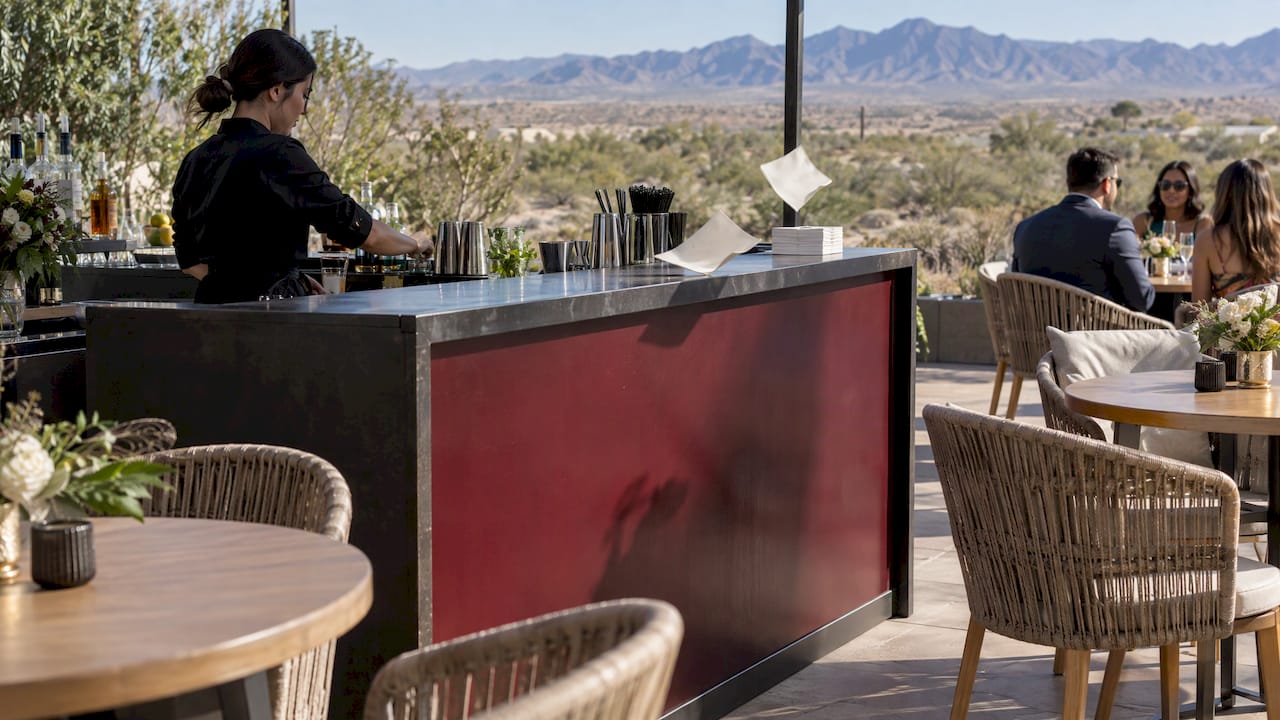
Managing wind at an outdoor bar comes down to four decisions: where the bar sits, what shelters it, how everything on it is secured, and who has the authority to pause service when gusts climb. Make those calls in writing before event day. Then a windy afternoon in the Las Vegas valley becomes a schedule change, not a scramble.
We are a mobile bartending company that works only in Las Vegas and Henderson, so this guide is written for planners, couples and corporate hosts in those two cities.
TL;DR
- Wind in the valley can be strong enough to move bars, signs and light tents. Recent gusts at local airports reached the low-to-mid 50s mph.
- Put the bar where the wind is least direct, use partly open windbreaks rather than solid walls, and keep the bartender’s back to the shelter.
- Weigh down or tie off everything light: napkins, menus, signs, linens, garnish trays and glassware.
- Write a wind trigger into the run of show: the condition, the deadline, the action and one named decision maker.
- Light tents and umbrellas are the first things to take down in gusty conditions. Follow the installer’s written wind limit, not a rule of thumb.
Table of Contents
- What wind to expect in Las Vegas and Henderson
- Place the bar and seating before you buy any screens
- Windbreaks, screens and tents: what actually helps
- Securing the bar itself
- Keeping guests and bartenders comfortable
- Decide the wind trigger in advance
- Perspective: why we plan wind like a staffing problem
- How we can help
- FAQ
- Sources
What wind to expect in Las Vegas and Henderson
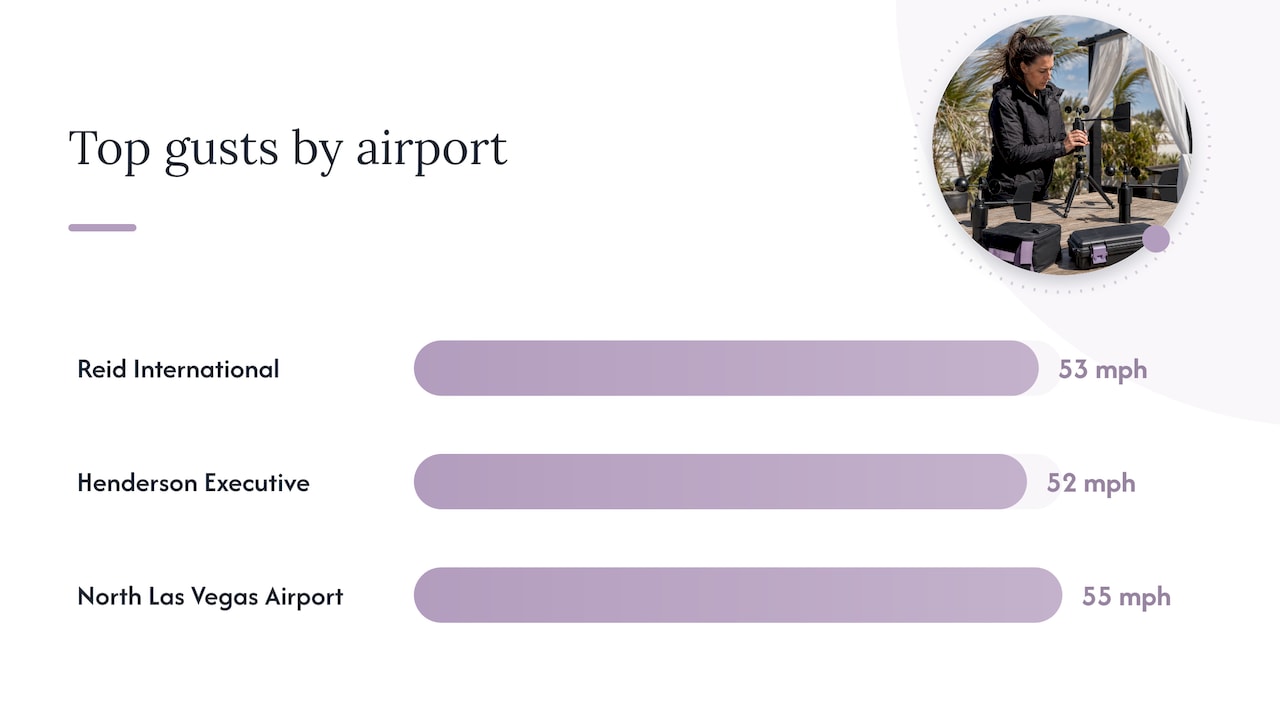
The valley is open desert, and wind arrives with little warning. In April 2026, Reid International recorded a top gust of 53 mph, Henderson Executive Airport 52 mph and North Las Vegas Airport 55 mph. Those are not storm numbers from some rare event. They are the kind of day that knocks over a signage easel and sends cocktail napkins across a pool deck.
The National Weather Service Las Vegas office issues Wind Advisories for the region, including Southern Clark County, and posts them on its active wind advisory feed. Bookmark it. Spring brings the most obvious windy days, but fall fronts can do the same, so do not treat wind as a one-season problem.
Prevailing winds in the valley typically come from the southwest, according to a local cooling guide for outdoor events. Treat that as a starting assumption when you walk a site, then confirm the actual direction on the day.
Assign a weather watcher
The National Weather Service advises event planners to designate a weather watcher who monitors forecasts and current conditions and keeps a continuous watch on event day. Give that job to one person, not “whoever is nearby.” Their tasks:
- Check the forecast 48 hours out, then again the morning of the event, focusing on gusts as well as sustained speed.
- Watch live radar and local observations during setup and service.
- Report to the decision maker named in your wind trigger, using the numbers your plan sets.
The common advice is to activate backup plans 24 to 48 hours before an event when weather calls for a change. For a bar, that is the window to confirm tent options, indoor space and staffing changes.
Place the bar and seating before you buy any screens
Placement costs nothing and does more than any accessory. Walk the site at the same time of day as the event if you can.
- Use existing shelter. A building corner, a wall, a planter line or a partial screen creates a calmer zone. Garden-design guidance suggests turning the backs of seating toward the wind and sheltering that edge. For a bar, that means the guest queue can face the wind less directly and the bartender works with the wind at the side or back, not blowing across the rail.
- Keep the back bar tight. Bottles, ice bins and garnish stations belong on the sheltered side, with the guest-facing rail on the open side only if the setup is heavy enough to stay put.
- Do not block the exits. Wind screens must not trap the queue or block the path for load-in and load-out. Our guide to bar station layout for Las Vegas events covers footprint, spacing and permit timing, and our load-in logistics templates help you schedule deliveries so heavy items arrive first.
- Think about heat as well. A sheltered spot in the Vegas summer can be hot and still. Cross-ventilation matters in tented events, so sheltering one side and leaving another open often beats sealing the space.
Windbreaks, screens and tents: what actually helps
Partly open beats solid
A solid wall seems logical, but wind behaves a lot like water. Solid barriers can create eddies and downdrafts on the sheltered side, while barriers that let some air pass bleed off pressure and leave a calmer zone. The same source suggests a screen at least 5 to 6 feet tall for seating, with options such as retractable shades, outdoor curtains, slatted screens and evergreen plantings.
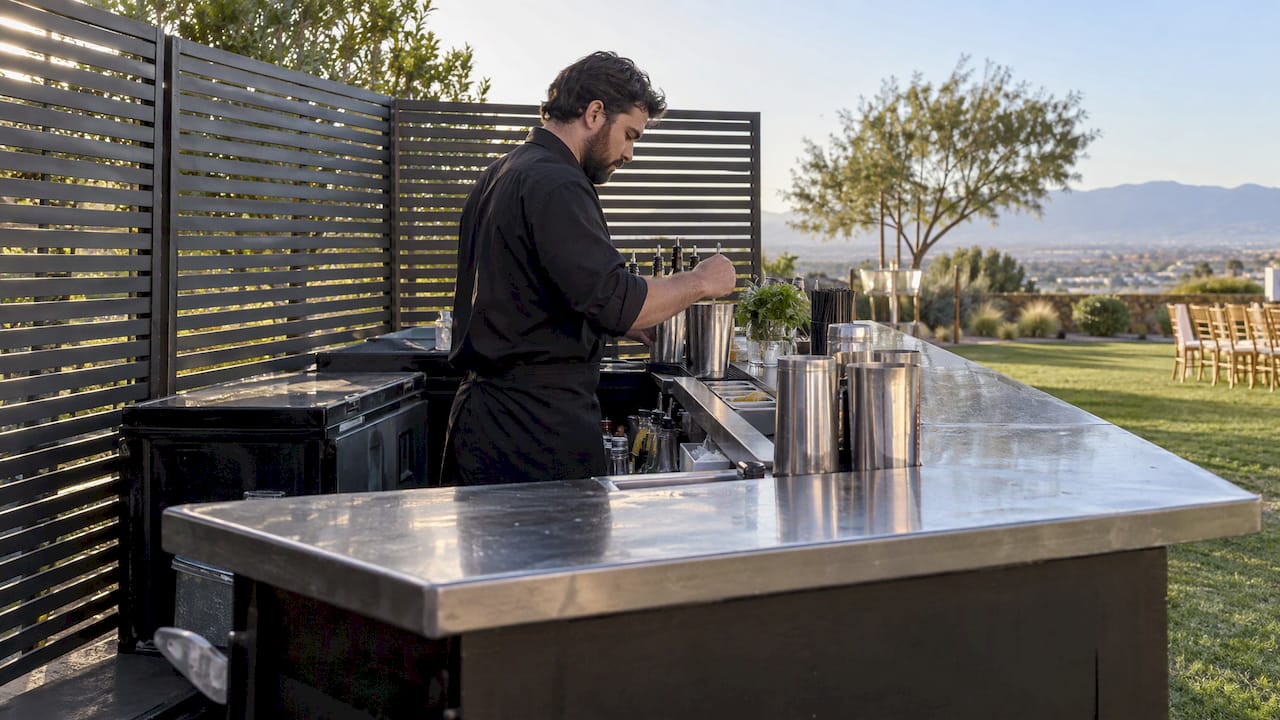
For a bar, a slatted or perforated panel behind the bartender with the open side facing the wind gives the most calm per dollar. Clear panels keep sightlines for a ceremony or a view of the pool.
Read the rating, not the brochure
Every screen and structure has a rated limit, and it changes with how it is installed. Two examples show why you cannot guess:
- A commercial four-post shade structure is rated for 105 mph with fabric attached and up to 150 mph without, and both mounting styles require reinforced concrete footings. That is a permanent installation. A pop-up on a pool deck has none of that.
- An all-aluminum commercial screen system lists ratings of 12 to 31 psf for 1/8-inch panels and 31 psf for 3/16-inch panels, with higher adjusted ratings depending on post and height. Ratings depend on the exact configuration.
The lesson for a planner: ask the venue or rental company for the written rating of whatever is on site, and how it was anchored when it was rated.
Temporary structures follow a standard
For tents, stages and other temporary outdoor structures, the industry standard is ANSI E1.21. It allows a reduced design wind speed of not less than 40 mph (3-second gust) when mitigation actions are carried out within a validated time period, and requires engineering documentation to state operating limits. One structural engineering firm explains that the standard lets operation plans reduce design wind loads when winds exceed 40 to 50 mph by evacuating the area or lowering vertical walls.
Plain-language version: a tent is only as safe as its written weather procedure. Before an event, confirm anchoring or engineered ballast, permitting requirements and the installer’s written weather procedure. If a tent is on site, the bar’s wind plan must match the tent installer’s plan, including who lowers sidewalls and when.
Securing the bar itself
Most wind trouble at a bar is small and fast: a menu card tumbling, a linen lifting, a glass sliding. Wedding planners recommend double-checking that glassware and signs are anchored when a bar is part of a windy setup. Here is how we approach each category.
| Item | Wind problem | What to do |
|---|---|---|
| Signage and menu boards | Easels tip, hanging signs swing | Use weighted bases or wall-mounted boards, and keep signs low and compact. See our bar signage ideas for formats that stay put. |
| Linens and skirting | Lift, flap, catch on bottles | Use fitted or clipped linens, weights in hems and short drops. |
| Napkins, stirrers, straws | Blow away | Hold them in weighted dispensers or lidded containers. |
| Glassware | Slides, tips, breaks | Keep it in racks or trays, stock the front rail lightly, and use sturdier barware when gusts are likely. |
| Garnish and ice | Dry out, blow away | Use lidded containers, and keep ice in covered bins. |
| Decor (florals, candles, lanterns) | Topple, open flames go out | Use heavy vessels or enclosed lanterns and avoid anything tall. |
| Bar structure | Panels act like sails | Use ballast and, where the venue allows, stakes or ties rated for the surface. |
A few habits make the difference:
- Load the bar in layers. Heavy items first, light items last, and only what is needed for the next hour on the front rail.
- Keep a restock cart sheltered. Extra glassware stays boxed until needed.
- Pre-batch when wind is forecast. Fewer open containers and fewer small ingredients out on the rail. Our guide to faster bar service with batch cocktails shows how.
- Check the safety basics. Our bar safety checklist for Las Vegas and Henderson events is a good companion when wind adds hazards such as broken glass or tipped equipment.
Keeping guests and bartenders comfortable
The most comfortable range for outdoor dining is cited as 60°F to 75°F, and wind over 20 mph may be problematic. The same source says windbreaks and partitions can create sheltered areas, while umbrellas and light tents should be avoided in gusty conditions because they can be a safety risk or cause damage.
For cool desert evenings, layering helps. One outdoor-season guide argues that overhead cover alone leaves a gap and suggests combining overhead protection with side screens for lateral wind and infrared heaters for temperature. The same guide explains that infrared heaters warm people and objects directly, while conventional patio heaters warm air that disperses outdoors, so infrared units suit breezy spaces better. Check venue rules and fire permissions for any heater before you order.
For bartenders, comfort is also function. Plan for:
- Shade and shelter at the station, with the screen at their back.
- Water for staff. See our event water service checklist and the guide on whether a bar rental needs its own water supply.
- Servicewear that holds up outdoors, plus a backup kit. Our bartender dress code guide lists what to pack.
Decide the wind trigger in advance
The hardest weather call is not what Plan B is, but when to execute it. One event production team suggests a usable trigger has four parts: the condition, the deadline, the action and the owner, all written into the run of show. We apply the same structure to wind.
A sample bar wind trigger (adapt to your venue and structures):
| Part | Example |
|---|---|
| Condition | Sustained wind or gusts above the structure installer’s written limit, or any gust that moves the bar, signs or glassware |
| Deadline | Decision 2 hours before guest arrival, with a recheck every 30 minutes during service |
| Action | Lower sidewalls, remove signs and decor, shift to plastic or sturdy barware, pause service, or move the bar indoors |
| Owner | One named person with authority, such as the planner or venue manager |
Two cautions on numbers. First, there is no universal wind threshold: safety rests on engineering specifications and manufacturer ratings, not generic rules. Second, the same source says that after a wind-related stop, activity should not resume until wind speeds stay below trigger thresholds for at least 30 minutes, or a professional meteorologist approves. Build that wait into your plan.
A practical ladder many planners use, always overridden by the installer’s limits:
- Adjust: secure items, lower the front stock and add weights.
- Shelter: close the windward sidewalls or move the bar behind the screen.
- Pause: stop service and clear glassware from the rail, especially if a tent or canopy is moving.
- Relocate: move the bar indoors or under a rated structure.
Our copyable backup bar plan walks through the permit steps for moving or changing a bar setup in Las Vegas.
Perspective: why we plan wind like a staffing problem
We have worked bars in Las Vegas and Henderson long enough to know that wind rarely ruins an event on its own. What ruins it is a bar built for calm weather and a team with no plan.
Our approach is to treat wind as part of the package, not an add-on. A customized bar with the right weight, a layout that puts the bartender on the sheltered side, and branding that mounts securely all keep service moving when the breeze picks up. As a fully licensed and insured company, we also work within Las Vegas municipal code, so any change to the setup has to be one the venue and the permit allow.
We would rather talk through your wind trigger during planning than improvise at the bar. Tell us the venue, the structures and who makes the call, and we will build the bar and staffing around it.
Brennon
How we can help
If your event is outdoors, we can build wind into your bar from the start. Our bar rental packages include custom bars and branding options, and our team handles venue coordination across Las Vegas and Henderson. Couples can see how we approach wedding bars in Las Vegas, and planners can look at corporate event bartending.

For an outdoor wedding, our outdoor wedding bar checklist pairs well with this guide. When you are ready, contact us about mobile bartending and liquor catering and tell us your venue and date.
FAQ
How windy is too windy for an outdoor bar?
There is no single number. Dining guidance flags wind above 20 mph as potentially problematic, and structure engineering uses 40 mph or higher design thresholds with written mitigation plans. Your limit is whichever is lowest among the tent installer’s stated limit, the venue’s rules and what your bar can safely hold.
Should I use a solid windscreen behind the bar?
Usually a partly open screen works better. Solid barriers can create eddies and downdrafts on the sheltered side, while a slatted or perforated panel lets some air through and leaves calmer air behind it. Make sure any screen is anchored and rated for the surface.
Can I use a pop-up tent or umbrella over the bar?
Only in calm conditions. Umbrellas and light tents should be avoided in gusty weather because they can cause damage or injury. If a tent is part of the plan, ask the installer for the anchoring method and written weather procedure first.
When should I decide to move the bar indoors?
Set the decision 24 to 48 hours ahead for the plan, then confirm on event day. Name one person with authority and write the trigger into the run of show, so no one debates it at the bar.
Sources
- National Weather Service Weather Watcher Guide
- Las Vegas Review-Journal: strong winds in the valley
- National Weather Service wind advisory feed
- Outdoor Event Cooling Guide Las Vegas
- Backup plans for outdoor events
- Windy Patio Layout Ideas
- Patio Windbreak Ideas
- Four Post Square Hip Shade Structures
- Lunar Screen System data sheet
- ANSI E1.21-2020 temporary structures
- Temporary structure design, Schaefer
- Outdoor Event Rain Plans
- Handling windy weather on a wedding day
- The Patio Playbook for Outdoor Dining
- Extending an outdoor season
- Outdoor Event Weather Safety guide