
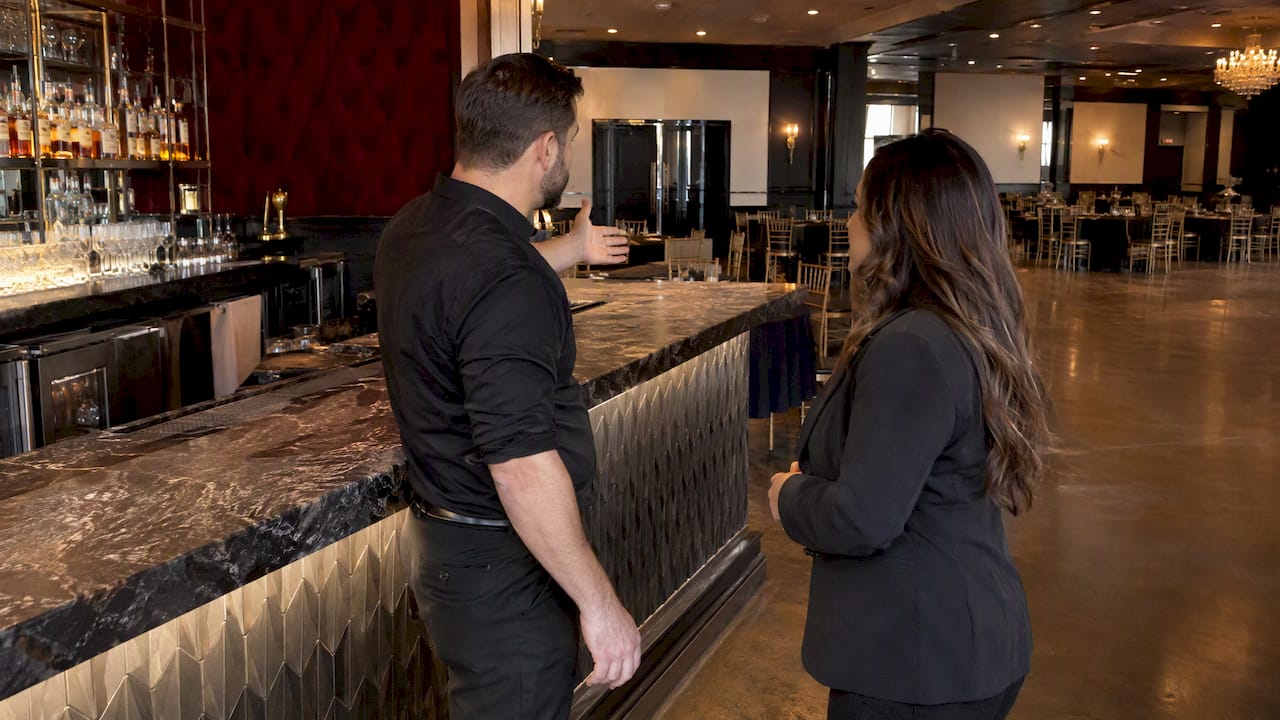
Venue bar coordination in Las Vegas comes down to one early question: does your venue allow an outside bar provider, and under what conditions? Resorts often keep all alcohol service in-house. Independent venues and private spaces usually allow outside bartenders, but they ask for licenses, insurance and approvals first. Once you know which kind of venue you have, the rest is a checklist of permits, staffing, costs and load-in details that you can settle weeks ahead.
This guide walks through that checklist for weddings, corporate events and private parties in Las Vegas and Henderson.
TL;DR
- Ask the venue first whether outside alcohol service is allowed. Some Las Vegas resorts are the only party permitted to sell and serve liquor on their property.
- Nevada and Clark County rules can require a liquor caterer permit, and the application deadline is measured in days before the event, so do not leave it for the last week.
- Get insurance sorted early. Venues commonly require a certificate naming them as co-insured, and some public spaces specify liquor liability limits.
- Agree in writing on bartender counts, service hours, setup and breakdown windows, and every fee, including service charges and sales tax.
- Henderson city facilities and parks do not allow alcohol, so confirm the exact location before you plan a bar.
Table of Contents
- Start with the venue type
- Questions to ask the venue before you book a bar
- Permits and licenses that may apply
- Insurance, liability and who is responsible
- Staffing, setup and breakdown
- Costs, minimums and what the agreement should say
- Planning the bar around the venue’s rules
- A coordination timeline
- Perspective
- How Liquid Courage handles venue coordination
- FAQ
- Sources
Start with the venue type
Las Vegas venues fall into three groups, and each one changes how you coordinate a bar.
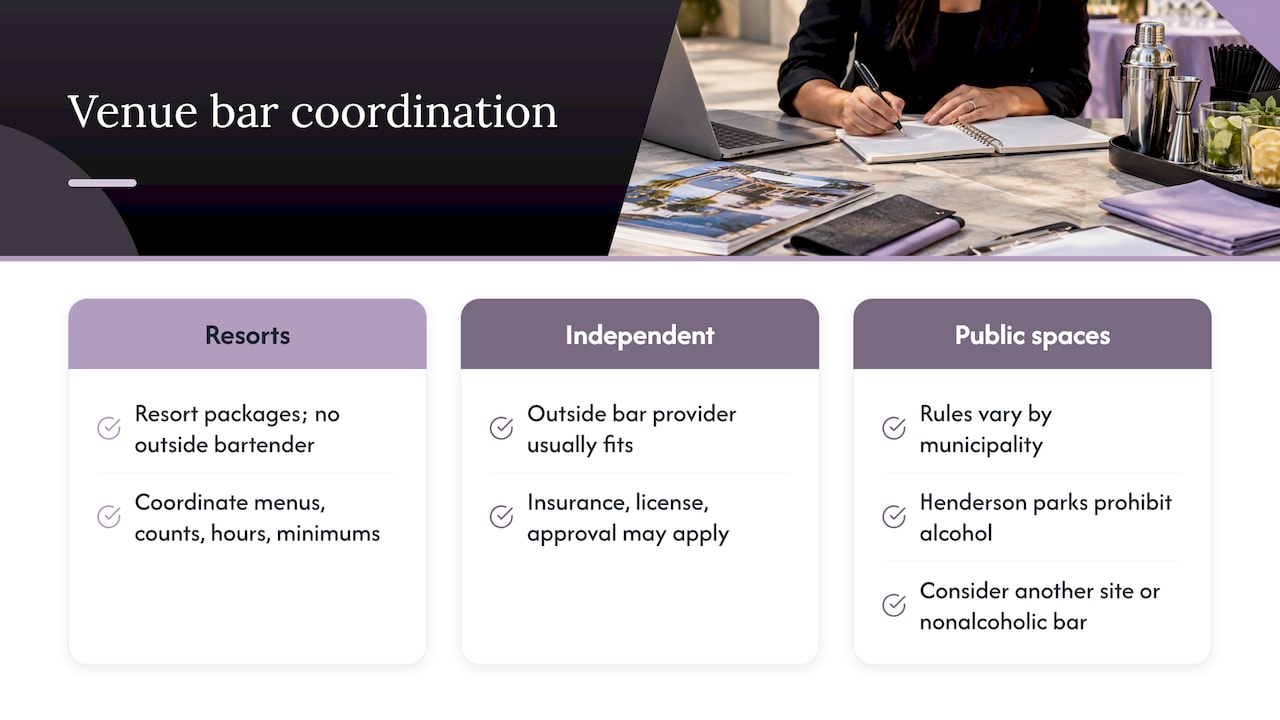
Resorts and casino hotels. Wynn Las Vegas states that it is the sole provider of all food and beverage served on its premises and the only authorized licensee able to sell and serve liquor, beer and wine. At a property like that, you are choosing among the resort’s own bar packages, not hiring an outside bartender. Your coordination work is with the resort’s catering team: menus, bar counts, hours and minimums.
Independent event venues, banquet halls and private estates. These are where an outside bar provider usually fits. They tend to require proof of insurance, a licensed provider, and sometimes a vendor approval step. Luxe Banquet Hall, for example, publishes a rental agreement that requires event insurance naming the venue as co-insured.
Public and municipal spaces. City of Las Vegas parks have their own special events rules, and Henderson is stricter still. The City of Henderson says no alcohol is allowed in any Henderson facilities or parks. If your heart is set on a city park or community building, plan for a different location or a non-alcoholic bar.
If your venue is a rental space that lets you bring your own bar, our dry hire venue guide explains how that arrangement affects permit fees.
Questions to ask the venue before you book a bar
Put these in an email so the answers are in writing. Venue coordinators answer quickly when the questions are specific.
- Is outside alcohol service allowed, or is the venue the exclusive provider?
- If outside providers are allowed, is there an approved vendor list or an approval process, and how far ahead must it happen?
- What license, permit and insurance documents must the bar provider supply?
- Who holds the liquor license for the event: the venue, the bar provider or you as the host?
- What are the access windows for load-in, setup, service and breakdown?
- Where can the bar be placed, and what power, water, ice and trash access is there?
- Are there service-hour cutoffs, corkage or cleaning fees, or security requirements?
- Is a union or house labor arrangement in force for bar service?
Venues differ in how formal this is. Henderson Sport & Social, for instance, asks hosts to confirm vendor guidelines, business licensing, insurance requirements and whether additional licenses are required for the event and municipality. It also requires outside vendors to be reviewed and approved at least 30 days before the event, and vendors must hold the appropriate state and local business licenses. Treat that 30-day figure as one venue’s rule, not a universal one, and ask every venue for its own.
If the venue mentions union staffing, read our union venue hiring checklist before signing so you do not pay twice for the same job.
Permits and licenses that may apply
Alcohol service in Nevada is regulated at the state, county and city level, and the right paperwork depends on who is serving, where, and whether alcohol is sold or given away. Always confirm with the licensing office that covers your event address. Here is what the official pages say.
Liquor caterer licensing
The City of Las Vegas explains that alcohol catering may be provided under an alcoholic beverage caterer license with an approved alcohol catering permit at a properly licensed establishment or special event. Clark County requires a Liquor Caterer Permit application at least ten calendar days before the event, with approval before service. Without a liquor caterer, an approved Liquor Licensee must obtain an Off-Premise Liquor Permit.
Ten days is the minimum, not the target. Venues, caterers and your own guest list all change late, and a permit that has to be amended is stressful. We cover the off-premise route in our Nevada off-premise liquor permit guide, including fees and how early to file.
Alcohol awareness cards
In Nevada counties with populations of 100,000 or more, owners or operators of liquor establishments must ensure employees who sell or serve alcohol, or act as security, complete a state-certified Alcohol Beverage Awareness program and hold a valid alcohol education card. Clark County is in that group. Ask any bar provider to confirm that every bartender on your event carries a current card, and note it in the agreement.
Private residences and special cases
A backyard wedding in Henderson or a party at a private home in Summerlin has different paperwork from a ballroom. Our private residence alcohol permit checklist covers that path. If your event includes tastings or sampling, see the alcohol sampling permit timeline, and for moving product to the site, the Nevada alcohol transport rules.
Insurance, liability and who is responsible
The cleanest way to avoid a dispute is to decide in advance who carries which risk. In practice, venues push alcohol-related liability to the host and the bar provider.
Two official examples show the range:
- Luxe Banquet Hall’s agreement says the client assumes responsibility for food and beverage-related injuries and liabilities and agrees to indemnify the venue, with event insurance due at least three days before the event.
- For City of Las Vegas park events, the Parks and Recreation special events handbook (effective November 1, 2019) requires insurance when alcohol is sold, including commercial general liability coverage naming the City as additional insured. Vendors selling alcohol must carry $1 million in liquor liability insurance, and the permit holder must provide proof of it.
These are specific to those venues, but they show what to expect. When you talk to a bar provider, ask for:
- A certificate of insurance that lists your venue exactly as the venue’s contract words it.
- The liquor liability limit, not only general liability.
- A copy of the relevant permit or license, and the names of the people who will be serving.
Send the certificate request to your provider as soon as the venue sends its insurance wording. Certificates take time to issue, and a mismatched name on the form is the most common reason for a rejection.
Staffing, setup and breakdown
Bar staffing is where venue rules and guest experience meet. Long lines at the cocktail hour are almost always a staffing-ratio problem.
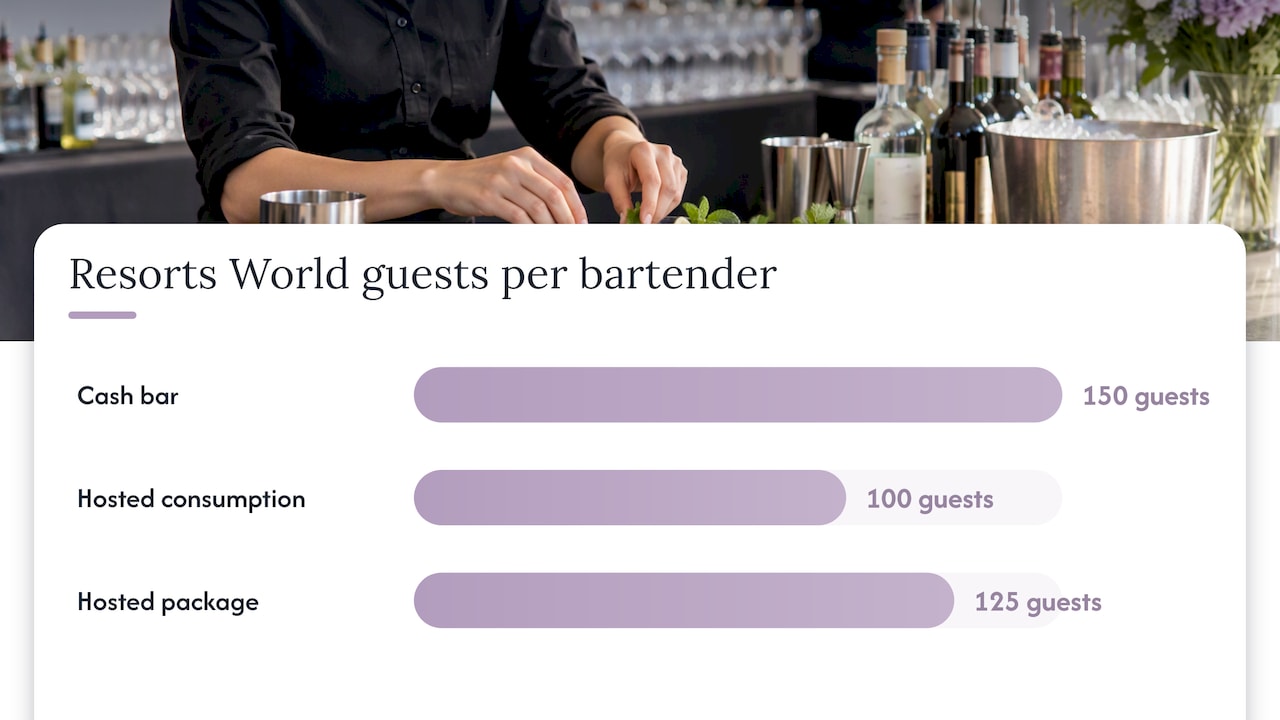
At Resorts World Las Vegas, the meeting planner guide sets one bartender per 150 cash-bar guests, per 100 hosted-consumption guests or per 125 hosted-package guests, and extra hours carry an additional per-bartender fee. Hosts there work with the Catering & Conference Service Manager to coordinate program details. Those ratios belong to that resort. They are still a useful benchmark: if your outside provider proposes one bartender for 200 guests at a hosted bar, you have a reason to ask questions.
When you plan with a venue, settle these details:
| Item | What to confirm | Who usually decides |
|---|---|---|
| Bartender count | Ratio by bar type (hosted, cash, package) and guest count | Bar provider, with venue approval |
| Load-in window | Start time, dock or door, elevator access | Venue |
| Setup time | Hours needed for bar, glassware, ice, garnish | Bar provider |
| Service hours | Start, last call, final close | Venue and host |
| Breakdown | Time to clear, trash, ice disposal, deposits | Venue |
| Power and water | Outlets, sinks, ice access near the bar | Venue |
| Security | Whether the venue requires its own staff | Venue |
Build a one-page schedule from this table and send it to every vendor. Our load-in logistics templates give you slots you can copy, and the bartender dress code guide helps if the venue has uniform requirements.
Costs, minimums and what the agreement should say
The agreement should leave no fee unnamed. Resort pricing is a good reminder of how many layers exist. At Resorts World Las Vegas, the planner guide lists a $750 beverage minimum per bar per hour, with service charges and sales tax on top, and food and beverage prices guaranteed up to three months before the event. The same guide lists a non-taxable 20% service charge, a taxable 4% admin charge and prevailing Nevada sales tax.
You will not see those figures at every venue, but you should expect some mix of the following:
- Beverage minimums or per-person bar packages
- Bartender fees and extra-hour charges
- Service or administrative charges
- Sales tax
- Corkage, cleaning or equipment fees
- Permit fees and insurance costs
Ask for an itemized invoice
The Nevada Department of Taxation says itemized invoices are preferred, since they allow correct collection of sales tax and let non-taxable services be separately stated. The same guidance (2012) lists setup and strike fees, wait staff fees, bartender fees and carving fees among necessary taxable services. Tax rules change, so confirm the current treatment with your provider or the Department of Taxation. Our alcohol catering tax guide explains how to avoid paying permit fees twice.
For weddings, a contract checklist saves arguments later. Start with our wedding liquor catering contract checklist, and bring it to every provider conversation.
Planning the bar around the venue’s rules
The format of the event shapes the bar, and the venue shapes what is possible.
Wedding cocktail hour
A cocktail hour is a short window where guests arrive together and all want a drink. A single bar with one bartender will back up quickly. Plan a second service point, such as a signature drink station or a pass-around tray, and check with the venue about where a second station can sit without blocking the foyer or fire exits. We explain the reasoning in our guide on why cocktail hour needs bartenders. If you want a full picture of options, our Las Vegas wedding beverage catering guide covers menus and bar styles.
Corporate receptions and conferences
Corporate events add two complications: a company’s own alcohol policy and a tight schedule between sessions. Decide on tickets, hosted hours or a cash bar, and tell the venue early, since the choice changes the permit path and the staffing ratio. Our conference bartending guide and networking event bar service guide go through the details, and the company party beverage station ideas help when the room is small.
Branded and custom bars
Most venues let you customize a bar as long as it fits the footprint and does not need anchoring to walls or floors. Send the venue photos or dimensions, the power draw of any lighting, and any signage. Approvals for branding can take as long as vendor approvals, so include them in the same message.
A coordination timeline
Use this as a working order of operations. Adjust it to the venue’s own deadlines, which always win.
- 3 to 6 months out: Confirm that outside bar service is allowed, get the venue’s vendor rules, and pick a bar provider.
- 8 to 12 weeks out: Sign the bar agreement. Ask for the provider’s license, permit and insurance documents. Submit vendor details to the venue.
- 6 weeks out: Send the venue’s insurance wording to the provider for the certificate. Confirm vendor approval timing (30 days at some venues).
- 4 weeks out: File or confirm the permit path with the right office. Clark County needs a liquor caterer permit application at least ten calendar days ahead, but earlier is safer.
- 2 weeks out: Lock the guest count, menu, bar locations and the load-in schedule.
- Week of the event: Send a final run sheet to the venue and provider, with phone numbers for the on-site contacts.
- Event day: Walk the bar area with the venue contact before guests arrive. Confirm last call and breakdown times.
Perspective
After more than 20 years of bartending in Las Vegas, we have seen that most bar problems are not about drinks. They are about a missing email. The venue said outside bars were fine, but nobody asked about the insurance wording, the load-in door or the cutoff time.
We work only in Las Vegas and Henderson, so we build our packages around how venues here actually operate. We are fully licensed and insured, we follow Las Vegas municipal code, and we are used to working with wedding venues and corporate clients. We handle the venue conversation so you are not relaying messages between vendors.
Our advice is simple: bring the bar provider into the planning as soon as you have a venue. Their questions will surface the rules you need to know, and a turnkey package keeps staffing, setup, service and breakdown under one roof.
Brennon
How Liquid Courage handles venue coordination
We provide mobile bartending and liquor catering for weddings, corporate events and private parties in Las Vegas and Henderson. That includes custom package options, bar and menu branding, and coordination with your venue.
If you are planning a wedding, see our Las Vegas wedding bartending services. For company events, our corporate event bar service covers receptions, conferences and parties. If your venue already has a bar, or you only need staff, look at dry hire bartender staffing, or browse our bar rental packages. To start, tell us about your venue and date and we will tell you what the bar needs.
FAQ
Can I bring my own bartender to a Las Vegas resort?
Usually not. Some resorts, such as Wynn, state that they are the only licensee permitted to sell and serve alcohol on their property. Ask the catering office for the resort’s policy. If you want an outside bar, an independent venue or private space is the better fit.
Do I need a permit for a bar at my Las Vegas event?
It depends on the venue and whether alcohol is sold. Clark County requires a Liquor Caterer Permit application at least ten calendar days before the event, and the City of Las Vegas issues caterer permits under its own license rules. Confirm which office covers your address and ask your provider which permit they will file.
Can I serve alcohol at a Henderson park or city facility?
The City of Henderson states that no alcohol is allowed in any of its facilities or parks. For a Henderson event with alcohol, choose a private venue or a licensed establishment, and check the venue’s rules before you book.
How many bartenders do I need?
It depends on the type of bar and the guest count. Resorts World Las Vegas uses one bartender per 100 to 150 guests, depending on the bar type. A signature drink menu, a short cocktail hour or a single bar often calls for more staff than the minimum.
Who is responsible if something goes wrong with alcohol service?
The contract answers that. Many venues push liability to the host and require insurance naming the venue as co-insured. Make sure your bar provider carries liquor liability coverage and can issue a certificate that matches the venue’s wording.
Sources
- Wynn Las Vegas meetings and events policies
- Luxe Banquet Hall venue rental agreement
- City of Henderson FAQ
- Henderson Sport & Social event guide
- City of Las Vegas alcohol licenses information
- Clark County liquor caterer license and permit
- Nevada Department of Taxation, Tax Notes April 2012
- Nevada Department of Taxation, Tax Notes July 2012
- City of Las Vegas Parks special events policies handbook
- Resorts World Las Vegas meeting planner guide