
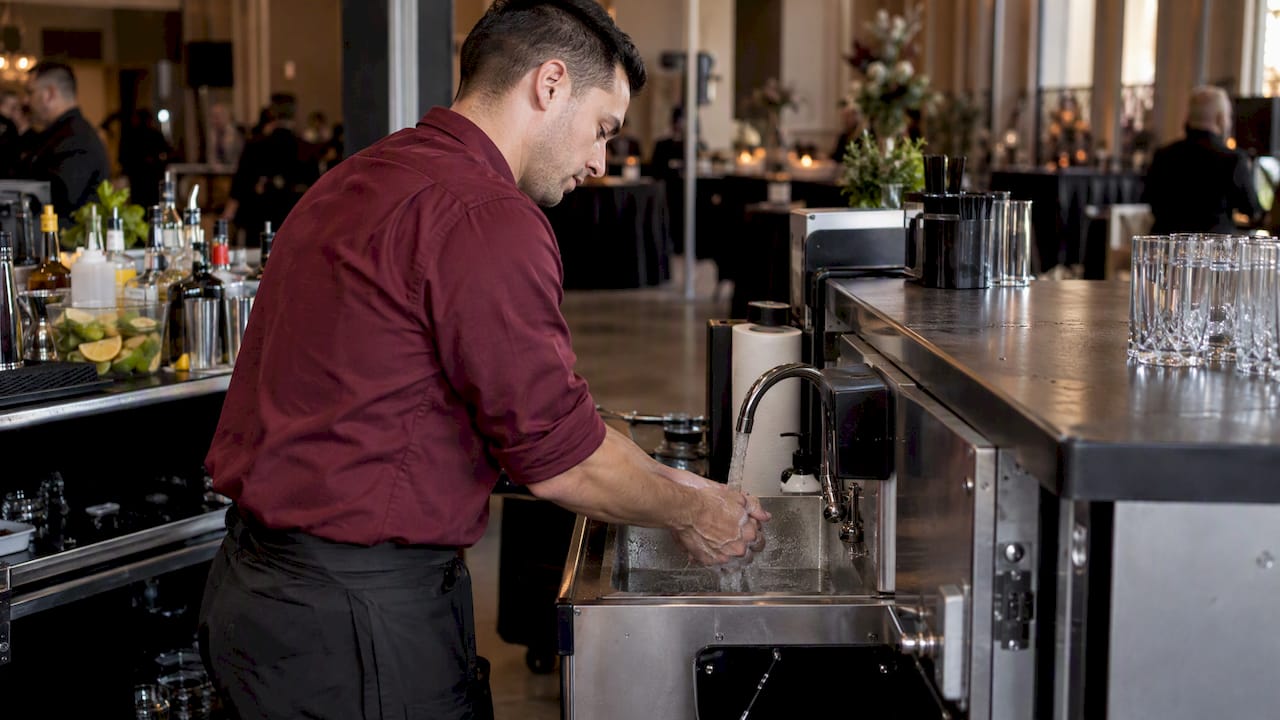
A safe bar comes down to six things: legal paperwork, trained staff, clean handwashing and ice, food held at safe temperatures, dry and clear floors, and a plan for fire and intoxicated guests. This checklist covers all six for temporary and mobile bars in Las Vegas and Henderson. Run it at three points: when you book, the day before, and at setup.
It is written for people who run bars at weddings, corporate events and private parties. Brick-and-mortar bars share most of the hygiene and floor items. The permit and mobile-setup items are specific to events in Clark County.
TL;DR
- Paperwork comes first: a liquor caterer license plus event-specific permits, filed 10 to 20 days ahead. A business license alone does not cover a venue.
- Every person who serves alcohol needs a valid TAM card, and they must carry it on site.
- A mobile bar needs its own handwashing setup with soap, warm water and paper towels. A nearby restroom does not count.
- Keep cold food at 41°F or below and hot food at 135°F or above. Never scoop ice with a glass.
- Keep aisles clear, mats down and spills cleaned at once. Check fire rules if you add tents, flames or propane.
Table of Contents
- Before the event: permits and paperwork
- Staff: TAM cards, age and training
- Handwashing and water at a mobile bar
- Ice, glassware and garnish
- Food temperatures if you serve more than drinks
- Floors, aisles and the back bar
- Fire, tents and flames
- Guest safety and responsible service
- Our perspective
- Hiring help for the bar
- Day-of quick check
- FAQ
- Sources
Before the event: permits and paperwork
Most bar safety failures at events start on paper. If the permit is wrong, the best-run bar can be shut down.
Clark County describes a Liquor Caterer License as the license for a business that serves liquor temporarily at an off-site location, after it obtains the proper liquor caterer permits. The county’s guidance says event permits should be applied for at least 10 to 20 days in advance. A city or county business license by itself does not authorize service at a given location.
The City of Las Vegas has its own business license instruction sheet for alcoholic caterers. It starts by confirming that the business location is inside city limits and properly zoned. Henderson events follow Henderson’s own rules, so confirm which jurisdiction the venue sits in before you file anything.
Checklist:
- [ ] Liquor caterer license held by the company running the bar
- [ ] Event-specific permit filed with enough lead time (10 to 20 days is the safe window)
- [ ] Venue confirmed as Las Vegas, Henderson or unincorporated Clark County
- [ ] Written confirmation of where alcohol will be stored before service
- [ ] Permit copies printed and kept at the bar
Our guides go deeper on each step: Nevada alcohol rules and a statute timeline, off-premise liquor permits, and how to verify alcohol storage at a venue. Hosting at a home? Use the private residence alcohol checklist. Planning a tasting or sampling? That is a separate process, covered in our sampling permit guide.
For larger events, Clark County also publishes a Special Events Security and Safety Plan supplemental. It asks you to describe how you will keep alcohol from people who should not have access to it.
Staff: TAM cards, age and training
In Clark County, alcohol awareness training is a legal requirement for the people pouring. TAM of Nevada’s FAQ says anyone who sells or serves alcohol to the public at an establishment or venue needs a TAM card. Security guards who work at those venues need one too. It lists these details:
- Staff must hold a valid card within 30 days of employment.
- They must carry the card on site and show it to law enforcement or compliance officers on request.
- Cards are valid for 4 years under NRS 369.630.
- Violations can bring administrative fines of $500 to $5,000 for the establishment.
The Nevada state law sheet from TEAM Coalition lists the legal age to pour, sell and serve alcohol as 21. Treat that as the floor for anyone behind your bar.
Checklist:
- [ ] Every bartender, barback and bar manager has a TAM card in hand, not just “on file”
- [ ] Expiration dates checked, not assumed
- [ ] Everyone behind the bar is 21 or older
- [ ] A named person is in charge of refusing service, and staff know they can refuse
- [ ] Hired-in staff are verified before the event, not at the door
If you hire a bartender, ask to see the card before the event. We wrote a short guide on verifying TAM cards to avoid fines.
Handwashing and water at a mobile bar
This is the item most often missed at pop-up and rented bars. Per the Southern Nevada Health District’s temporary food establishment self-inspection checklist, a missing or unstocked handwashing station is a critical risk factor. Pointing to a restroom down the hall is not enough. A mobile bar needs its own setup.
Checklist:
- [ ] A dedicated handwashing station at the bar
- [ ] Soap, warm water and paper towels stocked before doors open
- [ ] A bucket or tank for wastewater, so it never goes on the ground
- [ ] A plan to refill and empty during long events
- [ ] Clean cloths and sanitizer for surfaces, kept apart from drink-making tools
Whether a rental bar brings its own water is a common surprise. Read does your bar rental need its own water supply before you sign.
Ice, glassware and garnish
Ice
Never scoop ice with a glass. OSHA’s restaurant serving safety guidance warns that glass can chip into the ice unseen. Use a metal or plastic scoop and keep it outside the ice container, not buried in it.
- [ ] A dedicated scoop for each ice bin, stored in a clean holder
- [ ] Ice bins covered when not in use
- [ ] If a glass breaks near ice, the ice is thrown out and the bin is cleaned
- [ ] Ice for drinks kept separate from ice used to chill bottles
Glassware
- [ ] Broken glass goes in a dedicated, labeled container, not the regular trash bag
- [ ] Clean glassware stored upside down on a clean surface, away from foot traffic
- [ ] Glass switched to plastic or cans near pools, dance floors and outdoor stages if the venue requires it
Garnish and cut fruit
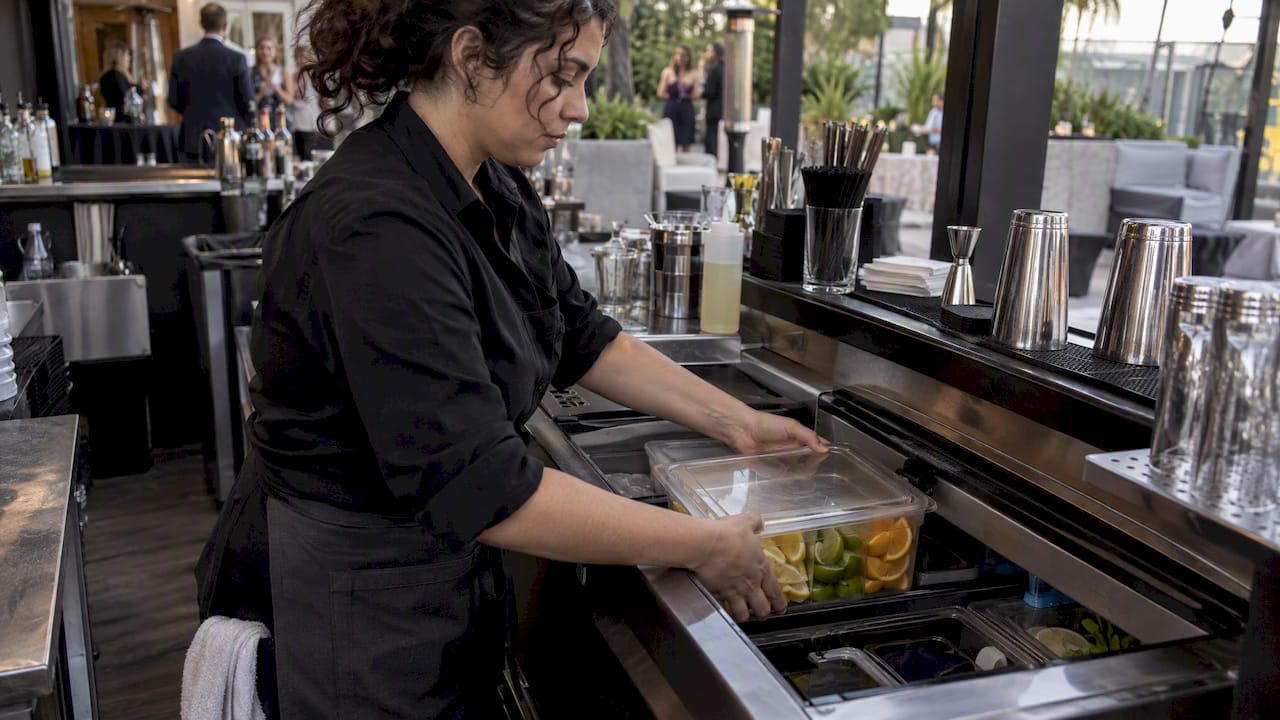
Cut citrus is food, and it can go off in a hot ballroom or on a patio. Keep garnishes covered and chilled, and set a time limit. Our rule of thumb is a two-hour limit at the bar and a discard after 24 hours. The full routine is in our garnish storage safety guide.
Food temperatures if you serve more than drinks
If the bar offers cut fruit, dairy-based drinks or snacks, temperature control applies. The CDC, in its guidance on preventing Clostridium perfringens, refers to the standard Food Code holding temperatures. Cold time/temperature control foods stay at 41°F or below, and hot ones at 135°F or above. Federal guidance describes the danger zone more broadly as roughly 40°F to 140°F, and local health districts often enforce the 41°F and 135°F figures.
A second source, the USDA’s Cooking for Groups guide, says to refrigerate perishables within 2 hours, or 1 hour when the air is above 90°F. Las Vegas summers make that second number matter at outdoor weddings.
- [ ] A calibrated probe thermometer on site
- [ ] Coolers with enough ice to hold 41°F or below until service
- [ ] A start-time label on anything that comes out of refrigeration
- [ ] Shade or a cooler lid for anything that sits on the bar
Floors, aisles and the back bar
Wet floors hurt bar staff more than anything else. The Oregon OSHA hazard guide for restaurants and bars names slips, trips and falls as the most frequent cause of workplace injury in bars. It recommends:
- aisles at least 22 inches wide
- floors clear of debris
- anti-slip mats in wet areas, such as behind the bar and near ice machines
- slip-resistant footwear for staff
- spills cleaned right away, with a warning sign posted
Checklist:
- [ ] Mats under the well, the ice bin and the sink
- [ ] Cases, boxes and trash bins stored off the walkway
- [ ] Cords taped or routed away from staff paths
- [ ] A towel and a wet-floor sign within arm’s reach
- [ ] Closed-toe, non-slip shoes on every staff member
Layout matters here. A bar squeezed into a corner forces staff to cross guest traffic with full trays. Our bar station layout guide covers spacing and why the permit filing deadline there is 10 days. For bigger events, a VIP bar setup with one bartender per 30 to 50 guests keeps lines short and the floor clearer.
Fire, tents and flames
Cocktail flames, heat lamps and propane are the most common triggers for a fire review. Clark County Fire Department approval applies to events with temporary tents or structures, flame effects, flammable liquids and propane. If your bar menu includes flaming garnishes or drinks, ask the venue and the fire authority before you plan them.
- [ ] A fire extinguisher at the bar, with staff who know where it is
- [ ] No flaming drinks unless the venue and fire rules allow it
- [ ] Overproof spirits stored away from candles, heaters and flame effects
- [ ] Exits and walkways kept clear of bar equipment
Guest safety and responsible service
A safe bar protects guests as well as staff. Build this into the plan before the first pour.
- [ ] A written cutoff policy, shared with the host before the event
- [ ] Water and food available near the bar
- [ ] Last call announced, and the bar closed at the agreed time
- [ ] A plan for rides home, such as rideshare information or a designated host contact
- [ ] ID checks for anyone who looks under 30, with no exceptions for guests of the host
Every event also benefits from the same everyday habits: a named person responsible, a walk-through before guests arrive, and a quick check of exits. If you are looking for general host-side tips, this party safety guide for hosts and venues covers the basics, including water-adjacent events.
Our perspective
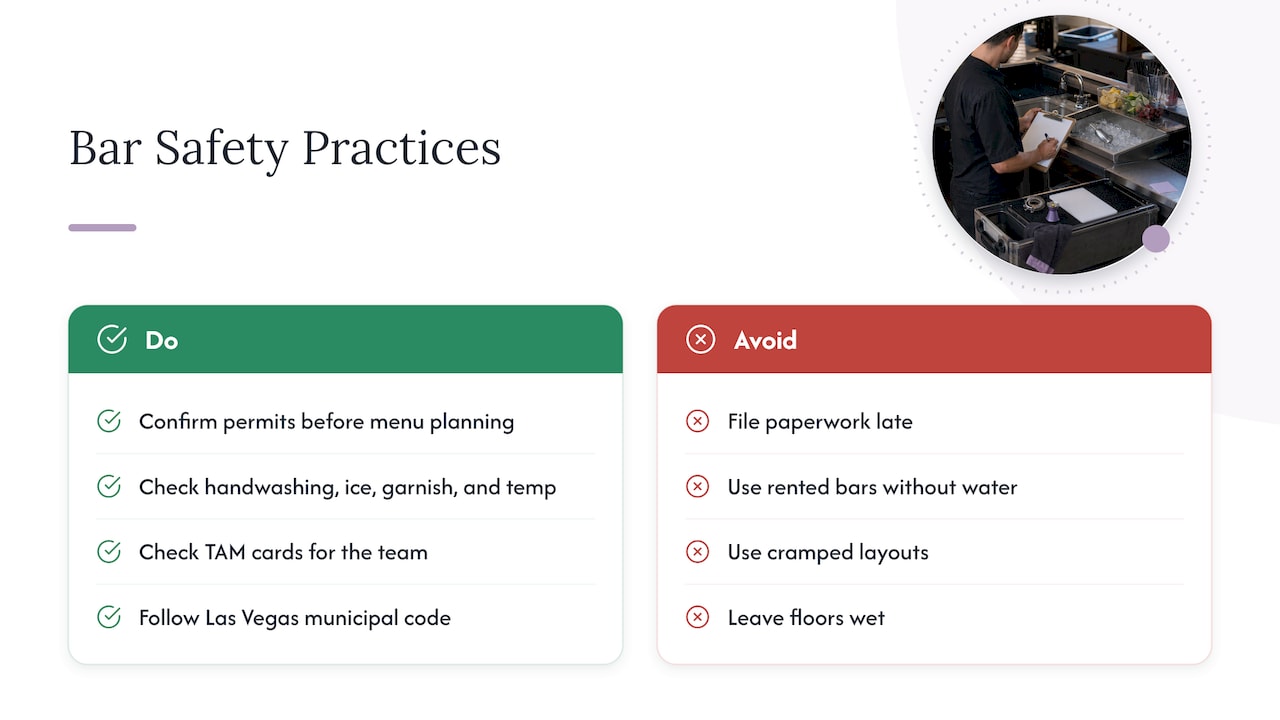
We only work in Las Vegas and Henderson, so our checklist is shaped by this market. The patterns we see are consistent. Paperwork problems come from filing late, not from people ignoring the rules. Hygiene problems come from rented bars with no water. Injuries come from cramped layouts and wet floors.
Our own approach is simple. We confirm the venue’s jurisdiction and permits before we plan the menu, because a menu is easy to change and a permit date is not. We treat the bar as a small kitchen: handwashing, ice, garnish and temperature are checked before the first guest arrives. We check TAM cards for the whole team, and we stay within Las Vegas municipal code. After more than 20 years of event bartending, we have learned that a quiet, dry, well-organized bar is a safe one. Guests rarely notice it, which is the goal.
— Brennon
Hiring help for the bar
If you would rather not run this checklist yourself, we handle it as part of our service. We provide mobile bartending and liquor catering for weddings, corporate events and private parties in Las Vegas and Henderson, with licensed and insured staff. For a wedding, start with our wedding bar services. For company events, see corporate event bartending. If you need a full bar setup, look at our bar rental packages. Pricing is quoted per event, so ask us for a proposal.
Day-of quick check
Print this and walk the bar 60 minutes before service.
- Permits and TAM cards are at the bar and in date.
- The handwashing station is stocked and working.
- Ice is in covered bins, with scoops outside the ice.
- Garnishes are chilled, covered and labeled with a start time.
- Mats are down, aisles are clear and a wet-floor sign is in reach.
- A fire extinguisher is located and exits are clear.
- The cutoff policy is agreed with the host, and water is available.
- The broken-glass container is in place.
FAQ
What does a bar safety checklist include?
A good one covers licensing and permits, staff training such as the TAM card, handwashing, ice and glassware handling, food temperatures, floor safety, fire rules and responsible service. For temporary bars, add water supply and storage. Use it three times: at booking, the day before and at setup.
What are the most common safety problems at bars?
Slips, trips and falls on wet floors are the most frequent cause of workplace injury in bars, according to Oregon OSHA. Glass in ice and missing handwashing facilities are the other common problems at events. Both are easy to prevent with a setup check.
Do bartenders in Las Vegas need a TAM card?
Yes. The TAM of Nevada FAQ says anyone who sells or serves alcohol to the public needs one. Staff must get the card within 30 days of starting work and carry it on site. Check the current rules with the card provider or your local licensing office before hiring.
Can a mobile bar use the venue’s restroom to wash hands?
Not according to the Southern Nevada Health District’s self-inspection checklist. A mobile bar needs its own stocked handwashing station. Ask your bar provider how they supply water before you book.
How early should I file permits for an event bar?
Clark County’s liquor caterer guidance points to at least 10 to 20 days before the event. Earlier is better, and some permit types take much longer. Confirm the exact deadline with the issuing office for your venue.
Sources
- Clark County: Liquor Caterer License and Permit
- City of Las Vegas: Business License Instruction Sheet, Alcoholic Caterer
- Clark County: Special Events Security and Safety Plan Supplemental
- Clark County Fire Department event approvals
- TAM of Nevada: Alcohol Awareness Training FAQ
- TEAM Coalition: Nevada state law sheet
- Southern Nevada Health District: Temporary Food Establishment Self-Inspection Checklist
- OSHA: Young Worker Safety in Restaurants, Serving
- CDC: Preventing Clostridium perfringens
- USDA FSIS: Cooking for Groups
- Oregon OSHA: Restaurant and bar hazard guide