
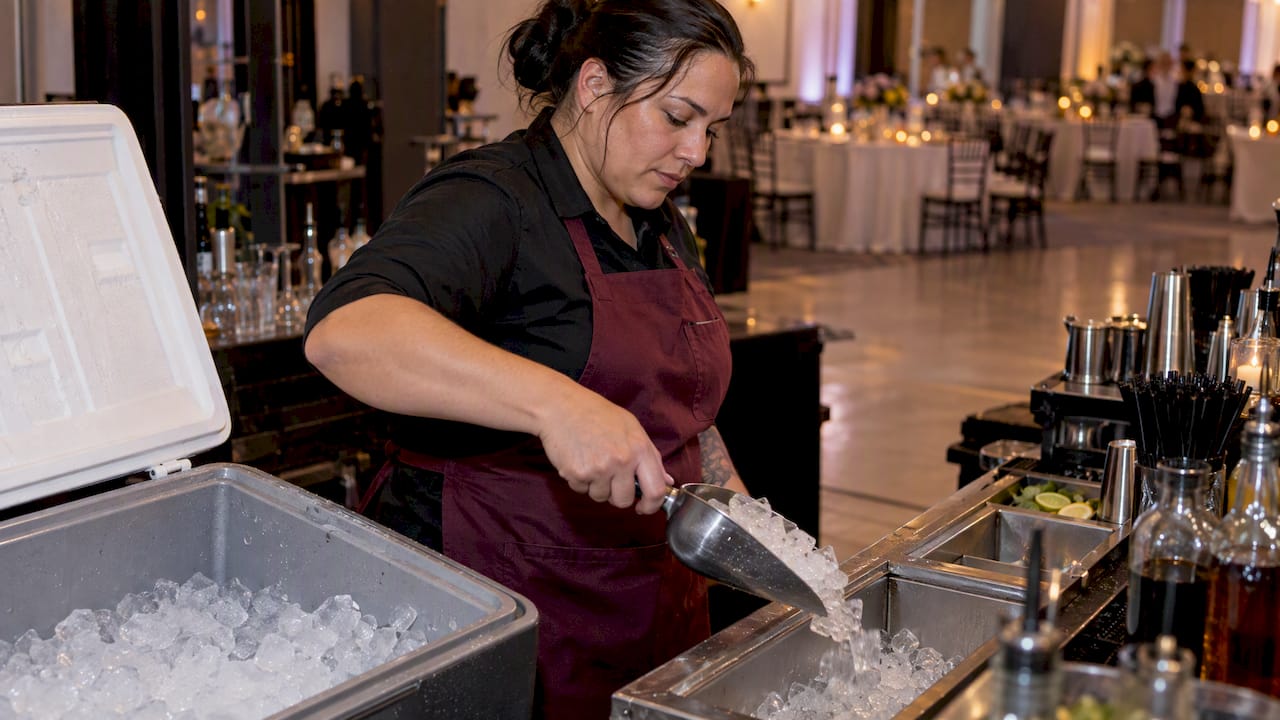
Plan on roughly a pound or more of ice per guest for most events, increasing the amount for outdoor events, events longer than four hours, or cocktail-focused gatherings compared to beer and wine events. That one adjustment, heat plus duration, matters more than any other factor in the calculation. Use the calculator below to turn that range into exact pounds and bags for your headcount.
TL;DR:
- Beer and wine service needs 1 pound per guest, while full cocktail bars need 1.5 to 2 pounds; chilled food displays add 0.5 pound per guest.
- For each extra hour after four, add 0.25 to 0.5 pounds per guest; heat calls for a 20% to 30% buffer, while shade may need 15%.
- Keep 30% to 40% of the order in shaded, insulated backup coolers, and assign someone to monitor bar ice and refill it during service.
- Round pounds up to full bags; common sizes are 10, 20, and 50 pounds, and orders above roughly 300 pounds warrant advance delivery or machine rental.
Table of Contents
- Baseline Formula and Quick Ice Calculator for Events
- Ice Needs by Event Type and Service Style
- Ice per Drink and How Bartenders Stage It for Service
- Weather, Duration, and Melt Buffer Planning
- Ice Types: Cubes, Crushed, and Block, and Where Dry Ice Fits
- Buying, Transporting, and Storing Ice for Your Event
- Practitioner Checklist and Pro Tips for Ice Service
- Why Overbuying Ice Beats Running Short
- Let Professional Bartenders Handle the Ice Logistics for You
- FAQ
- Sources
Baseline Formula and Quick Ice Calculator for Events
The simplest way to size an ice order is to start with a per-guest baseline and add a per-hour adjustment for anything beyond a standard four-hour event. A commonly used planning approach in the event and ice supply industry recommends increasing ice per guest for outdoor parties, cocktail-heavy bars, or longer events beyond a standard duration.
The formula looks like this:
- Start with guest count multiplied by a moderate baseline amount of ice appropriate for a typical indoor event with mixed drinks.
- Add a modest extra amount of ice per guest for each hour beyond four hours.
- Add an additional melt buffer percentage for outdoor or hot-weather events.
- Round up to the nearest full bag size once you know your total.
Here is how that plays out at three common guest counts. For 20 guests at a three-hour indoor cocktail party, multiply the number of guests by an estimated ice amount to find the total pounds needed, then convert to bags based on bag size. For 100 guests at a five-hour wedding reception with an outdoor cocktail hour, start with the baseline amount per guest, add for extended duration, and then include a melt buffer to estimate total ice needed in pounds and bags. For 250 guests at a six-hour outdoor corporate event, calculate ice needs using a base amount per guest, add for extra hours, and include a substantial buffer to estimate total pounds and bags.
Bag sizes vary by supplier, but 10-pound, 20-pound, and 50-pound bags cover most retail and wholesale options. To convert pounds into bags, divide your total pounds by the bag size and round up. A 250-pound order becomes five 50-pound bags or twelve to thirteen 20-pound bags, whichever your supplier stocks.
Ice Needs by Event Type and Service Style
Service style changes the math more than almost anything else, because a full bar pouring spirits, mixers, and multiple cocktails per guest burns through ice far faster than a beer-and-wine setup.
- Serve-only bars (beer and wine): plan for 1 pound per guest since bottles and cans need chilling but drinks use little loose ice.
- Full bars with cocktails: plan for 1.5 to 2 pounds per guest, since mixed drinks use ice both in the glass and for shaking or stirring.
- Cocktail hour with passed drinks: plan for 1.25 to 1.5 pounds per guest over a shorter window, since service is concentrated rather than spread across hours.
- Buffet or food display with chilled items: add 0.5 pounds per guest on top of beverage ice to keep shrimp, salads, or dips cold.
A wedding reception running a full bar for five hours sits closer to the 2-pound end of the range, especially once you factor in food chilling for a late-night snack table. A backyard barbecue serving mostly beer and soft drinks can stay near 1 pound per guest, since most of that ice goes into coolers rather than individual glasses. Cocktail hours deserve their own line item too: a one-hour reception with craft cocktails before dinner uses more ice per minute than a four-hour dinner service, because bartenders are mixing faster and guests are drinking more in that window. The beverage mix itself shifts demand as much as the event type does. A guest list leaning toward spirits and mixers needs more ice than one leaning toward canned seltzers or nonalcoholic options, since bottled and canned drinks chill in a cooler rather than melting into the glass.
Ice per Drink and How Bartenders Stage It for Service
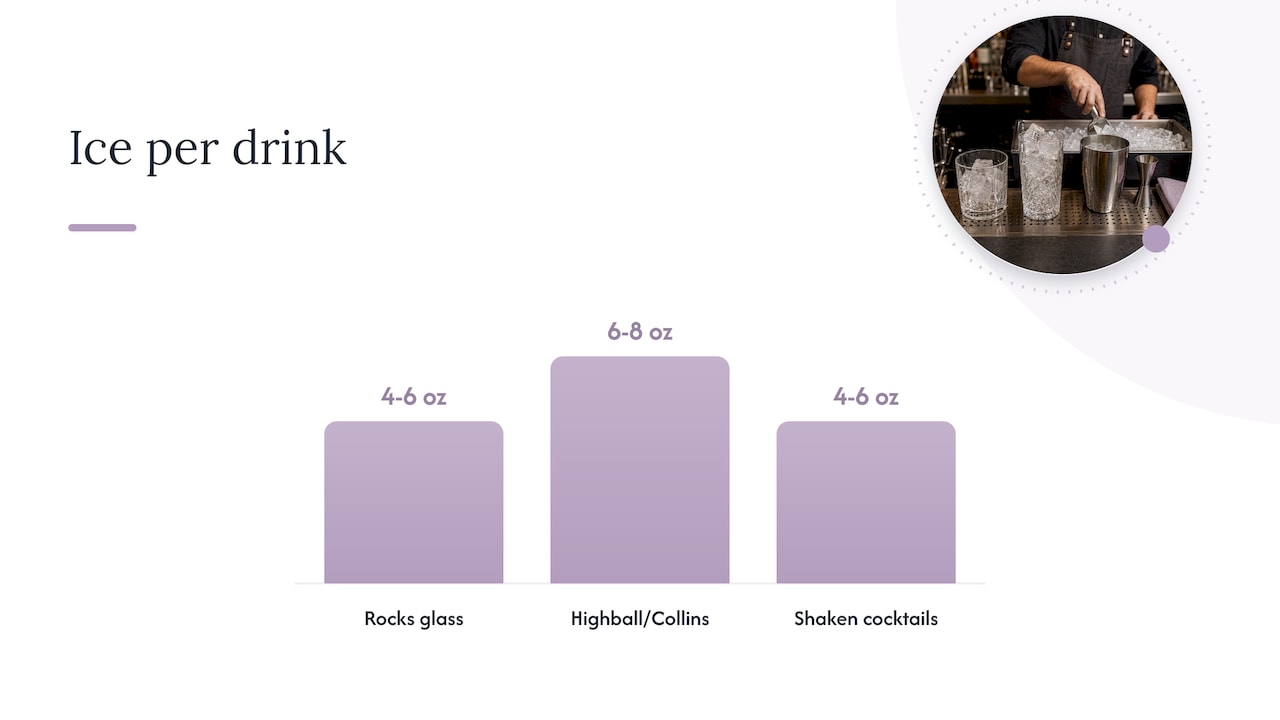
Breaking the baseline down to the glass level helps explain where all that ice actually goes. A standard rocks glass holds roughly 4 to 6 ounces of ice, a highball or Collins glass takes 6 to 8 ounces, and a shaken cocktail strained into a coupe or martini glass uses 4 to 6 ounces just for shaking, even though none of it ends up in the final drink.
- Rocks glass: 4 to 6 ounces of ice per pour, usually one large cube or a few standard cubes.
- Highball or Collins glass: 6 to 8 ounces, typically filled most of the way before the pour.
- Shaken cocktails: 4 to 6 ounces used in the shaker and discarded, separate from any ice served in the glass.
Batching and pre-chilling cut down on-service ice demand considerably. When a bartender pre-batches a cocktail base and keeps it in a chilled container, each pour needs less ice to bring the drink to temperature, since the liquid starts cold instead of room temperature. The same logic applies to glassware: chilling glasses ahead of time means less ice melts into the drink to compensate for a warm glass.
Staffing matters too. A staffed bar with a dedicated bartender can manage ice more efficiently than a self-serve cooler setup, because a bartender rations scoops and watches levels throughout service rather than guests grabbing handfuls at will. Our guide on planning networking event bar service covers how staffed setups manage this kind of flow.
Pro Tip: Keep a second cooler of backup ice within a short walk of the bar, not across the venue, so a bartender can restock mid-service without leaving the station unattended.
Weather, Duration, and Melt Buffer Planning
Heat and time are the two variables that break a tight ice estimate. An event held outdoors in direct sun, or anywhere above 85 degrees Fahrenheit, melts ice noticeably faster than an air-conditioned indoor space, which is why a melt buffer matters more than most planners expect.
- Outdoor or hot-weather events: add a 20% to 30% buffer on top of your baseline calculation.
- Events running past four hours: add 0.25 to 0.5 pounds per guest for each additional hour.
- Desert or arid climates: lean toward the higher end of both the baseline and the buffer, since low humidity speeds evaporation alongside melt.
- Shaded or tented outdoor events: a 15% buffer is often enough, since direct sun exposure is the bigger driver of melt, not just ambient temperature.
For events in consistently hot, dry climates, our desert wedding beverage guide walks through how heat changes both ice and drink planning together.
Storage matters as much as the initial order. Keep reserve ice in insulated coolers, out of direct sun, and avoid opening and closing lids more than necessary, since every open cooler loses cold air. Rotating older ice to the front of a cooler and adding fresh ice behind it keeps the coldest stock in reserve for later in the event rather than melting the newest ice first.
Ice Types: Cubes, Crushed, and Block, and Where Dry Ice Fits
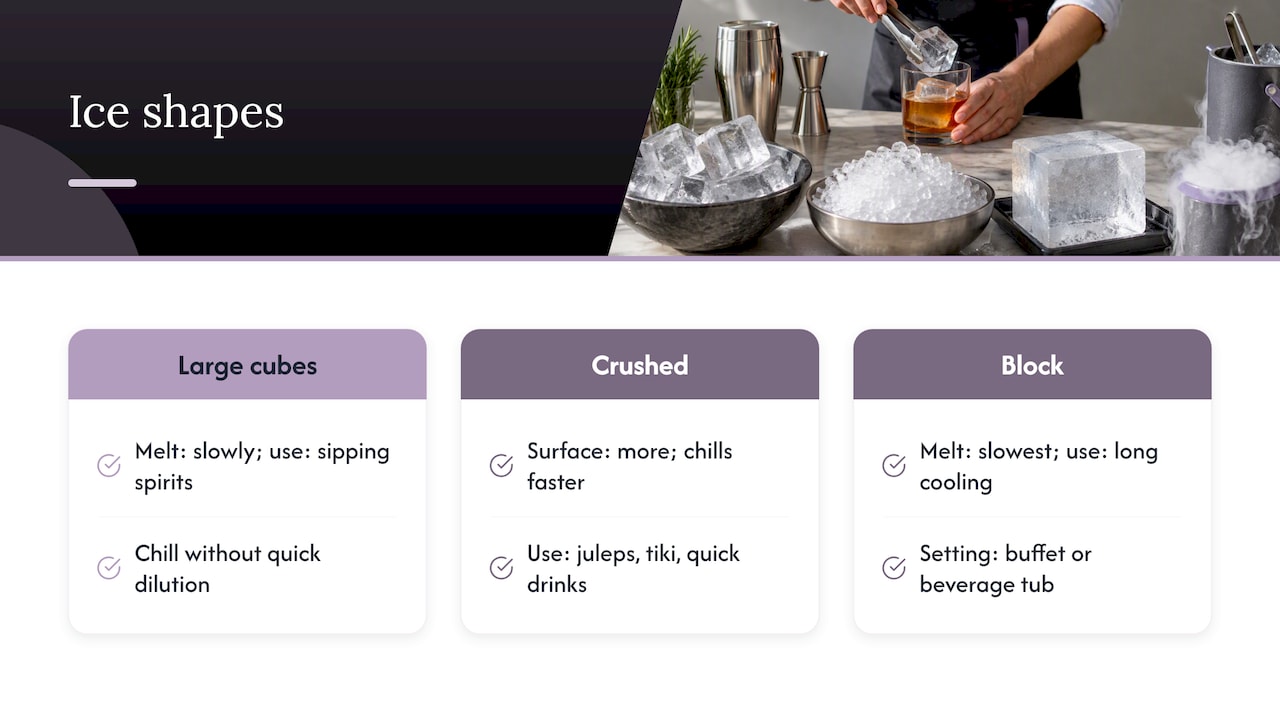
Ice shape changes both how fast a drink chills and how much it dilutes, which is why bartenders choose shape deliberately rather than grabbing whatever is on hand. Large cubes or spheres melt slowly, making them the better choice for spirits meant to be sipped over time, like an old fashioned, since they chill the drink without watering it down quickly. Crushed ice has more surface area and chills faster, which suits juleps, tiki drinks, and anything meant to be consumed quickly while ice cold. Block ice melts the slowest of all three and works best for long-duration cooling, such as a buffet display or a beverage tub that needs to stay cold for hours without constant refilling.
Dry ice and liquid nitrogen sometimes show up at events for visual fog effects or novelty cocktails, but they carry real handling risks that regular ice does not. The FDA’s guidance on liquid nitrogen and dry ice in food service explains that both can be used only when procedures keep them from making food or drinks unsafe, and neither should be served to a guest while still actively sublimating or evaporating, since that exposes people to extreme cold and gas hazards.
Dry ice causes severe cold burns on contact and can create asphyxiation risk if it builds up carbon dioxide in a confined, poorly ventilated space.
Regular drinking ice is not exempt from oversight either. The FDA classifies ice intended for human consumption as food, which means it has to be produced, stored, and handled under the same sanitary standards as anything else you would serve a guest.
Buying, Transporting, and Storing Ice for Your Event
Getting the pounds right only helps if the ice actually arrives cold and usable. A few logistics decisions make the difference between a smooth setup and a last-minute scramble.
- Convert your total pounds into bags based on what your supplier stocks, typically 10-pound, 20-pound, or 50-pound bags, and round up rather than down.
- Transport bagged ice in insulated coolers or a cooled vehicle, and keep dry ice ventilated rather than sealed, since trapped gas can build pressure in a closed container.
- Store ice off the ground, out of direct sun, and in a shaded or air-conditioned space until service begins.
- For orders above roughly 300 pounds or events without easy access to a retail supplier, schedule an ice delivery or on-site ice machine rental in advance rather than relying on same-day store runs.
The AFDO guidelines for packaged ice recommend sourcing from permitted, traceable suppliers, which simplifies both safety and compliance checks for larger events. USDA guidance on packing coolers covers how to layer ice and food correctly to keep both cold without cross-contamination.
Practitioner Checklist and Pro Tips for Ice Service
A short checklist the day before and the day of service catches most of the problems that cause ice shortages or waste.
- Day before: confirm bag counts against your calculated total, confirm delivery or pickup timing, and check that coolers are clean and dry.
- Day of: stage reserve ice away from direct sun, keep scoops separate from any scoops used for food, and assign one person to monitor bar-side ice levels.
- Menu-driven planning: build your ice order around the drink menu first, since a cocktail-heavy list needs more ice per guest than a beer-and-wine bar.
- Staging reserves: keep 30% to 40% of total ice in backup coolers rather than all at the bar, refilling as needed.
- Hygiene: use dedicated scoops for ice and never let hands or glassware touch the bulk supply, consistent with garnish storage and handling practices used at professional bar setups.
Why Overbuying Ice Beats Running Short
Guests notice a warm drink far faster than they notice a slightly oversized cooler of unused ice, which is why I lean toward the higher end of any range when a planner asks me for one number. A shortage mid-event is visible and hard to fix quickly, while a surplus just means less to haul away or a cooler that gets donated to the next event.
That said, waste matters too. The goal is a buffer sized to the real risk, heat, duration, and bar style, not a blanket worst-case guess applied to every event regardless of conditions.
— Brennon
Let Professional Bartenders Handle the Ice Logistics for You
Running the numbers above gets you a solid estimate, but matching that plan to real-time service, melt rates, and a bar that never runs dry during a five-hour reception is a different job entirely. We provide mobile bartending and liquor catering for weddings, corporate events, and private parties in Las Vegas and Henderson, and ice staging is built into how we run a bar rather than left to a cooler someone forgot to refill.
Our bar rental packages and private bartender services cover the setup, staffing, and compliance side of bar service, so you can hand off the ice math along with everything else behind the bar. If you are planning a wedding, corporate event, or private party in the Las Vegas area, get in touch to check availability for your date.
FAQ
How much ice do I need for 20 guests?
For 20 guests at a standard three to four hour indoor event, plan on 30 pounds of ice using the 1.5-pound-per-guest baseline, rounding up to three 10-pound bags. Outdoor or cocktail-heavy versions of the same event should move toward 40 pounds to cover faster melt and higher per-drink usage.
How much ice should I buy for 100 guests?
A 100-guest event’s ice needs vary with duration, weather, and bar style, generally requiring a moderate amount of ice or a higher amount, depending on conditions and drink service.
How much ice is needed for 50 people?
For 50 guests, begin with a baseline amount per guest and increase for outdoor or longer events, converting the estimated total pounds of ice into bags according to supplier options.
How many sodas do I need for 100 guests?
Soda needs to depend heavily on the overall drink mix and event length, so there is no single reliable per-guest number without knowing your bar setup and how many guests are drinking alcohol versus soft drinks. A mixed bar serving both alcohol and soda typically plans soft drink quantities alongside the liquor order rather than as a separate fixed ratio.
Sources
- FDA: Liquid nitrogen and dry ice guidance (Food Code supplement)
- CocktailSafe: Dry ice safety for cocktails
- AFDO: Guidelines for handling and producing packaged ice