
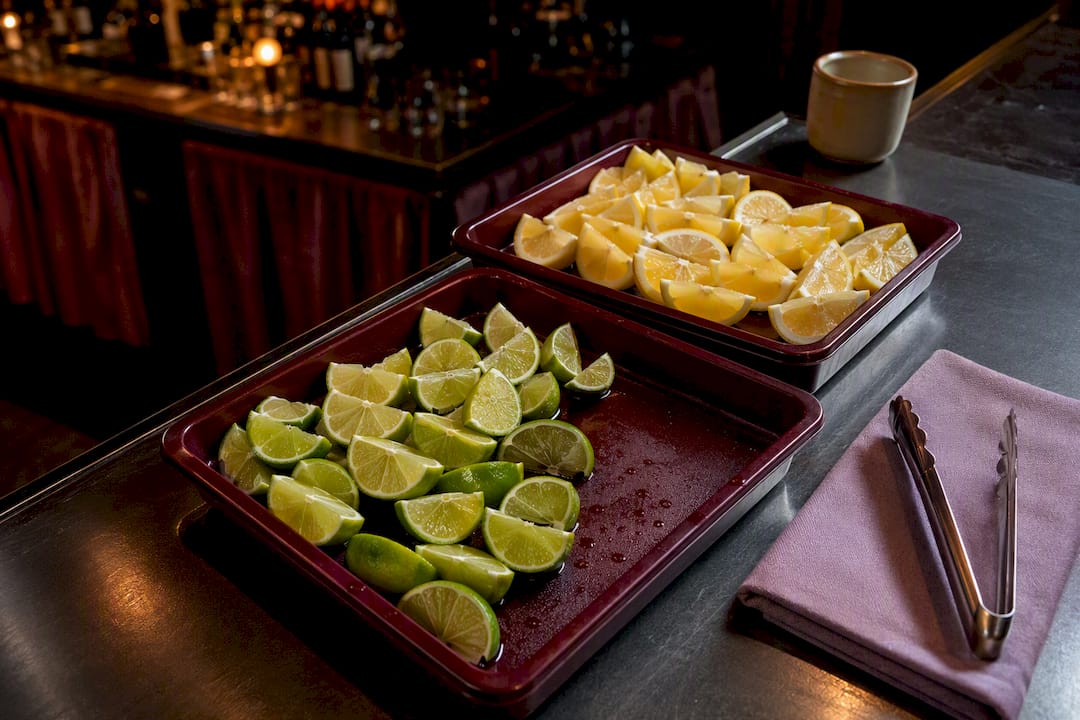
Wash every garnish under running water, prep it on a sanitized board, store it covered at 40°F or below, stock only a two-hour supply at the well, and toss whatever’s left after 24 hours. Skip bare-hand contact and keep a dedicated set of tools for produce. That’s the whole system. Nearly 70% of lemon slices tested in bars carried microbial growth, so the margin for skipping steps is thin.
TL;DR:
- Nearly 70% of lemon slices tested in bars carried microbial growth, emphasizing the importance of strict handling and hygiene practices.
- Using small, labeled containers with a two-hour stock limit and discarding garnishes after 24 hours reduces contamination risks significantly.
- Proper cleaning protocols include washing produce under running water, sanitizing tools, and avoiding bare-hand contact with garnishes at all times.
- Storage at 40°F or below, airtight containers, and organized stations prevent spoilage and cross-contamination during service.
- Hiring trained staff who follow strict safety procedures ensures compliance and minimizes contamination, especially at large events.
Table of Contents
- Quick Garnish Storage Safety Checklist for Service
- Why Garnish Safety Actually Matters
- How to Clean and Prep Garnishes the Right Way
- Storage Rules: Temperature, Containers, and the 24-Hour Cycle
- Stopping Cross-Contamination and Allergen Mistakes
- Setting Up a Garnish Station That Fights Contamination on Its Own
- End-of-Shift Sanitation: The Routine That Prevents Overnight Buildup
- How Liquidcouragelv Handles Garnish Safety at Live Events
- Why Simple Rules Beat Complicated Ones
- Want This Handled for You? Hire Trained Staff Instead
- Where to Go for Official Garnish Safety Guidance
- Sources
Quick Garnish Storage Safety Checklist for Service
You don’t need a manual mid-shift. You need five things you can check in ten seconds each:
- Stock only enough garnish for a short period at the well; keep the rest refrigerated
- Label every container with prep time and discard time
- Grab garnishes with tongs or a scoop, never fingers
- Keep trays covered when you’re not actively serving from them
- Drain, wipe, and sanitize the whole station at the end of shift
Post this near the well. New hires follow it without needing a lecture, and managers can glance at a tray and know instantly if something’s overdue.
Why Garnish Safety Actually Matters
A lemon wedge looks harmless sitting on a rim. It isn’t always. Testing across 21 restaurants found 25 different microbial species living on bar garnishes, with lemon slices as the worst offender.
The uncomfortable number: close to 70% of lemon slices sampled in that testing came back positive for microbial growth. That’s not a fringe case. It’s the default outcome when citrus sits out uncovered, gets handled with bare hands, or shares a well with melting ice for hours.
The transfer routes are simple. A bartender touches cash, a phone, a dirty glass, then a lime wedge. Wet garnish surfaces pick up and hold bacteria far more readily than dry ones, which is part of why standing water in a garnish tray is a bigger problem than people assume. Produce itself can already carry contamination from the farm or transport chain before it ever reaches your bar, so treating garnishes as ready-to-eat food, not decoration, matters.
The downside isn’t hypothetical. Foodborne illness complaints, allergic reactions from cross-contact, and the reputational hit of a health inspection citation all trace back to this exact oversight. Garnish cross-contamination remains one of the most overlooked risks in bar service, mostly because nobody thinks of a lime wedge as a food safety issue until it becomes one.
How to Clean and Prep Garnishes the Right Way
Prep is where most contamination either gets fixed or gets baked in. Follow this order every time:
- Inspect on delivery. Toss anything bruised, moldy, or soft. Damaged produce spoils faster and often carries higher bacterial loads already.
- Wash under running potable water. The FDA recommends washing produce under running water rather than soap, which can leave residue and isn’t necessary for removing surface bacteria.
- Consider a vinegar rinse as an optional extra. Lab testing found that vinegar and 5% salt-in-vinegar washes reduced bacterial contamination on garnishes. This isn’t official FDA guidance, so treat it as a supplemental step, not a replacement for running-water washing.
- Cut on a dedicated, sanitized board. Never on the bar top. A board reserved for produce prevents cross-contact with raw proteins or allergen residue.
- Portion and label. Drain excess water, load into containers, and mark prep time and discard time before the container ever hits the well.
Pro Tip: Wash a full day’s citrus and herbs at the start of shift, but only cut what you’ll use in the next two hours. Pre-cut garnish sitting for six hours loses both texture and safety margin.
Storage Rules: Temperature, Containers, and the 24-Hour Cycle
Storage is where good prep either holds up or falls apart. Get these four things right and you’ve covered most of your risk:
- Keep the fridge at 40°F or below. The FDA sets this threshold for perishable produce, and it’s worth checking with an actual thermometer rather than trusting the dial.
- Use lidded, airtight containers or covered garnish wells. Open-air trays invite airborne contamination and dry out fruit faster.
- Store olives and cherries in their own brine or jars, not mixed loose in a shared tray where liquids cross-contaminate.
- Stock a two-hour par at the point of service. Industry guidance on garnish quality control recommends limiting well stock to a two-hour supply, refreshing from refrigerated backup rather than letting one batch sit too long.
- Refresh or discard everything on a 24-hour cycle, no exceptions for garnish that “still looks fine.”
- Label every container with a prep timestamp and a discard timestamp. Without that label, nobody enforces the cycle. With it, a manager can scan the line in seconds.
That two-hour par and 24-hour discard rule only works if someone’s actually reading the labels, which is the part most bars skip.
Stopping Cross-Contamination and Allergen Mistakes
Fast-paced service is exactly when cross-contact happens. A rushed bartender grabs the same knife for a lime and a protein garnish, or touches ice with the same hand that just handled a citrus wedge.
- Use one cutting board and knife set for ready-to-eat garnishes, separate from anything touching raw proteins.
- Never touch garnishes or ice with bare hands. Tongs and scoops are non-negotiable, not optional flair.
- Wash hands on a fixed cadence, not just when visibly dirty.
- Label high-risk garnishes clearly (nuts, certain fruits) and train staff to repeat back allergy requests before building a drink. Liquidcouragelv’s own allergy-friendly cocktail service guide breaks down exactly what planners should require from any bar team.
Pro Tip: Color-code your cutting boards. A green board for citrus and herbs, a red one for anything touching raw protein, removes the guesswork that causes most cross-contact errors during a rush.
Setting Up a Garnish Station That Fights Contamination on Its Own
Good layout does half the work before a single drink gets built. A lidded garnish tray with a separately draining ice reservoir keeps fruit cold without sitting in pooled meltwater, which is one of the fastest ways citrus turns waterlogged and slimy.
- Separate wells for citrus, herbs, olives and cherries, and non-perishables so juices and brines don’t mix.
- Keep a sanitizing station within arm’s reach of the garnish tray, not across the bar.
- Position the backup fridge close enough that restocking takes seconds, not a trip to the back.
A well-organized station makes the two-hour par easy to maintain because refilling from the fridge takes less effort than letting old garnish linger. For larger events, the same logic applies to overall stocking, covered in Liquidcouragelv’s guide to bar planning for corporate events.
End-of-Shift Sanitation: The Routine That Prevents Overnight Buildup
Garnish safety doesn’t end when the bar closes. Standing meltwater left in an ice reservoir overnight is a breeding ground, and skipping this step undoes everything done right during service.
- Drain and dry ice reservoirs completely. Don’t leave residual water sitting until the next shift.
- Wash and sanitize garnish trays at minimum every 24 hours, per industry quality control standards.
- Sanitize cutting boards and knives after use, then air-dry fully before storage. Wet tools sealed away overnight grow bacteria faster than dry ones.
- Log the sanitation task with a timestamp so a manager can verify it happened without having to ask.
Experienced staff also avoid “marrying” leftover garnish into a fresh batch, a habit that quietly defeats the entire 24-hour cycle.
How Liquidcouragelv Handles Garnish Safety at Live Events
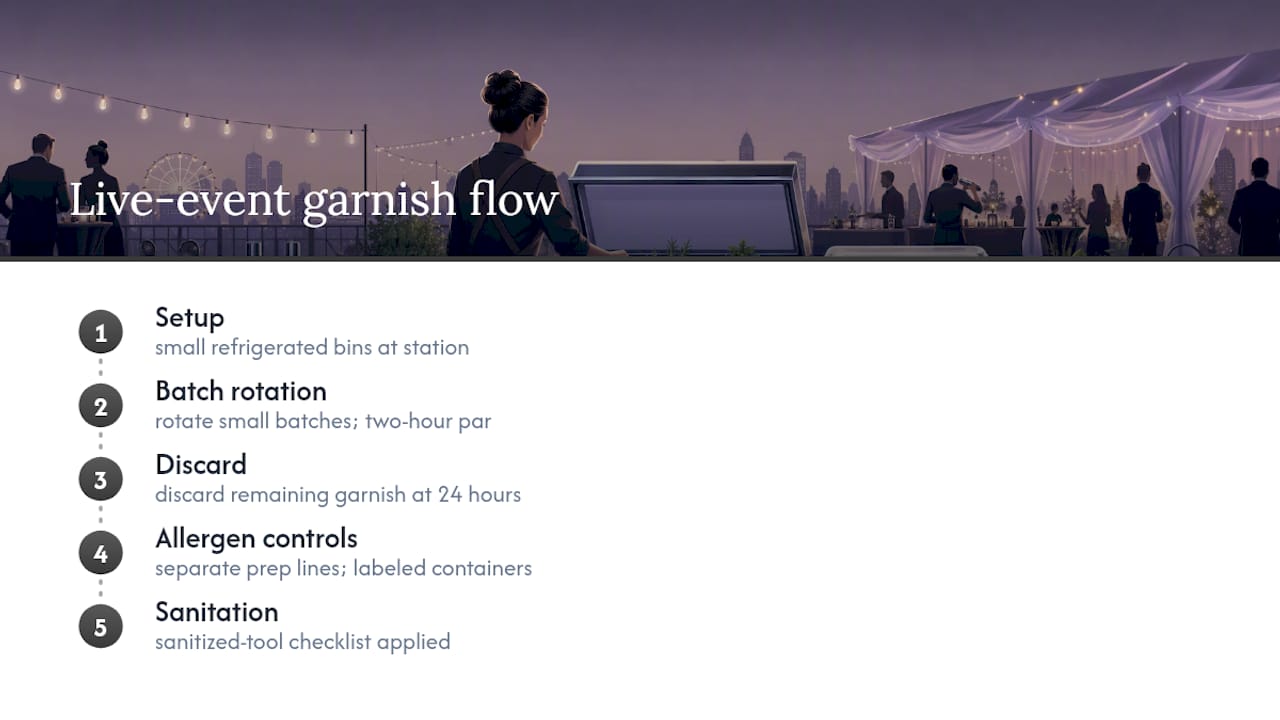
Mobile events add a wrinkle static bars don’t deal with: no walk-in cooler down the hall. Liquidcouragelv stages small refrigerated bins directly at or beside the service station, which keeps garnish cold and cuts the time any citrus or herb spends sitting out unrefrigerated. Garnishes rotate in small batches through the event rather than one large tray sitting exposed for hours.
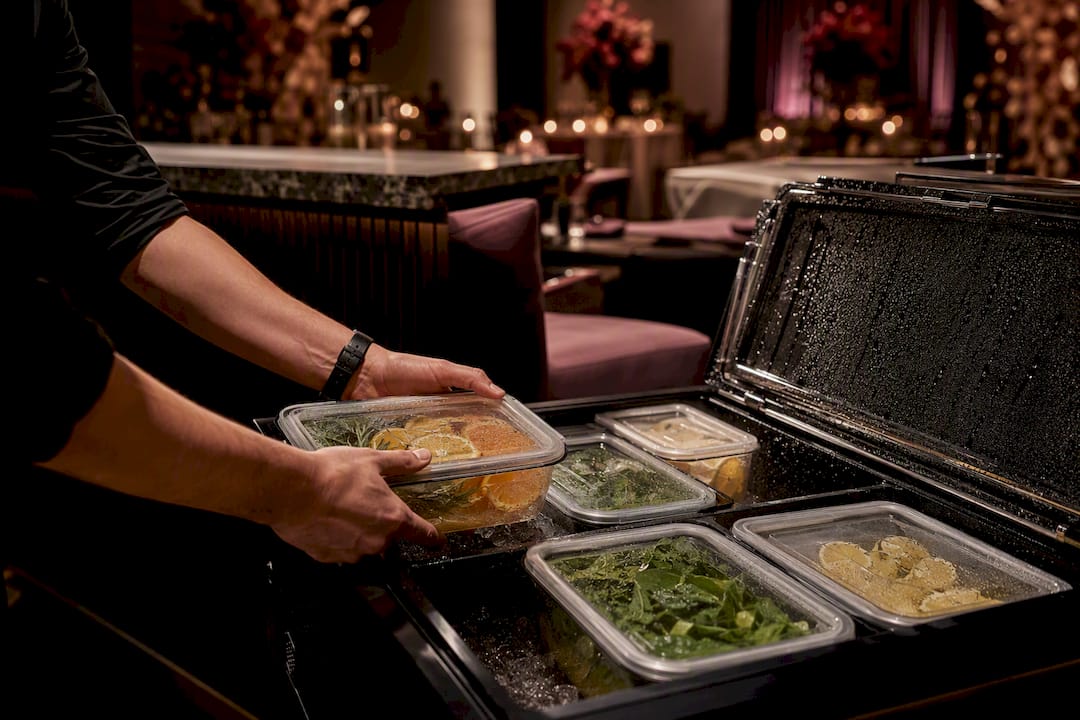
Allergy-friendly service gets built into the setup itself: separate prep lines for common allergens, clear labeling on containers, and staff trained to confirm requests before pouring. For weddings and corporate receptions, the same two-hour par, 24-hour discard, and sanitized-tool checklist applies whether the bar is in a hotel ballroom or a backyard tent.
Why Simple Rules Beat Complicated Ones
Bars don’t fail at garnish safety because the rules are hard. They fail because the rules never get written down or enforced. A two-hour par, a covered tray, and a sanitized board are simple enough that a new hire can learn them in one shift.
The habit sticks when a manager runs a thirty-second spot check now and then instead of assuming everyone remembers. Simple systems survive a Friday night rush. Complicated ones don’t.
— Brennon
Want This Handled for You? Hire Trained Staff Instead
Running your own garnish station means owning every step above, on top of everything else a wedding or corporate event demands. Liquidcouragelv’s mobile bartenders bring that discipline built in: onsite refrigerated storage, documented allergy protocols, and trained staff who already know the two-hour par without a laminated sign taped to the well.

That’s the real difference between hiring a bartender and hiring a system. You’re not hoping the person behind the bar read a safety checklist once. You’re getting a team that runs the same sanitized, labeled, temperature-checked process at every event, whether it’s a backyard anniversary party or a 300-guest corporate reception. If you’re planning a wedding or private event in Las Vegas or Henderson, the fastest way to see how this works is to check Liquidcouragelv’s event bartending services and request a quote for your date.
Where to Go for Official Garnish Safety Guidance
For primary sourcing beyond this checklist, start with the FDA’s produce storage and handling guidance for temperature and washing standards. Industry-specific rules on par levels and rotation come from the garnish quality control resource on breakage and spoilage. For a deeper look at what’s actually living on bar garnishes, the contamination study on restaurant lemon wedges and coverage of general produce washing techniques both offer practical detail worth reading in full.
Sources
- Restaurant lemon wedges: how dangerous are they?
- Breakage and Spoilage — Quality Control of Garnishes
- Selecting and serving produce safely
- Decontamination Strategies for Potentially Pathogenic Bacteria Isolated From Commonly Used Food Garnishes
- Garnish cross-contamination: The hidden risk in your bar