
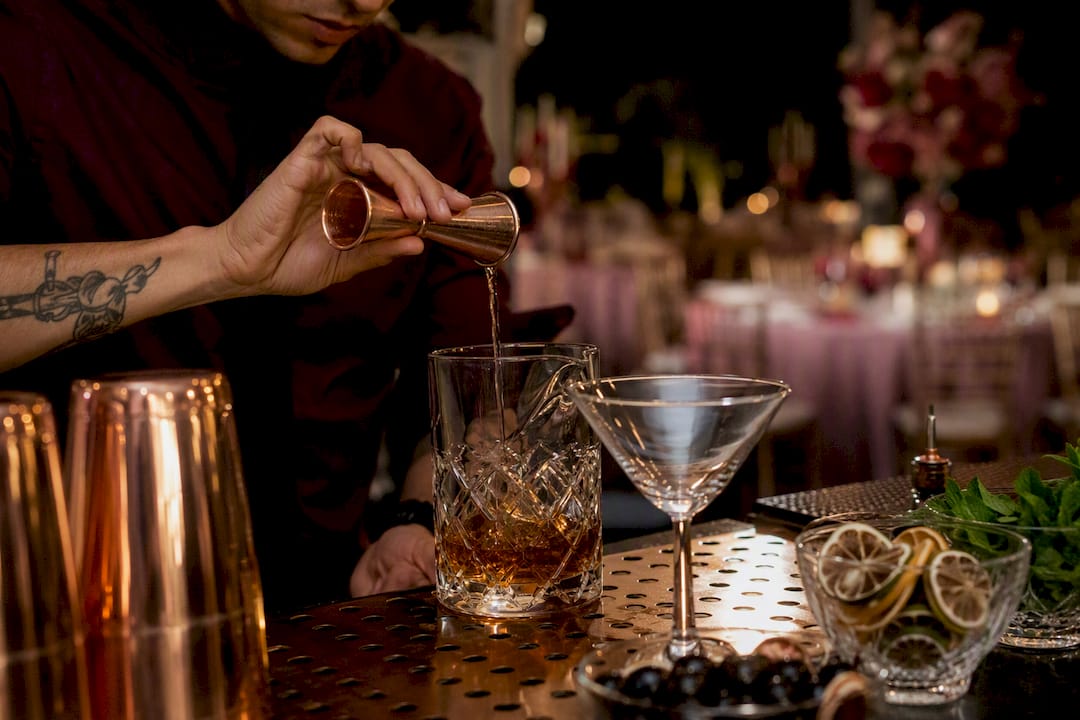
Most event alcohol policies cap purchases at two drinks at a time, limit total consumption to somewhere between one and three drinks per person, and restrict service to a 2- to 3-hour window depending on whether a meal is served. If you’re organizing an event, the three moves that matter right now: confirm your venue’s permit and licensing conditions, write your per-person cap and service window into the event plan before you order alcohol, and assign trained servers plus at least one sober monitor before doors open.
Everything else is detail. But the detail is where permits get denied and events get shut down early, so it’s worth getting right.
- Per-purchase limit: typically two drinks per transaction
- Per-person cap: often 1 to 3 drinks total, depending on event type and venue
- Service window: 2 hours for receptions, up to 2.5 hours with a meal, longer for some public events
- Staffing: trained servers plus sober monitors scaled to guest count
Key Takeaways
Reliable drink maximum policies combine a numeric per-person cap, a defined service window, and trained staff empowered to enforce both without exception.
| Point | Details |
|---|---|
| Set two limits, not one | Combine a per-purchase cap (commonly two drinks) with a per-person event total (often 1 to 3 drinks). |
| Match service window to meal presence | Plan 2 hours for receptions without a meal, up to 2.5 hours when a full meal is served. |
| Calculate quantities with guest count x hours | Use adult headcount multiplied by service hours or a flat per-person cap, then split by drink type. |
| Staff for enforcement, not just service | Assign trained servers and sober monitors scaled to guest count and whether the area is confined. |
| Check permits at every layer | Confirm state liquor rules, city licensing, and venue-specific contract terms before finalizing your policy. |
Table of Contents
- What Are Common Drink Maximum Policy Limits at Events?
- How Big Is a Standard Drink at a Permitted Event?
- How Long Can Alcohol Service Run at an Event?
- How Do You Calculate Total Alcohol Needed for an Event?
- What Staffing Do You Need to Enforce Drink Limits?
- What Permits and Venue Rules Affect Drink Maximums?
- How Do You Handle VIPs and Guest Exceptions?
- What Event Organizers Get Wrong About Drink Limits
- Sources
What Are Common Drink Maximum Policy Limits at Events?
Two numbers show up again and again in event alcohol policy: two drinks per purchase, and three drinks per person for the whole event. Neither is arbitrary. Both come from decades of institutions and regulators trying to slow down the pace of consumption without banning alcohol outright.
The two-drink-per-purchase rule is the more universal of the pair. It appears in state liquor rules, university event policies, and venue contracts because it does one simple thing: it stops a single guest from stockpiling four cocktails at the bar during a rush and drinking them back to back. Oregon’s public venue rules cap purchases at no more than two drinks at one time, or one bottle of wine or cider no larger than 750 ml, and that structure is echoed across most state frameworks.
The per-person, per-event cap is different. It’s less about pacing and more about total exposure. Dickinson College’s event alcohol policy sets a maximum quantity of three drinks per person per event, which becomes the anchor for how much alcohol organizers are allowed to order in the first place, not just how it’s served.
How these numbers shift by event format:
- Private seated dinner: often the most flexible, since a meal is being served and guests are stationary and easier to monitor.
- Cocktail reception: tighter windows, standing crowd, usually the two-drink purchase rule plus a shorter service time.
- Walk-around festival or public event: the strictest combination of confined drinking areas, monitor staffing tied to attendance, and hard per-purchase limits.
Prevention-focused public health guides frame these limits as tools that scale with risk, not fixed rules. A policy resource on event restrictions lists options ranging from total bans to designated drinking areas to straightforward per-sale beverage limits, and most real-world policies mix two or three of these tools rather than relying on one.
How Big Is a Standard Drink at a Permitted Event?
Serving-size caps are the piece organizers overlook until a permit reviewer flags it. A per-person drink limit only means something if “a drink” is a fixed volume, and most permits spell that out.
The common thresholds you’ll see in permit language and venue contracts:
- Draught beer: up to 24 oz per serve
- Wine: up to 10 oz per serve
- Spirits: up to 3 fl oz per serve
Those figures come directly from institutional policy language, including Dickinson College’s alcohol event guidelines, and they’re the baseline most Nevada venues and caterers work from when writing service plans. A 3 oz spirits pour sounds small compared to a bar’s standard cocktail, and that’s the point: mixed drinks made with a measured 1.5 oz shot leave room for two pours before hitting a single serving cap.
Tasting events run smaller still. Wine tastings typically pour 1 to 2 oz samples, and beer tastings run 2 to 4 oz, both well under the standard serve. Some jurisdictions specify these tasting pours directly in permit guides, and British Columbia’s special event permit guide is a clear example of how granular that language gets, even though its exact figures apply to that jurisdiction rather than U.S. permits.
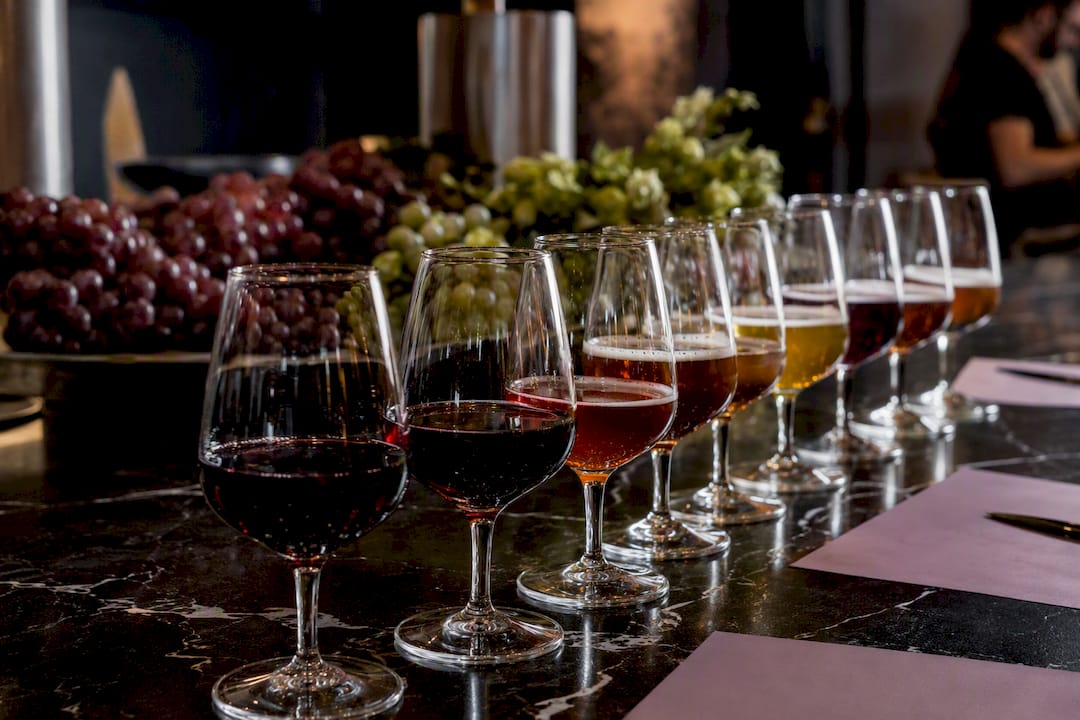
Serving size dictates glassware and pour policy more than most organizers expect. A 10 oz wine cap makes a standard 12 oz glass pointless unless you’re pouring under the rim, and a 24 oz beer cap usually means one pour per cup rather than a refill system.
How Long Can Alcohol Service Run at an Event?
Most alcohol service windows fall between 2 and 2.5 hours, and whether a meal is served is the single biggest factor in which number applies to your event.
The University of Southern Indiana’s alcohol policy draws that line explicitly: events serving a full meal get up to 2.5 hours of alcohol service, while receptions with food but no full meal are capped at 2 hours. Some public events, particularly festivals with extended hours, get permitted windows up to 5 hours, but that comes paired with stricter staffing and monitor requirements to offset the longer exposure.
The logic regulators apply is straightforward:
- Food slows absorption and extends the safe window for service.
- Standing receptions without food see faster consumption, so the window shrinks.
- Longer public events need more monitors and tighter per-purchase limits to balance the extended time.
For scheduling, start alcohol service after guests have already had access to appetizers or a first course, not before, and announce a clear last-call time at least 30 minutes ahead. Printing the service window on programs or signage removes the ambiguity that causes friction when the bar closes.
How Do You Calculate Total Alcohol Needed for an Event?
The standard institutional method multiplies your number of 21+ guests by event hours, then divides by drink type, and it works whether you’re planning a wedding for 50 or a corporate mixer for 200.
- Count adult guests. Only guests 21 and older factor into the alcohol calculation.
- Set your per-person rate. Use either an hourly rate (roughly one drink per person per hour is standard for moderate-paced events) or a flat per-event cap like the three-drink maximum several college policies use.
- Multiply guests by hours (or by the flat cap) to get total drinks. This is the number Dickinson College’s methodology uses: expected guests over 21 multiplied by event hours.
- Split total drinks across beer, wine, and spirits. A common allocation is 40% beer, 35% wine, 25% spirits, adjusted for your crowd.
- Convert to bottles and cases using standard serving sizes per bottle.
Here’s the math for a 3 hour wedding reception with 50 adult guests, using a 3 drink per person cap instead of an hourly rate:
Round every category up, never down, and build in a 10% buffer for no-shows who trade places with heavier drinkers or last-minute guest additions. Our wedding alcohol quantity guide walks through this math with Las Vegas specific guest patterns if you want a second pass on the numbers.
What Staffing Do You Need to Enforce Drink Limits?
Numeric caps mean nothing without staff empowered to enforce them, and most permit denials trace back to understaffing rather than the drink limits themselves.
Oregon’s public venue rules tie the required number of alcohol monitors to attendance, scaling up as guest counts rise and requiring more monitors for confined drinking areas than open ones. Campus policies use a similar logic: some set roughly two sober monitors per 50 guests, with additional coverage required whenever minors might be present in the same space as alcohol service.
What that staffing actually needs to do on the ground:
- Trained servers who understand refusal responsibility and enforce the two-drink-per-purchase rule without exception.
- Sober monitors positioned at entry points and near the bar, not just wandering the room.
- ID checks at every point of sale, not just at the door.
- Drink ticketing or wristband systems that make per-person caps enforceable without confrontation.
- A documented incident protocol for cutting off a guest and handling pushback calmly.
Federal law also requires standard government health warnings on alcoholic beverage containers, and staff should know that messaging exists as part of the broader safety framework they’re enforcing, even though it’s printed rather than spoken.
Pro Tip: Hiring a licensed mobile bartending team solves most of this in one move. Trained servers already know refusal protocols, monitor drink counts by habit, and won’t need a crash course on your event’s specific cap the morning of the wedding.
Confirming your bartender age and licensing requirements ahead of time avoids a last-minute staffing scramble when a permit reviewer asks for server credentials.
What Permits and Venue Rules Affect Drink Maximums?
Three layers of authority typically set your drink maximums: state liquor control boards, city or county licensing offices, and the venue itself. Each can add restrictions on top of the others, and organizers who only check one layer are the ones who get surprised on event day.
Permit conditions commonly include:
- BYOB bans, even at private events, when alcohol is served rather than self-poured
- Restrictions on kegs or bulk open containers at public and semi-public events
- Confined-area requirements whenever minors might attend, keeping alcohol service physically separated
- Documentation requirements for events over a certain attendance threshold, sometimes including a written security plan
The National Alcohol Beverage Control Association notes that U.S. alcohol regulation is deeply state and locally driven, so a rule that applies in one county may not exist thirty miles away. That’s exactly why checking both your state’s liquor control rules and your specific venue’s contract matters, rather than assuming last year’s event policy still applies.
If your event needs a variance from standard limits, most authorities want a security plan, proof of trained staff, and lead time of several weeks minimum. Confirming your event insurance coverage alongside your permit application strengthens that request, since insurers and regulators often ask for overlapping documentation.
How Do You Handle VIPs and Guest Exceptions?
Every drink maximum policy eventually runs into a guest who wants an exception, and how you handle that moment either protects your permit or undermines it.
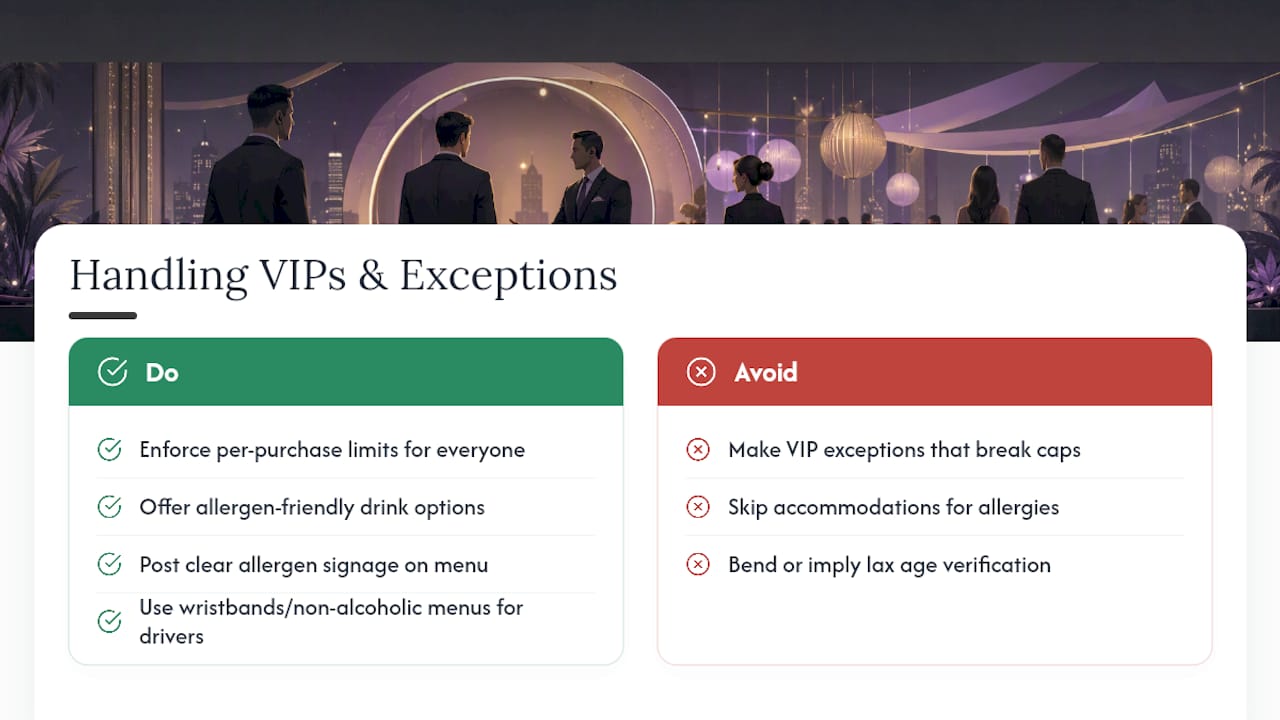
VIP tables and open bar packages don’t override per-purchase limits at events operating under a permit condition. What they can do is add convenience: dedicated service staff, reserved seating near the bar, or a curated cocktail menu, all still working within the same two-drink-per-purchase structure everyone else follows. Making an exception for a VIP that violates a documented cap is the kind of thing that shows up in an incident report if something goes wrong later.
Allergies and dietary restrictions are a different category entirely and deserve real accommodation. A guest with a sulfite sensitivity to wine, a gluten intolerance affecting beer choice, or a mixer allergy needs alternative options built into your bar menu, not an exception to the drink count. Stock at least one allergen-friendly beer, a low-sulfite wine option, and clear signage listing common allergens in specialty cocktails.
Designated drivers and guests choosing not to drink need visible signals, too. Wristbands or a simple non-alcoholic drink menu keep servers from accidentally pouring for someone who’s opted out, and that small detail prevents more enforcement headaches than most organizers expect.
The one place flexibility should never bend is age verification. No VIP status changes a minor’s access to alcohol, and no exception process should suggest otherwise.
What Event Organizers Get Wrong About Drink Limits
The biggest mistake organizers make isn’t setting the wrong number, it’s treating the number as the whole policy. A three-drink cap written on a permit application means nothing on event day if nobody’s tracking pours or checking IDs at the second round.
Conventional advice tends to stop at “check your local laws,” which is true but useless without a next step. The real gap is operational: policies fail when the numeric cap and the enforcement mechanism live in different documents, or worse, only in someone’s memory. Every policy examined here, from Dickinson’s methodology to Oregon’s monitor ratios, pairs a number with a staffing requirement. That pairing is the actual lesson, not the specific figures.
If you’re organizing an event this year, prioritize the enforcement side first. Anyone can write “two drinks per purchase” into a plan. Fewer organizers build the ticketing system, staff training, and monitor coverage that makes that number real. Get that structure right, and the specific caps matter far less than most guides suggest.
— Brennon
Planning an event in Las Vegas or Henderson that needs a policy like this executed correctly, not just written down? Liquidcouragelv’s event bartending services build drink caps, service windows, and ID protocols directly into staffing and service plans, so the numbers on paper match what actually happens at the bar.
Sources
- Events with Alcohol Policy (Dickinson College — student group manual)
- Alcohol Policy at Sponsored Events | USI Employee Handbook
- OAR 845-006-0430 – Alcohol Management in Public Venues
- U.S. Code — Federal warning requirement for alcoholic beverages