
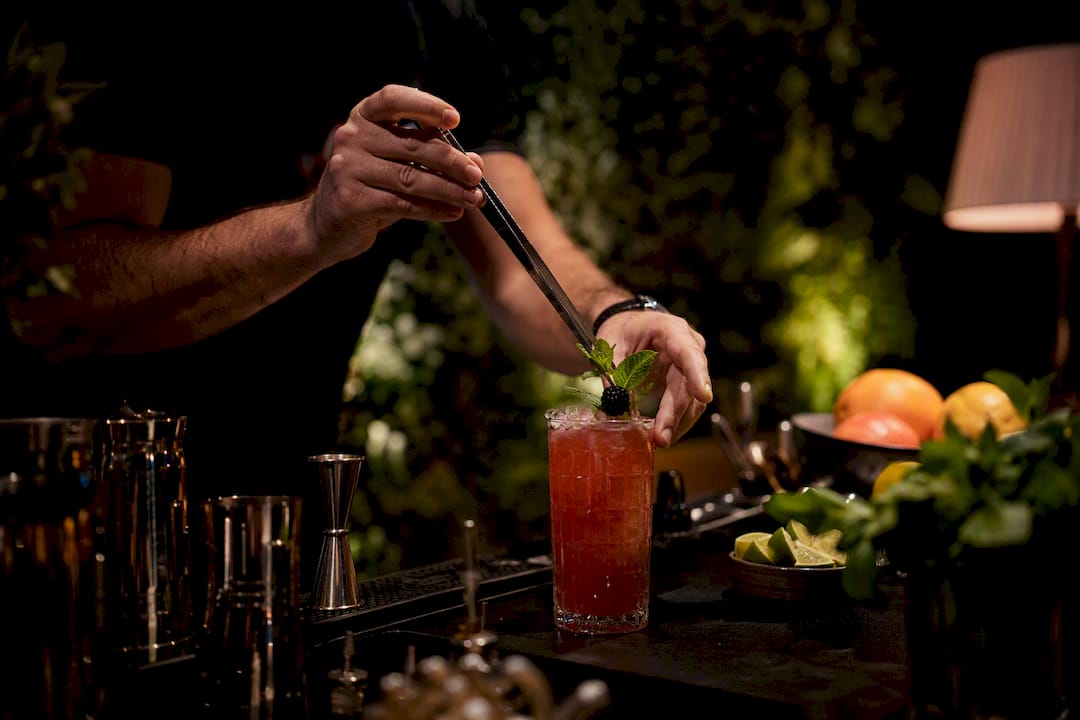
A sustainable bar service handles your event’s drinks while cutting waste, sourcing responsibly, and giving you proof it happened, not just a promise. It typically means low-carbon ingredient sourcing, compostable or reusable serviceware instead of single-use plastic, and a measurable waste-diversion outcome after the last cocktail is poured.
If you’re evaluating vendors this week, do three things:
- Ask for sourcing proof: specific distillery names, produce suppliers, or a certification like the Green Restaurant Association.
- Get sustainability language written into the service contract, not just discussed verbally.
- Reserve compost or food-donation pickup before the event, not after, since most local haulers need lead time.
Verification prompts worth asking any vendor: Are they LEED-certified at the venue level? Do they use a closed-loop delivery system like ecoSPIRITS’ ecoTOTE? Can they show a diversion rate from a past event?
Key Takeaways
A sustainable bar service delivers measurable waste diversion and traceable sourcing, and planners can enforce both by writing them directly into the vendor contract.
| Point | Details |
|---|---|
| Verify before you sign | Ask for named suppliers, certification proof, and a past diversion number, not vague green language. |
| Match serviceware to guest count | Reusable glass tends to work better above 150 guests; compostables need real composting infrastructure to matter. |
| Write it into the contract | Include diversion targets, sourcing declarations, and certification proof as enforceable clauses, not verbal promises. |
| Train staff and inform guests | Bartenders who explain the plan at the point of service drive higher guest participation than signage alone. |
| Liquidcouragelv builds it in | Liquidcouragelv treats sustainable sourcing and reusable serviceware as standard practice for Las Vegas and Henderson events, with contract language planners can verify. |
Table of Contents
- What Makes Up a Real Sustainable Bar Service?
- Which Serviceware Swaps Actually Cut Waste?
- How Do Bars Reduce Waste Behind the Scenes?
- What Does a Sustainable Bar Budget Actually Look Like?
- How Do You Spot Greenwashing in a Bar Vendor?
- What Does a Real Sustainable Bar Setup Look Like in Practice?
- Why Does Local and Seasonal Sourcing Matter So Much?
- How Do You Cut Single-Use Plastic at an Event Bar?
- What Should an Eco-Friendly Mobile Bar Setup Include?
- How Should Bar Staff Be Trained on Sustainability?
- What Counts as a Sustainable Beverage Beyond Sourcing?
- How Do You Get Guests to Actually Participate?
- Why Sustainability Isn’t Just a Marketing Layer for Bar Service
- Get a Sustainability-Ready Bar Quote for Your Event
- Frequently Asked Questions
- Sources
What Makes Up a Real Sustainable Bar Service?
A genuinely sustainable bar service isn’t one green gesture bolted onto a normal bar setup. It’s a full operational shift across six areas, and a vendor who’s only nailed one or two is doing marketing, not practice.
- Sourcing: Local spirits, seasonal produce, and beer from regional breweries instead of whatever ships cheapest.
- Serviceware strategy: A defined choice between reusable glassware and BPI-certified compostables, not random mixing of both.
- Waste diversion: A plan for where citrus peels, unused garnish, and food scraps actually go after the event.
- Staff training: Bartenders who know portion control and can explain the sustainability plan to curious guests.
- Water and energy efficiency: On-site glass washing systems or low-draw refrigeration instead of default disposables.
- Mobile-bar logistics: A trailer or setup designed to minimize generator fuel use and transport waste.
In practice, this looks like a vendor pouring a Nevada-distilled gin instead of a bulk import, running a rinse station behind the bar for reusable rocks glasses, and coordinating a compost pickup with the venue’s own waste hauler. Ask any bidder how they handle back-of-house coordination and measurement reporting. If they can’t describe a process, they don’t have one.
Which Serviceware Swaps Actually Cut Waste?
The swap that matters most depends on your guest count, not your green ambitions. A 40-person backyard wedding and a 400-person conference need different answers.
- Reusable glassware programs with on-site or off-site washing, ideal for seated events with a fixed footprint.
- BPI-certified compostable cups made from PLA, useful for standing receptions where breakage risk is high.
- Edible garnishes or no-straw defaults, which quietly eliminate a huge share of bar litter.
- Closed-loop spirit delivery systems, like the ecoTOTE model ecoSPIRITS is bringing to Nevada, which refill from bulk containers instead of individual glass bottles.
On equipment, ask about low-energy refrigerated units and whether the vendor runs an efficient sanitizing station versus defaulting to single-use everything because it’s easier to load in and out.
Pro Tip: Reusable glass usually beats compostables for anything over 150 guests, because compostable cups still need commercial composting infrastructure to break down properly, and most venues don’t have it on-site. If the venue has no compost hauler, reusables avoid the problem entirely.
How Do Bars Reduce Waste Behind the Scenes?
Waste reduction happens in the small, repeatable moves a trained bartender makes a hundred times a night, not in a single big gesture.
- Reclaim citrus peels for house-made syrups, bitters, or infused simple syrup instead of tossing them.
- Save spent coffee grounds or herb trims for compost pickup or, where local partnerships allow, farm feed donation.
- Batch high-volume cocktails ahead of time to cut over-pour and reduce liquor waste versus made-to-order chaos.
- Route unopened, untouched food and beverage surplus to a donation partner instead of a dumpster.
Coctelería Consciente’s nonprofit model, built around the 4Rs framework of rethink, reduce, reuse, recycle, is a good reference point for how structured ingredient reuse can get.
Pro Tip: Ask any vendor for a simple pounds-to-guests number after the event. If they can’t produce one, they’re not actually measuring diversion, they’re estimating it.
What Does a Sustainable Bar Budget Actually Look Like?
Sustainability adds real line items to a bar budget, and pretending otherwise sets you up for a fight during final invoicing. Build these into your planning from day one.
Typical cost drivers include:
- Reusable glassware handling and on-site washing labor
- Compost or food-donation pickup fees
- Premium pricing for local or small-batch spirits versus mass-market brands
- Staff training time built into the vendor’s rate
Timeline it like this:
- 8 to 12 weeks out: Lock sourcing commitments and confirm which serviceware strategy fits your guest count.
- 4 to 6 weeks out: Finalize compost or donation pickup with a local partner.
- 1 to 2 weeks out: Confirm final headcount so batching and portioning estimates are accurate.
- Post-event: Request a diversion report or waste summary within a week.
Put these clauses directly into the contract: a stated diversion target, a written sourcing declaration naming actual suppliers, proof of any certification claimed, and a credit or penalty tied to whether the sustainability commitments were met. Vague language here is where good intentions quietly die.
How Do You Spot Greenwashing in a Bar Vendor?
Ask pointed questions during vendor selection, because vague sustainability language is cheap and easy to say out loud.
- Do they buy spirits in bulk or via a closed-loop system, or are they pouring individual bottles and calling it green?
- Who’s their composting partner, and can they name them?
- How do bartenders get trained on portion control and waste handling?
- What does their post-event reporting actually include?
Red flags worth walking away from:
- Sustainability claims with no specifics: brand names, supplier names, or certification numbers.
- Resistance to putting any sustainability language into the signed contract.
- No answer when asked how they measure results after the event.
When you do get documentation, know what to ask for by name: LEED certification at the venue level, BPI certification for any compostable serviceware claimed, and Green Restaurant Association standing for the beverage operation itself. A vendor with real practices produces these on request within a day or two, not a vague “we’ll get back to you.”
What Does a Real Sustainable Bar Setup Look Like in Practice?
A mid-size Henderson corporate event is a useful example of how these pieces fit together operationally. The bar program for a 150-guest reception ran on locally sourced spirits, a reusable glassware rotation with an on-site rinse station, and a pre-arranged compost pickup for citrus and garnish waste.
- Local Nevada distillery spirits replaced two of the standard well brands.
- Reusable rocks and coupe glasses ran through a three-basin wash station instead of disposables.
- Compost pickup was scheduled before the event, not scrambled after.
The measurable outcome: a documented pounds-of-waste-diverted count handed to the client within a week of the event, the same kind of reporting standard that Resorts World Las Vegas uses at the venue level, where the property reports diverting a large majority of construction waste by weight and cutting energy and water use significantly against industry baselines.
If a vendor can’t hand you a number like that after your event, ask why not before you sign anything.
Why Does Local and Seasonal Sourcing Matter So Much?
Sourcing is where sustainable bar service either shows up for real or stays a talking point. Local spirits, seasonal produce, and regional beer cut transport emissions and usually taste better, since a citrus-forward cocktail made with fruit picked that week beats one made with fruit that traveled 2,000 miles in a truck.
For Las Vegas and Henderson events, that means favoring Nevada-distilled spirits over imports where quality allows, and building cocktail menus around what’s actually in season rather than forcing a summer citrus program in February. A good vendor treats the menu as flexible by design, swapping garnishes and mixers as growing seasons shift rather than locking a fixed list a year in advance.
Beer follows the same logic. Regional breweries typically ship shorter distances than national brands, and many small operations run more efficient water and energy use per barrel than large industrial breweries. Ask your vendor which breweries they work with and whether those relationships are direct or through a distributor several steps removed.
The tradeoff planners need to understand upfront: local and seasonal sourcing sometimes costs more per bottle or per case, especially with small-batch spirits, but it usually reduces the layers of packaging and transport that add hidden waste elsewhere in the supply chain. If your event has a signature cocktail program, this is the section of the RFP worth spending the most time on, since sourcing decisions ripple into everything from menu design to your craft cocktail selections.
How Do You Cut Single-Use Plastic at an Event Bar?
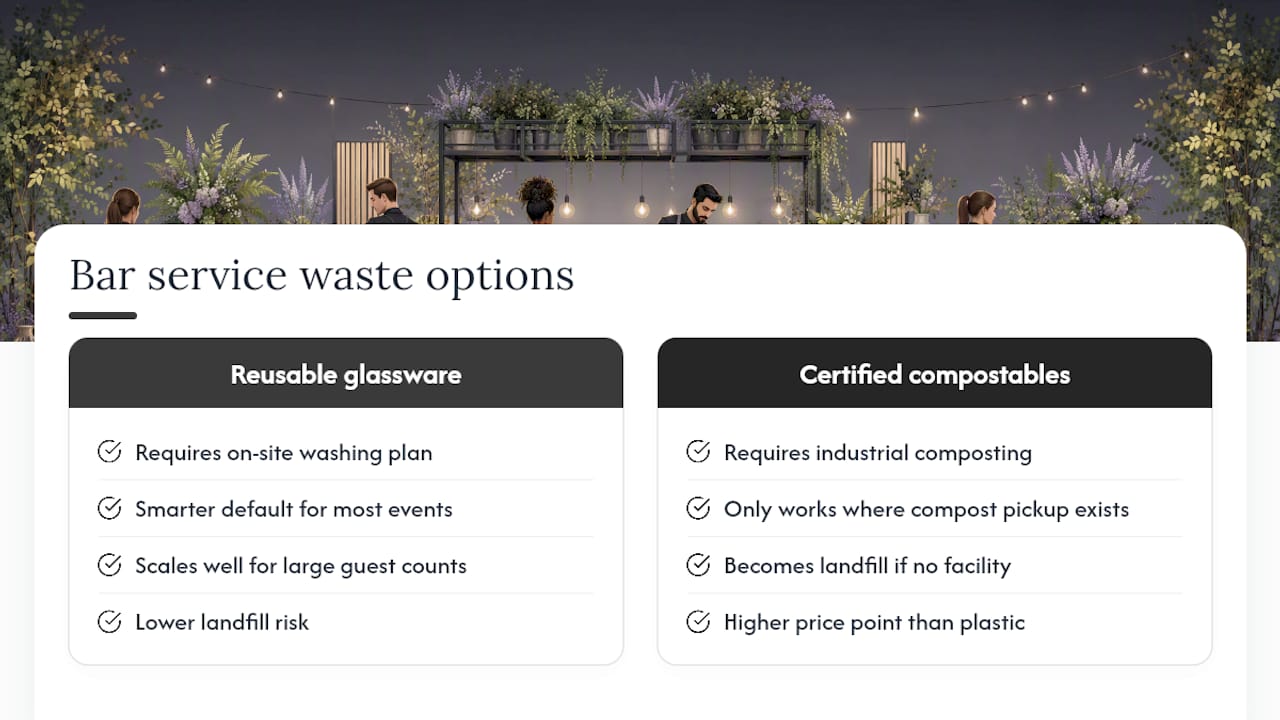
Single-use plastic is the most visible waste problem at any bar, and it’s also the easiest one to fix with a clear policy instead of a case-by-case scramble. The two real options are reusable serviceware with a washing plan, or certified compostables with a genuine composting pathway. Anything in between, like compostable cups with no compost pickup arranged, just becomes landfill waste with better marketing.
Straws and stir sticks are the low-hanging fruit. A no-straw default, with paper or reusable metal straws available only on request, eliminates a huge share of bar litter without anyone noticing much difference in service. Garnish picks made from bamboo or simply skipped in favor of a floating garnish cut plastic further.
The harder call is cups. BPI-certified PLA cups, the kind vendors like The Clean Pour market as part of biodegradable bar packages, only break down properly in industrial composting facilities. If your venue or city doesn’t have access to one, those cups end up in a landfill behaving almost exactly like plastic, just at a higher price point. That’s why the smarter default for most events, especially larger ones, is a reusable glassware rotation with on-site washing rather than betting on composting infrastructure that may not exist where your event is held.
Ask your vendor directly which pathway they’re proposing and why, based on your specific venue and guest count.
What Should an Eco-Friendly Mobile Bar Setup Include?
Mobile bar design matters more than most planners realize, because a trailer or cart built around efficiency choices behind the scenes can cut an event’s footprint before a single drink is poured. The build itself, from refrigeration to power draw, sets the ceiling on how sustainable the service can actually be.
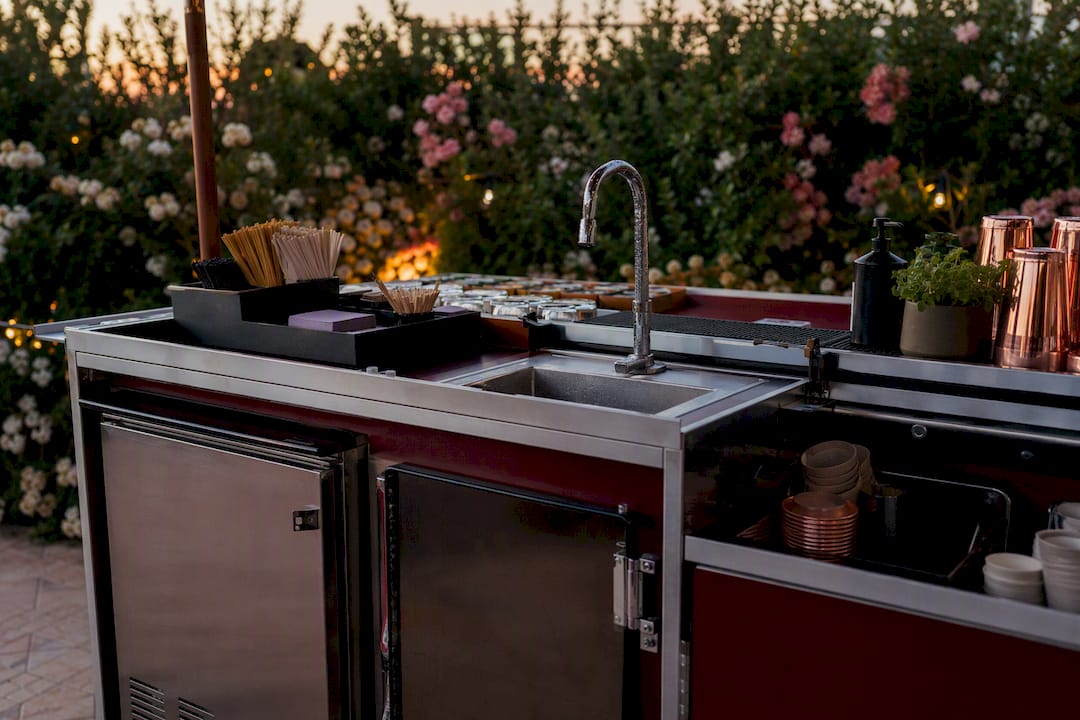
Efficient refrigeration is the biggest lever. Low-energy refrigerated units draw meaningfully less power than older compressor units, which matters at events running generators instead of grid power. A mobile bar that’s designed around efficient cooling reduces fuel burn over a multi-hour event, not just a marginal cost saving.
Water use is the second piece. A trailer built with an integrated wash-and-rinse station supports the reusable glassware programs mentioned earlier, letting bartenders wash glasses on-site instead of hauling disposables. That single design choice determines whether reusables are even logistically possible at your event.
Logistics matter beyond the bar itself. A well-planned mobile setup positions the bar to minimize walking distance for staff restocking from a supply vehicle, which sounds minor but adds up in fuel and time over a long event. For a deeper look at how mobile bars integrate into different venue types, see how mobile bars suit hotel ballrooms, which walks through the logistics tradeoffs planners face when choosing between a fixed venue bar and a mobile setup.
Ask any vendor bidding on your event what their trailer or cart is actually built around. Vague answers here usually mean the sustainability commitments stop at the menu and never reach the equipment.
How Should Bar Staff Be Trained on Sustainability?
Staff training is the cheapest, highest-impact lever in this whole checklist, and it’s the one most RFPs skip entirely. A bartender who understands portion control, waste routing, and how to talk to guests about the sustainability plan will outperform a fancy sourcing menu run by an untrained crew every time.
Training should cover concrete behaviors: pouring accurately to avoid over-pour waste, knowing which scraps get saved for reuse versus composted, and understanding where the reusable glassware or compostable cups actually go after service ends. Trained bartenders reduce waste at the point of service, and that single fact makes staff training worth more line-item attention than most planners give it.
Guest communication is the other half. A simple sign explaining “we’re using reusable glassware tonight” or a bartender who can answer a guest’s question about where the citrus peels are going does more for guest buy-in than a printed sustainability statement nobody reads. Clear messaging measurably increases guest participation in reuse and diversion programs, since most guests will cooperate with a green initiative once they understand what it is and why it’s happening.
Ask vendors directly whether training includes guest-facing talking points, or whether it’s purely operational. The best bar staff can do both at once without slowing down service, and that skill set matters more at a wedding cocktail hour than almost anywhere else, since cocktail hour service pace depends heavily on how well-trained the staff behind the bar actually are.
What Counts as a Sustainable Beverage Beyond Sourcing?
Sourcing locally is one lever. The category of the alcohol itself is another, and it’s one planners rarely ask about even though it can shift an event’s footprint meaningfully.
Organic spirits and wines are grown without synthetic pesticides or fertilizers, which reduces the chemical load on the land producing them. Biodynamic wine takes that further, following a farming calendar tied to lunar and seasonal cycles with strict limits on additives, a practice more common among small European and boutique domestic producers than large commercial labels. Fair-trade spirits and coffee liqueurs guarantee a baseline price and working condition standard for the farmers and workers producing the raw ingredients, which matters most for products like rum and coffee-based liqueurs where supply chains often run through countries with weaker labor protections.
None of these categories are default options at a standard open bar, so if you want them, you need to ask for them specifically during menu planning, ideally alongside the wine and beer selections you’re already choosing for the reception. Expect a price premium, since certified organic and fair-trade products typically cost more to produce and audit than conventional alternatives.
The honest tradeoff: these categories add cost and sometimes limit brand selection, since not every spirit category has a strong organic or biodynamic option yet. Beer and wine have the deepest organic selection currently; spirits are catching up but remain more limited. A vendor who can speak knowledgeably about which categories have real organic options and which are mostly marketing is worth more than one who just says “yes we can do organic” without specifics.
How Do You Get Guests to Actually Participate?
Sustainability efforts fail quietly when guests don’t know they’re happening or don’t see a reason to change their behavior. The fix is making participation visible, easy, and slightly rewarding.
Reusable cup incentives work well at longer events: a small token, a stamped card, or a simple verbal offer of a free pour for guests who keep and return their glass instead of grabbing a new one each round. Signage explaining the sustainability plan in plain language, placed right at the bar rather than buried on a table card across the room, does more work than most planners expect. Guests want to participate once they understand what’s being asked of them.
Bartenders themselves are the most effective messengers. A quick, friendly line like “we’re running reusable glass tonight to cut waste, feel free to hang onto that one” gets more genuine buy-in than any printed sign, because it comes from a person guests are already interacting with directly.
For weddings and private events specifically, framing sustainability as part of the event’s story, rather than a compliance checkbox, tends to land better with guests who are there to celebrate, not to be lectured. A short mention from the couple or host, or a line on the program, works better than a lengthy explanation nobody reads.
Why Sustainability Isn’t Just a Marketing Layer for Bar Service
Most sustainability claims in event bar service are marketing dressed up as practice, and that gap is exactly what planners should be pushing back on during vendor selection. The industry has gotten good at using the right words, compostable, local, eco-friendly, without the operational infrastructure to back them up.
The real test isn’t whether a vendor uses green language in their pitch deck. It’s whether they can name their compost hauler, show a diversion number from a past event, or explain why they chose reusables over compostables for your specific guest count. Vendors who’ve actually built sustainable operations answer these questions instantly, because they’ve had to solve the logistics already. Vendors who haven’t get vague or defensive.
The other underestimated piece: sustainability and guest experience aren’t in tension the way people assume. A well-run reusable glassware program often produces a better drink experience than flimsy plastic cups, and local spirits frequently taste better than mass-market imports because they’re fresher and made in smaller batches. Planners who treat sustainability purely as a cost center miss that it can be a quality upgrade dressed in different packaging.
That’s the standard worth holding every vendor to, including us, and it’s why sustainability language belongs in the contract, not just the sales conversation.
Get a Sustainability-Ready Bar Quote for Your Event
Liquidcouragelv builds sustainable practices into every event we staff around Las Vegas and Henderson, not as an add-on package but as how we run a bar. That means local spirit sourcing where quality supports it, a reusable glassware rotation with on-site handling for events where it makes sense, and contract language you can actually hold us to on diversion and sourcing commitments.
If you’re planning a wedding, corporate event, or private party and want the sustainability commitments written into your contract rather than just promised over email, that’s exactly what our event bartending services are built to handle. We’ll walk through your guest count, venue, and sourcing preferences to put together a plan that fits your budget without vague language you can’t verify later. Request a quote and tell us what matters most for your event, and we’ll build the sustainability plan around it from the first conversation.
Frequently Asked Questions
What is a sustainable bar service, in simple terms?
It’s bar and liquor catering built around low-carbon sourcing, reduced or reusable serviceware, and a measurable waste-diversion outcome, verified through contract language rather than just marketing claims.
Is sustainable bar service more expensive than standard bar catering?
Some line items cost more, like small-batch local spirits or compost pickup fees, but reusable glassware programs and portion-controlled batching often offset those costs by reducing liquor waste and disposable purchases.
How do I know if a vendor’s sustainability claims are real?
Ask for specifics: named suppliers, a composting partner, certification proof like LEED or BPI, and a diversion number from a past event. Vague answers are the biggest red flag.
Should I choose compostable cups or reusable glassware for my event?
It depends on guest count and venue infrastructure. Reusable glass generally performs better above 150 guests or when the venue lacks access to industrial composting.
Does Liquidcouragelv offer sustainable bar service for weddings and corporate events in Las Vegas?
Yes. Liquidcouragelv builds local sourcing, reusable serviceware options, and contract-ready sustainability language into bartending and liquor catering packages for weddings, corporate events, and private parties across Las Vegas and Henderson.
Sources
- ecoSPIRITS USA to Launch in Nevada – ecoSPIRITS
- Sustainable Bartending: Eco-Friendly Practices Guide