
An allergy friendly cocktail service means hiring a bartending team that documents every ingredient, trains staff on cross-contact prevention, and can prove it before your event, not just promise it. If you’re vetting a vendor right now, don’t sign anything until they can produce a written recipe sheet and answer specific questions about their cleaning routine.
Before you book, confirm five things:
- A pre-event consultation where the vendor asks about specific allergies, not just “any dietary restrictions.”
- Written ingredient and technical sheets for every cocktail, including house-made syrups and infusions
- Separate tools, glassware, or a dedicated prep zone for allergen orders
- Documented staff training on allergen protocols, not informal “we’re careful” assurances
- A clear plan for what happens if a guest has a reaction on-site
One reason vendor documentation matters more than you’d think: in the United States, alcoholic beverages above a low alcohol volume threshold are largely exempt from full ingredient labeling. A bottle’s label won’t tell you what’s really in that flavored liqueur. Only the vendor’s own sourcing records will.
Key Takeaways
The safest cocktail service for allergy-sensitive events is the one that documents every ingredient in writing and trains staff to follow separation protocols on every single order, not just when someone asks.
| Point | Details |
|---|---|
| Documentation is non-negotiable | Require written technical sheets for every cocktail, including house-made syrups and infusions, before the event. |
| Distillation helps, additives don’t | Unflavored spirits are usually safe, but flavored liqueurs and syrups need supplier verification every time. |
| Substitutions preserve quality | Aquafaba, oat cream, and coconut syrup replace egg, dairy, and nut ingredients without sacrificing the drink. |
| Separation prevents cross-contact | Dedicated tools, a clean-slate cleaning routine, and labeled storage reduce risk during live service. |
| Red flags show up fast | A vendor who can’t name their syrup ingredients or cleaning protocol should lose the booking. |
| Liquid Courage LV builds this in | Pre-event consultation, technical sheets, a dedicated allergen kit, and staff training come standard for Las Vegas and Henderson events. |
Table of Contents
- What Does an Allergy-Friendly Cocktail Service Actually Cover?
- Which Allergens Commonly Hide in Cocktails?
- Which Spirits Are Usually Safe, and Which Need Extra Scrutiny?
- How Do You Adapt Classic Cocktails Without Losing Quality?
- What Should You Require Before Signing a Cocktail Vendor Contract?
- How Should Bartenders Operate On-Site to Prevent Cross-Contact?
- What Should an Allergy-Friendly Cocktail Menu Look Like?
- What Are the Warning Signs of an Unsafe Cocktail Provider?
- How Liquid Courage LV Handles Allergy-Conscious Bar Service
- How Do You Verify an Ingredient Supplier’s Credibility?
- Why Most Allergy Advice for Bars Misses the Point
- Ready to Book a Bartending Team That Documents Everything?
- Frequently Asked Questions
- Sources
What Does an Allergy-Friendly Cocktail Service Actually Cover?
An allergy-friendly cocktail service is a bartending operation built around documented recipes, verified suppliers, trained staff, and physical separation of allergen-risk ingredients, not just a menu with a few “safe” drinks listed. The distinction matters more than most people realize: plenty of venues will slap “allergy-friendly options available” on a cocktail menu without any operational backing behind it. That’s marketing. What you actually need is a workflow.
A real allergy-conscious mixology operation includes:
- Documented recipes for every cocktail, house-made syrup, and infusion, listed by ingredient and supplier.
- Supplier verification, meaning the bartender knows exactly what’s in a flavored vodka or amaretto, not just what the label suggests
- Staff training on how to ask about allergies, log the request, and prep the drink without cross-contact
- Physical separation, like dedicated shakers, strainers, or a prep station kept apart from nut- or dairy-heavy ingredients
- On-site communication, so the person shaking your drink knows about the allergy before they touch a bottle
You need this level of service whenever severe or life-threatening allergies are in the guest list: weddings with a nut-allergic bridesmaid, corporate events with dozens of unknown dietary needs, or private parties where one guest’s shellfish allergy means the Worcestershire-based Bloody Mary bar is off the table entirely.
Which Allergens Commonly Hide in Cocktails?
Nuts, dairy, eggs, gluten, shellfish derivatives, and sulfites show up in cocktails more often than most guests expect, and several of them hide in places nobody thinks to check. Orgeat, the almond syrup behind a Mai Tai, is an obvious nut risk. Amaretto is another. But the sneaky ones are the ingredients nobody reads as “risky” until someone asks.
The obvious allergens:
- Nuts: orgeat, amaretto, Nocello, and some flavored bitters
- Dairy: cream, milk, butter (used in fat-washing spirits), and some liqueurs like Baileys
- Eggs: classic sours and fizzes use egg whites for foam and texture
- Gluten: malt-based liqueurs, beer-based mixers, and some whiskey-adjacent products
- Shellfish or fish: Worcestershire sauce and some Bloody Mary mixes contain anchovy
- Soy and sesame: increasingly common in flavored syrups and specialty bitters
- Sulfites: found in wine, vermouth, and dried fruit garnishes
The hidden ones are worse, because nobody asks about them until it’s too late. House-made syrups can contain nut milks or dairy without anyone flagging it on the menu. Clarifying agents used in modern “clarified cocktails” sometimes involve dairy proteins or gelatin. Fat-washing, a trendy technique where spirits are infused with butter or bacon fat for texture, introduces dairy or animal allergens into a drink that looks completely clear. Garnishes and bitters are the quiet troublemakers: botanical bitters can contain nut oils, citrus peels, or obscure plant extracts that never make it onto a printed menu.
Here’s the good news, and the reason distilled spirits get a pass more often than other categories: the distillation process itself removes proteins, which is why unflavored vodka, gin, and rum are typically safe for most food allergies, even when made from wheat or grapes. The risk shows up after distillation, when flavorings, syrups, or infusions get added back in. A bartender’s job is to know their backbar well enough to say “that liqueur has undisclosed flavoring agents, so we’re not serving it to you” instead of guessing.
Which Spirits Are Usually Safe, and Which Need Extra Scrutiny?
Unflavored, high-proof distilled spirits are almost always safe for gluten and most food allergies, while flavored liqueurs, syrups, and pre-made mixers are where the real risk lives. This is the single most useful rule an event organizer can hand to a bartending team: distillation strips out the proteins that trigger most allergic reactions, so a plain vodka, gin, tequila, or rum made from wheat, grapes, or grain is generally not a threat to someone with celiac disease or a related sensitivity.
Generally low-risk categories:
- Unflavored vodka, gin, tequila, and white or dark rum
- Straight whiskey and bourbon (distilled, though cross-contact during production is theoretically possible)
- Plain sparkling water, soda, and tonic (check for natural flavor additives)
Categories that need verification every time:
- Flavored vodkas and infused spirits, where the added flavoring is often proprietary
- Liqueurs like amaretto, orgeat-based products, coffee liqueurs, and cream liqueurs
- Fortified wines, vermouth, and some aperitivos, which can carry sulfites or botanical allergens
- Pre-made cocktail mixers and syrups, especially canned or bottled ready-to-drink products
That last category deserves its own warning. Labeling gaps mean canned and bottled cocktails frequently skip full ingredient disclosure, so a bartender who says “it’s probably fine” about a bottled sour mix is guessing, not verifying. The right move is contacting the manufacturer directly or sourcing from a supplier who provides technical sheets upfront.
Pro Tip: Ask your bartending vendor this exact question during vetting: “If a guest asks whether your amaretto contains real almonds or synthetic flavoring, can you tell me right now?” If they hesitate, that’s your answer about how prepared they actually are.
How Do You Adapt Classic Cocktails Without Losing Quality?
The best allergy-safe substitutions preserve texture and flavor closely enough that guests can’t tell the difference, and a few core swaps cover most of the classic cocktail repertoire. Egg whites, dairy cream, and orgeat are the three ingredients bartenders substitute most often, and each has a reliable, tested replacement.
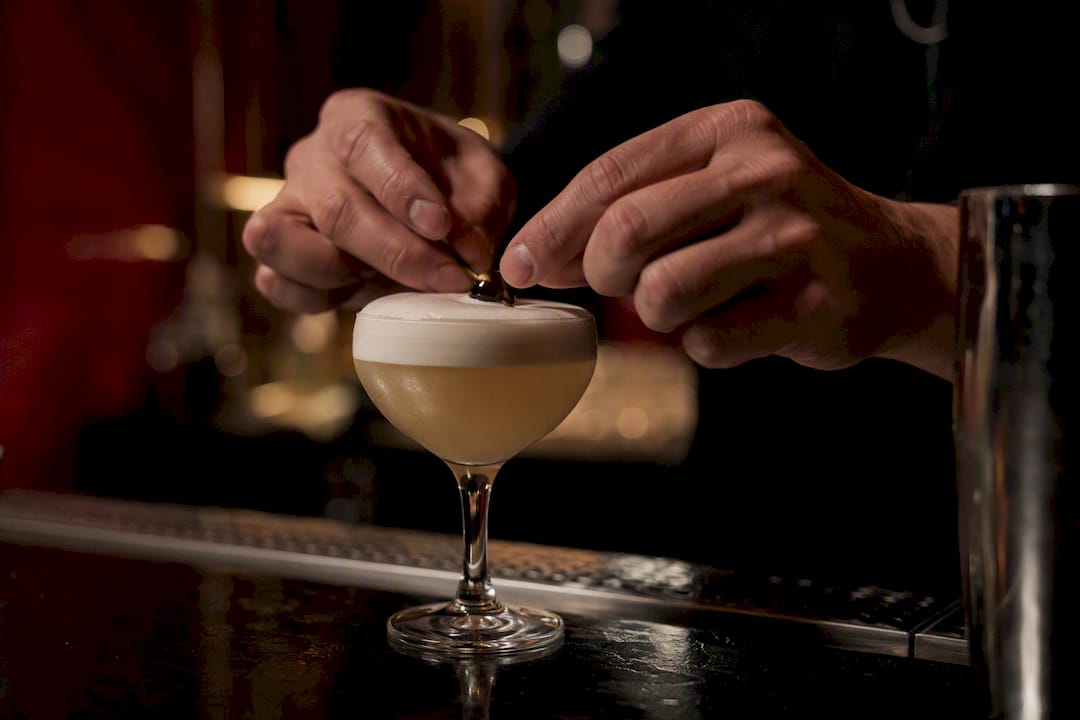
Egg white → aquafaba. The brine from canned chickpeas whips into a stable foam almost identical to egg white, and it’s become standard in modern vegan cocktail service. A Whiskey Sour made with aquafaba instead of egg white foams the same way, with a slightly less neutral taste that most guests never notice.
Heavy cream → oat or coconut cream. Oat cream mimics dairy’s mouthfeel more closely than coconut in most tests, while coconut cream adds a flavor note that works well in tiki-style drinks but can clash with a classic Brandy Alexander.
Orgeat → coconut syrup or barley-water-based syrup. True orgeat is almond-based, so for guests with tree nut allergies, skip nut-based substitutes entirely. Coconut syrup gets closest to the original sweetness and body in a Mai Tai.
| Original ingredient | Common allergen risk | Reliable substitution | Flavor note |
|---|---|---|---|
| Egg white | Egg | Aquafaba | Slightly less neutral, foams similarly |
| Heavy cream | Dairy | Oat cream | Closest mouthfeel match |
| Orgeat (almond syrup) | Tree nut | Coconut syrup | Sweeter, tropical lean |
| Amaretto | Tree nut | Nut-free almond flavor extract, verified allergen-free | Requires supplier confirmation |
| Triple sec (some brands) | Gluten (rare, brand-dependent) | Verified gluten-free orange liqueur | Nearly identical |
One rule matters more than any swap: never use nut extracts, even “natural flavoring,” for a guest with a severe tree nut allergy, because trace protein contamination during manufacturing is a real risk that most consumer-grade extracts don’t test for. When a severe allergy is involved, skip the clever substitution and serve something built from ingredients with zero nut exposure history. On the menu, label adapted drinks clearly, something like “Whiskey Sour (aquafaba, egg-free)” so guests don’t have to ask.
What Should You Require Before Signing a Cocktail Vendor Contract?
Vetting a bartending service for an allergy-sensitive event is not a “trust the reviews” situation. It’s a documentation exercise, and you should treat it that way from the first phone call.
Pre-event vetting checklist:
- Request written ingredient specs for every liqueur, syrup, and mixer on the proposed menu
- Ask for technical sheets on any house-made component, including infusions and bitters
- Confirm in writing that separate tools or a dedicated prep zone will be used for allergen orders
- Ask whether staff have documented allergen training, and request specifics rather than accepting “yes, of course”
- Get a description of their emergency response plan if a guest has a reaction
If a vendor can’t produce items 1 and 2 within a reasonable timeframe, that’s a real signal about how seriously they take the rest of the list.
Contract language worth demanding. Verbal assurances evaporate the moment something goes wrong. Ask your contract to include:
- A clause requiring full ingredient disclosure for all cocktails served, delivered in writing before the event
- An indemnity provision addressing what happens if an undisclosed allergen causes a reaction
- A named on-site allergen point person, identified by role, who guests and staff can flag issues to during service
- A remedy clause specifying what happens (partial refund, on-site menu adjustment) if the vendor fails to meet the disclosure requirements
What to ask during the consultation call. This is where you separate a vendor who’s done this before from one who’s improvising. Ask specifically:
- “Walk me through how you’d handle a guest with a severe tree nut allergy at the bar.”
- “What’s in your house-made syrups, and do you have a written list?”
- “How do your bartenders clean tools between an allergen order and a regular order?”
- “Do your garnishes or bitters contain any nut oils, citrus, or botanical extracts I should know about?”
A vendor who answers fluently, with specifics, has probably done this dozens of times. A vendor who says “we’ve never really had an issue” hasn’t thought about it at all.
Operational milestones to lock in. Set a timeline: technical sheets delivered at least two weeks before the event, a final menu confirmation seven days out, and a same-day check-in where the point person reviews any last-minute guest allergy updates. This kind of structure is exactly what a good cocktail hour planning process should include regardless of allergy concerns, but it becomes essential when even one guest has a serious allergy.
Pro Tip: Put the emergency contact number for your allergy point person on the run sheet you hand to venue staff and the day-of coordinator, not just in the vendor contract. If something happens, nobody has time to dig through paperwork.
How Should Bartenders Operate On-Site to Prevent Cross-Contact?
Good on-site allergy protocol starts the moment a guest walks up to the bar and says the word “allergy,” and everything that follows should be procedural, not improvised. Documented steps of service matter here specifically because a busy event bar has too much happening at once to rely on memory.
The steps of service that actually work: the bartender asks about allergies at first contact, confirms the specific allergen with the guest directly, communicates the order clearly to any prep staff involved, tags the drink with a visual cue (a colored pick, a marked cup), and prepares it at a dedicated station when the allergen risk is high.
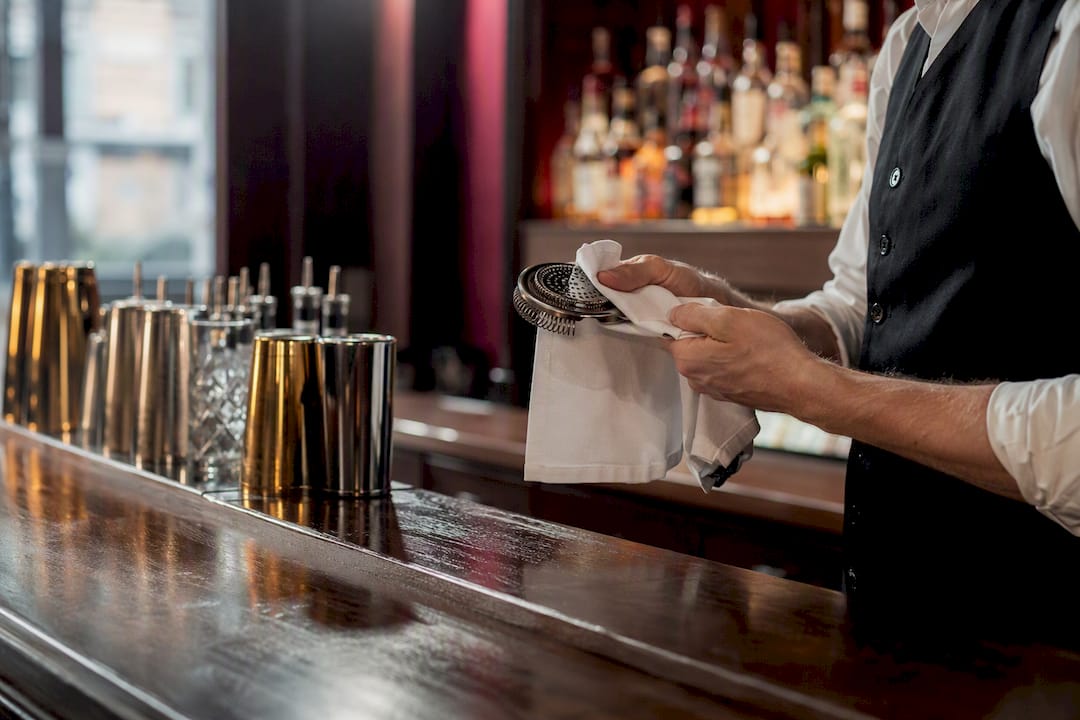
Cleaning and separation in practice means dedicated shakers, strainers, and jiggers reserved for allergen orders, a genuine “clean slate” wipe-down between drinks rather than a quick rinse, and garnish containers kept physically separate so a shared citrus wheel doesn’t cross-contaminate a sulfite-sensitive guest’s glass.
- Ask the guest directly, every time, even if they mentioned it to someone else earlier
- Use a visual tag on allergen-safe drinks so any staff member can identify them at a glance
- Keep a dedicated set of bar tools for allergen orders, cleaned separately from the main setup
- Know exactly where the first-aid kit is and who the allergy point person is before service starts
Staff should also know the basics of recognizing a reaction, hives, swelling, difficulty breathing, and have a clear, rehearsed answer for what happens next: stop service, alert the point person, and call emergency services if symptoms escalate. This isn’t a nice-to-have for a premium bar setup; it’s the difference between a minor scare and a real emergency.
What Should an Allergy-Friendly Cocktail Menu Look Like?
A menu that reassures allergy-sensitive guests without overpromising uses plain language, clear labels, and an open invitation to ask questions, rather than a blanket “allergy-friendly” stamp that nobody can verify. Structure matters here. Break the menu into sections guests can scan quickly.
Simple classics (lowest allergen complexity):
- Vodka Soda with fresh lime
- Gin and Tonic
- Tequila and Fresh Grapefruit
- Rum and Coke
Clarified and verified items (documented, allergen-checked components):
- Whiskey Sour made with aquafaba (egg-free)
- Clarified Milk Punch, labeled with dairy source and cream alternative option
- Oat Cream White Russian (dairy-free version available)
Mocktail options (zero-proof, ingredient-verified):
- Fresh Citrus and Herb Cooler
- Ginger and Hibiscus Fizz
Menu copy should do real work, not just decorate the page. A line like “Prepared with documented recipes; tell your bartender about any allergy so we can confirm ingredients” does two things at once: it signals that the vendor actually tracks ingredients, and it invites the conversation instead of assuming the printed menu covers every case. Mark any substituted item clearly, “egg-free” or “nut-free swap available,” and flag anything that requires a quick conversation with staff before ordering, like a flavored liqueur with an unverified nut content.
What Are the Warning Signs of an Unsafe Cocktail Provider?
The clearest red flag is a vendor who can’t or won’t produce a written ingredient list when you ask. If a provider hesitates, changes the subject, or says “we don’t usually get into that much detail,” treat that as a direct answer about how they’ll handle your event.
Watch for these patterns during vetting:
- Inability to name what’s in their house-made syrups or infused spirits
- No answer, or a vague answer, about cleaning protocols between allergen and non-allergen orders
- No named staff member responsible for allergy questions on the day
- Reliance on generic menu language like “ask about allergies” with nothing behind it operationally
- A blank stare or “we’ve never really had that come up” when you ask a specific question
That last one is more common than you’d expect, and it’s genuinely disqualifying. A bartending team that’s never been asked about allergies hasn’t built the muscle memory to handle it under pressure at your event. If you hit a red flag mid-conversation, ask for a written follow-up confirming their protocol before you go further. If they can’t produce it within a few days, that’s your answer: move on to a vendor who treats this as standard practice, not a special request.
How Liquid Courage LV Handles Allergy-Conscious Bar Service
Liquid Courage LV builds allergy-conscious service into the standard workflow for every event in Las Vegas and Henderson, not as an add-on for special requests. The process starts with a pre-event consultation where allergy needs get documented alongside the rest of the event details, not tacked on as an afterthought during setup.
From there, every cocktail on the proposed menu gets a written technical sheet listing exact ingredients, including house-made syrups and infusions, so there’s no guessing about what’s in a signature drink. Staff carry documented training on allergen protocols and steps of service, and the bar setup includes a dedicated kit for allergen orders, separate tools and prep space kept apart from nut- and dairy-heavy ingredients. Suppliers for flavored spirits and mixers get verified in advance, so nobody’s relying on a bottle label that legally doesn’t have to disclose everything inside it.
What organizers can request verbatim from this kind of setup:
- Written technical sheets for every cocktail on the menu, delivered before the event
- A named on-site allergy point person for the day
- Confirmation of separate tools and cleaning procedures for allergen orders
- Documented staff training records, not just a verbal assurance
If you’re planning a wedding, corporate event, or private party where guest safety depends on getting this right, the mobile bartending services page walks through what to expect from booking through day-of service, and the event bartending guide breaks down package details and contract expectations in more depth.
How Do You Verify an Ingredient Supplier’s Credibility?
Verifying a supplier means checking whether they can produce documentation, not whether their website looks professional. A legitimate supplier of flavored syrups, bitters, or specialty mixers should be able to provide a technical sheet or spec sheet on request, listing every ingredient and any allergen warnings, the same way a food manufacturer would.
Start by asking the supplier directly whether their products carry any third-party certification for allergen-free claims, like a certified gluten-free or nut-free designation, rather than a marketing claim with nothing behind it. Certifications from recognized bodies mean an independent party actually tested the claim, which carries far more weight than a label that simply says “gluten-free” with no verification process attached.
For house-made components, the standard should be the same one a restaurant kitchen holds itself to: every syrup, infusion, or bitters recipe gets written down, dated, and available for review. If a bartending vendor sources a flavored liqueur or specialty bitters from a smaller producer, ask whether that producer will confirm ingredients directly, since gaps in ready-to-drink labeling mean the bottle itself often won’t tell you. A supplier who dodges a direct question about sourcing or ingredient testing isn’t one worth building a menu around, regardless of how good the product tastes.
Why Most Allergy Advice for Bars Misses the Point
Most advice on allergy-safe cocktails focuses on recipes: swap this, substitute that. That’s useful, but it treats allergy safety as a menu problem when it’s actually an operations problem. A perfect aquafaba sour means nothing if the shaker it’s made in just handled a batch of orgeat five minutes earlier.
The industry’s real gap isn’t ingredient knowledge. It’s documentation and follow-through. A vendor who genuinely tracks every ingredient, trains staff on cross-contact, and can produce a technical sheet on request is rare, and that rarity is exactly why organizers need to ask hard questions before booking rather than after. Prioritize the paperwork and the protocol over the menu’s clever names. A gorgeous drink list means nothing if nobody behind the bar can tell you what’s actually in it.
Ready to Book a Bartending Team That Documents Everything?
Liquidcouragelv is the alternative to guessing your way through allergy season on a rented venue’s house bar. Every event includes a pre-event consultation, written technical sheets for the full cocktail menu, and staff trained on allergen protocols as standard practice, not a special add-on you have to negotiate for.
If you’re planning a wedding, corporate event, or private party in Las Vegas or Henderson and need a bartending team that treats allergy safety as part of the job rather than an afterthought, start with the event bartending guide to see package details and what’s included, or check the wedding liquor catering checklist if you’re working through contract terms right now. Request a quote and ask directly for the allergen protocol documentation covered in this guide. It should be an easy yes.
Frequently Asked Questions
What should I ask a bartending vendor about allergies before booking?
Ask for written ingredient lists for every cocktail, confirmation of separate tools for allergen orders, and details on staff allergen training. If they can’t answer specifically, that tells you what you need to know.
Are all distilled spirits safe for gluten allergies?
Unflavored spirits like vodka, gin, and rum are generally considered gluten-safe because distillation removes proteins, but flavored versions and liqueurs can reintroduce gluten through additives, so verification still matters.
Can bartenders safely make egg-free sour cocktails?
Yes. Aquafaba, the brine from canned chickpeas, whips into a foam nearly identical to egg white and has become a standard substitution in modern cocktail service.
What’s the safest drink to order if I’m not sure about a bar’s allergy protocols?
Stick with simple, known-ingredient cocktails like a vodka soda or gin and tonic, and avoid proprietary mixes or flavored liqueurs unless the bartender can confirm exact ingredients.
Do cocktail menus have to list allergens by law?
Not comprehensively. Alcoholic beverages above 1.2% ABV are largely exempt from full ingredient labeling in the United States, which is exactly why vendor documentation matters more than the bottle label itself.
This article is general information, not a substitute for advice from a qualified doctor. Consult a qualified healthcare professional about your own circumstances before acting on anything here.
Sources
For deeper detail on the regulatory and practical side of allergy-conscious service, the TTB’s labeling guidance explains why alcoholic beverages skip full ingredient lists. Oklahoma Allergy’s event planning guide covers cross-contact protocols in depth, while CocktailFYI’s substitution guide offers a broader library of ingredient swaps beyond what fits here.
- Alcohol beverage labeling and advertising | TTB
- Inclusive event planning: why allergy-safe practices matter | Oklahoma Allergy
- Vegan Whiskey Sour using aquafaba (Tales of the Cocktail)
- Liquor