
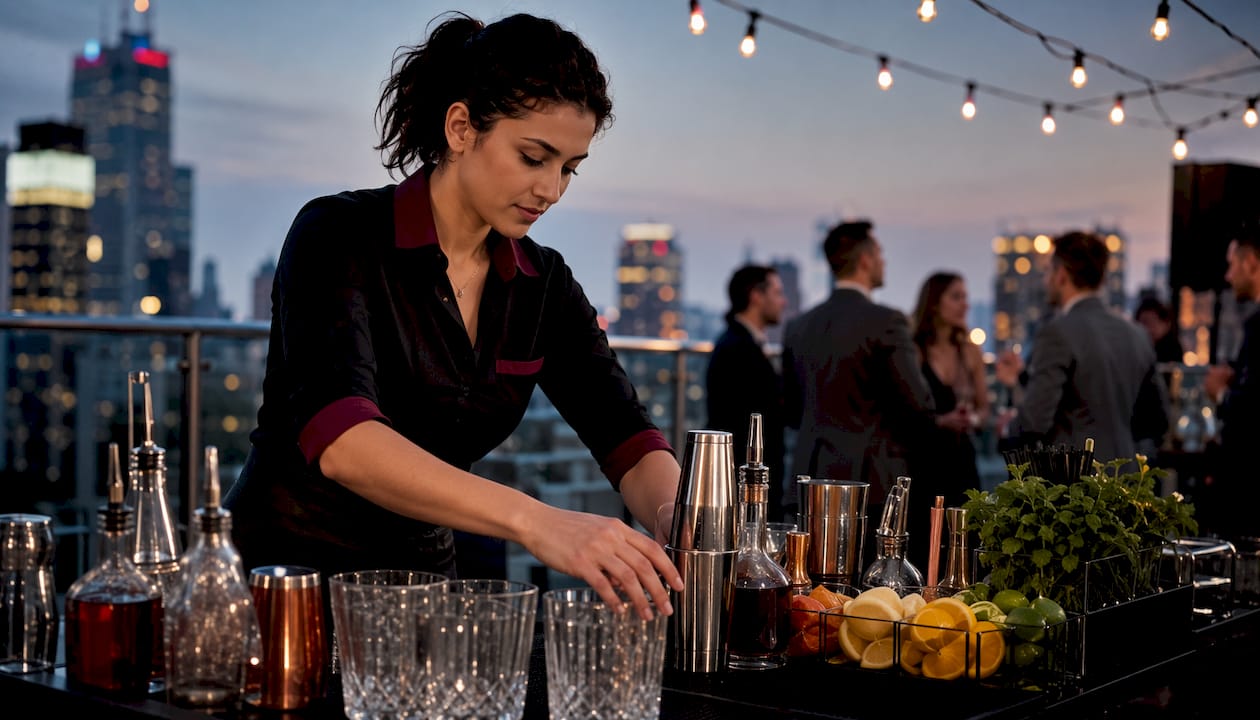
Full bar service means the host or venue offers spirits, beer, and wine together, with the mixers, garnishes, glassware, and trained staff to serve them. As Wiktionary notes, the term specifically signals hard liquor is available, not just beer and wine. One thing planners consistently get wrong: a full bar describes what’s on the menu, not who pays for it. An open bar means the host covers the tab; a cash bar means guests pay. Your event can have a full bar that runs either way.
For budgeting purposes, standard full bar packages typically run $25–$40 per person for beer, wine, and well drinks, though the range stretches from $15 to $60 depending on location, spirit quality, and service hours. Liquidcouragelv works with Las Vegas and Henderson planners to build itemized proposals around those variables, so there are no surprises on event day.
Table of Contents
- What does full bar service actually include?
- How does a full bar differ from an open bar or cash bar?
- What “full-service” really means for staffing and licensing
- What drives the cost of full bar service?
- How to choose a bar option and what to ask a provider
- Ways to control beverage costs without cutting the experience
- Planner timeline and pro tips from event bartending pros
- Key Takeaways
- The part most planners overlook
- Liquidcouragelv brings the full bar to you in Las Vegas and Henderson
- Useful sources for planners who want to go deeper
What does full bar service actually include?
A full-service bar package covers spirits, beer, wine, mixers, garnishes, and trained bartenders capable of making a wide range of drinks. Here is what that looks like in practice:
Core beverages:
- Standard spirits: vodka, gin, rum, tequila, and whiskey
- Beer (domestic and imported)
- Red, white, and sparkling wine
- Common mixers: soda water, tonic, cola, juice, simple syrup
Operational supplies:
- Ice and refrigeration
- Garnishes (citrus, olives, cherries, herbs)
- Glassware matched to drink type
- Backup inventory for longer events
Service inclusions typically bundled in:
- Bar setup and linen
- Staff for pouring, ID checks, and crowd management
- Breakdown and cleanup at the end of the event
A self-contained setup from a quality provider covers all of that infrastructure, which reduces the coordination burden on the venue. Optional upgrades worth asking about include premium or top-shelf spirits, craft beers, signature cocktails, and nonalcoholic mocktail options. You can see how those add-ons are structured in a real bar package breakdown before you start comparing quotes.
How does a full bar differ from an open bar or cash bar?
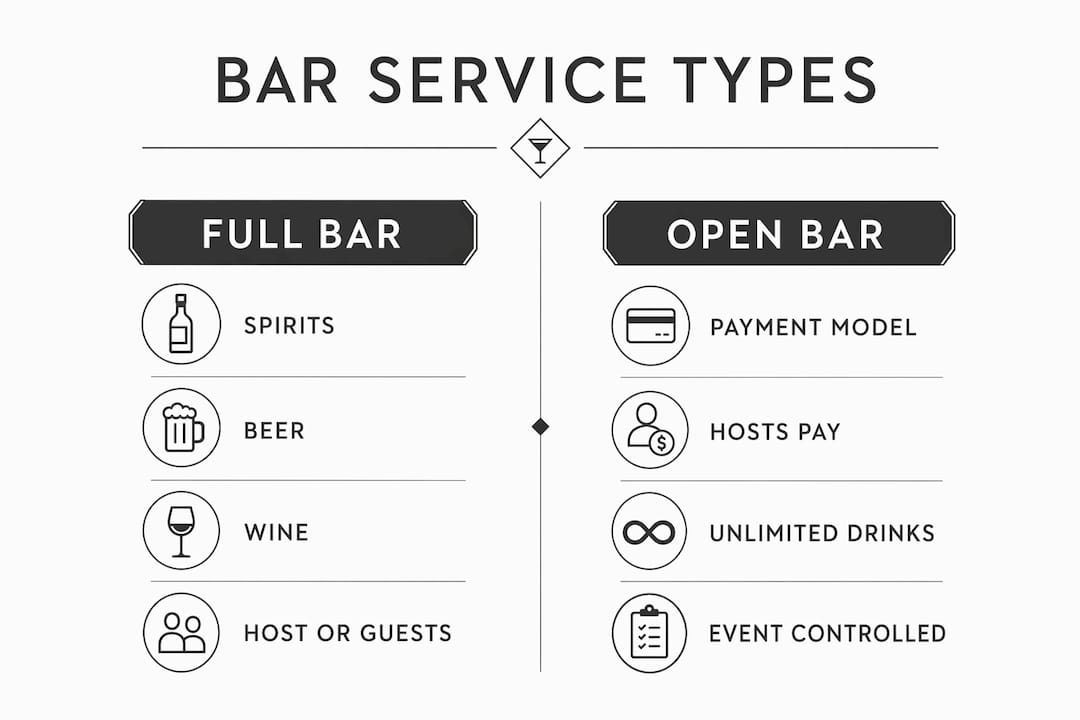
The confusion here trips up even experienced planners, so it helps to separate two distinct questions: what drinks are available and who pays for them.
| Term | What it means | Who pays |
|---|---|---|
| Full bar | Spirits + beer + wine available | Either host or guests |
| Open bar | Any available drinks, no guest charge | Host |
| Cash bar | Guests pay per drink | Guests |
| Beer and wine only | No spirits served | Either host or guests |
| Limited bar | Curated selection (e.g., two cocktails + beer) | Either host or guests |
The same event can combine these terms in different ways. A “hosted full bar” means the host pays for spirits, beer, and wine. A “cash full bar” means all those options are available, but guests pay at the bar. A “hosted limited bar” might cover two signature cocktails and domestic beer while guests pay for anything else.
A few decision drivers worth weighing:
- Guest mix: Diverse crowds with varied preferences benefit most from a full spirit selection.
- Event length: Receptions over four hours justify the investment; shorter events often do fine with a curated menu.
- Event tone: Corporate events frequently favor beer-and-wine or curated programs over a full bar for professionalism and cost predictability.
- Budget: A limited bar with two or three spirit options can feel like a full bar to most guests while cutting costs noticeably.
What “full-service” really means for staffing and licensing
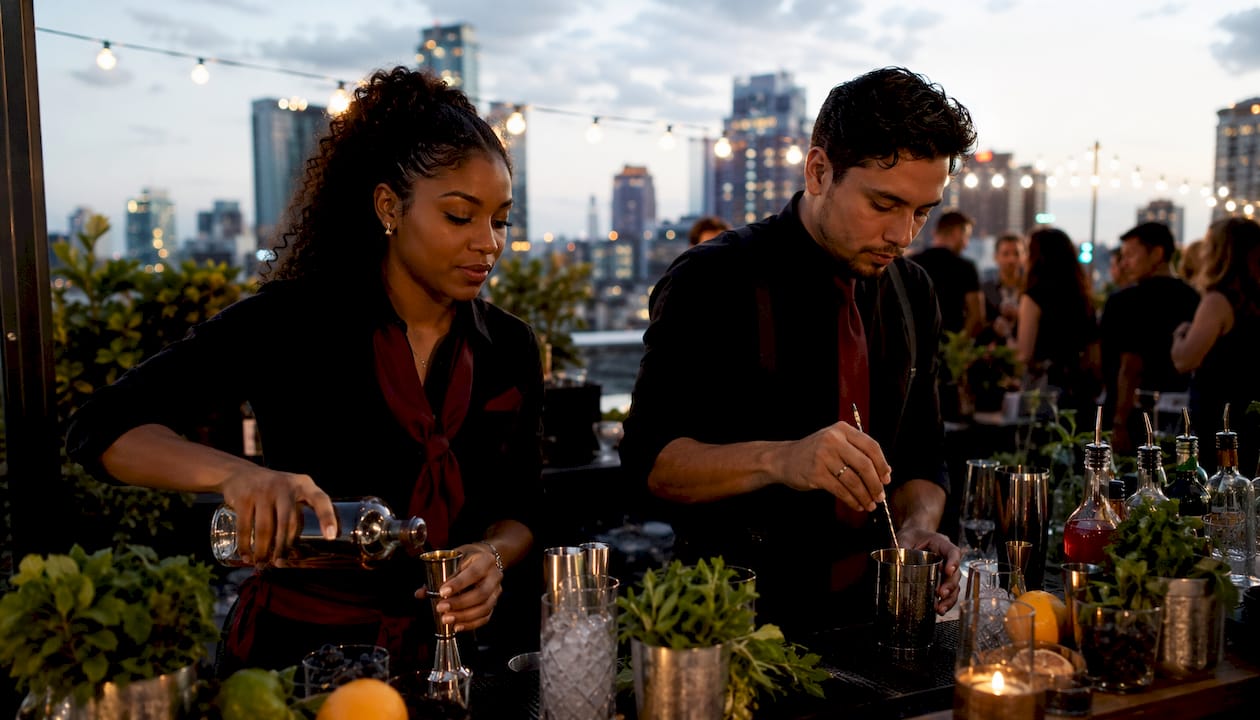
The word “service” in full bar service carries real weight. Trained, licensed bartenders do more than pour drinks. They check IDs, manage pour speed during peak hours, and keep the event compliant with state liquor authority rules.
Here is what professional full-service staffing typically covers:
- ID verification: Bartenders are responsible for refusing service to anyone under 21 and to visibly intoxicated guests.
- Staff-to-guest ratios: A common industry benchmark is one bartender per 50 guests for a standard bar; drop that to one per 35–40 for a full bar with cocktails to keep lines moving.
- Operational responsibilities: The provider handles glassware, refrigeration, POS or tally tracking, and end-of-event cleanup. Leftover inventory policies and corkage fees should be spelled out in the contract.
- Permits and insurance: The provider should carry general liability insurance and, where required, a catering or event liquor permit issued under the relevant state liquor authority.
Pro Tip: Ask every provider whether their staff holds responsible beverage service certification (such as TIPS or ServSafe Alcohol). It is a fast way to separate professional operations from casual setups, and it matters for your liability exposure if something goes wrong.
Staffing is often where the real difference between a smooth event and a chaotic one lives. A cocktail hour with properly staffed bartenders sets the tone for the entire reception.
What drives the cost of full bar service?
There is no universal flat rate for full bar service. Costs are built from several variables, and understanding them helps you read a quote critically.
Primary cost drivers:
- Guest count (the single biggest lever)
- Hours of service (overtime rates after a set window are common)
- Spirit grade: house/well spirits versus premium or top-shelf
- Number of bartenders and their hours
- Signature cocktails (each adds prep time and specialty ingredients)
- Equipment and setup needs (mobile bar vs. venue bar)
Common pricing structures:
- Per-person (hosted/open): You pay a flat rate per guest. Simple to budget, but you pay whether guests drink or not.
- Consumption-based: You pay for what is actually poured. Better for light-drinking crowds, riskier for heavy ones.
- Flat package fee: A set price covering staff, supplies, and a defined beverage list. Predictable, but confirm exactly what is included.
Ballpark range: Per-person open bar costs typically fall between $15–$60 per person, with standard estimates around $25–$40 for beer, wine, and well drinks. Premium spirits, signature cocktails, and longer service windows push that number up.
Always request an itemized quote. A single line item labeled “bar service” tells you nothing about what is and is not included.
How to choose a bar option and what to ask a provider
Work through these steps before you sign anything:
- Define your guest needs. Estimate how many guests drink spirits versus beer/wine, and whether anyone needs nonalcoholic options.
- Set a realistic budget. Use the $25–$40 per-person benchmark as a starting floor, then adjust for spirit grade and hours.
- Request itemized quotes from at least two providers. Line items should cover beverages, staff hours, setup, glassware, garnishes, and cleanup separately.
- Confirm staffing ratios in writing. Ask how many bartenders are included and what the overtime policy is.
- Verify licenses and insurance. Ask for proof of general liability coverage and any required event liquor permits.
- Confirm setup and cleanup responsibilities. Who arrives first, who breaks down last, and who handles leftover alcohol?
Specific questions to ask every provider:
- Are mixers, garnishes, and glassware included or billed separately?
- What are staff arrival and departure times, and what triggers overtime charges?
- Do you carry liability insurance, and can you provide a certificate?
- How is leftover alcohol handled — do you take it back, or does it stay with the host?
- Can I bring my own spirits, and if so, is there a corkage fee?
Red flags: Vague package descriptions with no itemization, no written staffing ratios, and providers who cannot confirm their permit status before the event.
Ways to control beverage costs without cutting the experience
A full bar does not have to mean an unlimited budget. These tactics let you keep the feel of a full bar while managing spend:
- Limit the spirit list to three or four options (vodka, whiskey, tequila, and one more) rather than stocking every category. Most guests never notice.
- Offer two signature cocktails plus beer and wine. This reads as a full bar experience to most guests while reducing the spirit SKU count and speeding service.
- Set a time-limited hosted bar. Cover drinks for the first two hours, then switch to a cash bar. Guests appreciate the gesture; the cost is contained.
- Use mid-tier spirits for well drinks and reserve one premium bottle for a signature cocktail or VIP table.
- Simplify garnishes and glassware. Fewer glass types mean faster service and lower staffing needs. A single all-purpose wine glass and a rocks glass cover most drinks.
- Buy-and-bill versus vendor-supplied: Some providers let you purchase spirits separately and charge only for labor and supplies. This can save money when you shop sales, but confirm the provider allows it before buying anything.
For networking events and corporate receptions, a curated menu almost always outperforms a full bar on both cost and service speed.
Planner timeline and pro tips from event bartending pros
Getting the logistics right comes down to timing. Here is a practical sequence:
- Eight or more weeks out: Confirm guest count estimate, finalize your bar menu scope, and secure permits if required by your venue or jurisdiction.
- Four weeks out: Lock in your provider contract with itemized inclusions, staffing ratios, and arrival/departure windows in writing.
- One to two weeks out: Reconfirm final guest count with your provider so they can adjust inventory. Confirm staff names and a direct contact for event day.
- Day of, two hours before guests arrive: Bar staff should be on-site setting up, testing equipment, and confirming ice and backup supplies are stocked.
- Peak service (typically the first 90 minutes of a reception): This is when lines form. Having one extra bartender during this window pays for itself in guest satisfaction.
- Last call and breakdown: Give guests 15 minutes’ notice before the bar closes. Staff should begin breakdown immediately after, with full cleanup completed before venue curfew.
Pro Tip: A ‘limited full bar’ approach — three or four spirits, two classic cocktails, beer, and wine — consistently outperforms an exhaustive spirit list on service speed. Offering many drink options slows pours; a tighter menu keeps lines short and guests happy.
Bar service timing is one of the most underestimated variables in wedding and event planning. Build the timeline before you finalize staffing numbers, not after.

Key Takeaways
Full bar service means spirits, beer, and wine are available with professional staff and supplies — but the payment model (open, cash, or hybrid) is a separate decision that must be confirmed in writing.
| Point | Details |
|---|---|
| Full bar vs. open bar | Full bar is the menu scope; open bar is the payment model. Confirm both in every contract. |
| Ballpark cost range | Standard per-person pricing runs $25–$40; the full range is $15–$60 depending on spirit grade and hours. |
| Staffing ratio | Plan for one bartender per 50 guests for standard service; one per 35–40 for a full cocktail menu. |
| Must-ask questions | Confirm what is included, verify liability insurance, and clarify leftover alcohol policy before signing. |
| Liquidcouragelv | Offers mobile full-bar setups with itemized proposals for weddings and private events in Las Vegas and Henderson. |
The part most planners overlook
The full bar versus open bar confusion is real, but the more consequential mistake is treating the bar as a commodity line item rather than a service with real operational complexity.
A bar that looks great on paper can fall apart at the event if the provider shows up without enough ice, sends one bartender for 120 guests, or cannot produce a permit when the venue asks. The beverage list is almost never the problem. The execution is.
What actually separates a good bar experience from a frustrating one is whether the provider brings a genuinely self-contained setup: their own refrigeration, their own glassware, their own backup supplies, and staff who have done this before. A venue’s built-in bar infrastructure sounds convenient until the venue’s ice machine breaks at 7 PM.
For Las Vegas and Henderson planners specifically, the market is full of providers who quote low and cut corners on staffing and supplies. The itemized contract is not just a budgeting tool. It is your protection against showing up to a half-stocked bar with a line out the door.
Liquidcouragelv brings the full bar to you in Las Vegas and Henderson
Planning a wedding, corporate event, or private party in Las Vegas or Henderson? Liquidcouragelv handles the full bar setup so you do not have to coordinate between a venue, a liquor supplier, and a staffing agency separately.
The service is mobile and self-contained: trained bartenders, glassware, ice, mixers, garnishes, and a bar structure that arrives ready to go. Every proposal is itemized, so you know exactly what is covered before you sign. Packages are built around your guest count, event length, and spirit preferences, whether that is a house-spirits wedding reception or a curated two-cocktail corporate event. Browse the event packages or go straight to the private events page to request a quote for your date.
Useful sources for planners who want to go deeper
- Full bar definition (Wiktionary): A concise, plain-language definition of what “full bar” means in US usage — useful for aligning terminology with vendors.
- Open bar vs. cash bar cost breakdown (Swan Lake Overlook): Covers per-person pricing ranges and the variables that push costs up or down — a solid starting point for budget conversations.
- Bartending packages explained (Make It a Double): Explains why there is no flat rate and how limited menus improve service speed — practical for planners comparing package structures.
- Full-service bar catering overview (OrderCatering): Details what a self-contained setup includes and why it matters for venue coordination.
- Bar service for corporate events (Randy Peters Catering): Explains why corporate planners often favor curated menus over a full bar and how to match the bar to the event tone.
- Liquidcouragelv event packages: The starting point for Las Vegas and Henderson planners who want to compare package components and request an itemized proposal.