
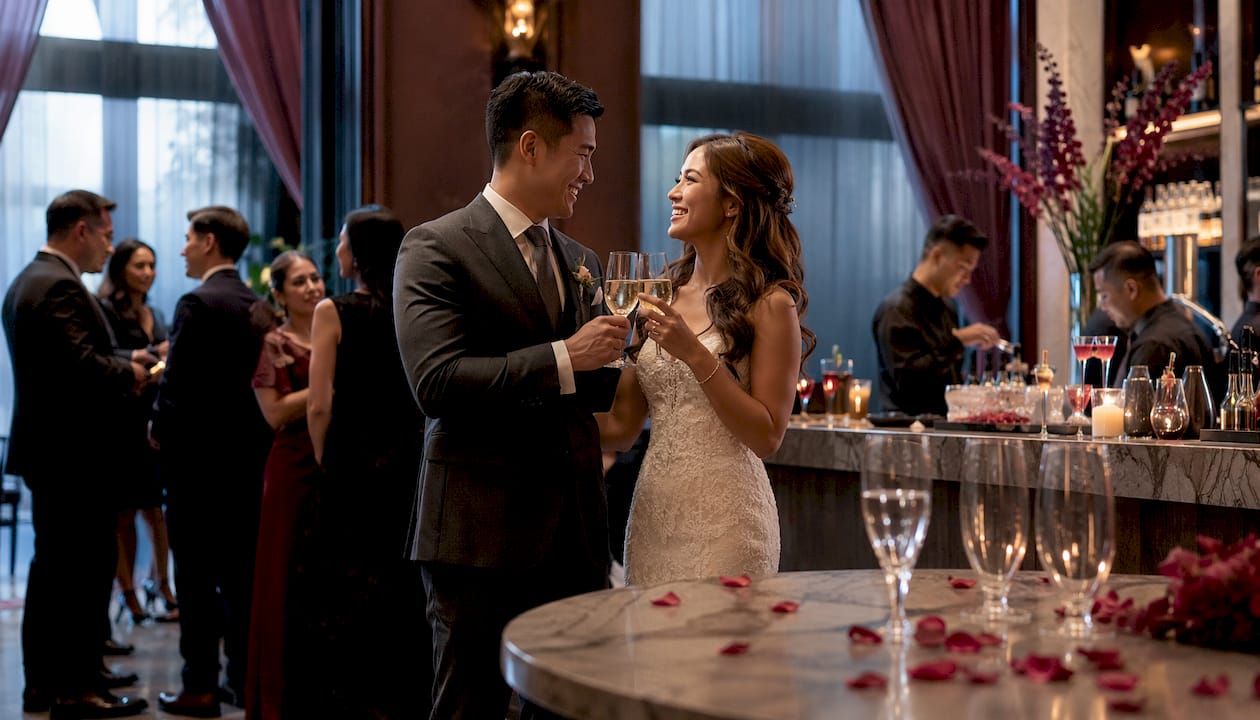
The core difference in an open bar vs cash bar wedding comes down to one question: who reaches for their wallet? With an open bar, you cover every drink. With a cash bar, your guests do. That single distinction ripples through your budget, the energy in the room, and how your guests remember the night.
Here is the short version before you go deeper:
- Open bar: Host pays all drink costs. Guests order freely, no money changes hands at the bar.
- Cash bar: Guests pay per drink. Host saves on alcohol costs but may still pay setup and labor fees.
- Cost gap: Open bar pricing typically costs $45–$90 per guest depending on liquor choices and length of service; a cash bar shifts alcohol costs to guests and the host pays mainly setup and labor fees.
- Guest experience: Open bars consistently read as generous and hospitable. Cash bars can feel unwelcoming, especially without advance notice.
- Atmosphere: Open bars keep energy high and lines moving. Cash bars slow service and can dampen the mood.
- Etiquette reality: A small percentage of U.S. weddings use a full cash bar, while a majority choose full open bars.
What does an open bar actually mean at a wedding?
An open bar means you, the host, cover every drink your guests order. Beer, wine, spirits, mixers — all of it goes on your tab, and your guests never touch their wallets at the bar. According to The Knot, 57% of couples choose a full open bar, making it the clear default for American weddings.
What you get with an open bar:
- Full hosted bar: Every drink category covered for the full reception.
- Limited open bar: Beer, wine, and one or two signature cocktails at no cost; premium spirits either excluded or available for an upcharge.
- Signature cocktail bar: Two curated drinks (often one spirit-forward, one lighter) plus beer and wine, which cuts costs while keeping the hosted feel.
- Time-limited open bar: Full service during cocktail hour and dinner, then closed or scaled back.
- Flat-rate packages: Priced per guest regardless of consumption, which makes budgeting predictable.
The hospitality signal an open bar sends is real. Guests who have already spent money on travel, attire, and a gift arrive expecting to be hosted. Open bars create a festive atmosphere that cash bars rarely match. The tradeoff is cost: flat-rate packages help contain the final bill, but a full open bar for a large guest list is still one of the biggest line items in any wedding budget.
What is a cash bar at a wedding?
A cash bar flips the payment model entirely. Guests pay for each drink individually, either by card or cash, and you as the host absorb little to no alcohol cost. It sounds like an easy budget fix, but the reality is more complicated.
Key facts about cash bars:
- Host still pays labor: Bartenders are paid hourly regardless of bar type, and their tips typically fall on you, not your guests.
- Setup fees apply: Venues often charge a bar setup fee even when guests are buying their own drinks.
- Licensing is required: Venues need proper liquor licensing to process drink sales, a detail many couples overlook until late in the planning process.
- Service slows down: Payment processing creates lines that an open bar simply does not have.
- Guest perception is a real risk: Roughly 40% of U.S. wedding guests interpret an unannounced cash bar as a sign the couple did not budget for them.
- Communication is non-negotiable: Uninformed guests arrive unprepared to pay, which creates frustration that colors the whole evening.
A cash bar is not automatically wrong. For casual afternoon weddings, smaller gatherings, or events where heavy drinking is not expected, it can work. The condition is always the same: tell your guests well in advance.
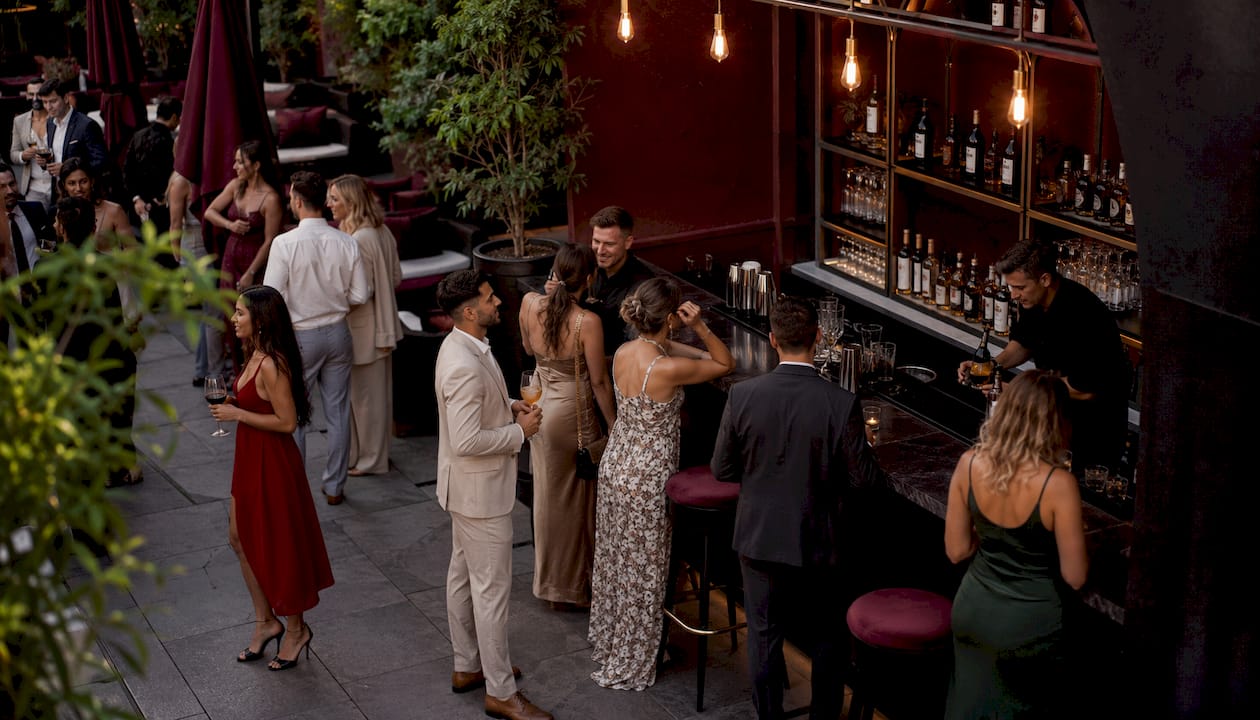
Comparing open bar vs cash bar: costs, experience, and atmosphere
The differences between these two wedding bar options go beyond the price tag.
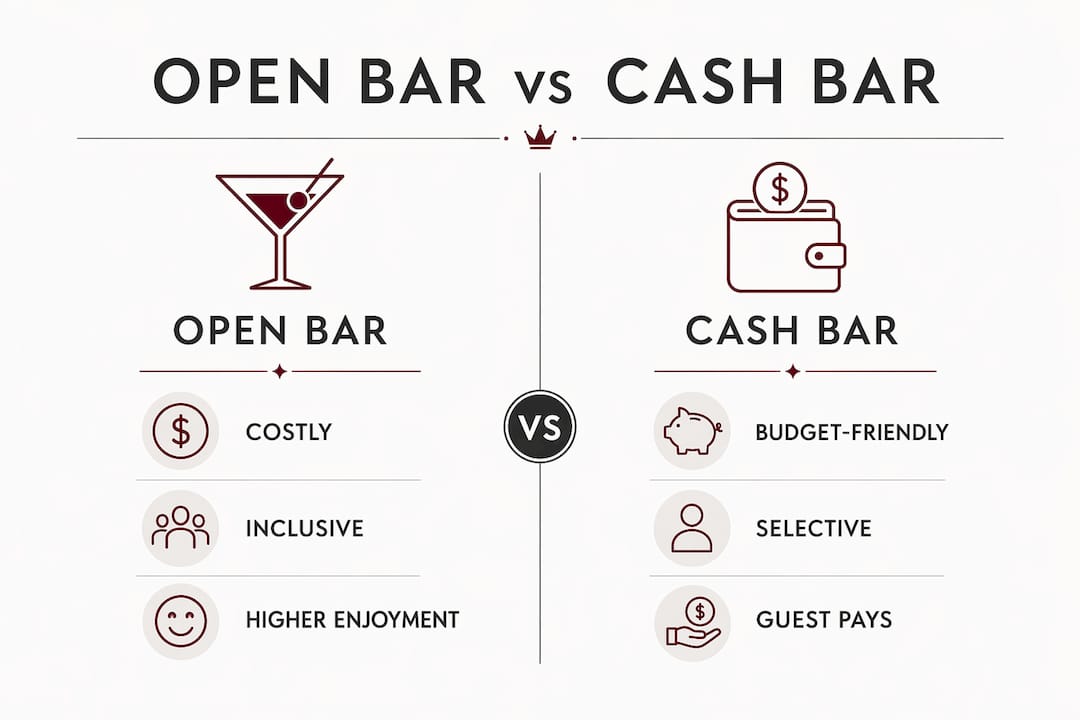
| Factor | Open bar | Cash bar |
|---|---|---|
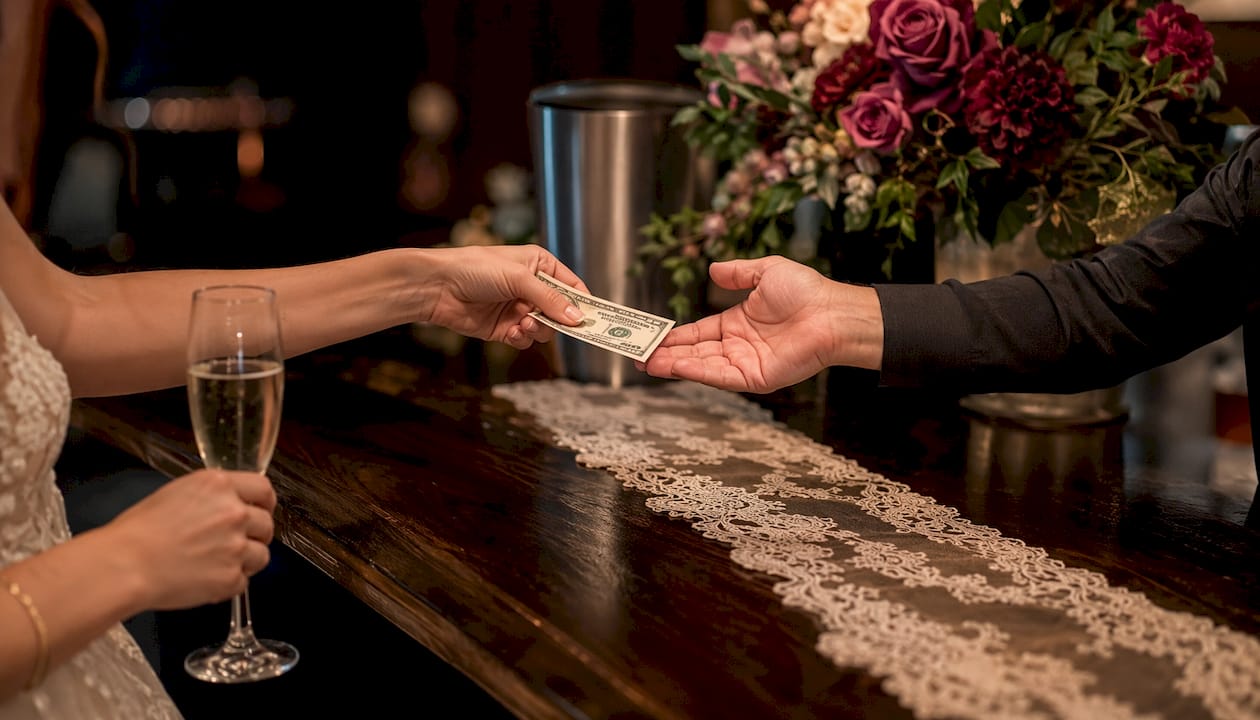
| Cost to couple | Moderate to high per guest | Minimal alcohol cost; setup and labor still apply |
| Guest experience | High. No friction, no wallet moments | Lower. Unexpected costs frustrate guests |
| Event atmosphere | Festive, social, high energy | Can feel transactional; may dampen mood |
| Budget control | Flat-rate packages help; consumption bars can spike | Predictable for the couple; unpredictable for guests |
| Service speed | Fast. No payment processing at the bar | Slower. Card readers and change create lines |
| Hospitality perception | Generous, welcoming | Often read as a hosting shortfall |
Pros of an open bar:
- Guests feel genuinely hosted and appreciated
- Faster bar service keeps the reception flowing
- Encourages mingling, dancing, and a lively atmosphere
- Removes any awkward “who pays?” moment
Cons of an open bar:
- Higher and sometimes unpredictable total cost
- Risk of overconsumption without service management
- Flat-rate packages can feel expensive for light-drinking guest lists
Pros of a cash bar:
- Dramatically reduces alcohol costs for the couple
- Guests tend to drink more moderately
- Frees up budget for other priorities (florals, catering, photography)
Cons of a cash bar:
- Widely seen as a hospitality misstep in formal settings
- Slower service disrupts event flow
- Requires clear advance communication or risks guest frustration
- Labor and setup costs remain regardless
Wedding planner Laura Ritchie puts it plainly: “Guests aren’t going to remember over-the-top flowers if they’re pulling out their wallet. What they’re going to remember is taking out their credit card.”
How to choose between an open bar and a cash bar for your wedding
Start with your actual budget, not your ideal one. After venue, catering, and photography, how much is genuinely left for the bar? That number drives most of this decision.
Questions to work through:
- What is your guest count, and how many are likely to drink?
- Is this a formal evening reception or a casual afternoon gathering?
- What do your regional norms and family expectations look like?
- Does your venue have the licensing and infrastructure to run a cash bar smoothly?
If a full open bar is out of reach, a limited bar with beer, wine, and one or two signature cocktails is the strongest middle ground. It usually costs $18–$35 per guest and scores well on guest satisfaction without the full open bar price tag.
Cutting bar hours is another lever. Closing the bar during dinner service or 30 minutes before the end of the night reduces labor and alcohol costs without abandoning hospitality entirely. You can also run a full open bar during cocktail hour and transition to beer and wine only for the reception.
Pro Tip: Consider a hybrid model: host the first hour of drinks, then switch to a cash bar. Guests feel welcomed, your costs stay manageable, and the transition is far less jarring than a cold cash bar from the start.
For couples with unpredictable guest lists, events professional Sonal J. Shah recommends flat-rate packages over consumption bars. When you do not know how heavily your crowd will drink, a per-person flat rate protects you from end-of-night bill shock.
What wedding professionals say about bar service decisions
The industry consensus is clear: guest perception of hospitality outweighs the money you save on a cash bar.
“If you’re inviting someone to something, you should be prepared to host them. If you don’t have the means to host properly, don’t try to piecemeal it together. And if bartenders are mixing drinks and running cards, there will be lines just like there are at a club — it holds up service.” — Laura Ritchie, wedding planner and founder of Grit & Grace
A few things professionals consistently flag:
- Limited curated menus beat cash bars on guest satisfaction. Offering a thoughtful selection of beer, wine, and one signature cocktail at no cost reads as intentional hosting, not budget cutting.
- Consumption bars need hard caps. Without a spending ceiling, a consumption bar can deliver serious end-of-night bill shock. Negotiate a cap or a switch-to-cash clause before you sign anything.
- Communicate early and clearly. If you are running a cash bar, put it on your wedding website FAQ and in your invitation suite. One sentence is enough. Guests who know in advance rarely mind nearly as much as guests who find out at the bar.
- Never skip the tip budget. Even with a cash bar, bartender gratuity is the host’s responsibility. Build it into your budget from day one.
The common misconception is that a cash bar is the only way to cut costs. It is not. Shorter service windows, beer-and-wine-only packages, and signature cocktail formats all reduce spend while keeping the hosted feel intact.
Legal considerations for open and cash bars at weddings
Bar type and liquor law are more connected than most couples realize.
Open bar: When you host the bar through a licensed caterer or venue, their liquor license covers service. You are not selling alcohol; you are hosting it. Liability for overservice typically falls on the licensed provider, which is why working with a properly insured bartending service matters.
Cash bar: The moment guests pay for drinks, the venue or caterer is conducting retail alcohol sales. That requires a specific retail or event liquor license, which is different from a standard catering license. Venues need the correct licensing for direct sales, and not every venue has it. Confirm this before you commit to a cash bar model.
A few other legal points worth knowing:
- Most states require licensed bartenders at any event serving alcohol, regardless of who pays.
- Some venues in dry counties or dry municipalities prohibit alcohol sales entirely, which makes a cash bar impossible and may restrict open bars as well.
- Event liability insurance covers certain alcohol-related incidents, but coverage varies by policy. Ask your venue and bartending provider what their insurance covers before the contract is signed.
If you are planning a Las Vegas or Henderson wedding, Liquidcouragelv handles licensing compliance and brings a fully insured mobile bar setup directly to your venue. Check the wedding liquor catering checklist to make sure nothing gets missed before you sign a contract.
Liquidcouragelv specializes in mobile bartending for weddings, corporate events, and private parties across Las Vegas and Henderson. Whether you want a full open bar, a curated limited bar, or a hybrid setup that fits your budget, the team brings the bar to your venue with everything handled. Get the full picture on wedding beverage catering in Las Vegas and see how a mobile bar service takes the logistics off your plate.
Key Takeaways
An open bar delivers the strongest guest experience and hospitality signal, but a limited bar with beer, wine, and a signature cocktail gives you most of that impact at roughly half the cost.
| Point | Details |
|---|---|
| Open bar cost range | Typically $45–$90 per guest depending on spirit tier and service hours. |
| Cash bar guest risk | Roughly 40% of U.S. guests interpret an unannounced cash bar as a hosting shortfall. |
| Best budget compromise | A limited bar runs $18–$35 per guest and scores well on guest satisfaction. |
| Labor costs are fixed | Bartender pay and tips fall on the host regardless of whether the bar is open or cash. |
| Legal requirement | Cash bars require a retail liquor license at the venue; not every venue qualifies. |