
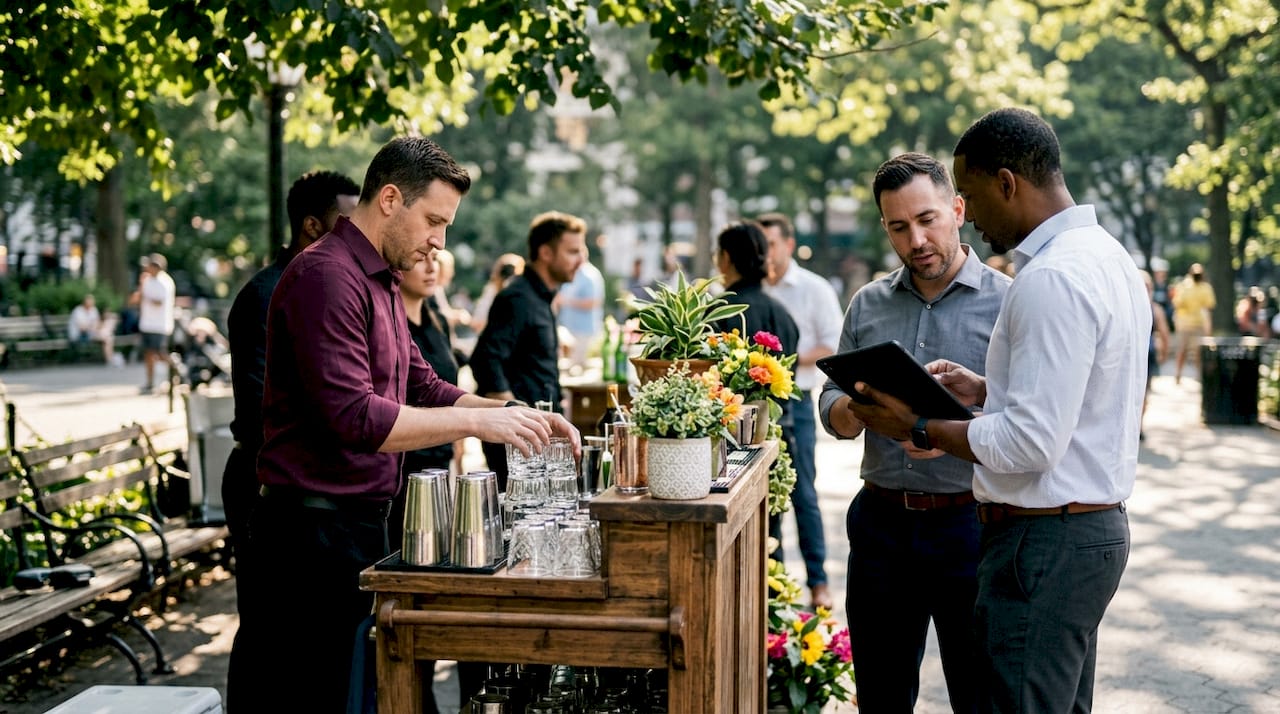
Bar service at a networking event is defined as the full system of staffing, layout, beverage selection, and logistics that keeps guests comfortable and conversation flowing. When you plan networking event bar service well, the bar becomes the social engine of the room, not a bottleneck. Get it wrong, and guests spend their time in line instead of making connections. The industry standard for a successful setup combines the right bartender-to-guest ratios, a realistic drink budget, and a physical layout that supports natural movement. This guide covers every decision point, from staffing numbers to ice management, so your next event runs without a hitch.
What staffing levels and beverage quantities do you need?
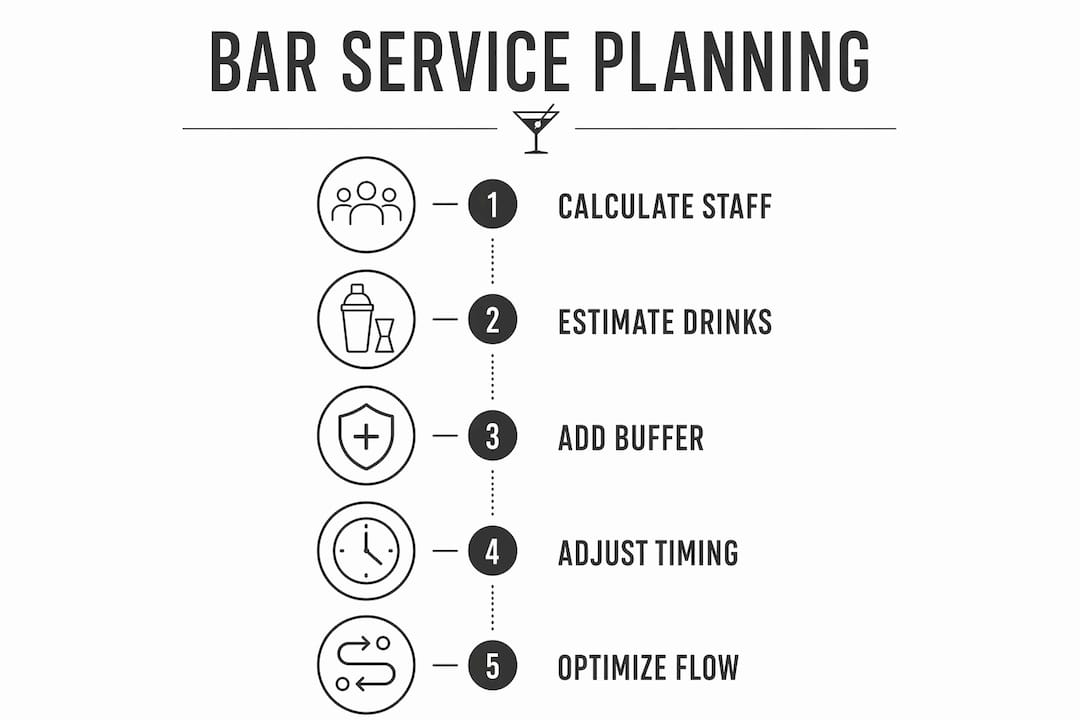
The staffing formula for bar service at events is straightforward. Industry standard calls for one bartender per 50–75 guests and one server per 25–30 guests for passed appetizers. That ratio keeps wait times short and gives each bartender enough bandwidth to work efficiently without rushing orders.
Beverage quantity follows an equally clear rule. Plan for 2–3 drinks per guest per hour as your baseline estimate. A two-hour networking reception for 100 guests therefore requires 200–300 drink servings. That number sounds large until you account for arrival surges, where the first 20 minutes can account for a disproportionate share of total orders.
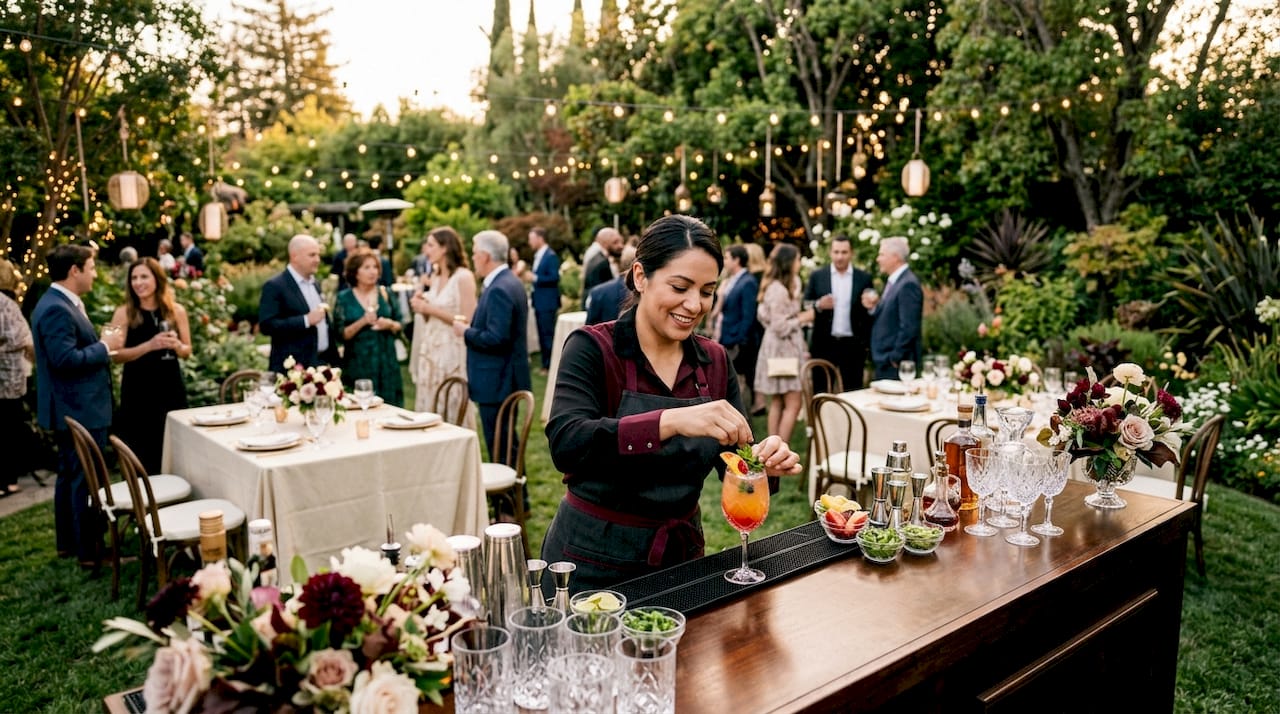
Event length and guest profile both shift these numbers. A morning coffee-and-cocktail reception skews toward lighter consumption. A post-conference evening reception with an open bar skews higher. Adjust your quantities before the event, not during it.
Pro Tip: Add one extra bartender for every 30 guests above your baseline capacity. That buffer prevents service from degrading when attendance runs over your estimate.
For planners who want a deeper look at staffing ratios and how they affect guest experience, the math behind the numbers matters as much as the numbers themselves.
How do you design bar placement and flow to cut wait times?
Bar placement is the single most underestimated decision in networking event bar setup. Placing the bar off the main circulation path, while keeping it visible from the room’s entry point, prevents the two worst outcomes: guests who can’t find the bar and guests who block doorways waiting for drinks.
A well-placed bar acts as a social hub. Guests naturally cluster near it, which creates organic conversation. The goal is to position that cluster where it does not choke movement to other parts of the room.
Three layout principles make the biggest difference:
- Use multiple service points. One bar for 150 guests creates a single point of failure. Two smaller stations split traffic and cut average wait time significantly.
- Add grab-and-go stations. A separate table stocked with pre-poured wine, bottled beer, and sparkling water pulls guests away from the main bar for simple orders.
- Keep signage clear. A small sign showing the order point and pickup point eliminates the hesitation that slows every transaction.
Menu design connects directly to flow. Simplifying the drinks menu to two or three signature cocktails plus standard beer and wine reduces decision time at the bar. Every second a guest spends deciding is a second the line grows behind them.
Pro Tip: Print a laminated menu card and place it six feet before the bar, not at the bar itself. Guests arrive knowing their order, and service speeds up immediately.
What operational logistics keep bar service smooth during peak periods?
The first 20 minutes of any networking reception are the hardest to manage. Speed-assist stations at the entry point, stocked with pre-poured welcome drinks, absorb the arrival surge before it reaches the main bar. This single tactic prevents the chaotic opening that sets a negative tone for the entire event.
Ice management is the operational detail most planners overlook until it causes a problem. Explicitly defining ice responsibilities prevents bartenders from leaving their stations to restock. When a bartender walks away to find ice, service stops for every guest in line. Assign a dedicated runner for ice replenishment and set a restocking schedule before the event starts.
A clean operational sequence covers four phases:
- Setup. Confirm bar placement, stock levels, and ice supply at least 90 minutes before doors open.
- Arrival surge. Activate speed-assist stations and welcome drink trays for the first 20 minutes.
- Mid-event replenishment. Run a scheduled check every 45 minutes on ice, garnishes, and glassware.
- Breakdown. Assign clear roles for clean-up so bar staff do not improvise at the end of the night.
Non-alcoholic options deserve their own dedicated station. Sparkling water, juice, and mocktails placed separately from the main bar reduce the load on bartenders and serve guests who do not drink alcohol without making them feel like an afterthought. This is a detail that corporate events require that casual gatherings often skip.
How do you budget for bar service at a networking event?
Bar service costs fall into two broad tiers. Substantial passed food and bar packages run around $70 per person. Full-service catering with dedicated staff and a wider menu runs $100 or more per person. The gap between those two numbers reflects staffing depth, menu complexity, and service style.
| Budget approach | Best for | Cost control method |
|---|---|---|
| Drink tickets | Fixed budgets, mixed audiences | Issue 2–3 tickets per guest per two-hour event |
| Prepaid tab with cap | Mid-size corporate events | Set a dollar ceiling per guest |
| Fixed menu open bar | Predictable consumption groups | Limit spirits to two or three options |
| Full open bar | Premium events, executive receptions | Offset cost with shorter event duration |
Using drink tickets is the most reliable method for managing spend without restricting the guest experience. Issuing 2–3 tickets per guest for a two-hour reception aligns with the standard consumption estimate and gives planners a hard ceiling on costs.
Staffing is the largest variable in any bar budget. Adding one extra bartender costs less than the guest experience damage caused by long lines. Treat staffing as a fixed cost, not the first place to cut. For Las Vegas events specifically, alcohol budget planning involves additional considerations around licensing and venue requirements that affect the final number.
What mistakes do planners make with networking event bar service?
The most common mistake is running a single bar for a large group. One bar at a 200-person event creates a line that never fully clears. Guests give up, grab nothing, and spend the event distracted by thirst rather than conversation.
Four other mistakes show up repeatedly:
- Overly long menus. A cocktail list with 12 options sounds impressive. It slows every single transaction and frustrates guests who just want a drink quickly.
- Poor signage. Guests who cannot identify the order point or pickup point create informal queues that block other guests.
- Bar placement in high-traffic corridors. Putting the bar near the entrance or a main walkway turns the service area into a permanent obstacle.
- Ignoring non-alcoholic options. Guests who do not drink alcohol still need a reason to approach the bar area. Without good non-alcoholic choices, they disengage from the social hub entirely.
Each of these mistakes has a simple fix applied before the event starts. The planners who avoid them are the ones who walk the venue floor before guests arrive and ask one question: “Where will people get stuck?”
Key Takeaways
Successful networking event bar service depends on getting staffing ratios, layout, and logistics right before the first guest walks in.
| Point | Details |
|---|---|
| Staff to the right ratio | Use one bartender per 50–75 guests and one server per 25–30 guests to maintain fast service. |
| Budget 2–3 drinks per hour | Estimate total beverage needs by multiplying guest count by hours and drinks per hour. |
| Place bars off main paths | Position bars as visible social hubs that do not block room circulation or entry points. |
| Manage ice proactively | Assign a dedicated runner for ice so bartenders never leave their stations during service. |
| Control costs with tickets or caps | Drink tickets or prepaid tabs keep spending predictable without reducing guest satisfaction. |
The detail that separates good bar service from great bar service
I have watched planners spend weeks on venue décor and speaker lineups, then book bar service as an afterthought two days before the event. The bar is where guests spend the most time during a networking reception. It shapes the entire social tone of the room.
The detail most planners miss is alignment between the bar design and the event’s purpose. A tech industry mixer calls for a clean, minimal setup with fast service and a short menu. An executive reception for a financial firm calls for premium spirits, branded glassware, and a bartender who can hold a conversation. Those are two completely different briefs, and treating them the same way produces mediocre results for both.
Signature cocktails named after the host company or event theme are a small touch that generates outsized conversation. Guests ask about the drink, the bartender explains it, and suddenly the bar is producing introductions instead of just beverages. That is the bar functioning as a strategic social hub, which is exactly what a networking event needs.
Ambient lighting around the bar area is another underused tool. A well-lit bar draws guests toward it naturally. A dark corner with a folding table does the opposite. The physical presentation of the bar communicates the quality of the event before a single drink is poured.
Think of the bar as a stage set. Every element, from the height of the counter to the visibility of the bottles, sends a signal to guests about the caliber of the event they are attending.
— Brennon
Liquidcouragelv brings professional bar service to your next Las Vegas event
Planning a networking event in Las Vegas or Henderson means your bar service needs to perform at a high level from the first guest to the last. Liquidcouragelv provides mobile bartending and liquor catering built specifically for corporate events, with professional staff who understand the difference between a cocktail reception and a conference afterparty.
Every setup is customized to your guest count, venue layout, and event objectives. Liquidcouragelv handles staffing ratios, ice logistics, and menu design so you can focus on the event itself. Whether you need a full mobile bar setup for a 300-person industry mixer or a last-minute corporate bar booking for a smaller reception, the team is ready to deliver. Contact Liquidcouragelv to get a quote tailored to your event.
FAQ
What is a networking event bar setup?
A networking event bar setup is the physical and operational arrangement of bar stations, staff, and beverage inventory designed to serve guests efficiently while supporting social interaction. It includes bar placement, staffing ratios, menu selection, and logistics like ice management and restocking.
How many bartenders do I need for a networking event?
The industry standard is one bartender per 50–75 guests. Add one additional bartender for every 30 guests above your baseline to maintain service quality during peak periods.
How much alcohol should I budget per person?
Plan for 2–3 drinks per guest per hour. For a two-hour reception, that means 4–6 total drink servings per person as your ordering baseline.
What is the best way to control bar costs at a networking event?
Drink tickets and prepaid tabs are the most reliable cost controls. Issuing 2–3 drink tickets per guest for a standard two-hour event aligns spending with actual consumption without restricting the guest experience.
Where should I place the bar at a networking event?
Place the bar off the main circulation path but visible from the room entry. This positioning turns the bar into a social hub while preventing it from blocking guest movement or creating congestion near doorways.