
A convention bartending package is a bundled service that provides professional bartenders, mobile bar equipment, and beverage supplies to manage drink service at conferences and trade shows. Most packages cover licensed bartending staff, bar furniture, tools like shakers and jiggers, mixers, garnishes, ice, and a curated drink menu. Alcohol is typically purchased separately. The core distinction planners need to understand is the difference between a bartender-only arrangement and a full-service package, since that choice drives both cost and logistics. Understanding what is a convention bartending package before you sign a contract saves you from budget surprises and service gaps on event day.
What does a convention bartending package include?
Standard bartending packages include licensed bartenders, mobile bar infrastructure, and essential supplies like ice and napkins, along with a curated drink menu. That baseline covers the labor and setup, but the details vary significantly between providers and service tiers.
A bartender-only package delivers labor and a professional tool kit. It does not include consumables, glassware, or setup. You source the ice, napkins, mixers, and garnishes yourself. This model suits planners who already have a venue bar or a catering team handling supplies.
A full-service package bundles everything into one quote. Typical inclusions are:
- Licensed and insured bartending staff
- Mobile bar furniture and backbar display
- Professional tool kits (shakers, jiggers, strainers, chillers)
- Glassware or disposable cups
- Ice, napkins, cocktail straws, and garnishes
- Mixers and non-alcoholic beverages
- A pre-set or custom drink menu
Professional bartenders also carry comprehensive tool kits with standardized setups to keep service efficient across high-volume moments. That consistency matters when you are running a 500-person trade show floor with multiple bar stations.
Pro Tip: Ask every vendor for a written list of exactly what is and is not included in the quote. The line between bartender rental and catering has blurred, and cost misunderstandings are common when planners assume supplies are covered but they are not.
How is pricing structured for convention bartending packages?
Full-service convention bartending packages cost between $800 and $2,500 for a 100-guest event, covering labor, mobile bars, glassware, mixers, and garnishes, with alcohol purchased separately. That range reflects the wide variation in service depth, event duration, and market location.
Pricing follows two primary models. Open bar packages charge a flat rate based on guest count and hours of service. Consumption bar models charge per drink poured, which can work for smaller or more conservative groups but creates unpredictable final invoices at large conventions.
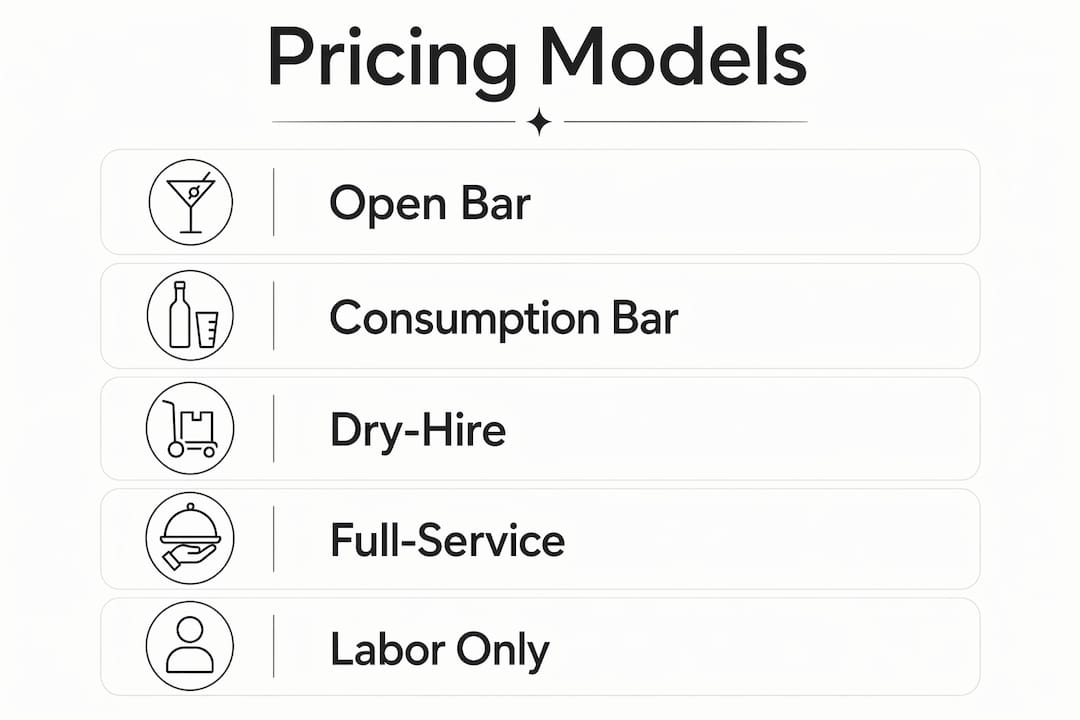
Dry-hire is the third option. You rent the bartender’s time, typically at around $60 per hour, but you handle all supply procurement separately. Dry-hire labor for four hours may cost $240, but supplies can add over $600, making full-service quotes more cost-effective than they first appear.
| Pricing model | Typical cost (100 guests) | What is included |
|---|---|---|
| Bartender-only (dry-hire) | $240–$480 labor only | Staff and tools, no supplies |
| Full-service package | $800–$2,500 | Labor, equipment, mixers, garnishes, glassware |
| Open bar (flat rate) | Varies by hours and guest count | All-inclusive beverage service per agreed menu |
| Consumption bar | Pay per drink poured | Variable cost, lower risk for small groups |
Event duration is the biggest cost multiplier. A four-hour cocktail reception costs less than a two-day convention with morning coffee service, afternoon soft drinks, and evening cocktails. Guest count, number of bar stations, and add-ons like specialty cocktail menus or branded glassware all push the final number up.
Pro Tip: Get quotes for both full-service and dry-hire models, then add your estimated supply costs to the dry-hire number. The comparison often makes the full-service package the clearer choice.
What are the main types of convention bartending packages?
Open bar, consumption bar, and ticketed bar are the three primary service models for convention bar service, each chosen based on event duration and size. Understanding each model helps you match the right structure to your event goals.
Open bar
Open bar is the most common choice for corporate conventions. Guests drink freely within a set menu, and you pay a flat rate. This model creates a predictable budget and a generous guest experience. The trade-off is that it costs more upfront, and over-ordering on alcohol is a real risk without good attendance data.
Consumption bar
A consumption bar charges per drink poured. This works well for smaller trade shows or events where alcohol consumption is expected to be light. The risk is a higher-than-expected final bill if attendance spikes or the crowd drinks more than projected.
Ticketed bar
A ticketed bar gives each guest a set number of drink tickets. This model controls costs tightly and works well for multi-day conventions where you want to offer a benefit without unlimited exposure. It also reduces the administrative burden of tracking consumption in real time.
Beyond the billing model, packages typically come in three service tiers:
- Basic: Bartender labor, standard tools, beer and wine service only
- Premium: Full bar setup, cocktail menu, glassware, garnishes, and mixers included
- Custom: Branded cocktails, specialty spirits, multiple bar stations, and event-specific menu design
Pro Tip: Align your package type with your event format before you price anything. A ticketed bar works well for a multi-day trade show; an open bar fits a single-evening awards reception. Mixing the wrong model with the wrong format creates both cost problems and guest friction.
How do convention bartending packages handle large-event logistics?
Convention bartending is not the same as private party bartending. Large events introduce venue rules, insurance requirements, and load-in logistics that can derail service if your provider is not prepared. Here is how experienced teams handle the operational side:
-
Venue compliance. Convention centers often have strict vendor approval processes, insurance minimums, and rules about outside alcohol. Experienced bartending teams navigate venue-specific requirements on insurance and load times to prevent costly delays. Planners who hire teams unfamiliar with these rules often face last-minute rejections or fines.
-
Insurance and licensing. A professional convention bartending service carries general liability insurance and employs licensed bartenders. This protects you as the event organizer. Always request a certificate of insurance before signing any contract.
-
Staff as guest managers. Professional bartenders at conventions also serve as brand ambassadors, sometimes assisting with event information and guest direction. A well-trained bartender does more than pour drinks. They manage crowd flow, handle difficult situations calmly, and represent your brand at one of the highest-traffic touchpoints in the room.
-
Peak-moment service efficiency. Simplifying the cocktail menu during peak event moments improves service speed and guest satisfaction. Complex full-bar requests create bottlenecks. Batch-made signature cocktails, beer, and wine are the preferred approach for high-volume periods like post-keynote receptions.
-
Day-to-night flexibility. Day-to-night bartending bundles let event spaces shift from daytime coffee or soft drink service to cocktail service in the evening. This maximizes the value of a single bar setup across a multi-day convention without requiring a full teardown and reset between sessions.
For planners managing conference bartending service across multiple days, this flexibility is one of the most underused features in the market.
Key Takeaways
A convention bartending package delivers the most value when planners match the service model, pricing structure, and operational depth to the specific demands of their event.
| Point | Details |
|---|---|
| Full-service vs. bartender-only | Full-service covers labor, equipment, and supplies; bartender-only covers labor and tools only. |
| Pricing range | Full-service packages for 100 guests typically cost $800–$2,500, with alcohol purchased separately. |
| Service model selection | Choose open bar for flat-rate predictability, consumption bar for cost control, or ticketed bar for multi-day events. |
| Operational expertise matters | Providers familiar with venue rules, insurance, and load-in logistics prevent costly event-day disruptions. |
| Menu simplification at peak times | Batch cocktails, beer, and wine reduce bottlenecks during high-volume moments at large conventions. |
What I have learned from planning convention bar service
I have seen planners spend weeks negotiating the perfect speaker lineup and then book a bartending team in 20 minutes. That imbalance shows up on event day. The bar is where guests spend the most unstructured time, and a slow or disorganized service creates a lasting impression that no keynote can fix.
The biggest mistake I see is treating the bartending package as a commodity. Planners compare hourly rates without accounting for what is not in the quote. A $60-per-hour dry-hire rate sounds reasonable until you add ice, mixers, garnishes, glassware, and napkins for 300 guests. The total often exceeds a full-service quote by a meaningful margin.
The second mistake is ignoring the venue’s vendor rules until the week before the event. Convention centers in Las Vegas, for example, have specific insurance requirements and approved vendor lists. A team that has never worked a convention center will hit those walls hard. Working with a provider like Liquidcouragelv, which operates specifically in the Las Vegas and Henderson market, means you get a team that already knows the local venue landscape.
My honest advice: treat your cocktail hour bartending decision the same way you treat your AV decision. Get three quotes, read every line of the contract, and prioritize experience over price. A great bartending team turns a functional event into a memorable one.
— Brennon
Liquidcouragelv’s convention bartending packages for Las Vegas planners
Liquidcouragelv provides mobile bartending and liquor catering services built specifically for the Las Vegas and Henderson market, including corporate events, conventions, and trade shows.
Every package from Liquidcouragelv is built around the specific needs of your event, whether that means a single bar station for a 100-person breakout session or a multi-station setup for a full convention floor. The team handles mobile bar setup, licensed staff, insurance documentation, and venue compliance so you are not managing those details yourself. Planners who want a clear picture of what a full convention bar setup looks like in practice can review the mobile bar guide, or go straight to the conference bartending service guide to see how Liquidcouragelv structures packages for event planners.
FAQ
What is a convention bartending package?
A convention bartending package is a bundled service that includes professional bartenders, mobile bar equipment, and beverage supplies to manage drink service at conferences and trade shows. Alcohol is typically purchased separately by the client.
What does a bartending package include?
Standard packages include licensed bartenders, mobile bar furniture, tools, ice, napkins, mixers, and garnishes. Bartender-only packages cover labor and tools but not consumables or setup.
How much does a convention bartending package cost?
Full-service packages for a 100-guest event typically cost between $800 and $2,500, not including alcohol. Dry-hire labor runs around $60 per hour, but supply costs often add $600 or more on top of that.
What is the difference between an open bar and a consumption bar?
An open bar charges a flat rate based on guest count and hours, giving guests unlimited access to the agreed drink menu. A consumption bar charges per drink poured, which creates a variable final cost.
Do convention bartending services handle venue permits and insurance?
Experienced providers carry general liability insurance and manage venue compliance requirements. Planners should always request a certificate of insurance and confirm the team is familiar with the specific convention center’s vendor rules before booking.