
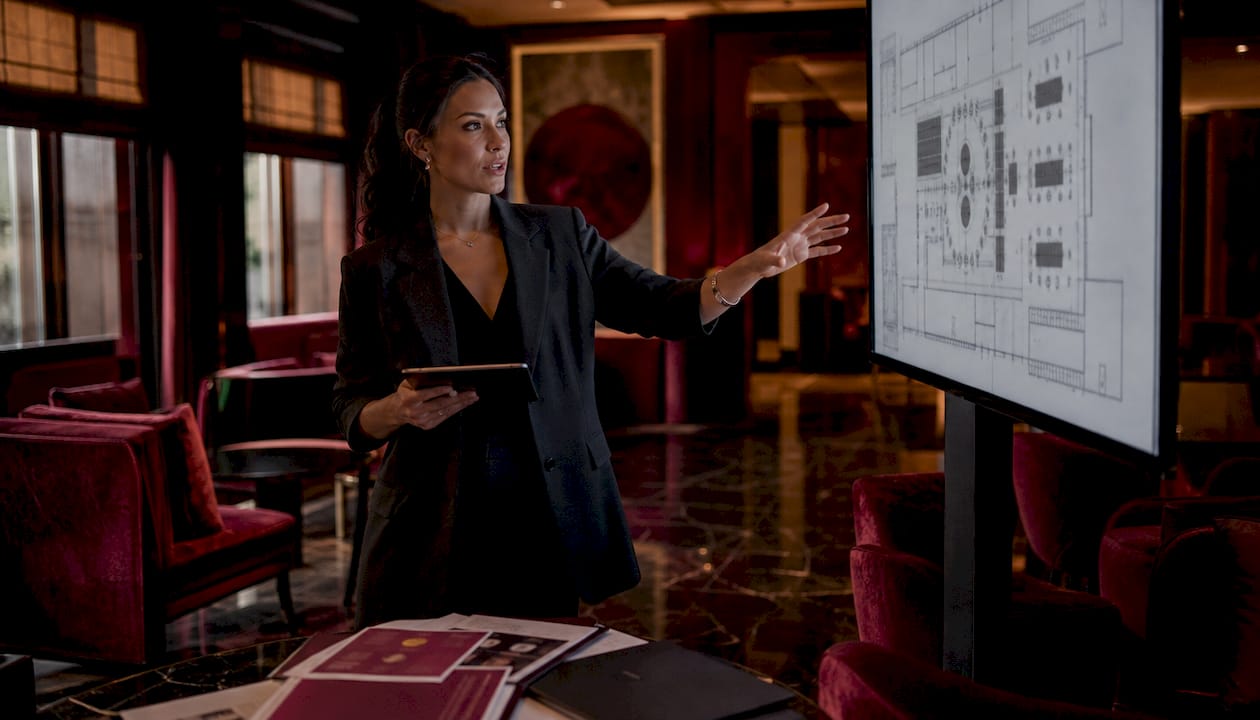
A corporate cocktail reception is defined as a structured networking event that combines professional hospitality, curated food and beverage service, and deliberate spatial design to achieve measurable business outcomes. The best corporate cocktail reception best practices go far beyond a checklist. They integrate staffing ratios, venue layout, menu curation, and guest flow into a single experience that serves your business goals. Get any one of these elements wrong, and the entire event suffers. Get them right, and guests leave with stronger relationships, clearer brand impressions, and a reason to come back.
1. How to select and prepare the ideal venue
Venue selection drives every other decision in corporate event planning. The space you choose determines your staffing needs, your layout options, your catering logistics, and your guests’ first impression of the brand.
Match the venue to your business objective first, aesthetics second. A product launch needs open sight lines and space for demonstrations. A client appreciation event needs intimate zones for one-on-one conversation. Choosing a beautiful space that fights your goals costs you more than money.
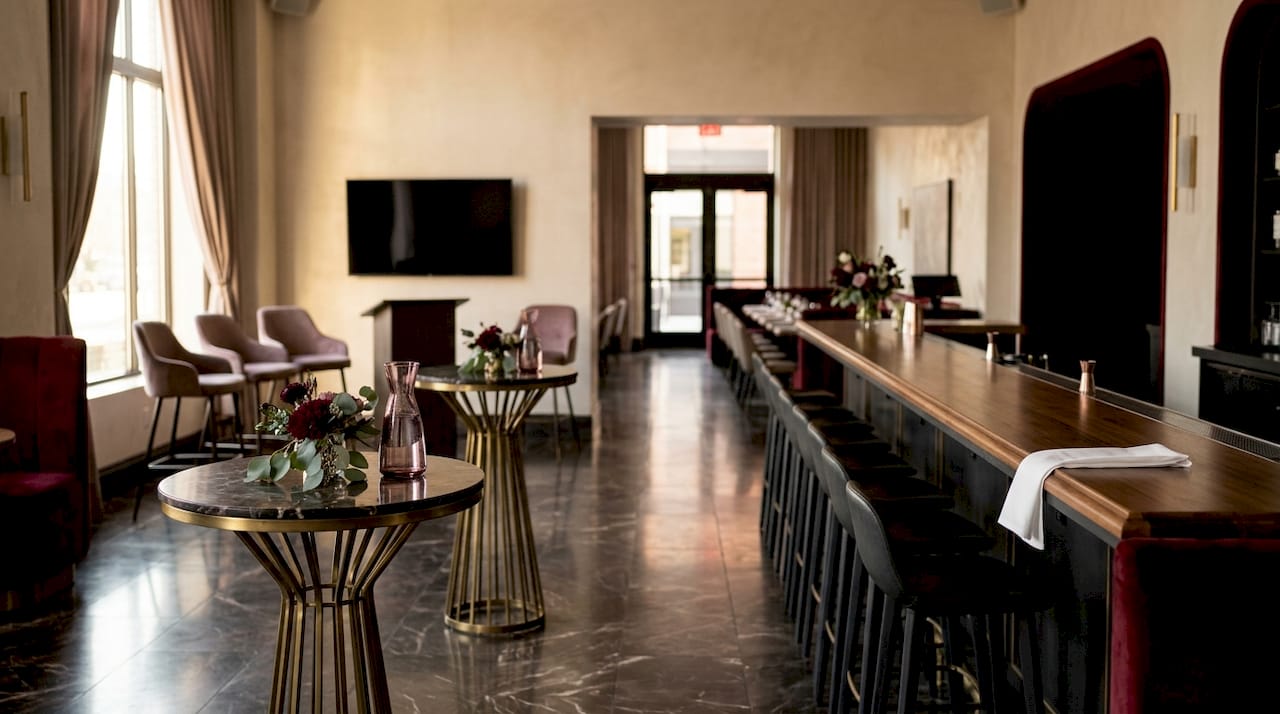
Capacity and layout matter more than square footage alone. A room that fits 300 people at a seated dinner may feel cramped with 200 guests standing and moving. Cocktail receptions run best at 2–4 hours, so the space needs to sustain energy without feeling exhausted by the second hour.
Key venue features to confirm before booking:
- AV infrastructure: Built-in speakers, microphone access, and screen capability for any presentations or announcements
- Climate control: Rooms with poor ventilation become uncomfortable fast, especially when guests are standing and moving
- Accessibility: Confirm ADA compliance for entrances, restrooms, and bar access points
- Natural conversation zones: Look for alcoves, varied ceiling heights, or furniture arrangements that create distinct areas without walls
- Loading access: Your catering and bar team needs a clear path to set up without crossing the guest entrance
Pro Tip: Visit the venue at the same time of day as your event. Lighting, noise from neighboring spaces, and foot traffic patterns all change by hour.
2. Staffing and hospitality service best practices
Staffing is the single most underfunded line item in corporate event planning. Understaffing the cocktail hour sets a negative tone that follows the entire event, and guests notice within minutes.
The industry standard is one server per 25 guests for cocktail receptions. For a 300-person event, professional hospitality staffing typically costs $8,000–$15,000 depending on service level and market. That range reflects real differences in experience, certifications, and training.
Follow this staffing structure for a well-run reception:
- Lead bartender or mixologist: Manages bar operations, signature cocktail execution, and responsible service decisions
- TIPS-certified bartenders: One per 50–75 guests at the bar, trained in alcohol awareness and crowd management
- Servers: One per 25 guests for passed appetizers and drink replenishment
- On-site supervisor: One team lead overseeing all staff, handling contingencies, and maintaining service quality
- Bar back or support staff: Handles ice, glassware restocking, and waste removal to keep the bar running without interruption
Pre-event brand training is not optional. Even experienced hospitality professionals need to know your brand story, your allergen protocols, and your service expectations before the first guest arrives. An on-site team lead enforces that standard in real time.
Pro Tip: Brief your entire staff on the event’s business purpose. A bartender who understands the goal of the evening facilitates better guest interactions than one who only knows the drink menu.
3. Curating food and beverage menus for maximum impact
The food and beverage menu is your most direct tool for controlling guest energy, pacing, and brand recall. A well-designed menu keeps guests engaged from arrival through the final hour.
Plan for 8–12 hors d’oeuvres per guest with a mix of cold, hot, and grazing options. That range accounts for guests who graze lightly and those who treat the reception as a meal. Falling short of this quantity creates visible gaps in service that guests interpret as poor planning.
Build your menu around these principles:
- Dietary inclusion: Offer vegetarian, gluten-free, and allergen-friendly options with clear labeling at every station
- Signature cocktails: Develop 2–3 brand-aligned drinks that reflect the company’s identity. Well-branded signature cocktails improve event recall by up to 94%
- Crafted mocktails: Non-alcoholic options with the same visual appeal and complexity as the cocktail menu signal inclusivity and thoughtfulness
- Staggered service timing: Serve appetizers in waves across arrival, mid-event, and the final hour to maintain visual appeal and guest energy
- Lighter finishes: Reserve lighter bites and dessert-style items for the final 30 minutes to sustain momentum without overloading guests before they leave
Pro Tip: Anchor your signature cocktail to a brand color, ingredient, or story. Guests remember a drink with a name and a reason far longer than a standard open bar selection. Liquidcouragelv builds these menus for corporate clients regularly, and the difference in guest conversation is immediate.
For a deeper look at building drinks that reflect your brand, the guide on branded cocktails for events covers the full process.
4. Designing layout and flow to prevent bottlenecks
Physical layout determines whether guests mingle freely or cluster near the entrance and never move. Poor flow is the most common and most fixable problem in cocktail reception planning.
Place bars and food stations at opposite ends of the room, and keep both away from the entrance. Guests who walk in and immediately hit a bar or food table stop moving. That creates a bottleneck that blocks natural circulation for the rest of the event.
Use these layout principles to guide your floor plan:
- Seating limit: Cap seating at roughly 20% of total guests. Excess seating encourages people to sit and stay put rather than move and meet.
- Multiple conversation zones: Use furniture groupings, varied lighting, and spatial separation to create distinct areas. Designing multiple networking zones prevents guest clumping and isolation.
- Clear entryways: Keep the first 10 feet inside the entrance completely clear for coats, bags, and orientation.
- Drinkware and ice planning: Pre-stage adequate glassware and ice at each bar station to prevent service slowdowns during peak arrival.
| Layout element | Best practice |
|---|---|
| Bar placement | Opposite end from entrance, away from food stations |
| Seating | 20% of guest count maximum |
| Conversation zones | Minimum 3 distinct areas for a 100-person event |
| Entryway clearance | 10 feet minimum from door to first station |
| Glassware staging | Pre-staged by bar type, replenished every 30 minutes |
The mobile bar setup guide from Liquidcouragelv covers how portable bar placement integrates with these flow principles for venues without fixed bar infrastructure.
5. Facilitating effective networking and guest engagement
The best cocktail receptions feel effortless. That feeling is engineered. Every element from music volume to staff behavior shapes whether guests connect or disengage.
Music played at 60–70% of room capacity volume supports conversation without forcing guests to raise their voices. Avoid playlists with strong tempo shifts. A sudden change in energy disrupts the room’s social rhythm and pulls attention away from conversation.
“The most effective corporate receptions treat every design decision as a behavioral prompt. Where you put the bar, how loud the music plays, and how staff move through the room all tell guests how to behave. Planners who understand this build events that achieve business outcomes. Planners who don’t build parties.”
Train your hosts and staff in subtle facilitation. A server who introduces two guests while passing appetizers creates a connection the event itself could never manufacture. Brief your hosts on which guests to connect and why.
Advise guests in advance on cocktail party etiquette. A pre-event communication that sets expectations around moderate alcohol consumption, business card exchange, and conversation norms raises the quality of interaction across the room. Signature cocktails and thematic elements give guests a natural conversation starter that removes the awkwardness of cold introductions.
Key Takeaways
Successful corporate cocktail receptions require deliberate planning across venue, staffing, menu, layout, and guest engagement to deliver real business value.
| Point | Details |
|---|---|
| Venue matches objectives | Choose space based on your business goal, not aesthetics alone. |
| Staff to the standard ratio | Budget for one server per 25 guests and TIPS-certified bartenders throughout. |
| Menu drives recall | Use 2–3 signature cocktails and 8–12 hors d’oeuvres per guest for maximum impact. |
| Layout controls behavior | Keep bars away from entrances and limit seating to 20% of guests. |
| Music and flow are tools | Set music at 60–70% volume and train staff to facilitate introductions actively. |
What I’ve learned from watching corporate receptions succeed and fail
The shift from formal seated dinners to cocktail receptions is not a trend. It reflects a real change in what corporate events are supposed to accomplish. Seated dinners lock people in place. Cocktail receptions, when designed well, create conditions for the conversations that actually move business forward.
What I’ve seen consistently is that planners who treat the reception as a logistics problem produce forgettable events. Planners who treat it as a behavioral design problem produce events people talk about the following week. The difference shows up in small decisions. Where the bar sits. Whether the music has tempo shifts. Whether staff know the names of key guests.
Branded cocktails are underused as a business tool. A drink named after a product launch or a company milestone gives guests something to ask about. That question opens a conversation. That conversation becomes a relationship. The hospitality industry has known this for years, but corporate event planning has been slow to adopt it.
My strongest advice for planners: stop building events around a checklist and start building them around a behavioral outcome. Ask what you want guests to do, feel, and remember. Then design every element to produce that result. The staffing ratio, the menu, the layout, and the music all serve that single goal.
— Brennon
Liquidcouragelv brings professional bar service to your corporate reception
Corporate receptions in Las Vegas and Henderson deserve bar service that matches the event’s business stakes. Liquidcouragelv provides mobile bar setup and professional bartending for corporate events, with TIPS-certified mixologists who build custom drink menus aligned to your brand.
Every Liquidcouragelv setup includes pre-event consultation on signature cocktail development, staffing ratios matched to your guest count, and an on-site team lead who manages service quality from setup through breakdown. The conference bartending service guide covers exactly what to expect from a professional bar team at a corporate event. For planners working on short timelines, last-minute mobile bar booking is available for corporate receptions across the Las Vegas area.
FAQ
What is the standard staffing ratio for a cocktail reception?
The industry standard is one server per 25 guests for cocktail receptions. A 300-person event typically requires a full team including bartenders, servers, a bar back, and an on-site supervisor.
How long should a corporate cocktail reception last?
Cocktail receptions run best at 2–4 hours. That window maintains guest energy without fatigue and gives hosts enough time to facilitate meaningful business interactions.
How many appetizers should you plan per guest?
Plan for 8–12 hors d’oeuvres per guest with a mix of cold, hot, and grazing options. Stagger service across the event to maintain visual appeal and energy through the final hour.
Why do signature cocktails matter at corporate events?
Well-branded signature cocktails improve event recall significantly and give guests a natural conversation starter. Limiting the menu to 2–3 signature drinks also controls costs and simplifies bar operations.
How do you prevent bottlenecks at a cocktail reception?
Place bars and food stations at opposite ends of the room, away from the entrance. Limit seating to 20% of your guest count and create at least three distinct conversation zones to keep guests moving and mingling.